

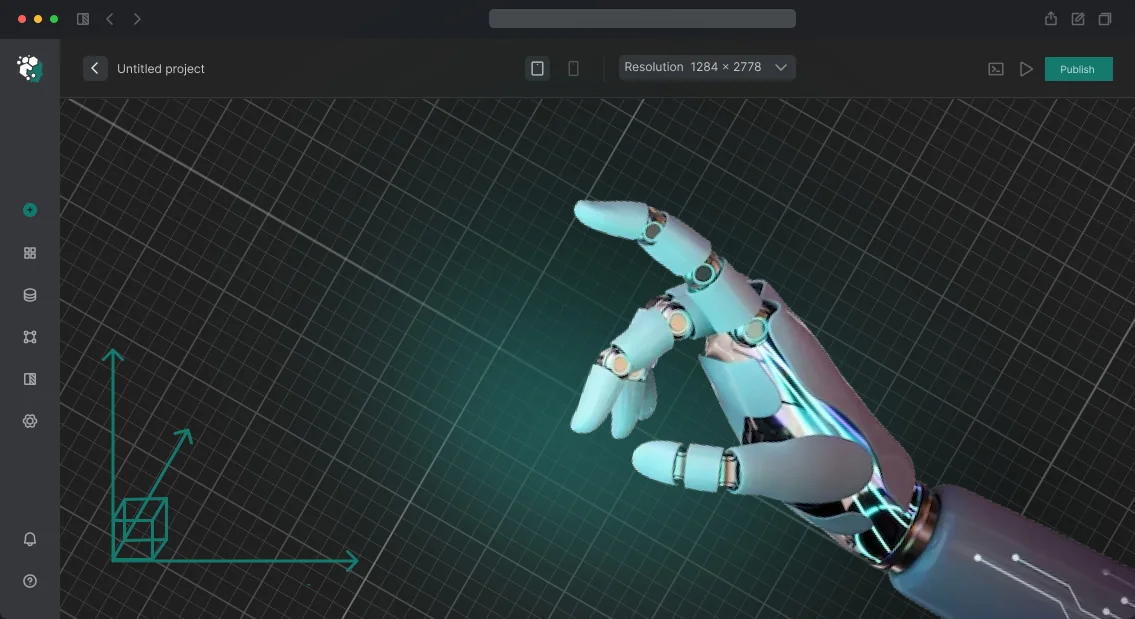
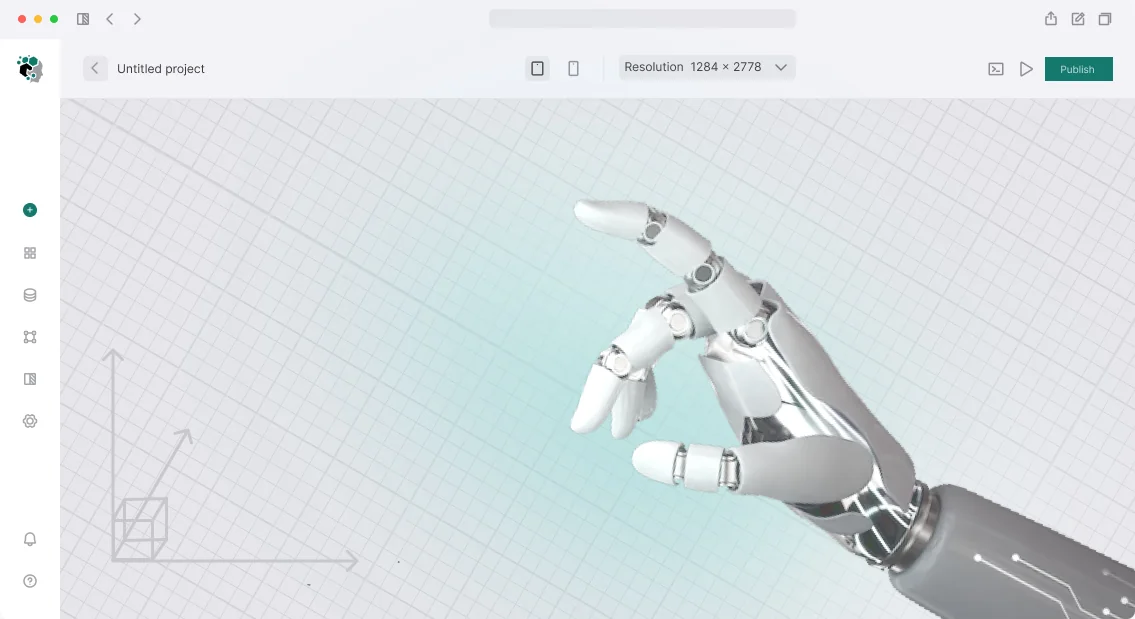






Industrial digital twin software: why you lose money on downtime
Every hour a production line is down means not only unproduced output, but also missed shipments, forced overtime, emergency repairs, and lost profit.
According to industrial companies, unplanned stoppages consume 3–5% of annual revenue, and during peak seasons the losses are even higher.
Worst of all, most failures do not happen suddenly — they are preceded by dozens of signals that conventional tracking systems do not connect.
This is where industrial digital twin software comes in: a digital twin of industry that combines data on equipment performance, personnel, and material flows into a single live model.
Instead of reacting to downtime that has already happened, you get a forecast: which unit needs attention, when maintenance is best performed, and how to rebalance loading so the line does not stop.
This approach cuts downtime losses by 20–40% within the first few months. Management no longer sees scattered reports, but a unified picture of production efficiency: machine loading, bottlenecks, actual causes of stoppages, and hidden reserves. This makes it possible to make decisions quickly, based on facts rather than intuition.
We help industrial companies implement digital twins tailored to their needs — from a single workshop to an entire plant. The industrial digital twin software we design brings transparency to processes and pays off through higher production efficiency. Below we break down how this works in practice.
What a digital twin implementation delivers
A digital twin is a virtual copy of a production facility that reflects the state of equipment and processes in real time.
For a manager, this is not a 3D picture but a working tool: it shows where money and time are lost and provides control over the situation without walking the shop floor.
According to McKinsey, companies that implement digital twins increase efficiency by 10–20%. In practice, the benefits look like this:
- Reduced downtime. The system warns about deviations in advance — stoppages are prevented before they happen. Downtime drops by 30–50%.
- Predictive maintenance. Repairs are scheduled based on the actual condition of components, not on a calendar. Spare parts and specialists are prepared in advance — unplanned stops stop disrupting the production plan.
- Process transparency. Machine loading, raw material stocks, order progress — all on one screen. Managers see bottlenecks and quickly redistribute resources without waiting for reports.
- Production savings. Accurate accounting of energy, materials, and time reduces operating costs by 15–20%. That is margin growth without increasing output volumes.
- Lower total cost of ownership. Equipment lasts longer, and emergency repairs become rare. Investment in a digital twin typically pays for itself within 1–2 years.
Implementation delivers fast payback and real-time control. You make decisions based on facts, not guesses, and see in advance where production is losing profit.
Digital twin formats for your task
A digital twin is not a single universal product but a range of formats that address different production challenges. We select the format to match your goal: shop-floor control, equipment monitoring, production line optimization, or a compelling presentation for investors.
The twin does not remain a static image — when needed, it receives data from sensors and changes in real time. This turns the model into an operator training simulator and a tool for quickly testing “what if” scenarios without putting production at risk.
| Digital twin format | What it is for | What the customer gets |
|---|---|---|
| Shop-floor digital twin | Layout, logistics, safety, personnel training | An accurate virtual copy of the building and equipment. Makes it possible to practice movements, evacuation, and placement schemes before changes begin |
| Equipment (unit) digital twin | Condition monitoring, repairs, maintenance | A detailed 3D model of the unit connected to operational data. You can see where failure risk is highest, when to schedule maintenance, and which components to order in advance |
| Process digital twin | Optimizing the production chain, reducing losses | A model of material and component flow along the line. Identifies bottlenecks, downtime, and unnecessary movements — it is clear what to change to increase output |
Any format can be extended with industrial 3D visualization — this makes the model clear for managers, investors, and new employees.
We build digital twins on professional platforms, so the model integrates easily with your accounting systems and does not require additional technical skills from your team.
How we implement a digital twin: project stages
Before a digital twin can deliver value — reducing downtime, optimizing equipment loading, predicting failures — it must be carefully integrated into your processes. We have refined an implementation approach that minimizes risk and delivers visible results from the early stages. Below are the six steps every project goes through.
-
Brief and situation audit. We gather requirements, study current processes, equipment composition, and data sources. You get a clear understanding of which tasks the twin will address first and what impact it will have on the business.
-
Concept approval. We present a prototype and usage scenarios, and discuss performance metrics. You know in advance what you will receive and how success will be measured — no surprises at later stages.
-
Digital twin development. We create a virtual copy of your facility and connect it to real production data. Already at this stage you see working modules, not just a presentation.
-
Integration with ERP and production systems. We embed the twin so it exchanges data with planning and accounting systems. This creates a single loop: information reaches the point where decisions are made and is not lost between departments.
-
Pilot launch and team training. We run a pilot on a real site and adjust the model based on feedback from your employees. People start working with the tool right away — with no long learning curve or downtime.
-
Support and evolution. We monitor model accuracy, update it as production changes, and help expand functionality. The digital twin evolves with your business and remains relevant for years.
In the end, you receive not just a “3D picture” but a working production management tool. It relies on your data, is integrated into the existing infrastructure, and is supported by our team — so the impact of implementation lasts.
What is included in a digital twin delivery
A digital twin is not simply a 3D model but a ready-to-use enterprise management tool. We deliver it as a complete product so you gain immediate value rather than a set of files. The delivery includes everything needed for launch and day-to-day use.
- Interactive 3D model of the enterprise — an accurate copy of workshops, equipment, and engineering utilities with inspection and measurement capabilities.
- Performance dashboards — clear screens showing loading, downtime, and equipment efficiency in real time.
- Integration module for accounting and dispatching systems — automatic data retrieval without manual entry.
- Personnel training — practical sessions for operators, technologists, and managers so the team works confidently with the twin.
- Operational documentation — instructions for configuration, administration, and system updates.
- Source files and licenses — project materials and rights for independent development.
This composition guarantees that the twin will work in your infrastructure and that employees will use it in daily tasks. If needed, our engineers remain on call after launch.
Case study: how a customer saved 40% on maintenance
A large machine-building enterprise, «Механика», was losing up to 10% of planned revenue due to unplanned equipment stoppages.
Repairs were carried out strictly according to regulations — regardless of the actual condition of components, so expensive parts were replaced ahead of time, and breakdowns still occurred.
Each hour of downtime caused significant losses, and there was no accurate data on when or why a machine would fail. The service department worked in constant emergency mode, spare parts were stocked just in case, and repair budgets were approved with a large buffer.
We developed a digital twin — a virtual copy of the equipment that receives data from sensors and analyzes it around the clock. The system itself warns about wear, forecasts the remaining useful life of components, and suggests the optimal time for repairs.
This made it possible to move from scheduled replacements to condition-based maintenance: personnel see each unit on screen and know exactly what needs attention.
Implementation results
In the first six months, maintenance costs fell by 40% — the savings were substantial. Unplanned downtime was cut by almost half, and the service life of key components increased thanks to timely diagnostics.
The investment in development paid back in less than a year, and the repair crew stopped working overtime.
The key takeaway: a digital twin is not technology for its own sake, but a tool for controlled savings. The customer gained a transparent view of asset condition and could plan maintenance budgets without surprises. This approach scales to any equipment and lets every subsequent line deliver measurable impact.
How to choose the right digital twin for your production specifics?
Choosing the right digital twin starts not with technology but with production tasks. One plant needs a visual model for personnel training, another a simulator for practicing emergency situations, and a third a visualization of equipment for investor presentations. The right format is one that solves a specific problem and fits into existing processes.
Specific requirements depend on equipment complexity, operating mode, and who will use the model: operators, engineers, or management. We start with an audit: we study drawings, process diagrams, usage scenarios, and data already available at the plant. This way you do not overpay for excessive detail or miss important elements.
Adaptation to production means tuning the model to your standards and regulations. We consider the specifics of workshops, raw materials, and the sequence of operations. The model becomes a working tool: it is used for briefings, scenario checks, and customer demonstrations.
It is also important how the twin will evolve. We design the project with future updates in mind: if you change equipment, add a line, or introduce a new technology, the model is easy to extend. It is not a one-off video but a foundation that lives alongside production.
So do not choose a “universal” product; choose a solution that answers your questions. We help you formulate requirements, make the selection, and create a digital twin aimed at a specific outcome: reduced downtime, faster training, or a confident project presentation.
Frequently asked questions about digital twin implementation
Before implementing a digital twin, managers worry less about technology and more about reliability: what happens during a failure, who is responsible for results, and how the system will fit into current processes. Below we address this block and list other questions we hear from customers before the start.
What happens if the system fails?
Guarantees are fixed in the contract: during implementation and after launch, we take responsibility for stable operation. In the event of a critical failure, engineers respond within a few hours, and backup protects against data loss.
Integration with your accounting and monitoring systems is agreed in advance and tested for fault tolerance. You receive a single point of support — no need to figure out who is at fault; we handle it.
- How long does implementation take?
- How quickly does the project pay off?
- Can the digital twin be connected to existing accounting and automation systems?
- Who trains employees to work with it?
- What is included in post-launch support?
Get a consultation on digital twin development
Leave a request for a consultation — and within a few days we will prepare a clear development plan for a digital twin tailored to your task. We will tell you what data will be needed, where the impact will appear fastest, and what the cost will be. No abstract promises: only a cost calculation, realistic timelines, and a clear demo.
What happens after you contact us:
- Brief. We discuss your task, current processes, and the goals the digital twin must achieve.
- Express audit. Our engineers study the initial data and infrastructure to assess complexity and risks.
- Timeline and cost estimate. You receive a transparent estimate and a clear stage-by-stage schedule with no hidden extras.
- Digital twin demo. On a prototype with your data, we show how the system will work in practice.
- Approval and start. We finalize requirements, approve the plan, and begin development.
Each stage produces a tangible result — you see what you are paying for and can make a risk-free decision. The demo helps you assess the future interface and the value for the business in advance.
After the consultation, you will have in hand:
- a brief with goals and scope of work;
- a cost and timeline estimate;
- an integration plan for your processes;
- a demo to test effectiveness;
- a fixated price after approval;
- support at every stage of implementation.
This is how ordering development becomes simple: you get the full picture and only then make a decision. Write to us — we will choose a consultation format that fits your schedule and answer all your questions.