

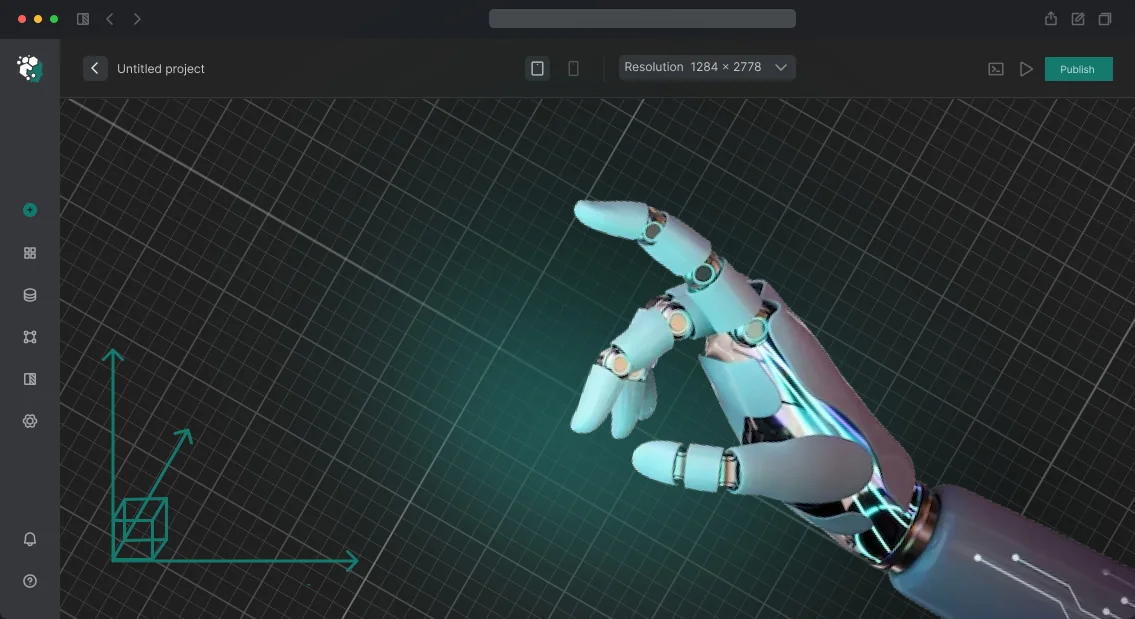
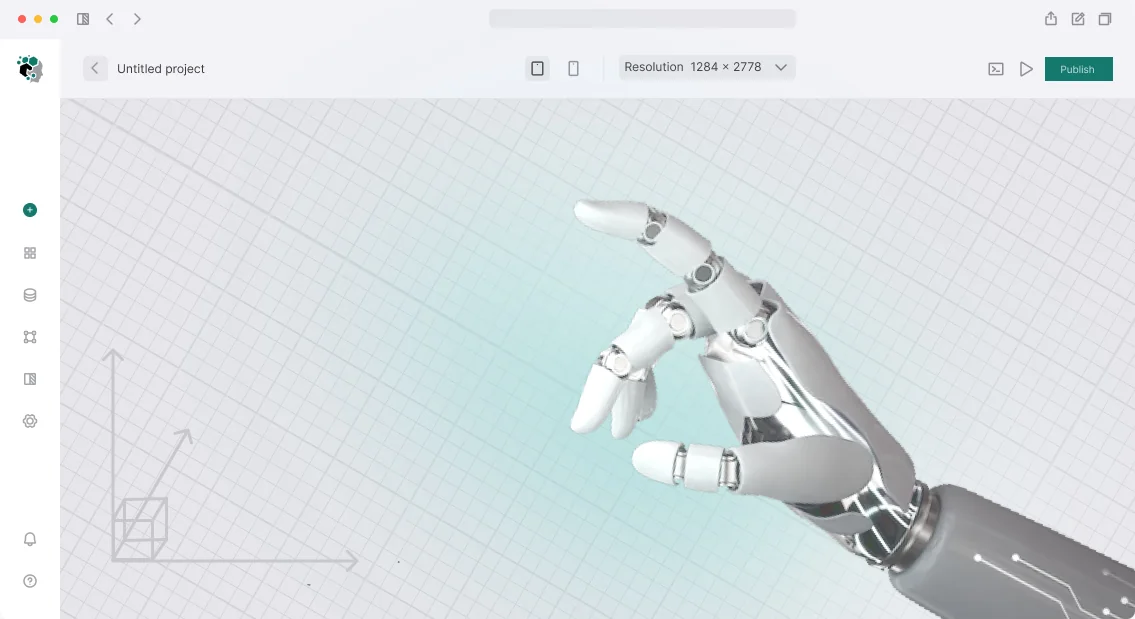






Industrial clients expect industrial digital twin
Industrial clients are increasingly asking to see an industrial digital twin — a digital replica of production where data accuracy and the progress of each order are visible. For them, this is a way to reduce risks and make sure deadlines and quality will not slip.
Previously, photos of the workshop or samples were enough; now the customer wants to see the whole process in dynamics. Without a digital replica, you lose the tender before price is even discussed. Competitors already show such a tool — and the client chooses in their favor.
The absence of a digital replica means losing clients: they choose someone who sees production through and answers questions instantly. Without an industrial digital twin, you have to rely on manual reports, which is slow and often inaccurate.
An industrial digital twin provides a manageable picture: you can see how deadlines will change in the event of a failure or changeover. Data accuracy here is higher than in manual reports, so decisions are made faster and more reliably. A manager sees risks in advance, and the client sees confidence in the supplier’s reliability.
We build such solutions: we analyze your production loop, create a digital replica, and connect it to your data. You get a tool for negotiations with clients and control without rebuilding production. This is exactly what is expected from a reliable supplier.
Accuracy and control: benefits of a digital twin
A digital twin is an accurate virtual model of your production that reflects the condition of equipment, processes, and product quality in real time. You see not only the current picture, but can also forecast the situation for days ahead.
For a manager, this is control without constantly being on site. Data on line operation and product parameters is collected automatically and displayed in an understandable form.
Deviations from the norm are noticeable immediately — you can react before the problem becomes expensive.
One of the main benefits is reducing downtime. The digital twin predicts when equipment will require maintenance. You get planned repairs at a convenient time, and losses from downtime are reduced many times over.
Production accuracy and quality control reach a new level. The model compares actual indicators with reference values and identifies even small deviations that could lead to defects.
You know in advance at which stage a risk will arise and adjust the process without stopping the line.
Speed of operation is another advantage. “What will happen if we change speed, temperature, or composition” scenarios are calculated in minutes, not in weeks of experiments. You find the optimal mode faster and implement changes faster.
Safety also becomes manageable. On the digital replica, you can practice emergency situations, train staff, and test new algorithms without risk to people or equipment. This reduces the number of incidents and increases confidence in production stability.
Development formats for industrial digital twin to fit the task
An industrial digital twin is not a standard boxed product, but a tool configured for a specific task: sales, personnel training, operational control, or modernization.
We divide formats by depth of detail and data sources, so you pay only for the capabilities that bring real value to the business.
| Digital twin format | For whom | What it gives the client |
|---|---|---|
| Presentation 3D twin | Sales and marketing departments | Visual product demonstration, increased conversion in negotiations and at exhibitions |
| Training simulator | Training centers, production personnel | Safe skill practice without risk to equipment and people |
| Operational twin | Engineers, maintenance services | Real-time condition monitoring, reduced downtime and accidents |
| Integration twin for modernization | Project managers, technical directors | Bottleneck analysis, investment justification, seamless integration with existing systems |
Each format solves its own business problem — from increasing sales to reducing costs. After you choose an option, we prepare a cost estimate with clear stages and deadlines, and upon completion, we hand over the source materials and documentation.
Development cost is calculated individually: it depends on the complexity of the facility, the volume of source documentation, and the required accuracy. We do not inflate the price for unnecessary options — you pay only for the level of detail your task really needs.
To create twins, we use professional equipment and proven industrial platforms, including Siemens — this guarantees compatibility with your infrastructure and stable operation in the long term.
Our engineers have experience in mechanical engineering, energy, and logistics, so they quickly understand the specifics of your production and offer solutions that pay off.
How the project goes: 7 steps to the result
We have broken the work into seven transparent stages so you can control the process and always know what stage the project is at. At each step, you receive an intermediate result and approve it — this eliminates surprises at final delivery.
- Brief and task analysis. We record the goals of the digital twin, usage scenarios, and the expected effect for your business. The result is a document with requirements and an estimate of deadlines.
- Prototype and concept. We show how the future product will look and work: scene structure, key mechanics, visualization style. You make edits before the main work begins.
- Development of 3D models and scenarios. We create detailed models of your equipment or facility and prepare animation of work processes. You see intermediate renders regularly.
- Digital twin assembly. We combine models, animation, and interactive elements into a single system and check that all components are displayed correctly.
- Approval and refinement. You receive a working version and test it in your scenarios. We make edits based on your feedback until it fully matches the task.
- Launch and integration. We install the solution on your devices, configure access, and train employees. The product is completely ready for operation.
- Support and development. After launch, we remain in touch: we update content, add new scenarios, and help with technical support if needed.
What is included in delivery: the complete package
An industrial digital twin is not just a 3D model but a working tool that must be convenient for your specialists from day one. We form the delivery package as a ready-made solution: from source data to employee training. Below is what you actually receive.
- Accurate 3D model of the facility. We reproduce the geometry, dimensions, and key components of your equipment or territory with accuracy sufficient for planning, training, and presentations.
- Interactive scenario. We build the model’s behavior logic: walkthrough, cross-section, technological processes, operating modes. You choose what to show and how to interact.
- Up-to-date documentation in an understandable form. Model passport, composition description, launch and update instructions — all files are structured and ready for handover to your team.
- Training course for employees. We conduct a short training session: how to open the model, add changes, and use it in daily work. We adapt the format to your specialists.
- Source files and usage rights. You receive editable materials — you can make changes with your own team or contact us for refinements without starting from scratch.
- Support after launch. We fix a maintenance schedule: clear communication channels, response times, and a plan for updating the model when the facility changes.
We approve each package item before work begins — you know the delivery composition in advance and do not pay for “just a pretty picture.” If you need to extend functionality or integrate the twin with your systems, we will discuss this separately and include it in the plan.
Case: digital twin for production
An industrial equipment manufacturer contacted us when losses from line downtime rose to a cost calculated after audit.
The equipment operated almost non-stop, but every abnormal situation had to be analyzed manually: engineers spent hours finding the cause, and every extra minute of downtime turned into money.
The task was to create a virtual copy of the workshop that would show the state of components in real time and predict failures before they stopped production.
What changed in production
We implemented a digital twin based on a three-dimensional model of the workshop and data from sensors. Over six months, the project went from brief to launch: first we digitized the key units, then taught the system to compare readings with reference operating scenarios.
The operator sees not dry numbers on the screen, but a clear picture: where the load is above normal, which unit needs attention, what will happen in the next shift.
Over a year of operation, the twin reduced unplanned downtime by 40%. Each minute of downtime came at a significant cost to the customer, so the annual savings were substantial — the exact amount was calculated after audit.
Training new employees also became faster: instead of two months of internship, three weeks — because all the workshop’s operating logic is visualized and safe to study.
Maxim Lebedev, the customer’s chief engineer, noted: “Previously we learned about a problem when the line had already stopped. Now we see it in advance and plan the repair without rushing. This is not just charts — this is production management, not reacting to emergencies.”
Why the project paid off
The main result is not maintenance savings, but controllability. We showed the customer how their workshop operates in different modes and helped find hidden reserves: one of the lines was able to achieve 12% higher utilization without buying new equipment.
The team still uses the model for planned shutdowns and tests — the twin has become a working tool, not a one-off demo.
After the launch, the customer returned with a new project: to extend the model to warehouse and logistics. For us, such repeat requests are the main indicator: it means the result is measured in money, not just in a pretty picture.
Frequently asked questions and doubts before starting
Before any project start, especially with a digital twin, customers have the same doubts. New technology, a large amount of data, it is unclear how this will affect current processes and who will be responsible after launch.
We have gathered the questions we hear most often and answer directly — without technical details, only what matters to you: safety, deadlines, support, and the price of a possible mistake.
How safe is it to transfer data for a digital twin?
We work in a secure environment: we separate access and encrypt channels, transferring only the necessary data. We sign a non-disclosure agreement, and all source materials and settings remain your property.
Who will support the system after launch?
We support the project after launch: we answer questions, fix comments, and update the solution to reflect changes in your tasks. Support terms are fixed in the contract with clear response times.
What if we need modifications after a few months?
You contact us, and we estimate the scope and timeline. Thanks to the modular structure of the solution, most modifications do not affect the core architecture, so changes are cheaper than starting from scratch.
How quickly will we see the first results?
We show the first prototype within a few weeks after the start. This allows you to align expectations, adjust details, and avoid spending budget on something that does not work.
If your question is not on the list, just write to us. We will discuss the task, your concerns, and prepare a solution that covers exactly your need.Take the first step: order development
Leave a request, and we will help turn the idea of a digital twin into a working tool. You do not need to understand the technology in advance or prepare a technical specification: just tell us about the task, and our engineers will propose a solution and estimate the timeline.
After your request, you will receive:
- Consultation with a specialized engineer — we will analyze your task and advise where a digital twin will deliver quick results and where it is not needed at all.
- Implementation plan for the first stage — a transparent cost estimate and deadlines so you understand the budget and work stages before starting.
- Commercial proposal tailored to your tasks — no template packages, only what covers your need.
- Examples of similar solutions — we will show how we solved similar problems in industry and what results customers achieved.
- Return on investment estimate — we will calculate what you will save and what effect you will get from implementation.
- Support at all stages — from design to launch and maintenance, so you are not left alone with the system.
Leave a request through the form on the website or write to us — we will respond within one business day, clarify the details, and suggest a convenient time for a call. The earlier you contact us, the faster our colleagues can start calculating the impact on your processes. Take the first step — we will bring the project to the result.
How to choose the right format for your tasks?
There is no universal “best” format — there is the right one for your task. The answer depends on how you will use the result: show investors, train staff, or connect the model to real equipment data.
A smart choice reduces budget and timeline by two to three times because you do not pay for unnecessary detail.
For an industrial digital twin, the key question is what business problem it solves. If you need to show a production line before launch, photorealistic visualization is enough. If the model must train operators, step-by-step animation is required. If the facility matters in dynamics, choose a video.
| Format | When to choose | What it gives the customer |
|---|---|---|
| 3D visualization | Need to show the object before physical launch or without access to it | Visual presentation of the product to investors, partners, and customers |
| 2D animation | Need to explain a process, scheme, or equipment operating principle | Fast staff training without complex technical details |
| Video | Need ready-made material for a presentation, website, or tender | A complete story that can be watched in a minute |
These three formats cover 90% of tasks. Identify the main audience: engineers value accuracy, management values the big picture, investors value potential. Choose the format for the decision-maker, not for internal preferences.
Our engineers help with the choice at the brief stage: we clarify the goal, audience, and usage scenario, then propose a format that solves the task without unnecessary costs.
If required, we make a combination: visualization for design approval and a video for external communication.
Why engineers trust us with complex projects
Engineers trust us with complex projects because we do not just make a 3D picture, but build an industrial digital twin based on real data.
We understand drawings, specifications, and production constraints, so the model immediately integrates into working processes — from personnel training to equipment condition monitoring.
The team has dozens of implementations for mechanical engineering, energy, and logistics. We know where accuracy is most often lost when transferring engineering data into 3D, and we eliminate these risks in advance.
Engineers get a digital twin they can trust when planning repairs and modernization, not just an impressive visualization.
Reliability is confirmed by the process: we record requirements, show intermediate versions, and deliver the project with clear documentation. Each stage is approved with your technical department, so there are no surprises at the end. If modifications are needed after launch, we remain in touch throughout the entire support period.
Our engineers are members of the professional community Association of Industrial Digital Technologies and annually align their approaches with current industry standards.
This gives the customer confidence: technical specialists at any site will accept the result, not just marketers.
By choosing us, you get a team that speaks the same language as your engineers. We take on the complex part — from analyzing source data to a working industrial digital twin that saves time, money, and nerves on a real facility.