







Jewelry 3D Configurator: How to Win Back Customers Who Leave Without Ordering
A customer sees a piece of jewelry in a picture — but cannot understand how it looks up close, in motion, or on the hand. They hesitate, worrying that the metal will be a different shade or the stone smaller than in the photo.
Eventually, they close the tab and go to a competitor: in online jewelry sales, customers are lost exactly at the selection stage, when there is no way to truly examine the item.
This hurts conversion: visitors add pieces to the cart and then abandon it without deciding to buy. For expensive jewelry, the cost of a mistake is too high, so a regular catalog is not enough.
The buyer needs confidence — the feeling of seeing the item almost as if in their hands before paying.
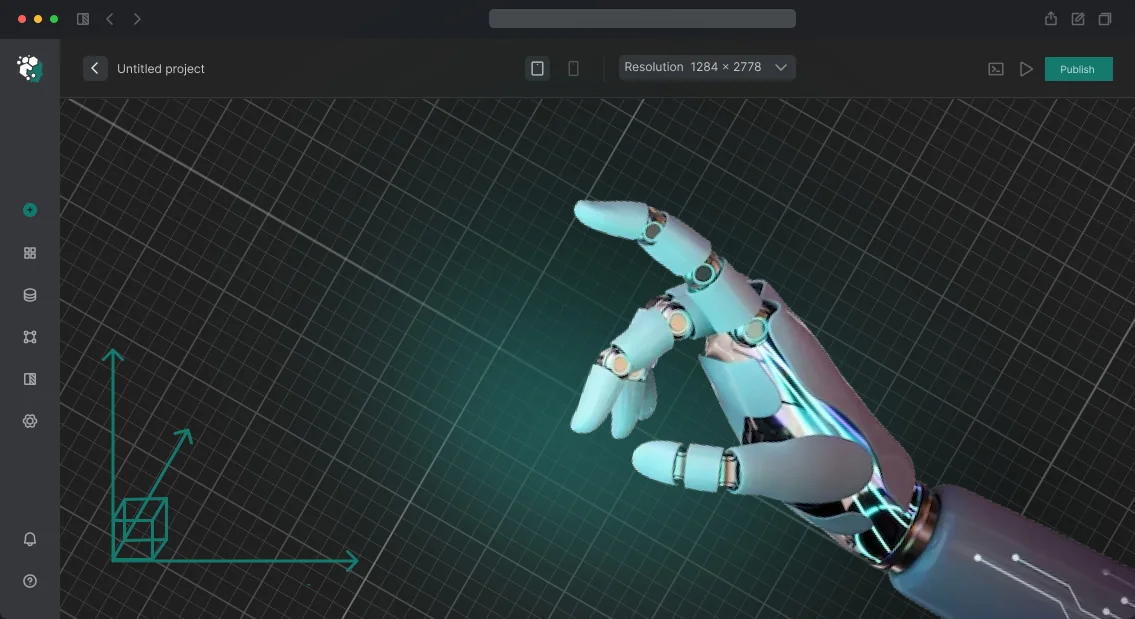
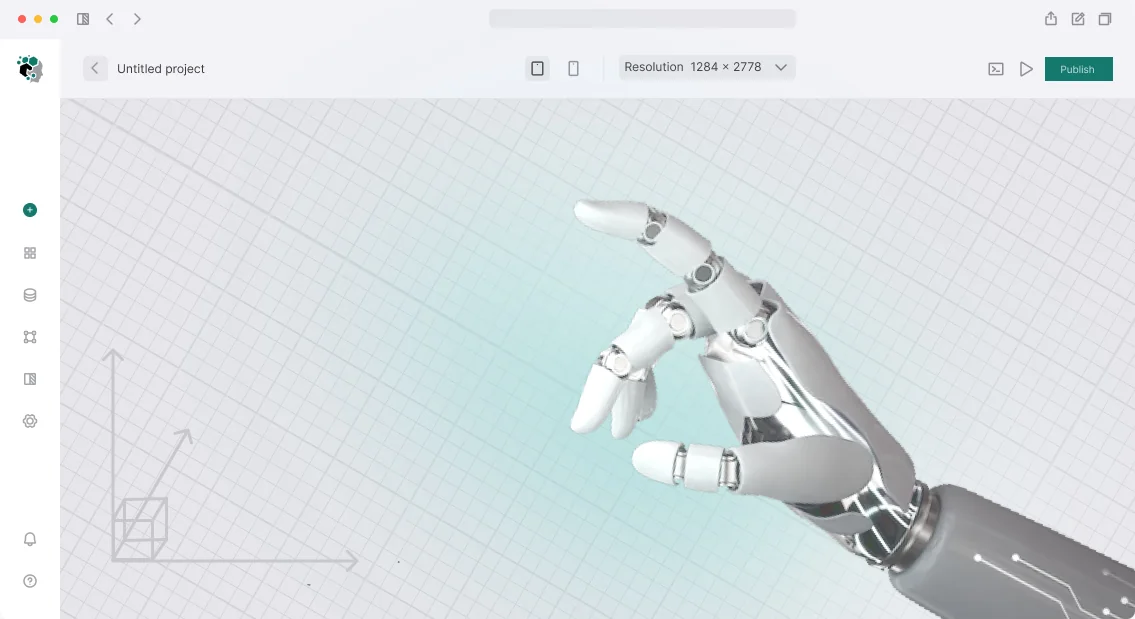
The solution is an interactive catalog with 3D visualization of jewelry. Instead of flat photos, the buyer can rotate a ring or earrings, zoom in on details, change the metal color, stone size, and try different cut options.
A jewelry configurator turns selection into an engaging process: a person customizes a piece for themselves, sees it from every angle, and knows they will receive exactly what they ordered.
This approach wins back customers even without a fitting. They spend more time on the site, return to "finish" their piece, and are more likely to place an order.
We develop such configurators to meet the specific needs of a business — taking into account the assortment, brand style, and target audience.
This solves the main pain point of online jewelry sales: you help the client make a decision instead of leaving them alone with their doubts.
What an Interactive Jewelry Catalog Delivers: Sales and Loyalty Growth
An interactive jewelry catalog turns ordinary window shopping into an engaging experience. Instead of static photos, buyers can examine a piece from all sides, zoom in on details, and even change the metal color or the stone.
This removes the main barrier to online purchase — the doubt: "what does it really look like?" The less doubt, the higher the order conversion.
When a customer assembles a piece themselves — choosing a stone, trying different options — they become emotionally involved in the process. Such a piece feels as if it was created personally for them, so the purchase decision comes faster.
In practice, an interactive format increases the share of orders from the catalog by 20–30%, and the average ticket grows thanks to additional options.
Brand recognition is just as important. An unusual 3D configurator itself becomes a reason to talk about the store: customers share screenshots and videos on social networks and recommend it to friends. That's free reach, which strengthens the image of a modern, tech-savvy company.
For a jewelry store, the configurator also works as a lead source. When ordering a non-standard piece or saving their custom version, the customer leaves contacts — you get hot leads without extra advertising.
And when returning to the catalog, the customer already trusts you: they know they will see the actual product, not a template picture.
Finally, interactivity increases loyalty. A person who spends time in the configurator remembers the store and returns for future purchases — for loved ones' birthdays or wedding rings.
As a result, the catalog pays off not only through higher conversion but also through a loyal audience that recommends you to others.
Configurator Formats for Jewelry: Comparison and Selection
There is no universal solution: a jewelry store needs to quickly show a product from different angles, while a made-to-order brand needs to let the client build their own piece.
We have developed configurators for different tasks and know which format will benefit you — without overpaying for unnecessary features.
Format Comparison
| Format | Best for | What it gives the customer |
|---|---|---|
| Configurator with ready-made options | Stores with a large catalog of rings, earrings, and pendants | Quick viewing of metal color, stone, and cut on a single model without page reload |
| Fully customizable configurator | Made-to-order brands and premium salons | Selecting size, width, stone, and engraving — the customer sees the final result before payment |
| 3D catalog with online viewing | Online storefronts and catalogs with many items | Rotating, zooming, and detailed inspection — fewer surprise returns |
| "Designer" configurator | Projects with non-standard jewelry | Free assembly of a piece from elements — the customer is engaged, and the average check grows |
The choice of format directly affects the budget: a simple 3D showcase, customization, and a full "designer" solution each require a cost calculated after audit.
We do not offer the most expensive solution; we calculate the payback within your sales model: the configurator should bring in more than it costs.
How We Help You Choose
At the start, we briefly analyze your catalog, customer behavior, and production process. Based on this, we propose a format that will deliver maximum results within a reasonable budget.
You receive a demo version and see how the configurator will fit into your site and which scenarios it will cover before development even begins.
How Development of an Interactive Solution Works: Stages and Timelines
The work follows a clear scenario: you are not just ordering animation; you get a manageable process with transparent deadlines and checkpoints. At the start, we define the catalog's tasks, target customer scenarios, and success criteria — then you just follow the results.
- Configurator brief. We discuss your assortment, typical customer requests, and your goals: growth in repeat purchases, average check, or reach. The foundation of the future concept is set at this stage.
- Prototype and scenarios. We show how the customer will rotate the jewelry, zoom in on details, and compare options. We align the logic before visualization begins.
- Modeling and visual style. We create 3D models of the products and the overall look of the catalog so the solution looks premium on both a smartphone and a large screen.
- Assembly and integration. We set up catalog upload, connect it to your site, and if needed, to your accounting system so stock levels and prices update automatically.
- Testing and launch. We check speed, purchase convenience, and stability across different devices. After launch, you receive analytics on customer behavior.
- Support and development. We support the solution after launch: update models, add products, and improve scenarios based on data.
The timeline depends on the size of the catalog and the depth of the graphics. A project with a few dozen pieces usually takes two to four weeks; large catalogs are divided into stages so you can start earning from part of the assortment sooner.
For each stage, we set specific dates and warn you about risks in advance — no surprises midway through.
What's Included in the Delivery: A Complete Package for Your Business
After the 3D configurator launches, you get not just a ready-made page but a working sales tool that immediately connects to your catalog and starts taking orders.
The complete package is designed so your managers quickly get up to speed, and customers can choose jewelry and complete a purchase without a consultant's help.
- 3D jewelry models — accurate high-quality digital copies of your products. The customer sees a ring or earrings from every side, zooms in on details, and honestly evaluates the piece before ordering.
- Configurator interface — a straightforward way for customers to choose metal, stones, size, and engraving. The process takes minutes, not a conversation with a manager.
- Admin panel — you independently change prices, add new items, manage discounts, and receive requests in one place. No "paper" orders or lost leads.
- Documentation package — clear instructions for the administrator and managers: how to set up the catalog, process an order, and send it to production. Everything is described step by step.
- Staff training — we conduct live training sessions and record short video tutorials. A new team member can learn the system in a day, not a week.
- Website integration — the configurator is embedded into your online store without restructuring existing processes. The customer doesn't notice the technical side, and you receive orders in your usual system.
- Technical support — after launch, we support the project: monitor stability, update models for your new collections, and quickly resolve any issues.
This is a complete "turnkey" package: from models and interface to a trained team and documentation. You pay once and, within a short time, get a working sales channel that pays for itself through higher average checks and a lower load on managers.
Case Study: A Jewelry Brand's Sales Growth with 3D Visualization
We launched a 3D configurator for the jewelry brand Lumeira, which sold jewelry through a catalog and an online store.
The main pain point was that customers could not "try on" rings and earrings before buying, so they often went to competitors or returned orders after delivery.
How We Solved the Problem
Instead of static photos, we proposed an interactive 3D configurator: the customer chooses the metal, stone, and cut, and the jewelry is assembled before their eyes.
We used professional 3D graphics tools — for us, this guarantees stable performance on any device, from a smartphone to a powerful PC.
The configurator was embedded directly into the product page — so the customer didn't have to look for a separate section. The visualization is as close as possible to the real product: you can see the brilliance of the stone, the texture of the metal, and the proportions. This removes the fear of "what if it looks different in real life."
What Changed in Two Months
After the configurator launched, the brand saw a 23% increase in purchase conversion, and the average check grew by 18% — customers increasingly chose more expensive stones because they could see the difference in detail. The number of returns fell by almost half: customers understood exactly what they were ordering.
Time spent on the product page grew from one minute to four minutes on average — that's time the customer spends learning about the product instead of leaving for a competitor.
As a result, the brand recouped its development costs in three months and ordered a configurator for the next collection.
This case is an example of how 3D visualization becomes not just a website decoration but a working sales tool. Contact us to discuss a similar task for your assortment — we'll show you a prototype on your own products.
Frequently Asked Questions About Developing a Configurator for Jewelry
We've collected answers to the questions jewelry brand owners most often ask when considering a 3D configurator. Here is a short and simple overview — about timelines, budget, integration, and guarantees. If your question isn't covered, leave a request and we'll discuss the details.
How long does development take?
A typical project with a basic catalog and choice of metal and stones takes 4–6 weeks. If more options are required (such as cut selection, engraving, or calculating the price of several pieces), the timeline grows to 2–3 months. We provide an exact timeline after the brief.
How much does a configurator cost?
The price depends on the number of models and the set of options. As a guide: a basic solution for one product category starts from a cost calculated after audit.
A full catalog with customization and automatic order upload into your accounting system starts from a cost calculated after audit. We fix the estimate in the contract and do not change it during the process.
Can we integrate the configurator into our website?
Yes. The configurator is embedded into your existing site as a standalone block or page. We set up data transfer of selected items to your accounting system so orders are never lost. If you don't have a website yet, we'll help you create one.
Do customers need to install anything?
No. The configurator works in the browser: the visitor opens the page and immediately sees the 3D model and can change metal, stone, and other parameters. No programs, plugins, or permissions needed — this lowers the barrier to entry and increases the number of orders.
What guarantees and support do you offer?
We work under a contract and take responsibility for timelines, budget, and quality. After launch, we provide a guarantee and technical support: we quickly fix any inaccuracies, help update models, and add new options. You can always contact us for further improvements.
Let's Discuss Your Project? Leave a Request Today
Let's discuss the details of your project? Leave a request for development — and within one business day, our specialist will contact you, clarify the task, and advise on the fastest and most cost-effective way to implement a 3D configurator for your jewelry brand.
We review every request individually, so immediately after a short conversation you will receive:
- A free consultation: we'll analyze your task, show possible solutions, and answer your questions.
- A cost estimate: a transparent quote for your budget with no hidden fees or "surprises" along the way.
- A commercial proposal: we'll fix the scope of work, timeline, and terms of cooperation.
- Examples of our case studies: we'll show how 3D configurators helped other jewelry companies increase sales.
- Recommendations for growth: we'll advise which features to add right away and which ones for the next stage.
- An individual launch plan: what to prepare before starting so the project begins faster.
You have nothing to lose: the consultation and estimate are free and create no obligation. Even if you're not ready to start development yet, we'll help you evaluate the idea and create an action plan.
Leave a request today — and by tomorrow you'll know how much your ideal configurator costs and how quickly it can start generating orders.
How to Choose the Right Configurator Format for Your Business?
Choosing a configurator format always starts not with technology but with the task: what exactly should the customer do — pick a ready-made piece, change the size or stone, or build a product from scratch.
For a jewelry business, this is fundamental: the client is dealing with an expensive and emotional product, so it's important that the interface is clear and the customization process is engaging but not overwhelming.
At this stage, together with you, we define the scenario: a quick selection by parameters or a full constructor with step-by-step choice of metal, stones, and engraving.
The specificity of the jewelry business is that the buyer often doesn't know the exact characteristics of a product — they want to see "their" piece and understand how it will look in real life.
Therefore, the choice of solution depends on how deep you are ready to go with customization without losing simplicity. If the goal is to increase catalog conversion, a lightweight 2D configurator with metal color and stone selection is enough.
If the goal is custom orders and higher average checks, you need a 3D format with model rotation and realistic visualization.
Individual business requirements also influence the format: assortment, number of SKUs, average check, and audience profile.
For example, for the mass segment, loading speed and simplicity are crucial, while for the premium segment, photorealistic rendering and close-up detail viewing matter more. We take these factors into account to offer a solution that pays off rather than just looks good.
At this stage, we ask questions about your business processes: how orders are received, what data production needs, and how the configurator should integrate with your website and accounting system.
The right answer to the question "which format should we choose" comes from a joint analysis: we look at your assortment, typical customer requests, and current sales growth opportunities.
Our engineers propose 2–3 implementation options with estimated timelines and budgets, and you make a decision based on clear business metrics.
This approach prevents the situation where you pay for a complex 3D model when your customers would have been satisfied with a simple 2D selection.
If you're unsure which format is right for your business, start with an expert consultation: we'll analyze your task for free and suggest the optimal option. It will take 30–40 minutes and save you months of development time and budget spent on the wrong solution.