

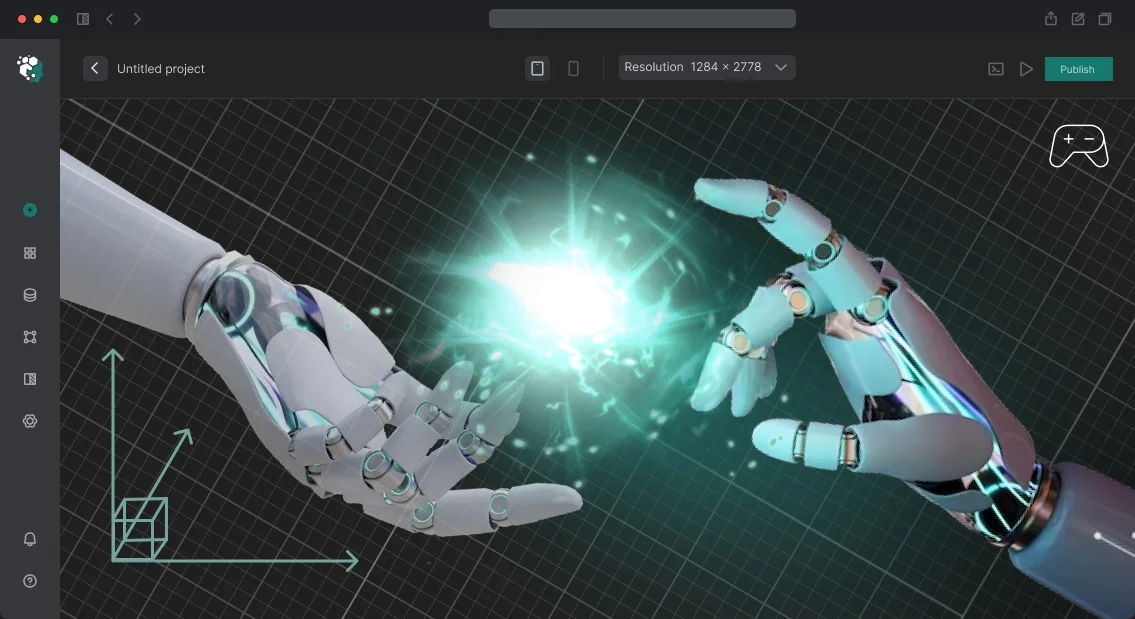
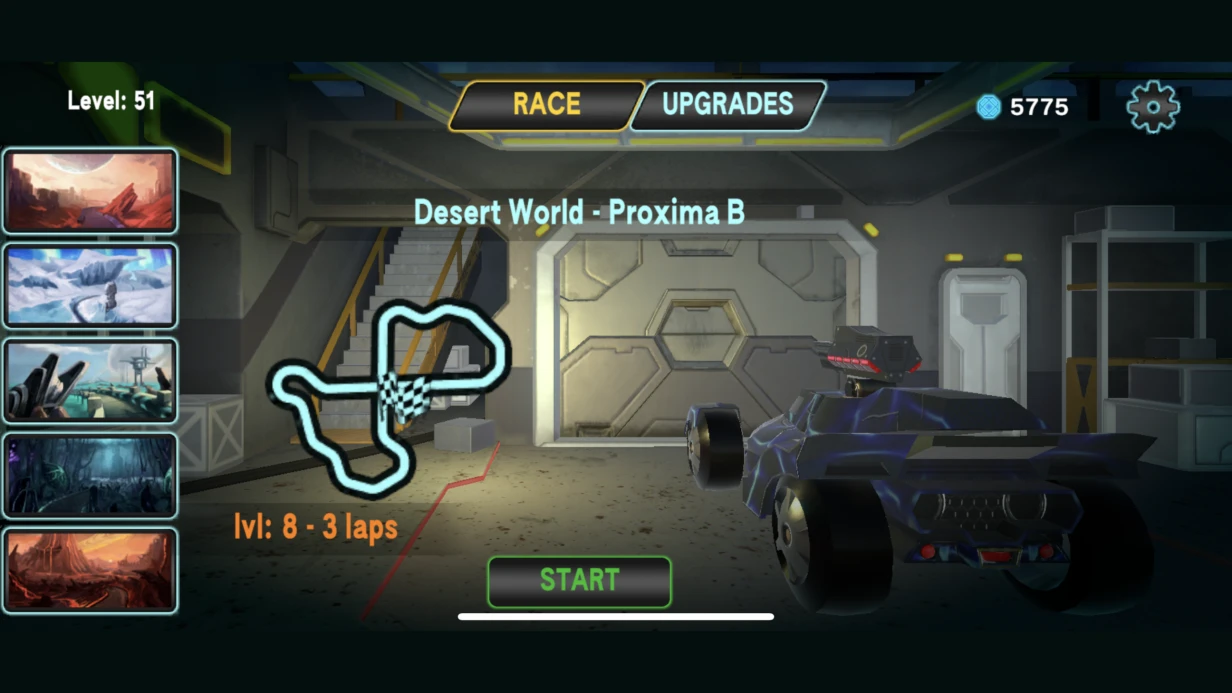
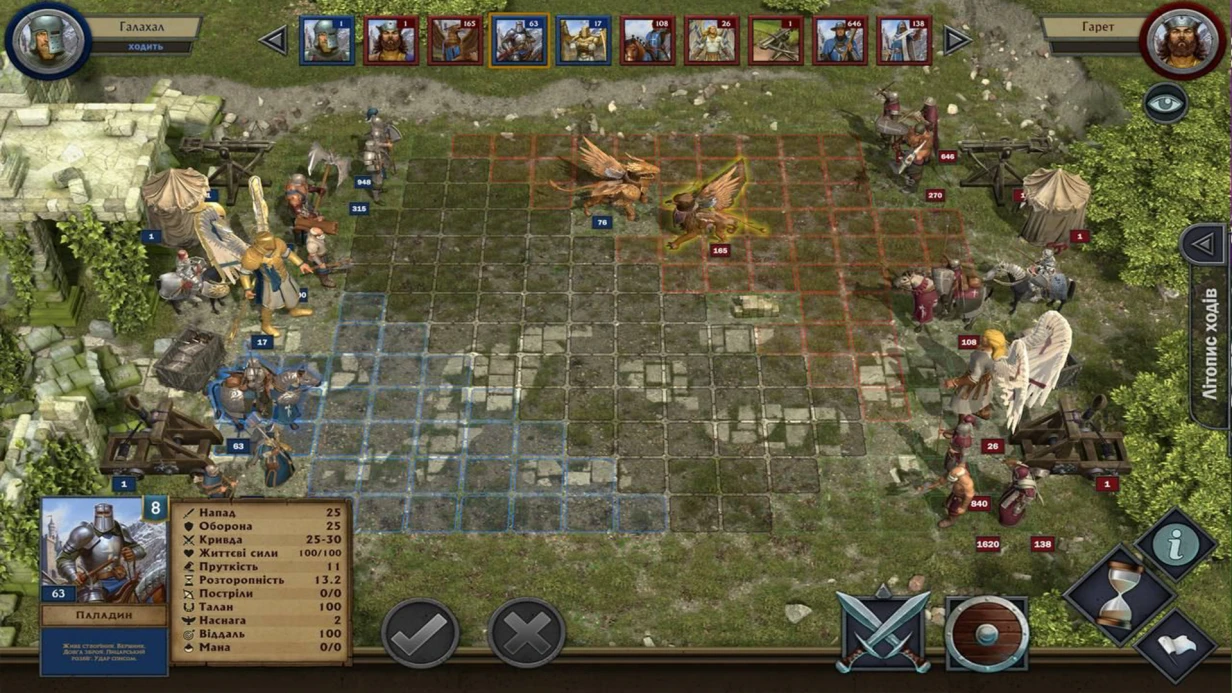
The game is ready, the engine graphics look good — but for marketing you need a banner, Steam capsule, trailer, and stories. The artist opens Photoshop and tries to make a screenshot "prettier." Result: compression artifacts, incorrect exposure, random fonts — the game loses its first impression. We (a team of game-dev engineers) encounter this regularly. Our approach is not to take a screenshot, but to fully render promo scenes in the engine with settings higher than in the build. This guarantees pixel-perfect quality and a unified visual language.
Our game promo materials service covers Steam banner creation, App Store cover design, and marketing art for games. We specialize in Unity promo scene setup and HDRP rendering. Game typography is handled with brand consistency. We also create animated promo assets and social media templates for games — ideal for video game promo and press kit for games.
Promo materials are not art; they are a production pipeline. We take the order turnkey: from asset review to export of all formats. Experience from over 50 projects in our portfolio allows us to guarantee results. All you need is your project and a list of channels. Contact us to estimate timelines and scope.
Below, we'll go into technical details: how to set up the render, which formats for which channel, how to work with typography and branding.
How do we set up a promo scene in Unity?
For Unity: a dedicated promo scene with High Definition Render Pipeline (HDRP) or URP with settings higher than in the game build. Ray tracing for reflections and shadows, if hardware supports it — for marketing renders, target hardware is not a limitation. We use Unity Recorder in Image Sequence or Animation Clip mode to capture frames at the required resolution.
Key point: The post-processing Volume in the promo scene is configured separately. More intense Bloom, Depth of Field on the foreground for cinematic feel, Color Grading with warm shadows and cool lights using a classic complementary scheme — all this is normal for marketing and unacceptable for gameplay.
Cinemachine Camera with Dolly Track allows placing the camera at exactly the right point and with the exact FOV needed for frame composition — without gameplay camera limitations. For character shots: custom pose animation via Animation Rigging or Timeline so the character looks at the camera in the desired angle.
Here are the steps for a typical setup:
- Import your game assets into a new scene.
- Configure HDRP/URP settings for high quality (e.g., shadow resolution 4096, anisotropic filtering enabled).
- Add post-processing Volume with marketing-friendly values.
- Set up cameras using Cinemachine.
- Use Unity Recorder to export frames at 4K.
- Scale down for each platform in Photoshop or Figma.
What formats and sizes are needed for each channel?
| Channel | Format | Resolution |
|---|---|---|
| Steam Capsule | JPG/PNG | 616×353 (main), 460×215 (small) |
| App Store Feature | PNG | 1024×1024 (icon), 1320×2868 (screenshot 6.7") |
| Google Play Feature Graphic | JPG/PNG | 1024×500 |
| YouTube Thumbnail | JPG | 1280×720 |
| Instagram/Stories | MP4/PNG | 1080×1920 |
| Facebook/VK Banner | JPG | 1200×628 |
Each format has its own safe zones — Steam Capsule is cropped at the edges in some displays, stories are overlapped by the profile icon and bottom interface. We design taking these limitations into account.
How do we handle typography and branding in promo materials?
Promo materials must maintain a unified visual language: fonts from the brand book, color palette, iconography style. If no brand book exists, that is a separate task (or a minimal guideline for marketing needs).
Text on promo: maximum two levels of hierarchy (headline + subheadline), readability at small preview size. A banner with 80 words is not read — but everyone notices if the font mismatches the game's style.
For game series or regular updates: a template system in Figma or Adobe XD with placeholder components for screenshots and text. New content update → replace screenshot and text in the template → export the entire set of formats in 20 minutes instead of two days.
Included in the work (deliverables)
- Analysis of game assets: quality assessment, adjustments if needed
- Setting up the promo scene in the engine (Unity/Unreal Engine)
- Rendering frames in 4K with subsequent downscaling for each channel
- Post-processing: color correction, retouching, adding effects
- Font selection and typography matching the brand
- Creating templates in Figma for future updates
- Exporting all formats with safe zone considerations
- Video teaser preparation (optional)
Each delivery includes full documentation (how to use templates), editable source files (PSD, Figma, After Effects), and a 1-hour training session on template usage. We guarantee two weeks of support after delivery. For example, we recently helped a client reduce their campaign launch time by 40% by providing ready-to-use templates, saving them at least $500 in rework costs.
Animated promo materials
GIF banners and HTML5 animations for web campaigns. For games with vivid animation, a 3–5 second looping clip from gameplay works better than a static image. Export from Unity Recorder as PNG sequence → assemble in After Effects → optimize via gifsicle for GIF or encode to WebM for web.
Video teasers for social media: 15–30 seconds, first 3 seconds without sound (autoplay). Editing in Premiere, color correction, subtitles — because 85% of story video views happen without sound.
Timelines and pricing
| Scope | Timeline | Pricing |
|---|---|---|
| Basic set (Store + 1 social network, 1 locale) | 3–6 days | From $500 |
| Full set (all platforms, 3 locales) | 2–3 weeks | From $2000 |
| + Template system in Figma | +3–5 days | +$500 |
| + Short video teaser | +4–7 days | +$800 |
Cost is calculated after assessing the availability of art assets and the list of required formats. Our basic set costs from $500, saving you at least $500 in rework costs. Contact us for a preliminary estimate.