

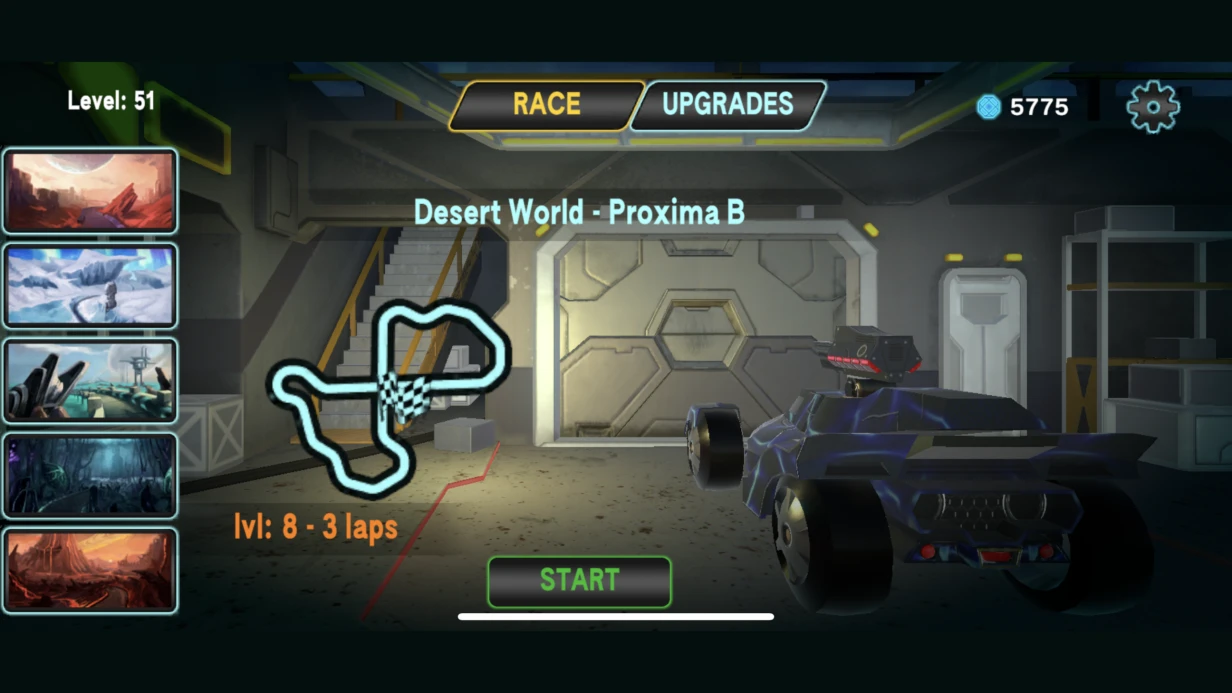
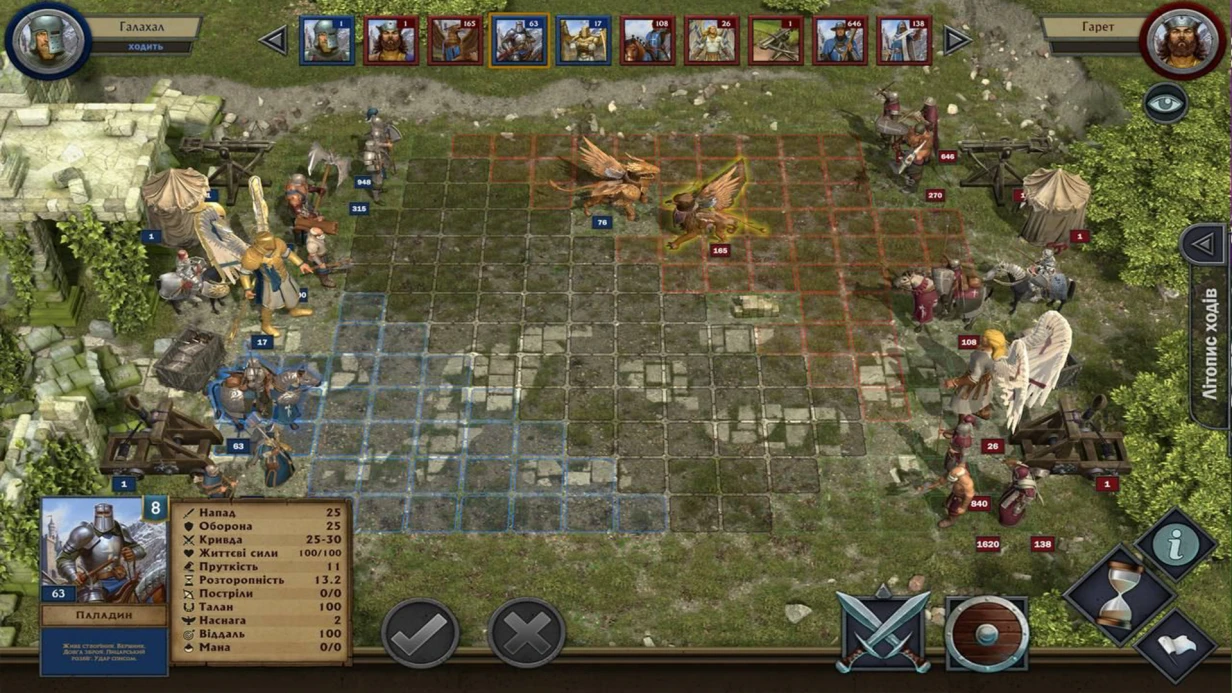
In decade-old game remaster projects, textures at 512×512, diffuse maps without metallic/roughness, meshes with 15,000 polygons — all on the Built-in Render Pipeline. Our task: migrate to URP or HDRP, raise quality to modern PBR standards without breaking gameplay and keeping system requirements reasonable. This isn't "repainting textures" — it's systematic work on technical debt in art production.
What Are the Problems of Legacy Graphics in Remasters?
The Built-in → URP transition isn't automatic. Unity's Edit > Rendering > Render Pipeline Converter converts materials from Standard to Lit (URP), but that's baseline conversion. Custom shaders in GLSL or ShaderLab without Surface Shader API need rewriting from scratch into HLSL or porting to ShaderGraph. The major loss: Unity's Standard shader in Built-in supports Specular workflow (albedo + specular + gloss), while URP Lit only supports Metallic workflow (albedo + metallic + smoothness). The specular → metallic conversion is non-trivial: old materials often had physically incorrect specular values that looked "nice" in the old renderer but wrong in PBR. The conversion must account for the dielectric F0 of 0.04; legacy specular values often deviated from physically correct PBR.
Specific situation: Stone walls had specular colour (0.2, 0.2, 0.2) with glossiness 0.3 — a soft sheen. After conversion, metallic = 0.0, smoothness = 0.3 — walls appear more matte due to the physical F0 calculation for dielectrics. Manual tweaking of smoothness and adding Detail Normal Map is needed to compensate.
How to Upscale Textures Without Quality Loss?
512×512 textures in a remaster for modern 1440p/4K monitors look poor. Options:
- AI upscaling via Gigapixel AI or Stable Diffusion with img2img (ControlNet tile). Gigapixel gives x4 without artifacts on tileable textures — 512 → 2048 in minutes. But for organics (character skin, plants) the result is unstable — requires manual touch-up.
- Full PBR rework: an artist creates a new texture set of 4 maps (Albedo, Normal, Metallic/Roughness, AO) in Substance 3D Painter, using the old texture as colour reference. This is correct for key assets but unrealistic for an entire game.
- Baking normal maps from old geometry. If low-poly and high-poly versions exist — bake in Marmoset Toolbag or xNormal with correct cage offset. Old normal maps often have UV-seam spreading issues — visible seams on edges. Proper UV mapping and cage offset are critical for normal map baking. We apply anisotropic filtering and correct MIP map generation to avoid aliasing.
Texture Upscaling Method Comparison
| Method | Quality | Time | Budget Savings |
|---|---|---|---|
| AI upscaling | Good for tiles, average for organics | Minutes per texture | Up to 80% time compared to full rework |
| Full PBR rework | Excellent | 3–7 days per character | — |
| Normal map baking | Good if geometry exists | 1–2 days per asset | Up to 50% cost |
AI upscaling is 5x faster than manual rework for background textures. For a project with 1000 textures, this translates to savings of over $40,000 compared to full manual rework. Retopology can reduce polygon count by 60% while maintaining visual quality.
When to Use Retopology vs LOD?
If the game stays on the same platform, aggressive retopology isn't needed. But if the original was made for 7th-gen consoles (PS3/Xbox 360), meshes often have non-functional topology: triangles without edge flow. When adding new animations or blend shapes — facial animation is impossible. For remasters with updated cutscenes: retopology of key characters, adding blendshape rig, setting up LOD Group with LOD0/LOD1/LOD2.
How to Rewrite Shaders for the New Renderer?
Old Particle System effects on Built-in Material need rewriting into VFX Graph (URP/HDRP). VFX Graph runs on GPU, supports lit particles with normal maps and PBR lighting — a qualitative leap for fire, smoke, magic. ShaderGraph for reworking custom shaders: old 200-line HLSL shader (Vertex-Fragment) → visual node graph. Debugging and iterating is easier, results compile for all platforms. More details at Render Pipeline Converter.
Step-by-Step Refactoring Process
- Audit and planning: assess asset volume, technical debt, target platforms.
- Material conversion: auto-convert via Render Pipeline Converter, manually tweak non-physical values.
- Texture rework: AI upscaling for background textures, manual PBR rework for key assets.
- Retopology and LOD setup: optimize key characters and objects for performance.
- Shader rewriting: port custom shaders to ShaderGraph and effects to VFX Graph.
- Profiling and optimization: monitor FPS, draw calls, memory usage.
- Release and post-release support, as with any Unity remaster.
What's Included in the Work
Our graphics refactoring service covers URP/HDRP conversion, PBR texture upscaling, shader rewriting with HLSL to ShaderGraph, mesh optimization through retopology, and VFX Graph implementation. Specifically:
- Graphics pipeline audit: determine asset volume, technical debt, target platforms.
- Material conversion: automatic + manual tweaking of non-physical values.
- Texture rework: AI upscaling, manual touch-up, normal map baking.
- Retopology and LOD setup for key characters and objects.
- Rewriting custom shaders and effects under ShaderGraph/VFX Graph.
- Profiling and optimization: check FPS, draw calls, memory.
- Support until release, 3 months post-release maintenance.
Timelines
| Task | Timeframe |
|---|---|
| Built-in → URP material conversion (auto + tweaks) | 1–2 weeks |
| Full PBR texture set rework for one character | 3–7 days |
| Retopology + UV unwrapping for a character | 5–10 days |
| Full graphics refactoring for a medium-scale project | 2–4 months |
Typical project costs range from $10,000 to $100,000 depending on asset count and complexity. For example, AI upscaling can reduce total project cost from $50,000 to $10,000.
We'll assess your project — contact us for a free consultation. Our team has 7+ years of experience in remasters and delivered 50+ graphics refactoring projects. We guarantee compatibility with target platforms and quality expectations. Get a consultation now.