

Clover POS self-service kiosk: why restaurants lose profit
Queues in a restaurant are not just an inconvenience — they are direct revenue losses. While a guest stands waiting for their order, they have time to change their mind, check out the menu at a neighboring establishment, or simply leave out of frustration.
According to our observations, every third potential order is lost at exactly this stage — the person has already walked in but never received service.
The problem isn't always about the number of staff. Even a full roster of cashiers doesn't help during peak hours: service speed hits the human factor — you need to take the order, ring up the items, and settle the guest. This is where restaurants lose profit and guests lose the desire to come back.
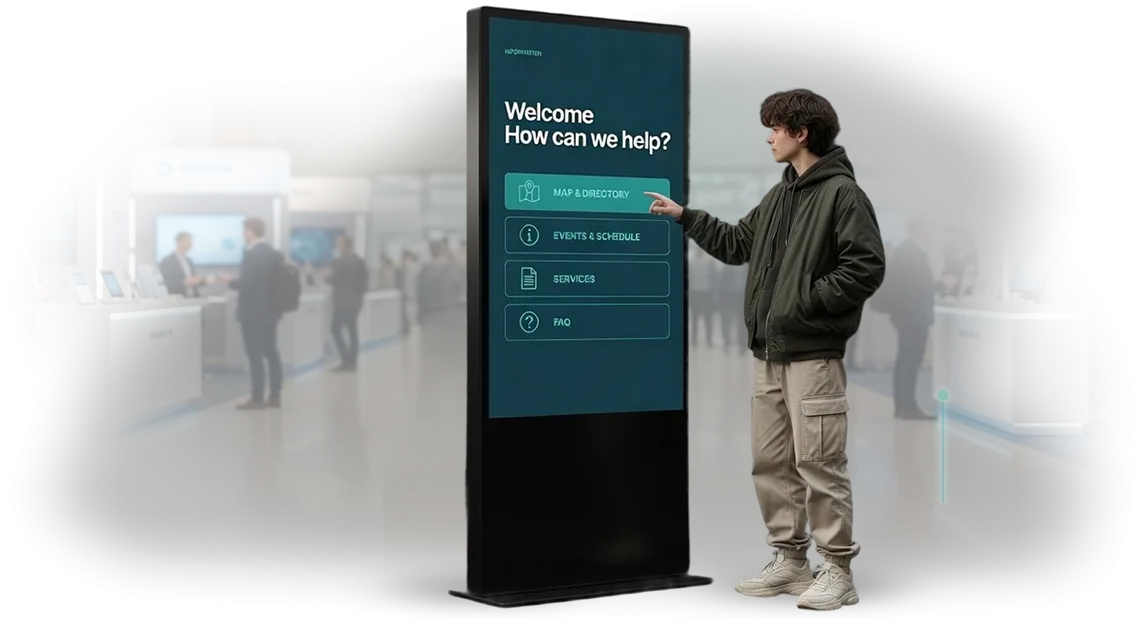
The solution that has already changed the market is the Clover POS self-service kiosk: a terminal where guests choose their dishes and pay for their order without standing in line or involving a cashier.
Self-service cuts order placement time several times over. The guest doesn't wait, and the cashier no longer becomes a bottleneck — they focus on complex questions and handing out completed orders.
For the restaurant, this means more guests served per hour, a higher average check (the kiosk can suggest add-ons and drinks), and fewer unhappy visitors who leave with negative impressions.
We see the same diagnosis in many establishments: queues are killing conversion, and the owner writes off the losses as "that's just how the food service industry works." But this isn't a death sentence — it's a matter of organizing the process properly.
Implementing a self-service kiosk on Clover POS addresses the main pain point: guests stop waiting and start ordering more. All that's left is to set up the process correctly for your format — and we know how to do it.
What self-service automation gives a restaurant
A peak-hour queue is a restaurant's biggest loss: guests leave without getting their order, and you lose revenue and visitor goodwill. A self-service kiosk removes this bottleneck and makes ordering fast, clear, and pleasant for the guest.
Here's what you get after implementation:
- Higher average check. The kiosk suggests add-ons, portion sizes, and drinks during the ordering flow. Guests spend 10–15% more than when ordering at the counter, but they perceive it as care, not pressure.
- Service speed. Ordering and payment take under a minute, even at peak hours. The line moves 2–3 times faster, and you stop losing guests to waiting.
- Staff relief. The cashier no longer stands behind the register but instead focuses on service quality, cleaning, and guest interaction. One employee handles the floor instead of monotonous register operations.
- Restaurant automation. Orders go straight to the kitchen, "human error" disappears, and accounting becomes accurate. You see real load and don't pay for extra staff hours.
- Data collection and loyalty. You know your popular items, peak hours, and repeat visits. Integration with Clover lets you award bonuses and make personalized offers — guests come back again.
We've already launched such kiosks in restaurants and cafés: owners see steady check growth and calm shifts without the chaos. You don't have to dive into technical details — we set up, connect, and support the solution.
Clover POS integration formats for restaurants
Clover POS integrates easily with self-service kiosks in various formats — and each option has its own purpose.
A countertop terminal suits an establishment with a live queue, a stationary kiosk relieves the register, and a kiosk with payment fully replaces the cashier at order intake.
The main question isn't "which kiosk to buy" but "which problem to solve." We pick the format based on the size of your dining area, guest flow, and average check so the equipment pays for itself in a reasonable time and doesn't sit idle.
| Format | Who it's for | What it gives the customer |
|---|---|---|
| Countertop terminal | Coffee shops, cafés with counter pickup | Speeds up ordering and card payment, takes up minimal space |
| Stationary self-service kiosk | Fast food, burger joints, canteens | Relieves staff workload, increases average check through upselling |
| Kiosk with payment | High-traffic locations, food courts | Guests select, pay, and receive their order without a cashier |
In all three options, orders go straight into the accounting system — you see revenue, popular items, and service speed in one window. Staff don't need retraining, and the menu is updated centrally.
We'll help you choose the format, supply the equipment, and configure the menu to your prices and promotions. One call — and within a few days the kiosk is taking its first orders.
Project stages: from brief to kiosk launch
We value the restaurant owner's time, so the self-service kiosk development process is as transparent as possible. You always know what stage the project is at, what happens next, and which decisions require your input. Every step ends with approval — no surprise revisions at the end.
- Brief and analytics. We study your menu, guest flow, and typical ordering scenarios. As a result, you get a preliminary estimate of timelines and budget.
- Interface prototype. We show how guests will choose dishes, place orders, and pay. You approve the logic before development begins.
- Design and adaptation. We tailor the interface to the restaurant's brand identity: large buttons, clear categories, dish photos. This speeds up service and boosts the average check.
- Development and integration. We connect the kiosk to your POS system, such as Clover POS, so orders go straight to the kitchen and payments process without errors.
- Testing. We verify ordering scenarios, discounts, promotions, and payment processing. You can try the interface yourself in test mode before launch.
- Launch and training. We install the kiosk, configure the equipment, and hand over instructions to staff. Launch typically takes a few days.
- Post-launch support. We monitor performance, update the menu and features, and help with changes. You're never left alone with the hardware.
What's included in the self-service kiosk delivery
A self-service kiosk delivery is a ready-made turnkey solution, not a box with a device. We deliver the equipment, configure the software, mount the stand, and hand you a working tool for boosting your average check and relieving cashiers.
The package includes:
- A kiosk with a durable, vandal-resistant enclosure — it withstands visitor traffic and isn't afraid of wet cleaning. The device is built for daily use on the floor.
- Software with an interface tailored to your menu — guests select dishes in 3–4 taps, see photos and ingredients, and pay by card. Integration with the POS (including Clover POS) and the loyalty program — no manual order entry.
- Installation and commissioning — we place the kiosk in a convenient spot, connect it to the network and the register, and test all ordering scenarios.
- Staff training — waiters and administrators get short guides: changing prices, exporting reports, handling common situations.
- Warranty and service maintenance — if something breaks, we quickly replace the equipment or come out for repairs. You're never left with a non-working kiosk.
- Technical support and updates — we help remotely and refine the interface for new items and promotions.
This eliminates endless coordination with multiple contractors: one contract — and within 2–3 weeks the kiosk is taking its first orders.
Case study: a restaurant chain increased profits by 27%
A fast-food restaurant chain came to us with a typical pain point: peak-hour queues and an average check that wouldn't grow. We proposed self-service kiosks on Clover POS — the same POS already in use across their locations.
No staff retraining or accounting process changes were needed: the kiosks simply became an additional ordering channel.
How the solution was built
The kiosks took over routine orders. Guests choose add-ons, portion size, and drinks themselves, while the screen suggests upsells: add cheese or upsize the portion. In the first month, the average check grew by 18% — driven precisely by these automatic prompts.
We first deployed a kiosk in one restaurant, fine-tuned the scenarios, then rolled the practice out across the whole chain. Within four months, the equipment and integration had fully paid for themselves.
The chain's profit grew by 27%, and the queue at the register during peak hours shrank by nearly half.
Results
- Average check grew by 18% thanks to kiosk upsells.
- Payback: 4 months.
- Chain profit: +27%.
- Repeat orders increased by a third.
The chain owner says: "We were afraid automation would scare guests off.
In reality, the kiosks turned out to be more convenient: guests don't stand in line, and we earn more." The same result is possible at your restaurant — get in touch, and we'll show you a payback calculation on your numbers and implement kiosks turnkey.
How to choose the right kiosk format for your establishment?
The right kiosk format is determined not by price but by your establishment's goals.
Before ordering equipment, it's worth answering four questions: how many guests pass through your dining area, how much space the service zone has, what your brand style is, and what budget you're willing to allocate for automation.
The answers immediately strip away unnecessary options and help you understand which kiosk will deliver real value.
Start with space and traffic. In a compact café with a single register, a countertop kiosk is more convenient — it doesn't take up floor space and sits easily next to the bar.
In a spacious fast-food restaurant where a queue forms at peak hours, a floor-standing unit with a large screen is the better choice: it absorbs the main load and speeds up service. The key benchmark is that guests don't crowd around the entrance or block the aisle.
Next, assess the concept. A self-service kiosk should look like part of your establishment, not a random device. For fast food, speed and large buttons matter; for a coffee shop, a clean design that complements the interior; for a family café, a clear menu with photos.
The right format preserves the atmosphere while raising the average check, because guests calmly pick additional items without pressure from a cashier.
Budget is the third criterion, but you shouldn't count only the purchase cost — calculate payback too. A countertop kiosk requires less investment and works well for a first rollout; a floor-standing unit costs more but returns investment faster with high traffic.
We help you choose the option that fits your reality and integrate it with your POS system, including the popular Clover POS solution, so orders are accepted without delays and go straight into accounting.
The main thing is not to overpay for features you won't use. Tell us about your establishment, and we'll propose a format that fits your space, handles your traffic, and pays off in a reasonable time.
FAQ: cost, timelines, and reliability
Before ordering a self-service kiosk, three questions usually come up: how much does it cost, how quickly does it pay off, and what happens if the hardware breaks. We answer honestly — based on typical projects, not marketing promises.
We tailor the configuration to your needs, including on popular platforms like Clover. That's why the estimate has no unnecessary line items: you pay only for the features you use — order intake, payment, loyalty program, and integration with your POS.
Timelines are predictable: a standard project takes 3–4 weeks from brief to a working kiosk.
How much does a self-service kiosk cost?
The cost depends on the depth of integration and the enclosure design. The base turnkey option — cost calculated after audit, including equipment, software, installation, and setup. We prepare the estimate after the brief and lock the price in the contract — no hidden surcharges.
If you already have the equipment, we'll do just the software and integration — that's more affordable.
What are the implementation timelines and when will the kiosk pay off?
On average, we launch a kiosk in 3–4 weeks. Payback depends on guest flow: at 50–100 orders per day, the kiosk pays off in 6–8 months.
After launch, you see the average check and popular items in the control panel — this helps grow revenue without extra costs.
What happens if the kiosk breaks down or the menu needs to change?
We provide a 12-month warranty on the equipment and work. If hardware fails, we repair or replace it within 2–3 business days, and provide a replacement kiosk while repairs are underway.
You update the menu and prices yourself through the personal account — changes appear on screen immediately or on a schedule.
Get a cost estimate for your kiosk in 1 day
Fill out the form — and within one business day you'll receive an estimate you can show management and budget for right away. We'll gather all the numbers for your location: guest count, average check, dish list, and POS integration requirements.
What you get after submitting your request:
- Consultation: we review your task and advise which kiosk format will pay off faster — freestanding, wall-mounted, or with QR-code payment.
- A commercial proposal with a fixed price: you know the final budget before starting, with no hidden fees or "pay more later."
- Interface mockup: you see what the kiosk will look like, which dishes and categories guests will see, and how easy ordering will be.
- Launch plan: stages, timelines, and areas of responsibility — it's clear who does what and when, and when the kiosk goes live.
- Benefit assessment: we estimate how the kiosk will shorten the queue, increase the average check, and reduce staff workload.
- Test prototype: a mockup you can show your team and, if you like, test with real guests before final development.
We work with various order management systems — from simple registers to popular platforms like Clover POS — so your kiosk will fit right into current processes without requiring equipment replacement.
After the estimate, you can calmly compare options, plan the budget, and launch the kiosk without missing deadlines. Leave a request — we'll discuss your location and prepare a proposal tailored to you.