

Reduce Aircraft Downtime with AR for Aerospace Maintenance
Every hour an aircraft sits on the ground, the airline loses money — not just from that flight, but from the domino effect of delays, rebookings, crew schedules and passenger trust.
Unplanned aircraft downtime is one of the most expensive problems in aviation, and it often comes from small inconsistencies in how complex procedures are performed.
Engine servicing and line maintenance are high-pressure jobs. Technical documentation runs thousands of pages, and two experienced engineers can read the same diagram differently. Maintenance errors are often the result — not lack of skill, but unclear instructions.
A missed torque value or a wrong connection point turns a routine check into a costly do-over, sometimes grounding the aircraft again.
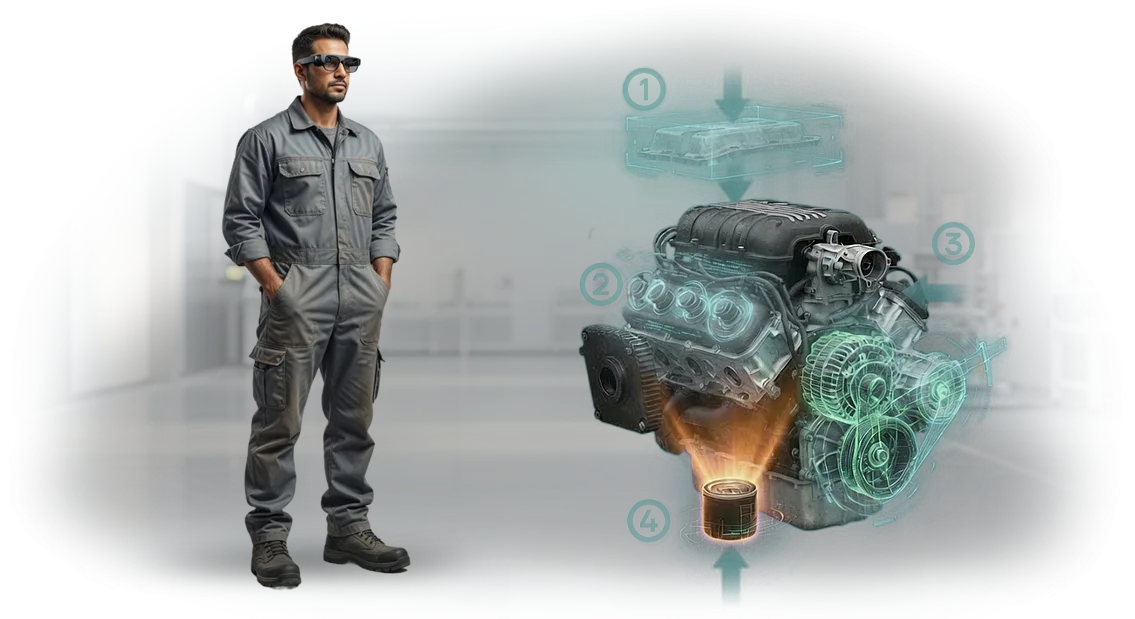
AR for aerospace maintenance replaces guesswork with a guided visual process.
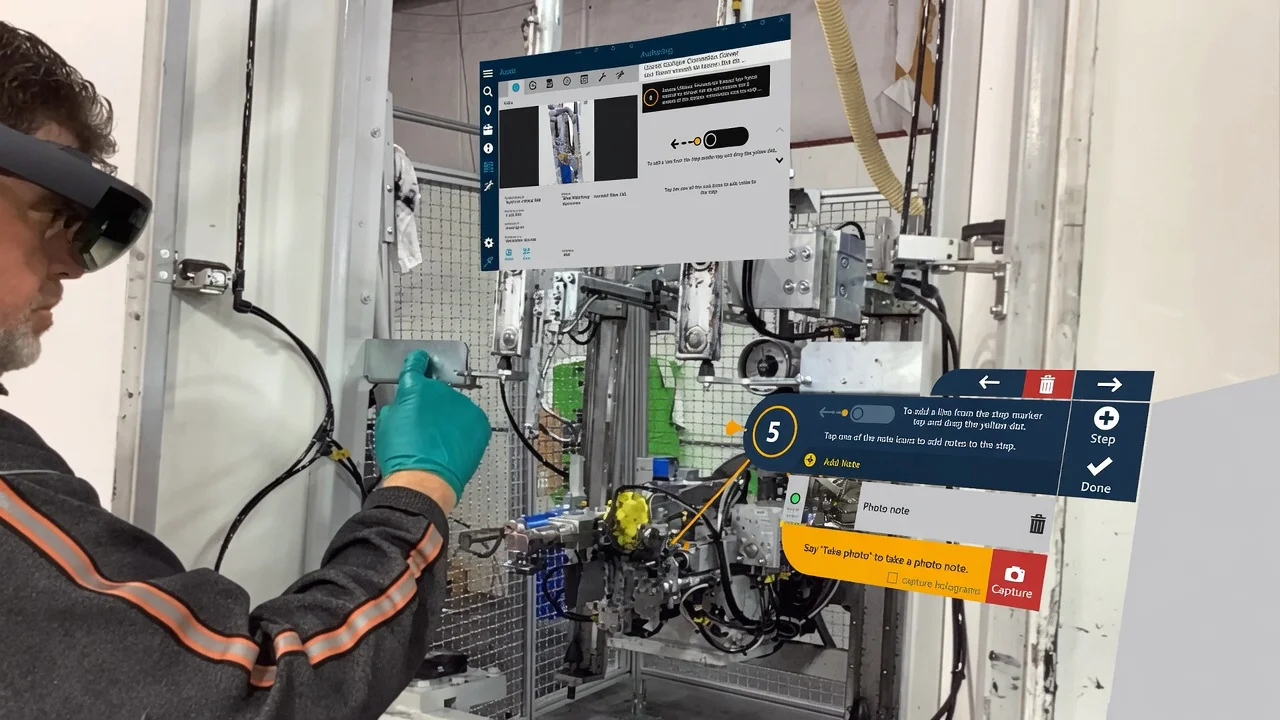
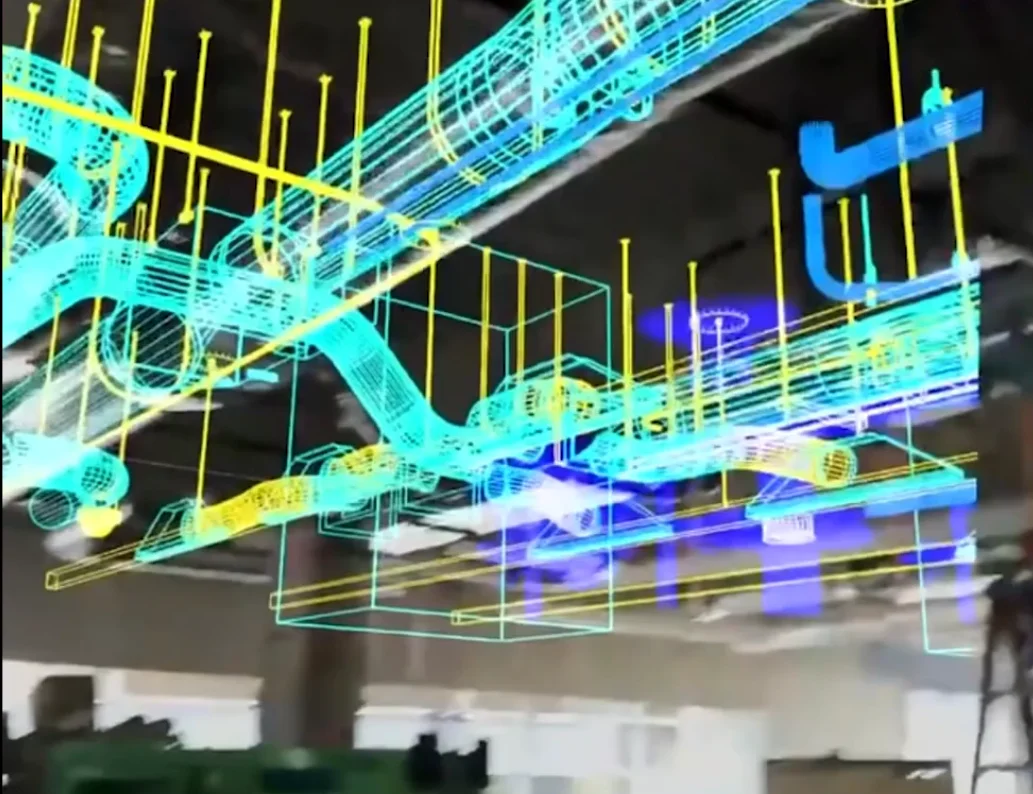
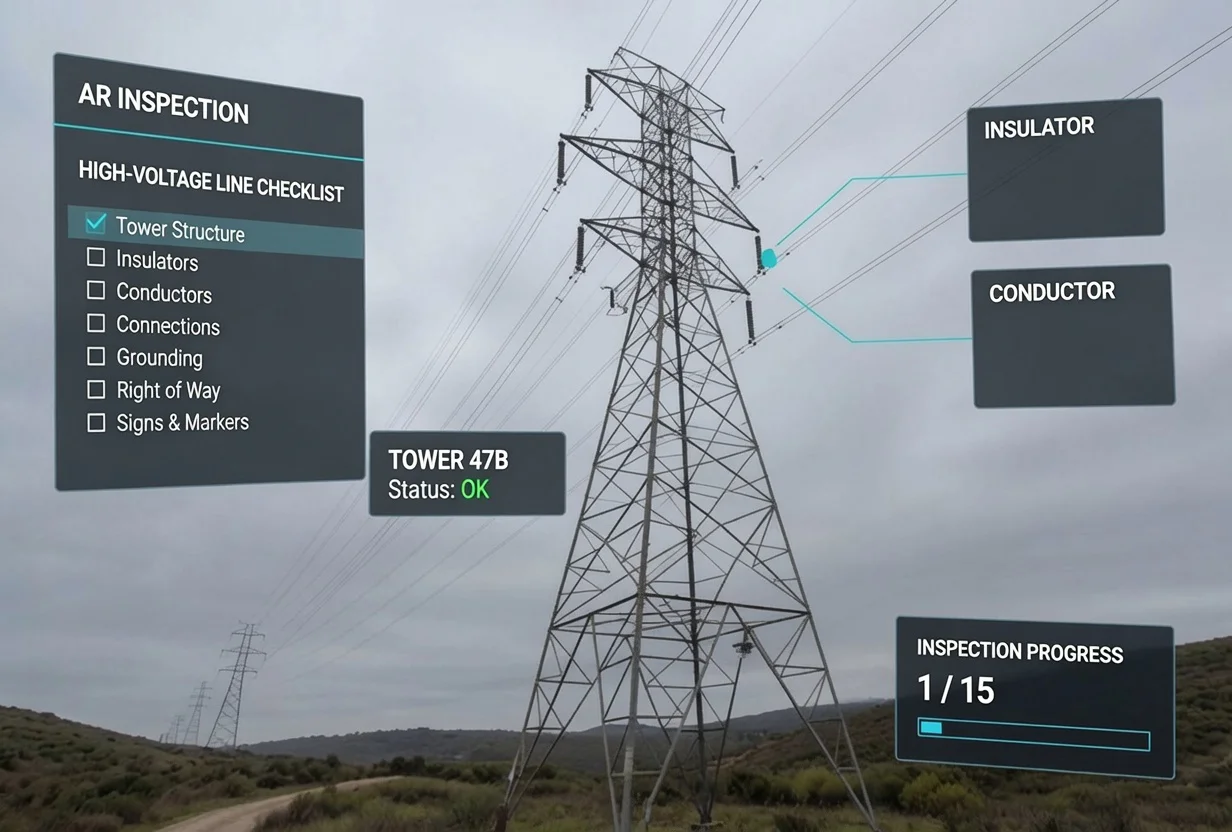
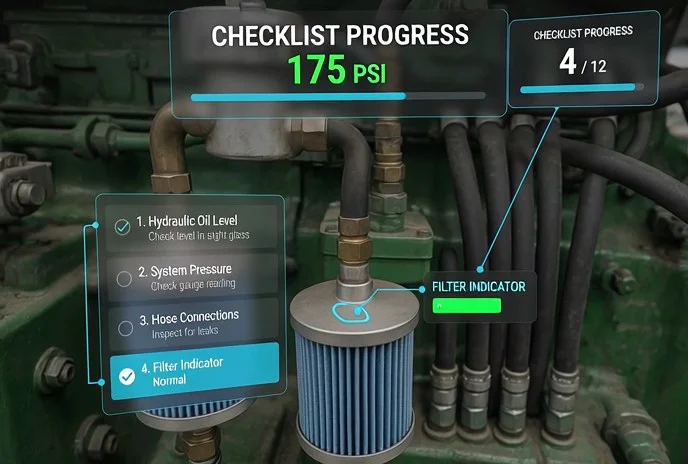
Our team designs augmented reality instructions that attach digital steps directly to the physical equipment: the technician sees exactly which fastener to touch, which cable to unplug, which reading to take. Maintenance becomes consistent regardless of who is on shift.
The bottom line is less aircraft downtime and a more predictable maintenance pipeline. Procedures take less time, errors are caught before they create problems, and training new staff gets faster because the knowledge is embedded in the instruction itself.
That means fewer callbacks, faster turnarounds and a maintenance team that works like one. We deliver exactly that — AR for aerospace maintenance built for your equipment and your team.
What Operators Gain from Guided Visual Workflows
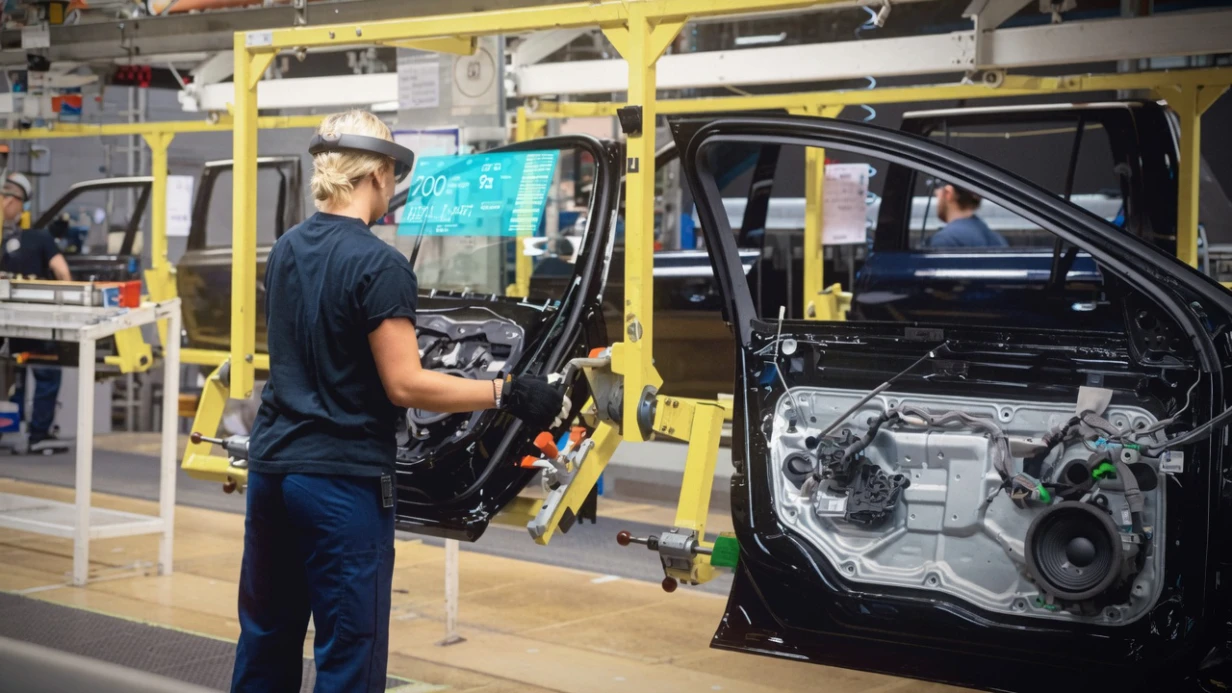
Guided visual workflows turn complex maintenance procedures into a simple sequence of on-screen steps. Instead of flipping through manuals and deciphering diagrams, the technician sees exactly what to do next—on the actual equipment.
In aerospace, where procedures often span hundreds of steps, manufacturers such as Boeing have shown that visual guidance reduces errors significantly. That means fewer mistakes, less guesswork, and a faster path to full competence.
With guided workflows, operators gain:
- Maintenance efficiency – complete tasks in fewer passes because every step is verified visually before moving on.
- Error prevention – on-screen overlays reduce skipped actions and incorrect torque values, so rework and safety risks drop.
- Knowledge transfer – inline expertise from senior engineers is captured directly in the workflow, making it available to every shift.
- Training time – new technicians ramp up in days instead of months, with the system acting like a mentor beside them.
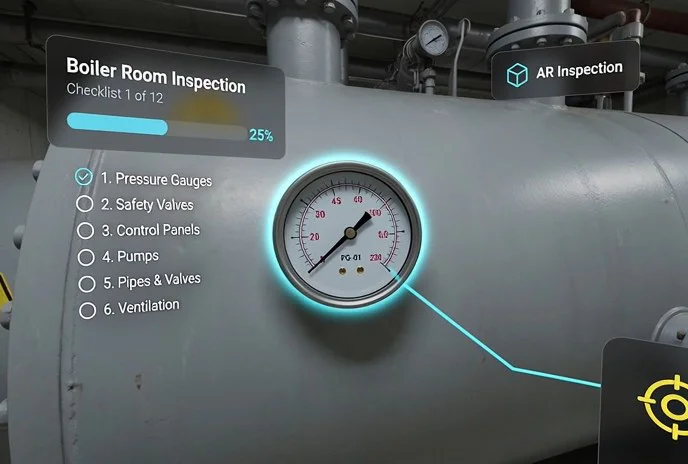
- Inspection quality – visual checklists ensure every critical point is covered consistently, with proof of completion for each check.
- Audit-ready records – each session logs exactly what was done and found, giving regulators a clear digital trail without extra paperwork.
For aerospace operators, this translates into predictable maintenance schedules, lower operational costs, and greater confidence in every release.
Our team builds these workflows with professional-grade AR tools, so you get a solution that fits seamlessly into your existing maintenance process—and pays for itself many times over.
Aerospace Operators: Choosing the Right Guidance Format
Every aerospace operator must choose a guidance format that fits the task. Heavy maintenance, line maintenance and training have different constraints: hangar time, access, skill levels and site connectivity. No single format serves all three; the table below compares the common formats.
| Format | Heavy maintenance | Line maintenance | Training & onboarding |
|---|---|---|---|
| Video | Good for familiarization, hard to update | Too slow on ramp; crews need instant answers | Useful pre-reading, passive |
| 3D overlay | Good for disassembly study, but forced screen-to-part switching | Not practical on a small screen beside the aircraft | Shows systems, but no real practice |
| AR | Step-by-step on the actual part, fewer errors | Shows next action directly on equipment | Practice on real asset with live cues |
AR is the only format that keeps hands and eyes on the actual part while presenting the next step in context. This matters under site constraints — tight bays, noisy ramps, unstable Wi-Fi — because the technician never switches between manuals, screens and the aircraft.
For training, AR turns the aircraft itself into the simulator, so onboarding is faster and line readiness comes sooner.
As IATA points out, procedure comprehension is central to maintenance reliability. Choosing AR for complex tasks and reserving video for pre-training lowers risk per maintenance hour and makes guidance match the way technicians actually work.
Step-by-Step: How a Typical Project Unfolds
We break the project into clear stages so you always know what happens next and what we need from you. You stay in control from the first call to post-launch support, and every stage ends with something you can see and approve.
- Brief and requirements gathering. We start with your maintenance workflow, existing manuals, and the tasks where AR will help most. Our engineers document the exact steps, tools, and environment. You get a clear picture of what will be digitized.
- Content plan and storyboard. We turn your procedures into a visual script with every step, warning, and check. You review it in plain language, not code, and approve before any building starts.
- Approval and adjustments. You receive a detailed plan with timelines and costs. We adjust anything that doesn't match your reality, so the final product fits your team's maintenance routine.
- Prototype and pilot deployment. A small pilot runs with a few technicians on real equipment. We measure how it affects speed, errors, and confidence, then refine before the full rollout.
- Full rollout and integration. We deploy AR across your sites, connect it to your existing documentation, and train your team to use and update the content themselves.
- Post-launch support. We monitor performance, collect feedback from your engineers, and deliver updates as your procedures evolve. Your AR library stays accurate and useful.
What Is Delivered in the Rollout Kit
The rollout kit is your team’s single source of truth for AR maintenance. Instead of collecting pieces from different contractors, you get one complete package that covers content, software, training, and documentation.
Here is what we prepare and hand over:
- Ready AR instruction set. Instructions for the specific aircraft components and maintenance procedures you specify. Each task contains visual cues and step-by-step guidance, so technicians know exactly what to do next.
- Access to the software platform. Your engineers open, update, and manage instructions from one place. No additional servers or complex integrations are required on your side.
- Authoring tools for your trainers. A simple editor lets your internal staff create new instructions or adapt existing ones without programming skills. This keeps the content relevant as your equipment changes.
- Hands-on user training. We teach your technicians and instructors on real equipment, using the actual AR instructions. This shortens the learning curve and reduces mistakes during the first live operations.
- Complete handbook and documentation. User manuals, administrator guides, troubleshooting instructions, and system maintenance checklists — everything you need for audits, onboarding, and everyday work.
- Deployment support. Our engineers stay with you through the first weeks after launch, so you have a direct line if anything needs adjusting.
With this kit, your maintenance, training, and quality teams all work from the same standard. The result is faster task completion, fewer errors, and a transparent process that is easy to demonstrate during inspections.
Case: Faster Turnaround at a Regional MRO Site
Для регионального MRO-центра, обслуживающего самолёты бизнес‑авиации, AeroFix MRO, узким местом были инструкции по замене агрегатов: техники сверялись с бумажными схемами, тратили время на поиск нужного раздела, а стажёрам требовался постоянный контроль старших коллег.
Ошибки при сборке приводили к повторным работам и сдвигу графика обслуживания. Мы внедрили AR-инструкции для пяти самых частых операций — техник видит порядок действий прямо на оборудовании, с подсветкой точек крепления и подсказками по допускам.
Уже через три месяца время ремонта одного узла сократилось с 5,5 до 3,5 часа (минус 35%), а доля ремонтов с первого раза выросла с 78% до 94%. Количество переделок снизилось в два раза — ангар стал реже простаивать, а вылеты перестали задерживаться из-за технических причин. Загрузка ангара выросла, плановые работы стали заканчиваться вовремя.
Что говорят техники и владелец
Техники быстро приняли новый формат: новички выполняют операции без опасения перепутать порядок, а мастера тратят меньше времени на объяснения.
Руководитель площадки отметил, что спорные моменты решаются без звонков инженеру, а ввод в должность новых сотрудников сократился с двух недель до трёх дней. Все 14 техников участка дали положительную оценку — никто не попросил вернуться к бумажным инструкциям.
По расчётам центра, экономия за год превысила $180k — с учётом снижения простоев, сокращения переделок и ускорения сертифицированных работ. После теста на одном участке заказчик расширил проект на соседний цех и включил AR-инструкции в стандарт обслуживания.
Which Guidance Format Suits My Operation Best?
There’s no single perfect way to deliver AR for aerospace maintenance — the right choice depends on how your operation actually works. When choosing format, look at three things first: fleet size, site constraints, and the experience level of your technicians.
These factors matter more than any feature list, because they determine whether the tool gets used on the floor or stays in the hangar.
Fleet size shapes the scale of the solution. If you maintain only a few aircraft or line-replaceable units, a simpler mobile AR guide can eliminate paper lookup and cut training time.
A large fleet with several models, on the other hand, benefits from AR that adapts to each variant and keeps every technician on the same updated procedure — without re-briefing crews one by one.
Site constraints are about the physical environment: how much space you have, lighting, noise, safety rules, and network reliability. In tight or restricted areas, hands-free AR keeps both hands on the job and reduces the risk of missing a step.
If coverage is weak on the apron or in the hangar, an offline-capable format saves you from interruptions at the worst moment.
Technician experience also plays a central role. New team members often need step-by-step visual overlays that guide them through each torque value and inspection point. Veterans just want a quick checklist and fast navigation to the next task.
A good format adapts to both — it should accelerate juniors without making experienced technicians feel held back.
Once you evaluate your fleet, site, and team, the best path becomes clear. Our engineers start with this assessment and only then recommend a format that fits your workflow — not a generic demo. Send us a few details about your operation, and we’ll map the right approach together.
Frequently Asked Concerns Before You Start
Команда техобслуживания по понятным причинам осторожна с новыми инструментами: регламенты, допуски и безопасность полётов не терпят экспериментов. Поэтому мы не заменяем процессы, а усиливаем их — AR-инструкции встраиваются в уже утверждённые процедуры.
Впишется ли это в наши регламенты?
Переписывать ничего не нужно: берём ваши технологические карты и превращаем в пошаговые AR-сценарии. Специалист видит следующий шаг прямо на узле, система фиксирует выполнение каждого пункта.
Безопасно ли для авиационной техники?
Управление голосом, внимание на объекте, а не на экране. Требования к допускам сохраняются, каждое действие подтверждается и остаётся в журнале.
Сколько времени на обучение?
Достаточно 2-3 часов на группу: интерфейс повторяет привычные карты и чек-листы, система подсказывает следующий шаг.
Что будет после запуска?
Не исчезаем после сдачи: обновляем сценарии, обучаем новых сотрудников, поддерживаем с гарантированным временем реакции. Условия — в договоре.
Вырастет ли решение с парком?
Новая модель техники добавляется в библиотеку сценариев без остановки процесса. Рост числа пользователей не требует отдельного IT-проекта.
Каждый проект заканчивается измеримым результатом — сокращением времени операций и ошибок. Задайте вопросы до старта: ответим предметно.Request a Feasibility Study on Your Site
Before investing in AR for aerospace maintenance, you need to know whether it will actually work for your operation. A feasibility study answers this with a clear yes or no — based on your real site, equipment and existing workflows. Many teams hesitate because AR feels new; the study turns that uncertainty into concrete facts.
When you contact us, we start with a short call to understand your goals. Then our engineers assess your maintenance environment on-site or remotely, and prepare everything you need for an informed decision. We focus on one practical question: where AR can save you the most time and money.
Here is what you receive from the feasibility study:
- A feasibility study tailored to your site and specific maintenance tasks
- One sample AR instruction created for a real task on your equipment
- A cost estimate and implementation timeline for your project
- A direct quote with no hidden costs or obligations
- A clear recommendation on where AR delivers the greatest value
- A follow-up call to walk you through the results and next steps
With these materials, you can evaluate AR in practice before making a larger commitment. You will know exactly what to expect, how much it costs, and how quickly you can start.
Request your feasibility study today — the call takes 30 minutes, and the study helps you avoid expensive mistakes.