

Why You Lose Leads Without a 3D Model of Your Conference Stage
Every day without a virtual exhibition format, you lose leads. A client who cannot evaluate your conference stage remotely opens a competitor’s website—and that competitor already shows a 3D showroom with a view of the hall, seating, and technical zones. The decision-maker decides within minutes, and you simply have no chance to catch up.
This applies not only to international forums. Regional business conferences, corporate events, partner meetings—everywhere, the client wants to see the stage before signing a contract.
Photos and static drawings do not convey the scale, there are not enough viewing angles, and a busy executive has no time for lengthy approvals. If the necessary information is not available immediately, attention shifts to an alternative.
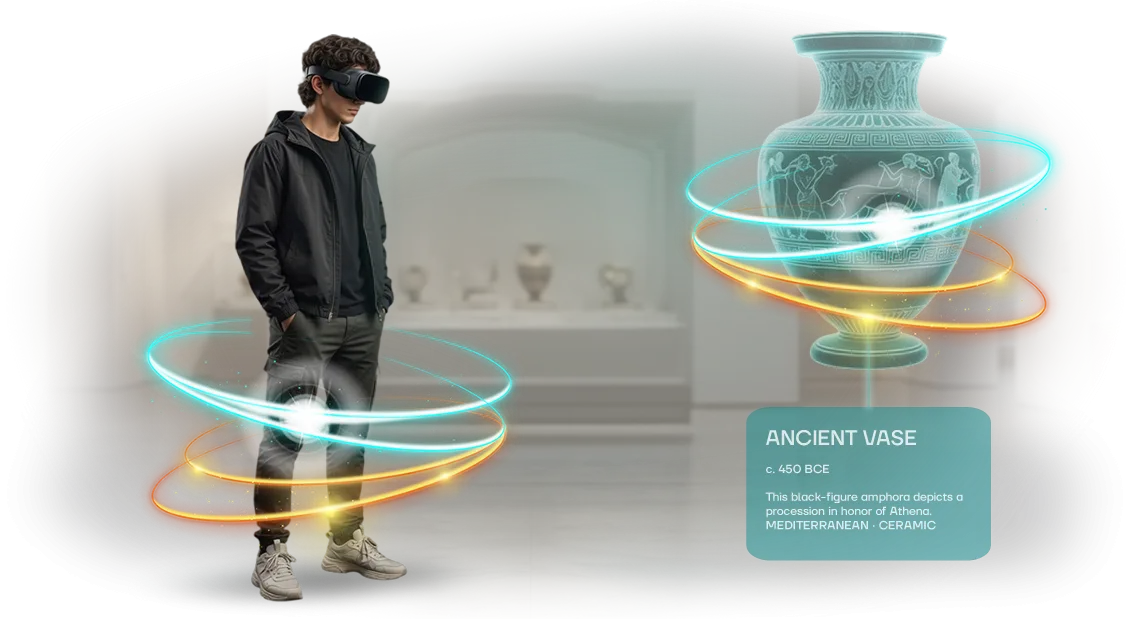
A virtual exhibition solves this: a 3D model of the conference stage gives a full sense of presence. The client “walks” through the hall, assesses the placement of speakers and audience zones, and sees what the event will look like. This removes the main objections even before calling a manager and speeds up decision-making.
A 3D showroom does not replace a live event—it enhances it. It is used at the stage of selling the venue, in mailings and on the website, and on the day of the conference as navigation for guests.
Participants familiarize themselves in advance with the location of the stage, meeting rooms, and coffee breaks, spend less time searching, and perceive the program better.
The result is measurable: fewer lost leads, faster approvals, more repeat contracts for the next year. It is an investment that pays off with the very first major client, and we help implement it turnkey—from measuring the stage to publishing the finished virtual tour.
What You Get from a Virtual Exhibition
A virtual exhibition is not just a digital copy of a physical event, but an independent sales channel. It brings together attendees, speakers, and exhibitors in one space, where everyone sees your brand and can interact with the product. Such an exposition works before, during, and after the event.
Unlimited Audience Reach
Guests join from any city or time zone—without travel or business trip costs. For you, this means an increase in visitor numbers many times over compared to renting a standard hall.
By adding a virtual conference stage for live streams, you will attract even those who did not plan to participate.
Memorable Brand
The space is designed in your corporate style, and interactive elements attract more attention than a static stand. Visitors spend more time inside the 3D showroom, exploring products and demonstrations.
As a result, the brand is remembered better than competitors and receives natural mentions on social media.
A Steady Stream of Leads Without Fuss
Inside, request forms, exhibitor business cards, and contact buttons work—contact information is collected right while viewing. The organizer sees which stands attracted attention and gets a breakdown of visitor behavior.
This allows for quickly passing interested contacts to the sales department and increasing the return from the exhibition.
Savings on Event Organization
You do not need to pay for venue rental, logistics, installation, or printing materials. A virtual exhibition is cheaper than a physical one and pays off through a flow of leads. Plus, the 3D scene can be reused: run the event again with new stands added—without new rental costs.
3D Formats of Virtual Exhibitions for Your Task
The same product works differently in a virtual tour, a 3D showroom, and an interactive conference stage. The difference is in the goal: one format sells, another informs, the third gathers an audience around an event. We choose a format for your task, not force your task into a template.
We compare virtual exhibition formats using simple criteria: who your audience is, what they need to do, and what result this brings to the business. Below are typical scenarios; we will clarify details at the brief.
Scenarios for Your Tasks
| Format | For whom | What it provides |
|---|---|---|
| Virtual tour | Manufacturers, dealers, museums | A review in the real environment without logistics—the visitor studies exhibits at their own pace. |
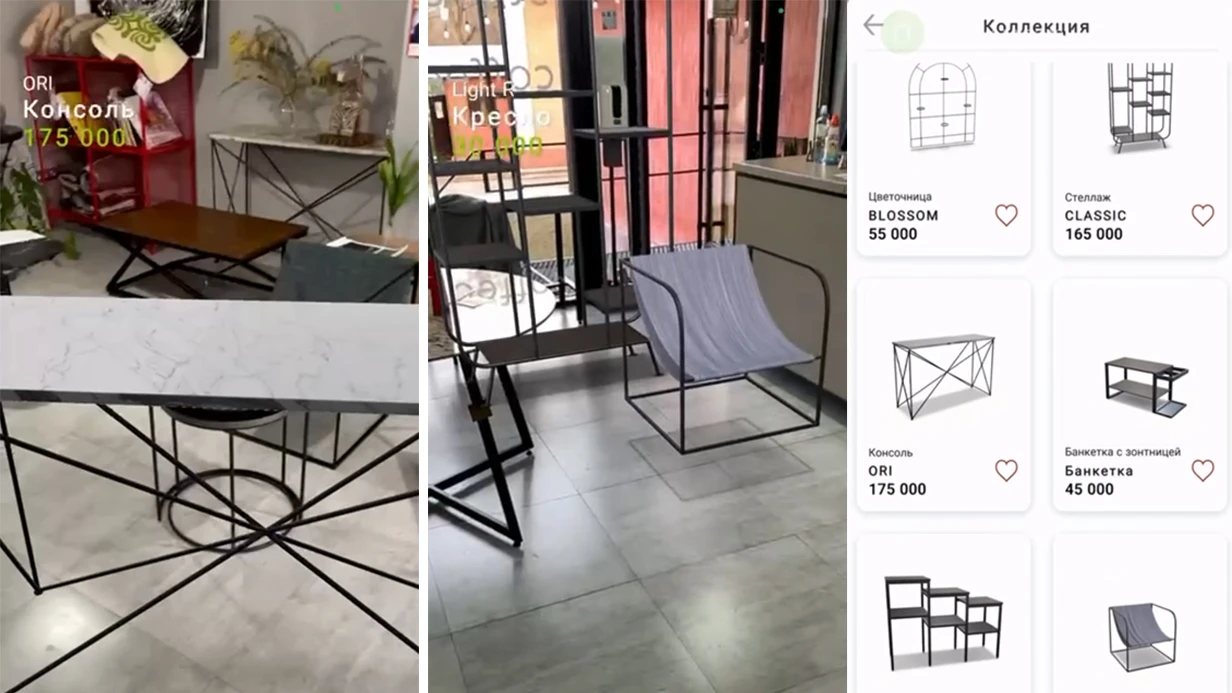
| 3D showroom | Online stores, real estate | An interactive showcase with option customization—speeds up selection and reduces returns. |
| Interactive conference stage | Conference and exhibition organizers | A live stage with speakers and chat—holds attention and measurably engages. |
Formats are often combined: a virtual tour leads to a 3D showroom, which then becomes a platform for a conference stage. The visitor follows a single path from the first click to a request, without leaving for third-party sites—this is how conversion grows.
We will start with a short consultation: you name the goal—drive traffic, showcase a product line, or host a broadcast—and we will propose a format that solves it on time and within a clear estimate.
How Virtual Exhibition Development Works
We have structured the process so that you see the result at every stage and can influence the project before the final launch. Below are the main steps a virtual exhibition goes through, from the first meeting to handing you the finished platform.
- Brief and immersion in the task. We study your product, audience, and goals: what visitors should see and what action to take. You receive a clear technical specification and an estimate with no hidden work.
- Concept and prototype. We define the structure of the space: halls, routes, interactive zones. You approve the layout and the visitor’s behavior scenario before development begins.
- Design approval. We create the visual style and show renders of key locations. Revisions are made before the final build, so you see the atmosphere of the future exhibition in advance.
- 3D space development. We assemble virtual halls, navigation, and animations. We use professional tools—you get stable performance on any device without delays.
- Content filling. We upload your descriptions, photos, videos, and documents. We set up request forms and advertising zones so the exhibition immediately brings in client inquiries.
- Testing and launch. We test scenarios on different screens and publish the project on your domain. You receive a link and instructions for staff and guests.
- Support and development. We update content, add new halls, and monitor stability. If needed, we scale the exhibition for new business tasks.
Each stage is documented in the contract with clear deadlines and areas of responsibility. You always know what is happening with the project and when the next result will be ready.
What Is Included in the Virtual Exhibition Deliverable
You get not just a 3D model of the conference stage, but a ready-to-use online product.
We custom-build the scope of work and the delivery package for your task, from the architecture of the space to the visitor flow scenario, so the result is immediately used in marketing, sales, or at the event.
The delivery package includes:
- 3D models and scenes. Exhibits, stands, and the conference area are rendered in the unified style of your brand. The models are ready to be shown on the website, on social media, and on event screens.
- Scenario and navigation logic. We design how a visitor enters the hall, what they see first, and where the route “leads” them—this holds attention and nudges toward the target action.
- Integration with your systems. The exhibition can be connected to your website, customer management system, or product catalog: requests, contacts, and inquiries immediately go into your team’s workflow.
- Instructions for your staff. Clear materials for launching and managing the virtual space—no technical specialist needed for every change.
- Technical support and updates. We stay in touch after launch: we help add exhibits, change texts, and expand the exhibition for new tasks.
- Training launch. We conduct a short session for your team so you can independently give tours and analyze visits.
This is a full-fledged tool for your marketing and sales departments. Instead of one-off mockups, you get an asset that works for brand awareness and revenue: visitors see the product in a favorable light, and managers see ready-made requests.
Case Study: How We Ran a Virtual Conference
For Digital Summit—an international conference on digital technologies—we built a virtual venue that replaced the offline event for 2 days.
The client needed to bring together scattered talks, stands, and networking in one space without losing participants accustomed to the live format.
The problem was that most online events of that time attracted only half of the registered guests: people left after the first talk, never reaching the exhibition area.
We approached it from the perspective of the scenario: a three-dimensional hall, navigation like in a real lobby, avatars, and the ability to approach any stand.
What We Achieved
The conference was attended by 12,400 participants, of whom 8,700 spent more than an hour in the space. 3,200 left contacts at the stands, and 1,500 scheduled meetings with exhibitors—2.5 times more than at the offline event the year before.
For the client, leads became the key metric: the next day, 68% of guests opened emails with offers from exhibition participants.
The venue budget turned out to be three times lower than full offline organization—by eliminating hall rental, logistics, and printed materials. The savings, calculated after an audit of the full offline costs, came with twice the reach.
The client’s team did not handle the technical side: we took care of preparation, support during broadcasts, and a report on guest behavior.
Six months later, the client returned with a new product line—it became a system: one virtual format gathers an audience that no single hall could have housed.
How to Choose the Right Format for Your Task?
Choosing a format starts not with technology, but with the goal: what you want to get from the project. If the task is to show a product or space from a convenient angle and give visitors the opportunity to “walk” through the hall on their own, a compact 3D showroom is enough.
This option works like a catalog: it is always available via a link, does not require your team’s presence at the moment of viewing, and is perfect for continuous use.
If, on the other hand, you need live audience engagement—event announcement, live broadcast of the stage, communication with speakers or sellers—look toward a full-scale virtual exhibition. This is already an event: with a program, schedule, meeting zones, and visitor activity tracking.
It is for the conference stage that a 3D model brings together the speaker’s presentation, visual brand accents, and interactive navigation in a single space, so guests perceive what is happening holistically and stay at the event longer.
The main selection criterion is which business result you want to measure. A showroom is convenient when product recognition and constant access to information matter. An exhibition is when you need engagement, leads, and repeated contacts with the audience.
For a conference stage, the key factors are visual appeal and convenience for speakers: the easier it is for a guest to join the viewing, the higher the reach and trust in your brand.
The optimal format becomes clear after a short brief: we clarify who your audience is, what usage scenario is expected, and how long the project should run.
Based on this, we select a solution that solves your task without overpaying for unnecessary functionality—and you get a tool that delivers measurable results.
This logic has already been confirmed by dozens of projects, so you don’t need to understand the details; simply state your goal—we’ll handle the rest.
Frequently Asked Questions About Virtual Exhibitions
Clients most often ask the same thing: how much does a virtual exhibition cost, how quickly can it be launched, what equipment do visitors need, and is it difficult to implement. We answer the main objections—briefly and to the point.
How much does it cost?
The price depends on the scale: a showcase with dozens of exhibits or a showroom with several halls and interactive features—the exact cost is calculated after an audit. We fix the estimate after the brief and do not change it, even if you want to refine details along the way.
How quickly will it be created?
A standard project takes 2–6 weeks. In the first week, we show a draft, you make edits—the final result matches expectations. If deadlines are tight, we launch in 10–14 days using ready-made templates.
What are the equipment requirements?
Any modern device with internet is enough: a computer, tablet, or smartphone. Nothing needs to be downloaded or configured: open the link, enter the code—and you are immediately inside the exhibition.
Is it difficult to implement?
We handle implementation ourselves: we set up the platform, connect access, and upload content. After launch, we support and update the exhibition and add new exhibits—you don’t need to distract your team.
Didn’t find your question? Write to us—we’ll reply the same day.Order a Virtual Exhibition or Showroom
A virtual exhibition or 3D showroom is your digital office that works around the clock and welcomes visitors from around the world.
The client does not need to travel to the venue or wait for the event to open: they can explore the product at a convenient time, at a comfortable pace.
For business, this is a new sales channel and a tool that pays off through increased reach and reduced costs for organizing offline events.
We take on the entire journey—from idea development and 3D models to content filling and launch. You get a ready-made platform, integrated with your website or working independently.
You don’t need to understand technologies: we select a solution for your task and support the project at all stages.
Leave a request—and in return you will receive:
- a free cost and timeline estimate for your project
- a consultation on the format: what works best for your task
- an analysis of your audience and interaction scenarios with the exposition
- content recommendations: 3D models, photos, videos, descriptions
- a clear work plan with defined stages and milestones
- technical support after launch and the possibility of updates
After your request, you will receive not just an estimate, but a clear action plan with recommendations for content and promotion. If the project is a fit, we start work immediately; if not, we honestly say so.
Fill out the form below—we will call you back within one business day and prepare a free estimate. We’ll start with a short consultation, after which you will know exactly what your ideal showroom looks like.