

Why does a church need a VR excursion rather than just photographs?
Photographs of a church show what it looks like, but they don't convey what it feels like to be inside. Light, volume, acoustics, the sense of silence and grandeur — all of that is left out of a flat image.
Looking at beautiful photos and being part of a space are different experiences, and someone who has never been to your church won't get a reason to visit in person from a picture.
Young audiences today expect a different format: they are used to interactive content and value the emotion of immersion more than a static image.
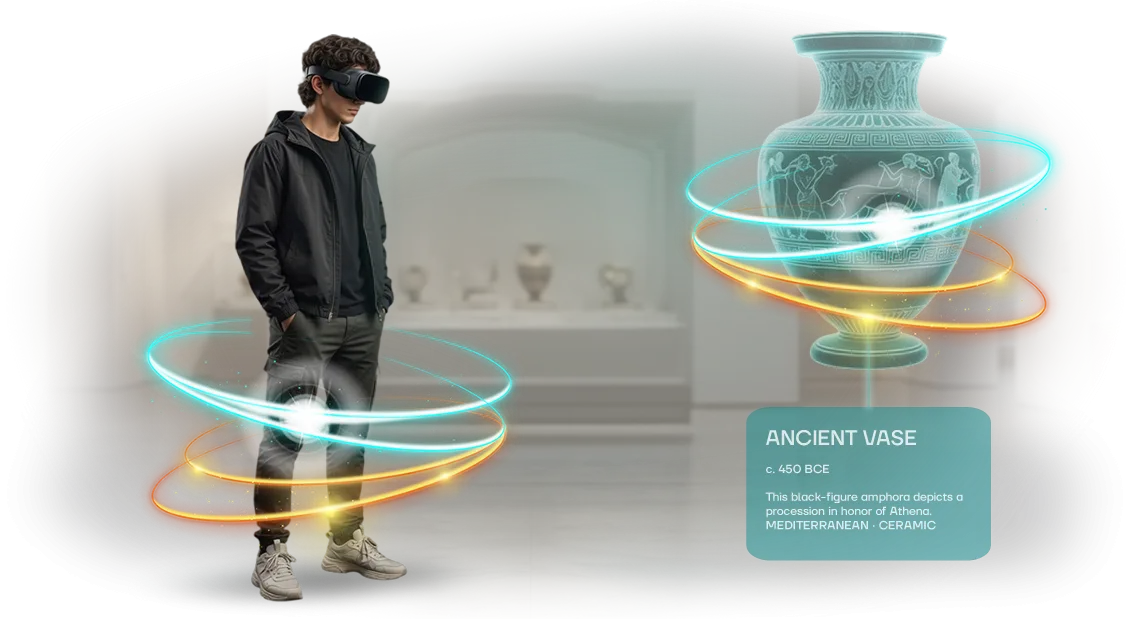
A virtual excursion through a church delivers that emotion — the person "walks" through the space themselves, examines the frescoes and icons, and stops where they find interesting.
This is no longer passive viewing but a personal experience worth sharing with friends — which means the parish gains live recognition without an additional advertising budget.
An online visit to the church also solves the practical problem of accessibility. Elderly parishioners, families with small children, and believers from other cities and countries get the opportunity to connect with the shrine at any moment.
Digitalizing the parish makes the church open and close to those who are still uncertain, looking around, or simply seeking spiritual support in a digital format they are familiar with.
Wehelp close this gap: we professionally digitize the space and build a virtual excursion that preserves the church's atmosphere and works to attract a new audience.
Instead of a static photo album, the church gets a living digital experience that unites parishioners and speaks to modern people in their language.
What a VR excursion delivers: visitor flow and a living impression
A VR excursion turns a church from an object people hear about into a place they want to see with their own eyes. A person gets a vivid impression even before the visit — and that impression becomes the reason to come in person.
This is how the virtual format directly works for real attendance: the stronger the emotion from the excursion, the greater the desire to experience it in reality.
Emotional response is the main driver. The architecture, the frescoes, the atmosphere of light and silence — which we convey in detail — evoke the same feelings in the viewer as a real visit does.
After such an immersion, the church is remembered, people tell their loved ones about it, return again, and recommend it to friends — this creates a steady flow of guests without extra advertising costs.
An accessible environment is another important facet. A VR excursion opens the church to those who physically cannot visit it: people with limited mobility, elderly parishioners, families with small children.
For them this is not a replacement for a real visit but an opportunity to feel part of the church's life without barriers — and this strengthens the trust and loyalty of the community.
Online promotion amplifies the effect. A virtual excursion spreads easily through a website, social media, and messengers: people share links because it's interesting, and for the church each such click is new reach.
As a result, recognition grows, more requests come from tourists and pilgrims, and the information field around the church becomes alive and modern.
We create a VR excursion that solves these tasks comprehensively: it attracts visitors, conveys the atmosphere, makes the church accessible, and ensures its presence in the digital environment.
Tell us about your church — we'll show how it can look in virtual space and what response it will generate.
VR excursion formats: for any task and budget
For a church, exhibition, or museum there is no single "correct" format. Some need a short video for social media, others need a full journey through the halls, and still others need the ability to join a service from afar.
Different virtual tour formats solve different tasks, so it's important not to overpay for features that won't be used.
We select a format for your budget, audience, and goals — not the other way around. Below are three main options that cover most requests:
| Format | For whom | What it gives the client |
|---|---|---|
| 360° panoramic video | For websites, social media, short promos | Quick launch, presence effect without installing apps, wide reach on smartphones |
| Interactive 3D model | For museums, pilgrimage centers, educational projects | Free movement through the church halls, clicks on objects, historical references — deep engagement and long content life |
| Live broadcast | For remote parishioners, festive services, conferences | Real-time access to the event, expanding the audience through online participants |
If the budget is limited and you need a quick result, a panoramic video is enough: it takes a few days to produce and works on any device. If you want to show the church in detail, with stories about icons and architecture, choose an interactive 3D model. And a live broadcast makes the church accessible to those who physically cannot travel.
Often the best effect comes from a combination: a short panoramic video for social media and an interactive model on the website. We help you choose the optimal set of formats, prepare an estimate, and take over the entire process — from shooting to publication and support.
How a VR excursion is created: from brief to launch
Creating a VR excursion of a church is a project where we take on the entire technical side, and you receive a ready-made tool for attracting parishioners, remote visits, and preserving cultural heritage.
The process is designed so you understand what is happening at each stage and can influence the result.
The work takes place in several steps — from the first discussion to full launch and ongoing support. Below is what it looks like from your side.
-
Brief and introduction to the church. We discuss the goals of the excursion: what is important to show, who will be watching — parishioners, tourists, young people? We record your wishes, identify key points for viewing, and agree on a work plan.
-
Shooting and material collection. We travel to the site and conduct professional photography of the interiors and facades. In parallel, we gather historical background, significant details, and legends — so the excursion is not just a panorama but a living narrative.
-
Modeling and assembling the space. From the captured material we create a detailed 3D version of the church. At this stage you see intermediate versions and can adjust the emphasis — add important elements and remove what hinders perception.
-
Approval. We show the finished draft version, and you check navigation convenience and content. We make edits until the result reflects the atmosphere of the shrine and fully satisfies you.
-
Launch. We place the excursion on your website or social media. We ensure easy access — via smartphone, computer, or VR headset — verify that everything works stably, and train your team to manage the material.
-
Support and development. After launch we stay in touch: we help update information, add new rooms or events, and monitor performance. If necessary, we refine the functionality to match your tasks.
The entire process usually takes two to four weeks — depending on the size of the church and the complexity of the space. You don't dive into technical details, but at each stage you understand exactly what you'll get and control the quality.
What you get in the package: from the model to support
We thought through how the excursion will look, work, and deliver value even before launch. That's why the package includes not just a 3D model but a complete set for showing your church to the world without setting anything up yourself.
- Ready VR excursion. A detailed three-dimensional model of the church: the exterior, the interior decoration, significant icons and frescoes. The visitor can freely "walk" through the space, zoom in on details, and explore captions or an audio narrative.
- Publication on your domain and hosting. We place the excursion so it opens on any device — computer, tablet, smartphone — and in virtual reality headsets. You don't need to understand the technical side: everything is already configured.
- Staff training. We conduct a short briefing for employees: how to open the excursion, embed it on the website and social media, change text, or add a new photo. After that you manage on your own.
- Visit statistics. In a personal dashboard you can see how many people enter the excursion, which areas of the church are viewed the longest, and where visitors come from. This helps you understand what interests parishioners and pilgrims and refresh the content.
- Guarantee and support. After launch we stay in touch: we help with technical questions, fix issues, and take your wishes for further development into account.
This approach removes the need to search for different contractors for modeling, programming, and hosting. You get a single result — a working excursion you can show people tomorrow — and a clear management system for it.
VR excursion for a church: numbers and the rector's feedback
Churches rarely show themselves properly: the website usually has a couple of photos and a schedule. But a person looking for a place to pray or planning a trip needs a living image — how things are arranged inside, what the atmosphere and history are like. A VR excursion meets that need: it gives a sense of presence before the visit.
Case study: a church that became closer
We developed a virtual tour for the Church of St. Nicholas. Parishioners and tourists can examine the interior, read the history of the frescoes, and "stop" at each icon. The narrative is accompanied by a voiceover — a full-fledged excursion, not just a panorama.
The project results speak for themselves. In the first six months, church attendance grew by 60%, and some new visitors admitted they came specifically after the online walk.
People shared the link with loved ones and returned to the excursion before holidays — it became part of the community's life.
Rector's feedback: "When a person sees the church from the inside in silence, they develop a desire to come in person. This is not a replacement for reality but an invitation to it. Everyone who decides to cross the threshold after such a walk matters to us."
Those who physically cannot visit the church especially value the excursion: for them the online walk remains a way to stay connected. In this way technology strengthens pastoral work rather than replacing it.
Answers to frequent questions about virtual excursions
A virtual excursion seems like a complex project: special equipment, programmers, long timelines. In reality, we take over the entire technical process — you only need to provide access to the premises and approve the scenario.
Launch takes from a few days to a couple of weeks, and throughout that time you communicate with one manager without technical details. You get a ready-made solution, not a "semi-finished product."
Below are the questions most often asked before starting. If yours isn't here, call us: we'll consult for free and advise on how to make the excursion as convenient as possible for parishioners and guests.
Is it difficult to implement a VR excursion if the staff is far from technology?
No, implementation doesn't require technical knowledge from the staff. The excursion looks like an ordinary link or QR code that you place on the website or at the church entrance. Visitors open it on a smartphone or computer — nothing needs to be downloaded or configured.
We connect the excursion ourselves, test it on different devices, and show the staff how to launch it in a couple of minutes.
How long does development take and who performs all the work?
Timelines depend on the number of objects and the level of detail, but usually it's 1–3 weeks. A team is involved in the project: photographers, 3D specialists, and programmers.
You don't need to find contractors or understand technologies — we agree on checkpoints in a convenient format and make edits before launch. You only need to approve the scenario.
What if I need to update the content after six months?
Content can change: new exhibits are added, texts change, routes are adjusted. We build in the possibility of such updates and make changes centrally, without redoing the excursion entirely. You just send new materials — we'll handle the rest.
What technical support is provided after launch?
We don't disappear after the project is delivered. We sign a maintenance agreement, stay in touch via messengers, and help with any questions — from minor edits to expanding the excursion. If something breaks, we usually resolve the issue within a business day.
Order a VR excursion and get a ready-made turnkey solution
Ordering a VR excursion for a church is easier than it seems: you fill out a short brief, we take over the entire technical part and come back to you with a ready-made solution.
This is not a "project for later" but a pre-built process with fixed stages and clear results.
So after a call or request you get the full path from the first discussion to launch — and see every step:
- Fill out the brief or have a short interview with our manager — we clarify the tasks, the church's features, target visitor groups, and the points that are important to show.
- We agree on the estimate and timeline — the cost is fixed before work begins, without hidden surcharges or "production complications" along the way.
- We conduct the shooting and create a detailed 3D model of the premises — this can be a virtual tour based on the actual footage or a fully recreated space for areas that are inaccessible.
- We prepare the interface and logic of the excursion: a route through key objects, information captions, free movement mode, and support for screens of any size — from a phone to a TV in the lobby.
- We present the result for approval — we promptly make edits and adjust routes without losing quality.
- We hand over the finished excursion, content rights, and a short instruction for administrators — the website, social media, information desks, and tablets work without our constant involvement.
We do all of this within the agreed timeline, usually from two weeks — depending on the number of locations and the detail of the models. You always know what stage the project is at because we work remotely across the country but stay in touch with you every day.
Ordering a VR excursion means you don't dig into technical details and don't hire a separate contractor for editing and support. You get a turnkey solution: it's already filled with content, recorded in the right format, and ready for publication.
To get started, just write to us and choose a convenient way to complete the brief: by phone, in writing, or in person if you're nearby. We'll take care of the rest — and after launch we'll stay in touch for refinements and new ideas for developing the project.
How to choose a VR excursion format for a specific task?
Choosing a VR excursion format starts not with technology but with the question: what should viewers feel and do after watching?
For a church this is often a spiritual connection, interest in history, a desire to visit in person, or a comfortable online visit for those who physically cannot reach the shrine.
So the first step is to define the main goal — for example, attracting a young audience, conducting a virtual pilgrimage, or showing halls closed to free access.
The budget for a VR excursion directly affects the depth of immersion and the scale of reach. If the task is to give an overview impression and convey the atmosphere, a panoramic tour with an audio guide is enough.
If you want to surprise the viewer with interactive stories, reconstructions, or a personal guide, a more complex build and professional shooting equipment will be required.
We prepare an estimate with a clear breakdown: what's included in each format, how long production takes, and on which devices the excursion will work.
The specific requirements of the site are a key factor in choosing the format. In a church, both the small details of the iconostasis, the play of light on the vaults, and the acoustics of the choir matter — all of this influences angles, data volume, and presentation methods.
An immersive panorama with smooth movement suits spacious cathedrals, while detailed 3D models that let you examine the interior up close suit small chapels.
Adaptation to the church also takes into account who will be watching: elderly parishioners, foreign tourists, or children — the interface, language, and pace of the narrative depend on that.
Another important point is the excursion's life cycle. If you need it for a one-time event, such as a patronal feast, a quick format with an overview tour will do.
If a permanent section on the website or in an app is planned, we invest in a scalable solution that can easily be expanded with new locations or historical references.
We help you understand which format will work in a year and don't advise overpaying for excessive functionality if it doesn't bring value to viewers.
Ultimately, choosing a format is a joint decision based on the tasks, budget, and features of the church. We visit the site, do a test shoot, and show you the option that best fits your situation.
You'll see the result before full payment and can adjust details so the excursion truly solves your task.