

Shoppers can't see the cars before visiting — you're losing leads
A shopper decides whether to buy a car within the first minutes of browsing your website. But when they see only a dozen flat photos and a short description, trust in the offer drops: it's impossible to examine the interior, assess the dimensions, or picture the car in real life.
As a result, the user goes to the dealer that let them inspect the car in detail without leaving home — and you lose leads that could have become sales.
Worse, some visitors do leave their contacts, but disappear after follow-up questions: they lack confidence in their choice. Managers spend time on "cold" conversations, and conversion from inquiry to deal stays low.
This is a familiar situation for many auto dealers and marketing directors: advertising works, traffic is there, but sales aren't growing.
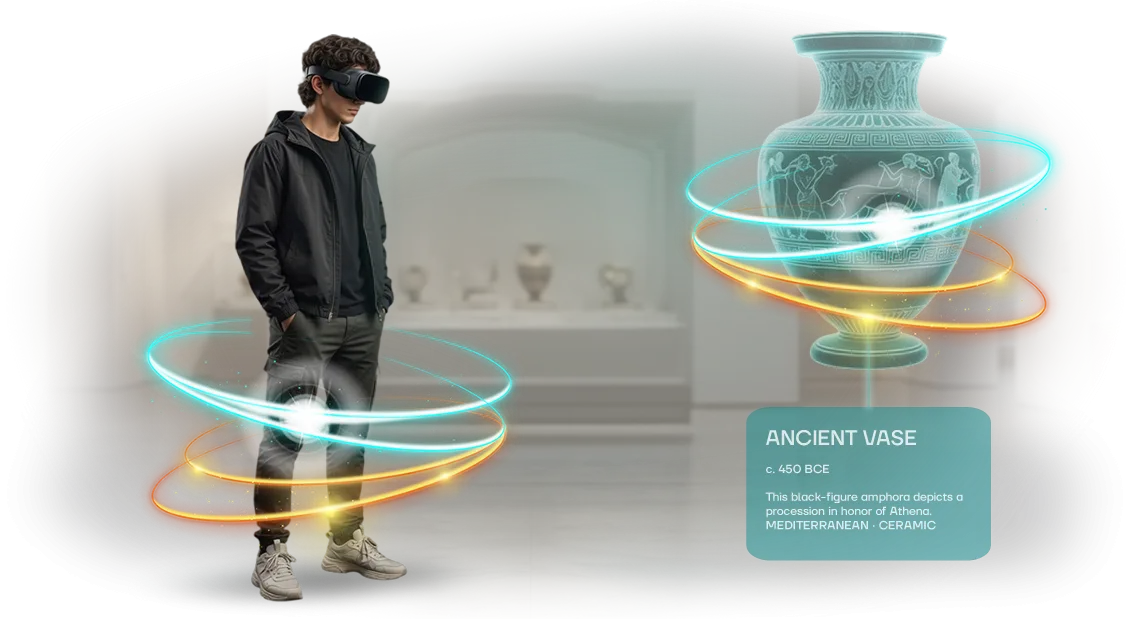
We close this problem with a virtual showroom — an interactive 3D exhibition where every model is available for online inspection from all angles. Visitors "walk" around the car themselves, zoom in on details, change the body color, open doors and the trunk.
This experience removes the main barrier in selling cars online — the inability to examine the product before visiting the showroom — and gives the client a sense of presence.
Built-in functionality lets you show trim levels and highlight key options, answering questions before the client even calls a manager. You get higher conversion to leads: visitors who "touched" the car online arrive at the dealership already highly ready to buy.
The virtual showroom runs on professional equipment and doesn't require your users to install complex software — a regular browser is enough.
What a virtual 3D showroom brings to your business
A virtual 3D showroom removes the main limitation of a traditional dealership — the need to visit in person. Buyers can inspect the car from all angles, look inside the cabin, change the color and trim — without leaving home.
This expands your sales geography across the entire country and even beyond, and you receive an inbound flow not just of views, but of interested customers.
For the business, this works on three levels: increased reach, increased trust, and more test drives. When a client has already "touched" the car in 3D, they arrive at the dealership with a ready decision — you just need to confirm the impression.
And if you add test-drive booking right inside the 3D showroom, every visit turns into a manageable lead you can see in advance.
The key here is realism. We work on a professional 3D engine with photorealistic graphics and carefully designed lighting — so much so that it's almost impossible to tell a render from a photograph.
This authenticity removes the fear of "buying a pig in a poke" and boosts conversion to leads, because the client sees not an abstract image but their future car.
An additional plus for the brand — recognition. The unusual interactive format itself becomes a news hook: clients share the link on social media, mention it in reviews, and return to the showroom for new models.
And when the 3D showroom is used in advertising, banners, and email campaigns — every interaction with it increases trust in your dealership as a modern and reliable company.
As a result, you get not just a showcase, but a full-fledged sales channel: open 24/7, with no rent and no location dependency. Buyers explore the car with interest, leave a lead, book a test drive — and arrive already almost ready to close the deal.
That's measurable revenue growth with the same marketing budget — exactly what makes investing in a virtual showroom worthwhile.
Virtual car exhibition formats for auto dealers
For an auto dealer, it's important not just to show a car on screen, but to move the client closer to purchase: let them examine details, compare trim levels, and feel the cabin space.
A regular catalog with photos no longer holds attention, so a virtual exhibition becomes a working sales tool. Different formats solve the task differently — from a quick 360 view to a full VR showroom where visitors "sit" behind the wheel.
The choice depends on your goal: attract mass traffic, engage visitors in exploring a model, or move them toward a test drive and a lead.
Format comparison
| Format | Who it's for | What it gives the client |
|---|---|---|
| 360 view | For a broad audience and social media | Quick inspection of the exterior and interior without installing apps — convenient for a first introduction to the model. |
| 3D tour | For buyers choosing between trim levels | Full car inspection with switching colors, options, and camera angles — helps refine preferences and shortens the dealership visit. |
| VR showroom | For premium models and closed presentations | The feeling of being inside the showroom: the client explores the car at real scale, while a manager accompanies them and answers questions in real time. |
We help you choose a format that fits your budget and objective: for mass campaigns, a 360 view is enough; for launching new models, a VR showroom with a chat consultant.
And if you need to combine reach and depth, we offer a combination of formats: a 3D tour with built-in transition points into VR zones. All solutions work in the browser and on smartphones, so clients don't waste time installing additional software.
How we create a virtual showroom: 7 steps
Developing a virtual showroom is not a "black box" but a well-honed process with a strict sequence of stages.
We support you from the first brief to launch, fixing timelines and budget, so you always understand what's happening with the project and when the result will be ready. Below are the seven steps every client goes through.
-
Brief and goals. We clarify the objectives: which models to show, who the target audience is, what matters more — reach or leads. We create a technical specification for the whole team so the work moves in the right direction.
-
Prototype and scenario. We build the showroom structure: how the visitor moves, what they see first. We agree on the logic before development starts to avoid rework in later stages.
-
Design mockup. We show the interface and visual style before development begins. You see the future showroom in detail and make changes without wasting resources.
-
Building the virtual space. We fill the showroom with cars and surroundings: lighting, reflections, cabin details. A photorealistic image triggers emotion and the desire to look at the car more closely.
-
Integration with your tools. We connect the showroom to your website, lead forms, and customer management system. All visitor actions are available to your team for analysis and follow-up.
-
Testing. We check on different devices and popular browsers so every visitor sees a stable and fast picture. We fix any flaws before your clients ever see the showroom.
-
Launch and support. We host the showroom on your domain and hand over analytics and instructions for your staff. We stay in touch: we make improvements when new models appear or priorities change.
What's included in virtual exhibition development
When you decide to run a virtual exhibition, it's important to understand exactly what you'll get in the end. We deliver not just a link, but a complete product, ready to use and delivering results. Here's what's included in the package.
- Adaptive platform — the virtual hall opens on a computer, tablet, and smartphone without installing apps. Guests follow a link from email or messenger and immediately see your exhibits. Thanks to the adaptive design, you reach both those sitting at an office PC and those on their phone on the go.
- Social media content — a ready-made set of materials: announcements, photos, videos, and text for Stories. You publish them without a designer, save time, and attract extra traffic to the exhibition.
- Control panel — an intuitive interface where you change descriptions, prices, add new exhibits and promotions. Edits take effect instantly, so you can react to demand right during the event.
- Analytics — detailed visitor data: number of guests, time spent on the platform, interest in specific products. These numbers show you what really works and help adjust your strategy for future projects.
- Technical support — we assign a personal manager for the duration of the exhibition. They help visitors, resolve technical issues promptly, and take the load off your team.
- Fast launch — we handle all the technical preparation; you get a ready link for invitations. The launch takes less time than you'd normally expect from digital projects.
All the system's components work together: content attracts visitors, the platform holds their attention, analytics shows effectiveness, and you manage the process without technical specialists. This saves your budget and lets you focus on the main thing — negotiations and sales.
Case study: virtual showroom for a dealer — +37% leads
Dealerships often face a paradox: the showroom floor holds only a fraction of the model range, and the client needs to compare several configurations without spending hours driving around.
Photos and videos don't convey the feeling of a "live" car, so visitors leave the site without leaving a lead — and that's a direct loss for the sales department.
For the dealership AvtoPraid, we solved this problem by building a virtual showroom with a panoramic view of the exterior and interior, plus color and option customization.
Users can "walk around" the car, open the doors, examine details — all right on the website, without installing apps or extra steps. A simple, clear solution that requires no customer training.
The results exceeded expectations within the first month. Average time on site grew 4 times: visitors started exploring 5–6 models per visit instead of the previous 1–2, and engagement grew many times over.
Return visits to the site increased by 65%, and most importantly — the number of test-drive requests grew by 37%. Managers noted that clients arrive better prepared and make decisions faster.
This case confirms: a virtual showroom for an auto dealer is not just a flashy widget, but a working sales tool that delivers measurable results around the clock. It pays for itself through more leads, reduced workload for managers, and higher audience loyalty.
Ready to make a similar project for your fleet — let's discuss the specifics of your market and your sales team's goals.
Frequently asked questions about virtual exhibitions and showrooms
Clients often ask us how everything will work: is it hard to update a virtual exhibition, how fast does it load for visitors, and what does it look like on mobile devices. We answer these questions — so you know the details in advance and can assess the benefit.
How fast does a virtual showroom load?
We use a professional platform with optimized graphics, so the page opens in a couple of seconds even on standard internet speeds. The visitor doesn't have to wait — they land straight in the 3D space and can examine the car from all sides.
Will the showroom work on phones and tablets?
Yes. The virtual exhibition adapts to any screen — from smartphone to wide monitor. That's convenient for your clients: they can look at the car anytime, anywhere, and it gives you extra reach without spending on promotion.
How often can content be updated?
Updating takes minimal time: you send new photos, descriptions, or prices, and we publish them within a couple of hours. Visitors always see the current version — this is especially important when the model lineup changes or special offers launch.
What about technical support?
We support you at every stage: we help launch the showroom, answer user questions, and quickly make changes when needed. You don't have to deal with technical details — just set the task, and we handle it.
Order a virtual showroom for your auto business
Leave a request for a virtual showroom — we'll tell you the cost and timeline for your project. It takes a couple of minutes and is completely non-binding: based on a short description, we'll prepare a proposal and clearly show you what the result will look like.
How we work
- Request. You submit a request on the website or in chat — tell us which cars need to be shown, how many models, and what purpose the showroom is being created for.
- Consultation. We clarify the details: the platform (website, booth, separate page), whether integration with a catalog is needed, and which viewing scenarios matter. We answer your questions and suggest the optimal format.
- Cost and timeline estimate. We fix the budget and schedule in a commercial proposal — with no hidden charges. You see what you're paying for and when you'll get the result.
- Demo. We prepare a pilot sample: a 3D scene with a model of your car. You evaluate the graphics quality, handling, and make edits before full development.
- Launch and support. We publish the showroom, connect it to your website if needed, and train your staff. After launch, we stay in touch: we help add new models and update content.
What you get
- A preliminary cost and timeline estimate at no charge — based on your description.
- A demo version before the main project starts — the solution is approved before full payment.
- Clear stages and fixed deadlines: you always know what stage the work is at.
- A showroom that works for your business: holding visitors' attention, increasing interest in models, and growing time on site.
- Technical support after launch — you're never left alone with the solution.
Fill out the form or write to chat — we'll send the estimate and timeline within one business day.
How to choose the right virtual exhibition format for your task?
Choosing a virtual exhibition format starts not with technology, but with your business goal.
Presenting a new car model to a broad audience at an online launch is one thing; hosting a closed preview for dealers and distributors is another; and giving a potential customer the chance to explore the cabin in detail from any angle without leaving home is a third.
The same 3D showroom can be structured differently: as an interactive catalog, as a virtual dealership with a consultant, or as an immersive cinematic tour. So the most honest answer is — define your goal first, and only then choose the format.
If your goal is reach and attracting a large stream of visitors, an open virtual showroom with simple navigation and minimal user effort works best.
If the focus is on selling a specific model, an interactive configurable presentation format is better: the client changes the color, inspects details, opens doors themselves — this creates a sense of full control and boosts engagement.
And if the task is training managers or collecting feedback from partners, a closed presentation with individual scenarios and per-action analytics is the right fit.
Understanding these differences, we match the format to your specifics rather than forcing your task into a ready-made template.
As a rule, a short conversation with our expert is enough to cut through the noise and propose the best option. We ask a few questions about your audience, the touchpoint, and the expected metrics — and at that stage it already becomes clear what will deliver results.
We always give recommendations in two versions: a minimal one that covers the necessary baseline, and an extended one that strengthens the impression and leaves room for the future. You compare and make a confident decision.
Want to avoid spending a week of trial and error choosing a format? Describe your task in one line — and we'll tell you which format will work faster and more effectively for your specific product.