


Furniture Buyers Leave for Competitors Because of Flat Photos
Furniture buyers make decisions at home, browsing a catalog on a screen.
Flat photos convey neither the scale, nor the texture, nor how the piece will fit into an interior — and this is the main reason a potential client "hangs" on your website and then leaves for a competitor who shows products in volume.
A static image makes shoppers doubt: "Isn't this cabinet too small? What color is it actually? Will it match my sofa?" At that moment, the fear of making a mistake kicks in, and the purchase is postponed.
That is why a virtual showroom for furniture is not a matter of fashion but a matter of survival in a niche where the buyer chooses with their eyes.
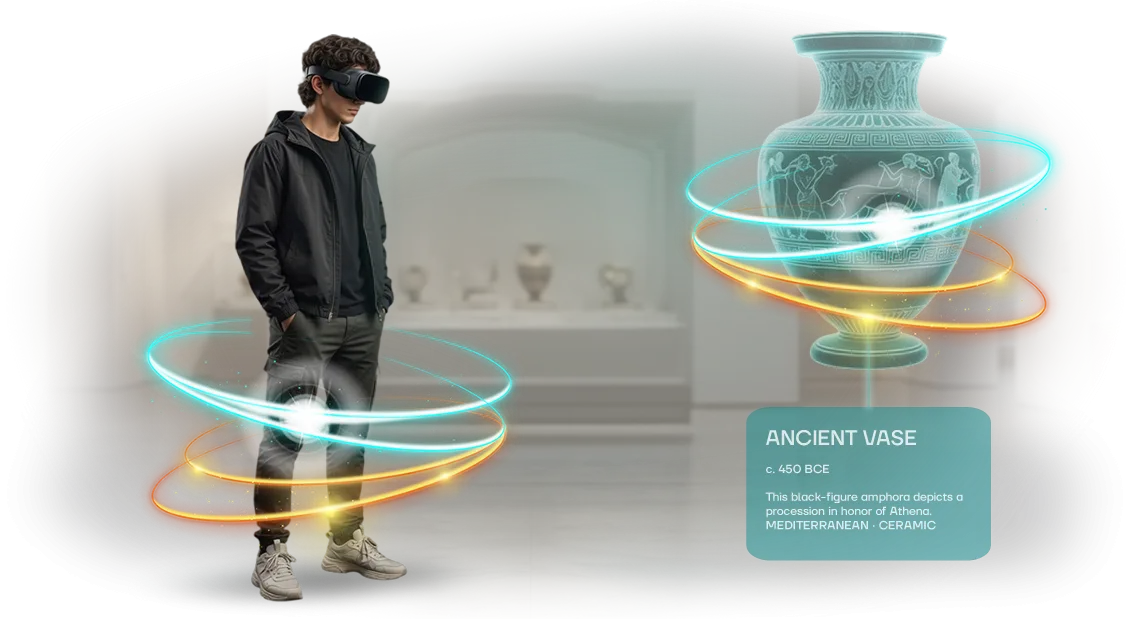
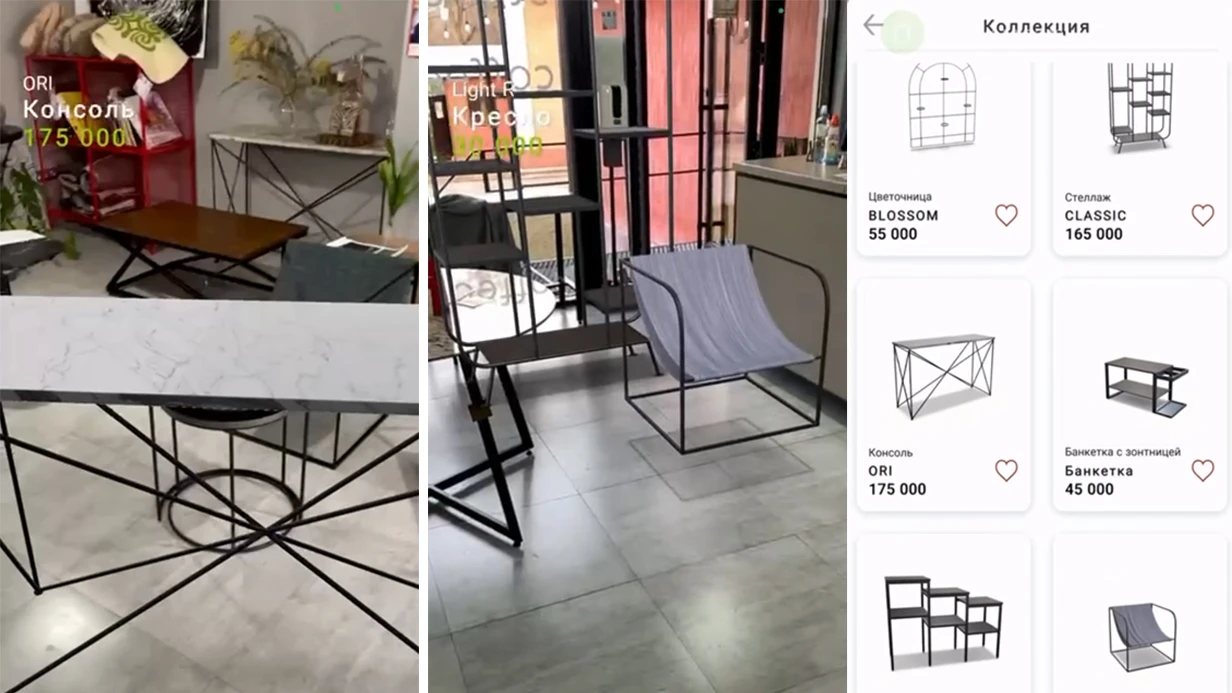
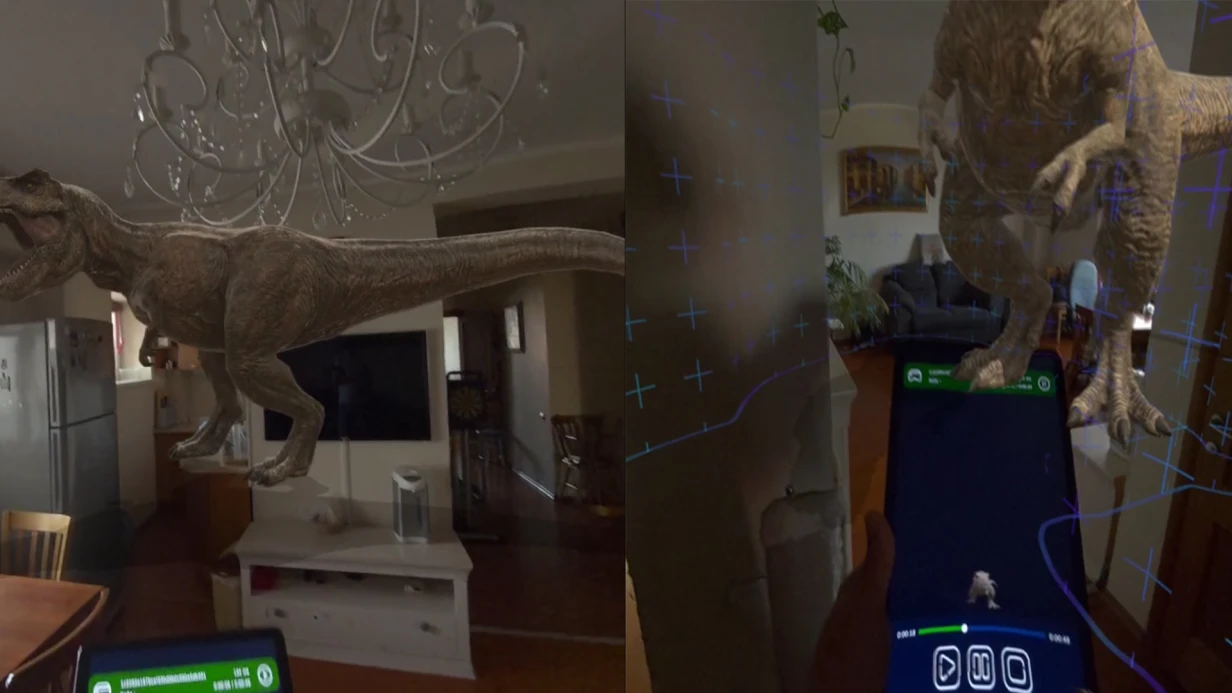
Interactive furniture presentation changes the rules of the game: the client rotates the product in 3D, zooms in on details, changes the viewing angle, and sees the item to scale.
A regular catalog offers 2–4 angles, while a 3D furniture catalog offers an endless number of viewpoints. This gives the buyer the feeling that they have already "held" the item in their hands and mentally placed it in their room.
A ready-made VR exhibition adds another level: the buyer does not just look at the screen but finds themselves inside a space where the furniture is arranged in a full-fledged interior. They walk between pieces, assess proportions and combinations.
This experience is memorable and, most importantly, shortens the path from viewing to purchase decision.
We have been helping furniture manufacturers and showrooms solve this pain point for more than ten years. Our solutions turn a passive catalog into a sales tool that works for you 24/7 and does not require a manager's presence to hold the client's attention.
What a Virtual Exhibition and 3D Showroom Give a Business
Traditional exhibitions and showrooms involve serious budgets for rent, logistics, and stands. At the same time, a client comes once, looks around for 10–15 minutes, and leaves, while the reach is limited to the city and the event dates.
A virtual exhibition and 3D showroom remove these limitations: your products are available at any time, anywhere in the world, and a client can examine them in detail as if in person.
Our team creates online spaces that turn catalog browsing into an emotional experience. Below is a checklist of key advantages you get with a virtual showroom.
- Increased brand trust. A full 3D product model that can be examined from all sides convinces of quality no worse than a physical sample. The client sees materials, textures, and details — fewer doubts before purchase.
- Client engagement. The interactive format holds attention 3–5 times longer than regular photos and descriptions. Users explore the product, change colors and layouts — time on site grows, and this is a direct signal for algorithms and the sales department.
- Higher conversion. A visual product demonstration shortens the path to purchase: the client understands exactly what they are getting and makes a decision faster. For complex products — furniture, appliances, real estate — conversion to inquiries increases by up to two times.
- Boundless reach. The exhibition works 24/7, so your clients are the whole country, not just stand visitors. There are no floor-space limits: the entire collection can be shown in virtual space.
- Savings on exhibitions. Expenses on rent, mockups, sample delivery, and business trips are eliminated. A showroom created once serves for years — it replaces several physical events and pays off quickly.
- Online product presentation. This is an ideal tool for negotiations: you send the client a link, and they explore the product at their own pace, even from thousands of kilometers away.
A virtual showroom is not just a "pretty picture" but a working sales tool. It shortens the deal cycle, removes geographic objections, and presents your product in the best light. Request a demo — see how it works in your niche.
Formats of Virtual Showrooms for Furniture
The furniture business has different tasks: introducing buyers to a new collection, showing the assortment without renting additional space, and running a presentation for wholesale clients who cannot come in person.
There is no universal format — so it is important to choose the one that solves a specific task. Below are the main formats that work in the furniture industry.
| Format | Who it's for | What it gives the client |
|---|---|---|
| 3D store tour | Retail buyers | The ability to "walk" through the hall and view furniture from different angles without leaving home |
| Virtual furniture showroom | Those choosing a product from a catalog | A complete understanding of the scale, materials, and how pieces combine in an interior |
| Virtual exhibition with multiple halls | Manufacturers and distributors | The entire collection shown at once — visitors choose their own route and avoid information overload |
| Interactive hall | Wholesale buyers, designers | New-product presentation in a live format: colors, materials, and layouts change in real time |
A format is not an end in itself but a tool that must deliver measurable results: increase conversion, shorten the deal cycle, or expand sales geography.
We have been designing virtual spaces for the furniture business for over 10 years — from small showrooms to large-scale exhibitions that replace physical stands at international events. We match the format to your budget and task, not the other way around.
If you are unsure where to start, call or write to us: we'll tell you which format will pay off fastest in your case. The first consultation is free and comes with no obligation.
How VR Showroom Development for Furniture Works
Developing a VR showroom for furniture is a sequential project in which you participate at every stage. We don't work "for the shelf": you see the result before launch, make changes, and get a tool that genuinely sells. Below is the client's journey through the project, from brief to post-launch support.
-
Brief and task analysis — we record the assortment, target audience, and company goals. We gather references and determine how the showroom will fit into your marketing. The result is a clear project plan and timeline.
-
Prototype and scenario — we design the structure of the virtual exhibition: which halls, how the visitor moves, and which items are in focus. You approve the logic before any graphics are created.
-
Project approval — we discuss the space design, collection presentation, and product card formats. At this stage, adjustments are quick and inexpensive, so we bring all key decisions up for approval.
-
Virtual exhibition creation — we digitize the furniture, build 3D halls, and add navigation, descriptions, and inquiry buttons. Each model looks close to the real item so the client understands scale, materials, and color.
-
Test build and review — we show a working version of the showroom. We check usability on different devices, loading speed, and scenario logic. You try it yourself and make final adjustments.
-
VR showroom launch — we place the project on your website and connect feedback forms and analytics. We make sure visitors immediately see how to place an order.
-
Post-launch support — we help update the catalog, add new models, and change layouts when needed. The showroom lives together with your assortment rather than remaining a static image.
This approach removes the client's main fear — "it's unclear what the result will be." You control every stage of the virtual exhibition creation, and the VR showroom launch happens without surprises: on time and with a clear business outcome.
What's Included in the Virtual Project Delivery
A virtual showroom is a full-fledged sales tool, not just a pretty 3D picture. The client receives a complete package that is easy to embed in a website and fill with current products.
- Interactive 3D space — several themed halls with realistic furnishing. The visitor moves freely and examines furniture from all sides.
- 3D model library — each item is recreated with accurate geometry and textures that convey color and material. This helps the client make a decision.
- Catalog interface — convenient filters and search by category; each card includes price, description, and an order button.
- Admin panel — you can add or change models, prices, and descriptions yourself without a programmer. Updates take minutes.
- Integration module — a ready-made block for your website and social media that opens on any device and requires no additional development.
- Staff training — a short guide for managers and content managers so they immediately use all the project's capabilities.
All parts of the package are aimed at shortening the client's path from interest to purchase. You get a tool that increases reach, strengthens the brand, and boosts conversion to orders.
Case: Virtual Furniture Showroom for the Eco-Style Factory
The Eco-Style furniture factory felt constrained by a regular catalog: it was hard for clients to imagine how a wardrobe would fit into an interior, and renting an exhibition hall ate into the budget.
The client wanted not just pictures but a tool that would help sell sofas and kitchens without in-person meetings.
We developed a virtual showroom: the buyer moves through the halls, examines items from all sides, and changes fabrics, colors, and contents. Everything opens via a link in a couple of seconds — on a computer or phone, without installing software. No need to persuade a client to visit — just send a link in a messenger.
Results from the first six months: more than 2,500 unique visitors, an average time in the showroom of about 8 minutes versus 4 minutes in a regular hall, and conversion to inquiries up by 42%.
A quarter of orders came from neighboring cities — the manufacturer gained new clients without opening new locations. After implementing the virtual display, the share of repeat inquiries to the sales department increased by a third.
The factory was convinced of its effectiveness and ordered the second phase of the project: a fitting room for case furniture and a set cost calculator.
Now managers use the virtual hall as the main tool for initial consultations — employees spend less time on repeated presentations, and clients receive a visual proposal even before the call.
How to Choose a Virtual Exhibition Format for Your Task?
Choosing the right format starts not with technology but with the goal. If you need to show furniture in detail and give the buyer a sense of scale, a VR showroom with realistic materials will work.
If the task is to gather a wide audience from different cities and provide access without installing software, we choose a browser-based virtual exhibition.
The same showroom can be built either as an interactive catalog or as a full-fledged space, but the budget and timeline will differ.
We help you find your bearings at the start and match the VR showroom to the usage scenario. We find out who will use the space: retail buyers, wholesale purchasers, designers, or sales managers.
For retail, simplicity is key — a person with no training should be able to change upholstery or color in a couple of clicks. For wholesale clients, the ability to compare models in a single interior and immediately submit an inquiry matters.
Designers and buyers need accurate geometry and material layouts in order to integrate the furniture into projects.
That is why a virtual exhibition for business is not a choice between "simple" and "complex," but a decision about which scenario will deliver more conversion for your investment.
If the catalog is opened from a phone, we build a lightweight version without losing image quality. If the exhibition needs to collect contacts, we add registration forms and a chat with a consultant. Nothing extra, but everything needed for your task.
A correctly chosen format saves budget and time. You don't pay for developing features that aren't used, and you get a tool that fits into your funnel: promotion, collection display, inquiries, or booking a personal consultation. We advise on which part of the showroom can be reused for future exhibitions.
To help you decide faster, we conduct a short briefing and prepare two or three format options with timelines and expected results. This is free and comes with no obligation — but you gain clarity on which virtual exhibition format suits your particular business.
Frequently Asked Questions Before Launching a VR Showroom
Before launching a VR showroom, clients have questions about content, timelines, devices, and support. We've collected brief answers so you understand how the work is organized.
What materials are needed to get started?
Photos, dimensions, and descriptions of the furniture are enough. If there are no 3D models, we will create them ourselves — nothing extra needs to be purchased.
How long will development take?
Usually 2–4 weeks. You'll see the first version within a week and can make changes right away.
What devices does it work on?
Any modern smartphone, tablet, or computer. A VR headset can also be connected, but it is not required.
Who will update the assortment?
We maintain the showroom: adding new models, changing prices and descriptions. You just send the updated data.
What about warranty and failures?
We provide a warranty on all work and promptly fix any issues — within one business day. If you want to see a virtual showroom in action, we'll send a demo with your furniture. Just write to us — we'll calculate timelines and cost for your collection.
Order Virtual Showroom Development for Your Assortment
To order a showroom, you don't need to understand technology — just leave a request on the website. Within a few hours you'll receive a call from a personal manager, and within one or two days — a cost estimate and a development plan tailored to your furniture assortment.
What you get immediately after contacting us:
- A clear plan: which models will go into the virtual showroom, in what order, and how this will affect sales.
- A predictable budget: an estimate with a fixed price at each stage — no hidden surcharges or "surprises" along the way.
- Honest timelines: we state the exact launch date based on the size of the assortment and confirm it in the contract.
- Examples of similar solutions: we show cases for furniture factories and studios so you can see the level of the result before starting.
- A load assessment: we estimate how many real buyers this format can serve and how it will save your salespeople's time.
- A personal manager: one person leads the project from the first call to launch and handles all coordination on our side.
From there, the work follows a clear timeline. First, we clarify the details of your business and compile the model catalog; then we create a prototype and get your approval.
After that, the team builds the virtual displays "turnkey," selects scenarios for clients, and tests everything on different devices.
Once the solution is ready, you receive a fully configured virtual showroom with instructions for your staff. All that's left is to place it on your site and send the link to clients — everything else is already working.
You can order turnkey exhibition development right now, or simply find out whether this format suits your business: leave a request for a virtual showroom below. A manager will respond within one business day, answer your questions, and prepare a no-obligation proposal.
Start with a short conversation — and within a week you'll see what your assortment looks like in 3D.