


VR Showroom for Real Estate: Turn Viewings into Sales
Real estate buyers are increasingly postponing viewings: visiting an apartment in another district or city takes half a day, and the result often doesn't live up to expectations.
This drags out the purchase decision, and some potential clients go to competitors who know how to present a property remotely.
A virtual tour solves this problem: it creates a sense of presence and lets buyers explore the layout, finishes, and views from the windows without a single visit to the property.
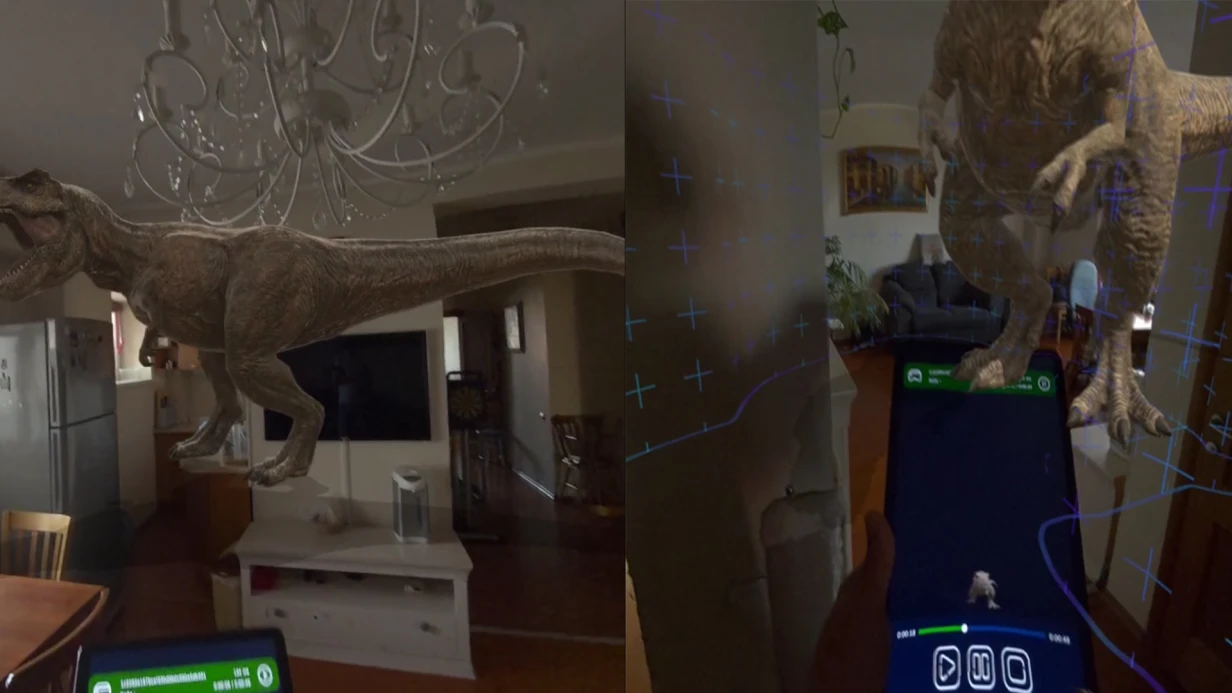
A VR showroom makes real estate accessible to remote buyers — from residents of neighboring cities to expats looking for housing in your region. Instead of a dozen photos, the client gets a full-fledged 3D tour: moving through rooms, assessing the scale, examining details.
This removes the main objection "I can't see it — I won't buy it" and brings the deal closer.
An interactive showroom also works as a sales tool: you can change finishes, rearrange furniture, or show different layouts of the same project. The buyer "tries on" the apartment and emotionally takes ownership of it — and emotions are what most often drive prepayment.
For you, this means fewer empty showings and warmer leads, because the client already knows what they're getting into.
Selling apartments through a virtual format accelerates the deal cycle: from initial contact to closing the deal, 20–30% less time passes, and your client geography is no longer limited to your city.
The very first virtual tour pays for itself through reduced costs for organizing offline showings and higher conversion into inquiries.
We've been building such VR showrooms for developers and real estate agencies for several years. We work with professional equipment and a proven capture technology, so the result is consistently high quality — seamless transitions, accurate room geometry, and natural colors.
Your buyers will see the property as close to reality as possible, and you'll get a tool that sells even without your involvement.
What a VR Showroom Will Give Your Business: 4 Key Benefits
We've been creating virtual showrooms for real estate for over 10 years and know what results they deliver to businesses. Here are the four key benefits you'll get after launch.
Increased Audience Reach
A virtual showroom is accessible to anyone with a smartphone or computer — regardless of city or time zone. Out-of-town buyers can view the property without flying in, while local buyers can filter out unsuitable options before visiting. You attract people who would never have made it to your sales office.
Reduced Time on Showings
Managers no longer need to escort clients around a property and repeat the same thing for the tenth time. One virtual tour replaces hours of in-person meetings: buyers independently explore the layout, finishes, and views from the windows. The team spends the freed-up time working with warm leads.
Increased Brand Awareness
An unusual presentation format is memorable — guests and clients share the virtual showroom link in social media and messengers. Every mention works as free advertising, reinforcing the developer's positioning as modern and client-oriented.
Higher Conversion into Inquiries
When clients can already see the property in detail, their decision becomes informed and fast. Fewer objections about the layout, fewer doubts about the developer's reputation. As a result, the share of visitors who leave an inquiry grows, and the deal cycle shortens.
VR Showroom Formats for Real Estate: From Apartments to Residential Complexes
Real estate buyers make decisions based on photos and floor plans, but that's often not enough. Especially when the building is still under construction or a commercial space needs to be presented without an actual visit.
A virtual showroom solves this problem: the client "walks through" the property, sees the scale, light, and layout — and is ready to discuss terms.
We develop VR showrooms for different business objectives. Each format has its own purpose: some help sell specific apartments, others showcase the scale of an entire residential complex, and still others help lease commercial space. Here's how it works.
| Format | For whom | What it gives the client |
|---|---|---|
| 3D apartment tour | Sales departments, agencies | The buyer sees the apartment before the building is completed, saves time on viewings, makes decisions faster |
| Layout configurator | Developers, design studios | The client changes partitions and selects finishes themselves — engagement and loyalty increase |
| Residential complex panorama | Residential complex marketing, presentations | Shows the infrastructure, courtyard, and surroundings — sets the project apart from competitors |
| Virtual sales office | Commercial real estate, rental | A tenant or buyer explores the space from anywhere, reducing the workload on managers |
All formats run on professional equipment and adapt to any device — from a tablet to a VR headset. The client gets a ready-made tool that generates inquiries and shortens the deal cycle right from the launch stage.
If you want to present your property to its best advantage, choose a format from the table — or let's discuss which one suits you best.
How We Create a VR Showroom: 6 Steps from Brief to Launch
A clear process means a predictable result and a calm client. From the very start, you see who is responsible for what, when the intermediate checkpoints are, and what exactly you get at each step. No "black box": you always know what stage the project is at and what happens next.
We formalize areas of responsibility in the contract and set deadlines in the project schedule after the first brief. This avoids misunderstandings and guarantees that you get exactly the VR showroom that solves the tasks of your real estate property.
- Brief and task immersion. We conduct an interview with your team, study floor plans and marketing materials. The output is a technical specification and a clear understanding of what needs to be shown to the client first.
- Concept and scenario. We define the viewing route, key attention points, and functionality: from free navigation to interactive hints. We agree on the logic and visual style of the future showroom with you.
- 3D modeling and visualization. We create the space with consideration for the layout, lighting, and finishing materials. At this stage, you receive the first renders and see how the property will look in the virtual environment.
- Development and assembly. We build the interactive elements, interface, and management system. This stage is entirely on us: you don't dive into technical details, just review intermediate results via a shared link.
- Testing on different devices. We check how the showroom works on computers, tablets, and smartphones — on your side and ours. We fix any issues and bring it to a stable state.
- Launch and handover. We place the showroom on your website, connect view analytics, and hand over access. After launch, we stay in touch and quickly make edits if you need to update texts or replace materials.
The entire cycle from brief to working version takes an average of 2–4 weeks depending on the complexity of the property. Key approval stages are set in the schedule — you always know in advance when you need to give feedback so the project doesn't stall.
What's Included in the VR Showroom Delivery: Complete Package
The delivery package includes everything needed for the VR showroom to start generating inquiries from day one. The client gets not just technology, but a working sales tool that's equally clear to both the buyer and the manager.
Here's what you get in the end:
- A ready-made 3D model of the property. The client can examine the facade, layout, and finishes in realistic quality. This works better than any photos, because buyers control the tour themselves and feel like they're inside their future apartment or office.
- An interactive tour for your website. A visitor moves from the regular catalog into the virtual space and explores the property from any device. For the business owner, this means increased interest in the listing and more time that a potential client spends on the property page.
- An admin panel for your team. You change price tags, descriptions, and statuses yourself, and add new layouts. For marketing, this is speed: no need to wait for programmers to update information, and the sales department always works with current data.
- Instructions for managers. Clear scripts on how to weave the tour into conversations and correspondence. Your employees quickly understand how to use the tool to shorten the deal cycle and reduce the number of site visits.
- Staff training. We run a short practical course for your managers and marketing team. The team gains confidence in working with the tool, and you get a predictable result and a minimum of questions from employees.
A word on support: it doesn't end with project handover. Throughout the entire collaboration, you receive technical assistance and advice on developing the showroom — from adding new properties to setting up additional viewing scenarios. We respond quickly because we understand: downtime in the tool means lost leads for your business.
Case Study: How a VR Showroom Increased Residential Complex Sales by 30%
We worked with a developer building the Severny Park residential complex in a regional center. Apartments were sold based on documentation at the foundation stage — buyers had doubts, couldn't see the courtyard, the views from the windows, or the layout.
The sales department spent 40 minutes on each visitor, but many left to "think it over" and never came back.
We proposed a VR space instead of a traditional showroom: a person puts on the headset and "walks" through the apartment, enters the courtyard, sees the lighting at different times of day. The first two weeks we tested it with real buyers, then launched it into regular operation.
What changed
Within a month, viewing bookings grew by 30%, and the average time from first visit to booking dropped from three weeks to nine days. Buyers started asking fewer questions about dimensions and ceiling heights — they saw everything with their own eyes.
Why it worked
A VR showroom removes the main fear — buying "a pig in a poke." The client chooses the floor, the view from the window, and the layout in advance, so by the time they arrive for the real meeting, they're already ready to decide. The sales department stopped spending time on persuasion and focused on paperwork.
The developer ordered a second phase — VR tours for commercial spaces. Six months later, the share of deals closed after the first meeting had doubled. That's how the VR showroom became not entertainment, but a working sales tool.
FAQ About VR Showrooms: Answers Before You Start
Before launching a project, clients ask the same questions: how long it will take, what it will cost, which devices it will work on, and what we guarantee. We'll answer honestly — so you can make a decision with full clarity.
How long does it take to develop a VR showroom?
A standard project takes from two weeks to a month. The timeline depends on the number of properties, the detail level of the 3D models, and whether integration with your CRM or website is needed.
We set the deadline in the contract and show intermediate results — you see progress as early as the first week.
How is the budget formed?
The budget is transparent and tied to the scope of work, not to hours. The estimate includes 3D modeling, development, testing on different devices, and training for your team. Edits within the agreed scope are included — no hidden surcharges.
What are the technical requirements for users' devices?
We build the showroom to be responsive: it works correctly on most modern laptops, tablets, and smartphones without installing additional software. A VR headset is a nice bonus for full immersion, but not a requirement — the client can view the property right in the browser.
What guarantees do you provide?
Guarantees are set out in the contract: we deliver the project on time, ensure stable performance on target devices, and hand over all source materials. After launch, we stay in touch — helping you update content and make changes as new properties come up.
If your question isn't covered above — write to us. We'll explain how a VR showroom fits into your sales funnel and prepare a preliminary cost estimate for your task.Ready to Discuss a VR Showroom for Your Project? Get a Quote
Leave a request — and within one business day you'll receive a full estimate for your property. We understand that timing matters in real estate, so we'll prepare a commercial proposal and a work schedule without drawn-out approvals.
- You leave a request on the website or in a messenger — we just need a couple of details about the project.
- We assess the scope of tasks and prepare an estimate for two budget options: basic and extended.
- We send a commercial proposal with the scope of work and timeline.
- We agree on the work schedule — setting milestone dates and the showroom launch date.
- We launch the VR showroom and help your team use it in sales.
Along with the estimate, you'll receive:
- a commercial proposal with a fixed price — no hidden payments;
- examples of virtual showrooms for residential complexes and commercial real estate;
- a work schedule with checkpoints and a launch date;
- a list of required materials — from floor plans to photographs;
- a personal manager who will stay in touch at every stage.
How to Choose the Right Format Without Making a Mistake?
Choosing a virtual showroom format isn't a matter of taste, but a strategic decision.
The same real estate property can be presented in different ways: from a lightweight panoramic tour with navigation points to a fully interactive space where finishes and furniture can be changed. The choice affects the budget, launch timeline, and return on investment.
The first criterion is your goals. If you need to quickly introduce buyers to the layout and keep them on the site, a simple 3D tour that opens on any device is enough.
If the task is to showcase the property's advantages, hold attention, and drive toward an inquiry, a full-fledged VR showroom with interactive scenes and hints is a better fit. Base your choice on the role the tour plays in your sales funnel.
The second criterion is your audience. An apartment buyer and an investor look at a property differently: one cares about atmosphere and comfort, the other about growth potential and numbers.
The format can be adapted: add a layer with infographics for professionals or strip away unnecessary details so as not to overload the average visitor. That's why we always clarify at the start who exactly will be using the virtual space.
Our advice: start not with technology, but with a description of the task and the viewer's profile. Answer the question of what should happen after a visit to the showroom — that will be the main selection criterion.
We'll recommend the optimal format, show you examples of similar real estate projects, and let you view a sample before work begins.
The right choice saves your budget: you don't overpay for unnecessary options and get a tool that generates inquiries. And if you're unsure, come for a consultation — we'll analyze your situation and offer an option that will pay for itself in a short time.