


Clients Don’t See Your Collections Live — They Turn to Competitors
Clients choose fabrics by touch, in color, and in the scale of a full interior. A physical exhibition offers this opportunity, but only for a few days a year and only to those who could attend. The rest — regional designers, furniture factories, wholesale buyers — are left out.
While your booth operates at the pavilion, competitors display their collections online around the clock. Customers don’t wait for the next exhibition: they open another manufacturer’s catalog, examine the texture in high quality, and make a decision. Every month without a virtual exposition means lost leads and missed contracts.
The textile business needs an online exposition that conveys the materiality of fabric: the thread weave, color depth, and the way light behaves across different textures. Ordinary photographs don’t solve this problem — they are flat and don’t convey a sense of scale.
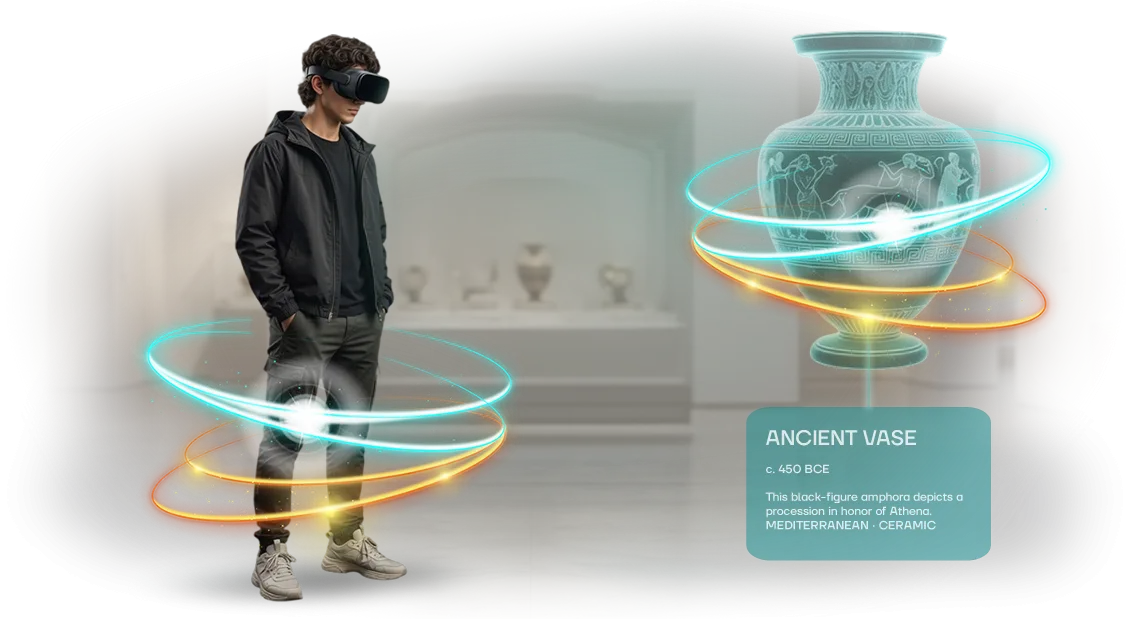
A virtual exhibition lets visitors examine the collection up close, “feel” it with their eyes, and immediately imagine how the material will look on an armchair or sofa.
Clients are no longer held hostage by geography and exhibition schedules. They enter your 3D showroom from a laptop or tablet, explore the range at their convenience, and come back again.
This builds brand recognition and increases the share of repeat inquiries from designers and factories.
We help textile manufacturers and furniture companies create such virtual exhibitions. We convey fabric textures in detail so that customers make decisions without a personal visit — and choose you, not a competitor.
What a Virtual Exhibition Offers for Textiles and Upholstery Materials
A virtual exhibition solves the main problem of the textile business — how to show a material that begs to be touched when the buyer is hundreds of kilometers away.
Ordinary catalogs and photos do not convey texture, scale, or color, and carrying physical samples is expensive and slow.
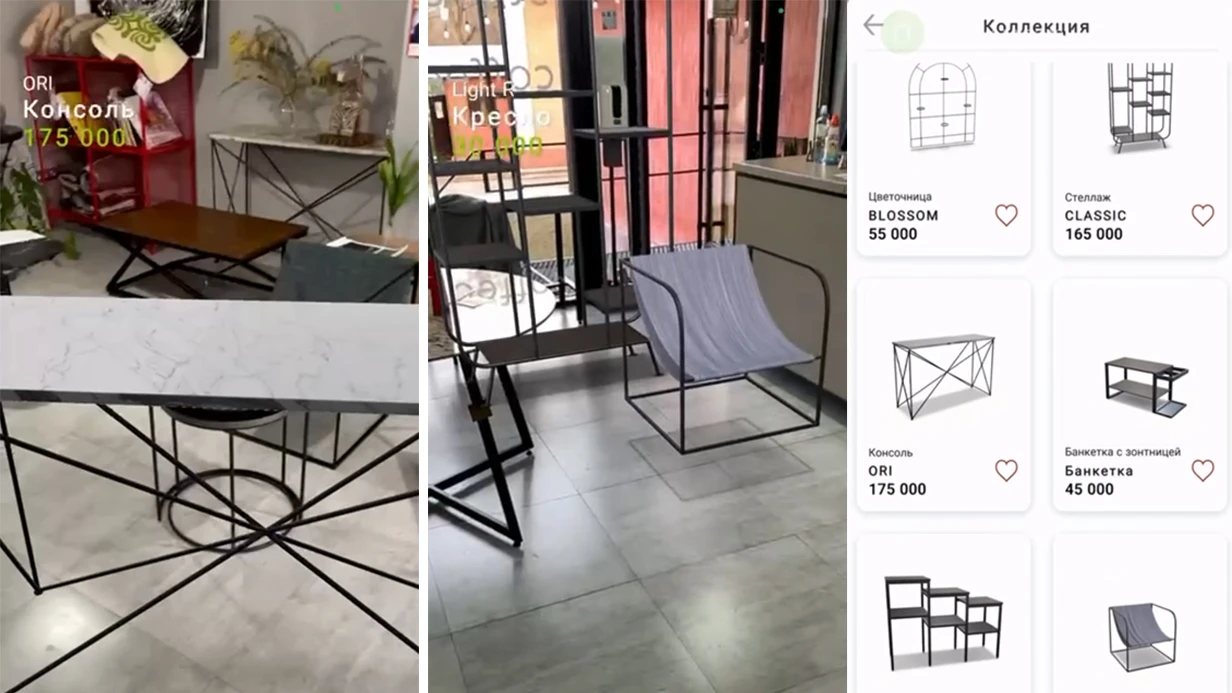
An interactive showroom closes this gap: the client sees the fabric at a realistic scale, zooms in on details, and evaluates how the material looks in a finished product.
We build virtual spaces that work for your sales department 24/7 — no weekends, no business trips. Here’s what that means in practice.
Benefits for Fabric Manufacturers
Designers and furniture factories are no longer dependent on geographic proximity. Instead of traveling to an exhibition or waiting for a courier with samples, customers enter the showroom and study the collection at their convenience. You expand your reach to all regions where you don’t physically deliver catalogs.
An online fabric presentation removes the objection “I can’t see it in person.” The client zooms in on the thread weave, changes the angle, and imagines the fabric on a specific sofa or armchair.
This shortens the approval cycle: fewer meetings, fewer sample shipments, faster ordering decisions.
For Furniture Factories and Designers
An interactive showroom is a tool for your managers. Instead of verbal descriptions, they send clients a link where everything is visible: color, texture, and compatibility with other materials in the collection.
This increases negotiation conversion and reduces the rate of returns caused by mismatched expectations.
Sales grow because buyers interact with the product longer. The more time a client spends with a material, the higher the likelihood of an order. The virtual format lets you show all article numbers at once — holding attention and nudging toward a choice.
Want your fabrics to be viewed from anywhere in the country? Tell us about your collection — we’ll show you how to present it effectively in 3D.
Virtual Exposition Formats for Your Task
When you sell fabrics and upholstery materials, clients need to see texture, color, and how the material behaves in an interior. Physical samples are expensive and slow, and static photos don’t convey a sense of scale.
The virtual format lets you show the collection in detail, give buyers a chance to “feel” it with their eyes, and make decisions faster.
We develop three main exposition formats. The choice depends on the task: showcase a new collection, hold a seasonal event, or build a permanent online catalog. In any case, the client gets a tool that works for recognition and sales, not just a pretty 3D image.
Format Comparison
| Format | What it’s for | What it gives the client |
|---|---|---|
| Virtual showroom for fabrics | Presenting the assortment with permanent access | The buyer examines materials up close, sees texture and combinations, and books samples without calling a manager |
| Virtual exhibition | Seasonal collections, new product debuts, special events | Attracts attention to the brand, collects inquiries within a short period, creates a news hook |
| Online catalog | Quick selection by parameters: color, composition, purpose | Reduces selection time, lowers the load on the sales department, helps designers and furniture makers find what they need in minutes |
As you can see, each format solves its own task. In a showroom, you can create rooms with examples of furniture upholstery and curtains; in an exhibition, interactive stands and presentations; in a catalog, convenient search and filters.
We help you choose a format for your collection and business specifics, then implement it turnkey — from exposition structure to built-in request forms.
How We Develop a Virtual Showroom: Project Stages
Wehave spent over 10 years helping textile manufacturers and suppliers showcase collections without logistics costs.
That’s why the virtual showroom development process is structured so you understand what happens at each stage, what the timeline will be, and what result you’ll get.
-
Brief and goals. We get to know your task: which fabrics and collections to show, who the visitors are, and which walkthrough scenarios matter. We record expectations for timeline and metrics — for example, the number of views and sample requests.
-
Material audit. We take in photos, catalogs, 3D models, or the fabric samples themselves. If precise texture reproduction is required, we do additional shooting — this is the foundation of a realistic material image.
-
Structure prototype. We assemble the space layout: halls, display cases, categories, navigation points. You see the showroom logic before rendering, so you can easily make changes without redoing work.
-
Space design and development. We create the stylistics, lighting, and display case content. At this stage, we bring in professional equipment and proven visualization tools to make the image as close as possible to the real fabric.
-
Assembly and testing. We combine all elements into an interactive showroom and test usability on different devices. You receive a preview link, and all comments are fixed before launch.
-
Launch and project analytics. We publish the showroom on your website or a separate address, connect the statistics system, and track activity: which collections are viewed more often, how much time is spent, and where visitors stop.
We fix the timeline for each stage in the contract; a typical project takes 3–5 weeks depending on the number of items. After launch, we stay in touch: we refine scenarios, add new collections, and help you use analytics to increase inquiries.
What’s Included in the Virtual Exhibition Delivery
You get not a “prototype for show,” but a fully working platform where you can already receive visitors and collect inquiries. The package includes everything you need: from digital copies of your assortment to process setup for your team.
What’s Included
- 3D product models — fabrics, upholstery materials, finished furniture. Each sample conveys texture, color, and light reflection so visitors see the material almost as if it were real.
- Virtual exhibition interface — navigation through halls, catalog with filters, product cards with specifications and a sample request button. Simple for guests and convenient for your manager.
- Adaptation to usage scenarios — the platform works equally well on a large screen during an event, on a laptop in negotiations, and on a client’s smartphone. The same experience without quality loss.
- Integration with your systems — visitor inquiries and contacts are automatically transferred to your tracking system; sample request emails arrive immediately after a visit. No manual entry.
- Branded design — logo, color palette, hall style, and overall tone of the platform under your brand, not a standard template.
- Training for your team — we run a short workshop after which managers independently conduct tours, update the display, and add new items.
- Launch support — we help with the start, accompany the first presentations, and handle technical issues so you can focus on sales.
In the end, the cost includes not just “development hours,” but a finished tool that pays off through faster demonstrations and geographic expansion without logistics expenses. All you need to do is bring visitors — everything else is already set up.
Case Study: Virtual Showroom for an Upholstery Fabric Factory
For the upholstery fabric factory «TekstilPro», we built a virtual showroom that replaced an expensive exhibition booth.
Instead of sample albums — an interactive fabric catalog where you can examine the texture up close, see the color under different lighting, and immediately request a commercial offer.
This is an example of a fabric showroom that works around the clock and requires no floor space rental.
The virtual exhibition case was not simple: the assortment included hundreds of article numbers, and each had to be shown so a designer could see the real texture.
We used professional 3D graphics and photogrammetry — the client received a model that conveys the nap, weave, and sheen of the material. The client can “flip” the sample, zoom in, and even see how the fabric behaves in an interior.
The results speak for themselves. In the first months of operation, average time on the site tripled: visitors study the catalog for 4–5 minutes instead of the usual 40 seconds.
The number of inquiries from the “View fabric” section increased by 2.5 times — managers receive requests with specific article numbers, so they spend 30% less time on approvals.
The factory has already used the showroom for online presentations to clients from other cities and plans to make it its main sales channel.
The department head notes: “We gave up traveling booths and catalogs — now the entire line is always with us, in one space.” If you need the same tool for your collection, let’s return to discussing your task on a preliminary call.
How to Choose a Virtual Exhibition Format for Your Budget?
The answer depends not on the size of the budget, but on the tasks you set for the exhibition. Often clients work backwards — choosing the most expensive format just to “make it look nice,” and end up overpaying for features that neither visitors nor sales managers use.
So the first step is to clearly define your goal: showcase new products, collect contacts, conduct negotiations, or close contracts.
For textiles and upholstery materials, the key is to accurately convey texture, color, and how the material looks in an interior.
If the task is to introduce clients to a new collection, a 3D catalog with detailed sample viewing and the ability to zoom into the fabric structure is enough.
If you plan to negotiate and sign contracts, a full virtual space with navigation, meeting halls, and material combination demonstrations is worth considering.
The cost is influenced by the number of exhibits, the level of detail, and interactive functions — for example, changing lighting or trying fabric in different interiors.
These are exactly the parameters we discuss at the brief stage and choose the optimal solution for your budget. We don’t force your task into a ready-made template — instead, we offer options that solve your problem without being overloaded with unnecessary functionality.
In the end, you get a clear estimate, a phased plan, and the opportunity to start with a basic format and then expand it as your tasks grow.
This approach avoids overpayment and makes the exhibition a working tool: it brings reach, inquiries, and repeat contacts, rather than simply becoming an expense item.
To understand which format suits you, simply contact us and briefly describe your task. We’ll offer two or three options with different budgets — from compact to expanded — and you’ll choose the one that matches your goals and financial capabilities.
Frequently Asked Questions About Virtual Exhibition Development
Most often, doubts concern not the technology itself, but the process: how quickly the virtual exhibition will be ready, what will happen after launch, and who is responsible for the result.
This is especially important for textiles and upholstery materials — collections are constantly updated, and the showroom must keep up. So we’ve answered the main questions in advance.
What guarantees are there for virtual exhibition development?
We work under a contract with a fixed estimate and stage-by-stage delivery. You see intermediate versions of the showroom — from the layout to the finished halls — so situations where “it didn’t turn out as expected” are excluded. You personally accept the final result, and only then is the project considered complete.
How long does creating a virtual exhibition take?
A standard project for a collection of fabrics and upholstery materials takes 2–4 weeks. The timeline depends on the number of halls, samples, and interactive features — we outline the preliminary schedule in the brief and fix it in the contract.
If you need to meet a specific exhibition or presentation deadline, we create an accelerated version without quality loss.
What happens after launch? Is there support?
Yes, after launch you receive technical support: we handle refinements, fix errors, and help update content — for example, replacing collections, article numbers, and prices. You’re never left alone with the project.
Support is included in the service package or can be connected separately, whichever is more convenient.
Will we be able to manage the showroom ourselves?
Yes. We provide an easy-to-use control panel so your employees can change fabric photos, descriptions, and prices without contacting developers. We conduct training on a simple example — usually one short webinar is enough, and then the team works independently.
If you have other questions about timelines, guarantees, or the content of a virtual showroom — write to us, we’ll review your situation and offer a solution for your collection.Get a Consultation on Virtual Exhibitions and 3D Showrooms
Order a virtual exhibition or 3D showroom for textiles and upholstery materials — and show your collections to buyers from any city without logistics or venue rental. We’re available by phone, email, or messengers: the consultation is free and comes with no obligation.
Here’s a quick overview of how the process works after you contact us:
- You submit a request or call — we clarify the tasks, exposition formats, and timelines.
- You send materials: fabric photos, catalogs, and descriptions of textures and colors.
- We prepare the virtual exposition concept: hall structure, navigation, and presentation scenarios.
- We approve the layout and visual style and make revisions.
- We assemble the virtual showroom, test it on different devices, and provide the link for your clients.
- After launch, we support the project: we update collections and add new materials.
Already at the consultation stage, you’ll see how a virtual exposition fits into your marketing — you can use it for exhibitions, dealer presentations, on your website, and in social media. Leave a request, and we’ll offer a solution for your budget and assortment. Simply click the contact button in your preferred channel — we’ll respond within one business day.