

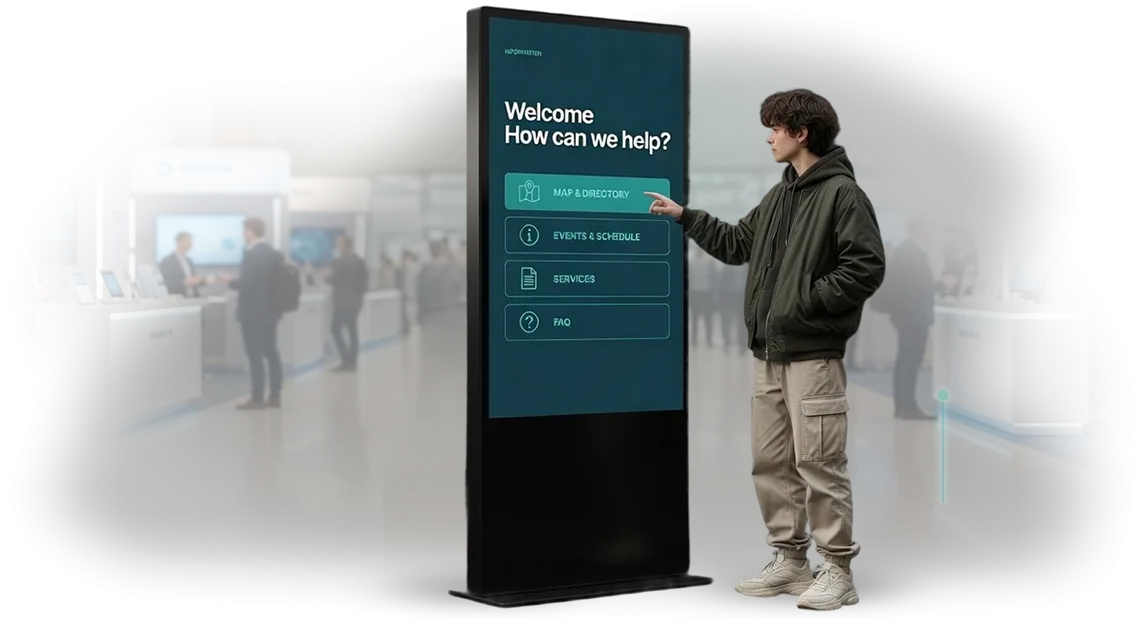
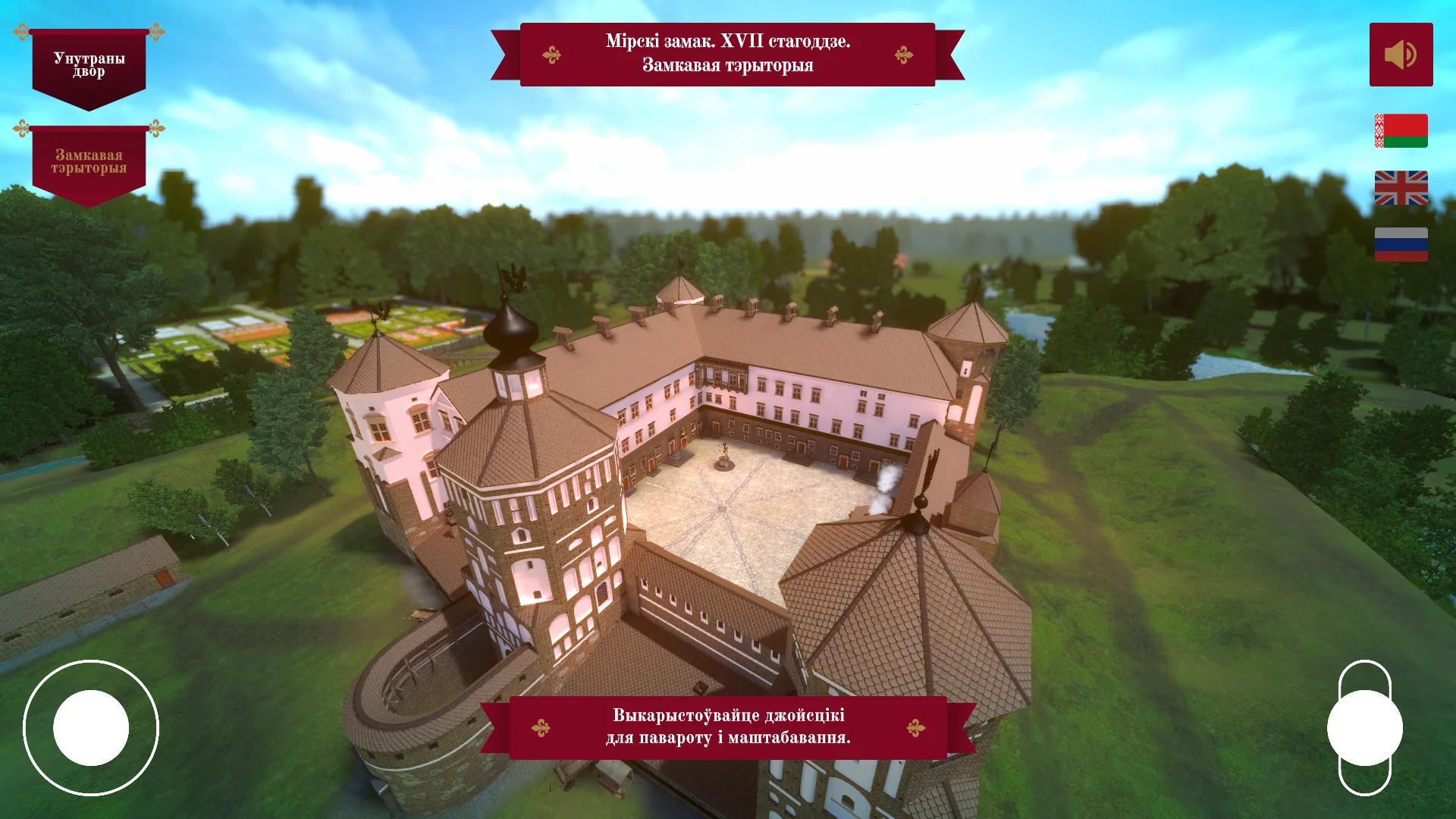
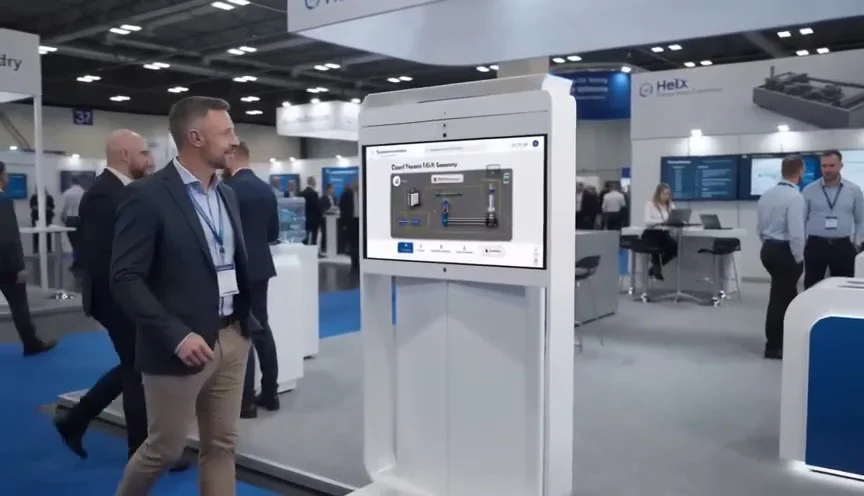
Exhibition booth reception desk: first impression of the museum
The exhibition booth reception desk is the guest's first point of contact with the museum. It is in the reception zone that a visitor decides whether to stay for an hour or rush through the exhibition.
If guests are met with paper signs, a long queue, and silence, interest in the exhibition fades before they even reach the first hall.
An exhibition counter with an interactive kiosk turns waiting into an introduction to the exhibition. While a visitor buys a ticket or waits for their group, they can watch previews of key exhibits, choose a route through the halls, and learn the museum's history. This way, the first minutes work for the impression, not against it.
The problem many venues face is the gap between the entrance and the main exhibition: guests do not understand where to go, what to see, or how long it will take.
An interactive kiosk closes that gap—it provides navigation, answers frequently asked questions, and creates a sense of care for the visitor from the very first second. The first impression no longer depends on the queue or staff fatigue—it becomes predictable and positive.
We design these solutions around the specific needs of each museum: we define scenarios for solo guests, families, and organized groups, plan the interface logic, and integrate the kiosk into the style of the space.
As a result, the reception zone stops being just a ticket-issuing point—it becomes the start of a thoughtfully designed journey through the exhibition, and the guest feels from the very first seconds that the museum was waiting for them.
What an interactive kiosk gives the management and guests
Guests come to the museum for experiences, but they often get lost in the halls, do not know where the exhibition they need is, and leave without buying tickets for temporary exhibitions.
Staff answer dozens of routine questions, and the museum loses revenue from souvenirs and additional services. An interactive kiosk solves this chain of problems and gives the management several measurable results at once:
- Increased loyalty. Visitors choose their own route and discover interesting facts—they feel cared for, return to the museum, and recommend it to friends. This is free advertising without marketing investment.
- Convenient navigation. A map of the halls, excursion schedule, signs to the café and coat check—guests spend less time searching, and the management does not need to install additional signage.
- Reduced staff workload. Employees stop being an information desk and focus on real work: meeting groups, leading tours, and safeguarding exhibits.
- Greater recognition. A stylish kiosk with a unique design is an art object that guests photograph and post on social media, expanding the museum's reach without an advertising budget.
- Conversion to revenue. The kiosk can sell tickets, souvenirs, audio guides, and accept donations—this increases the average transaction and does not require hiring additional cashiers.
This approach has long been the norm in global cultural institutions—just think of Prado, where digital assistants have been helping guests for many years.
An interactive kiosk is not just a screen but a tool for the museum's systematic development: more loyalty, less staff workload, higher revenue.
Information kiosk formats for your tasks
Each task is different. Sometimes you need a "set and forget" kiosk, and sometimes it becomes the centerpiece of the exhibition and must impress. That is why we offer two formats: a standard solution and a custom project.
What matters is not the price itself, but how well the kiosk delivers on the investment and solves your task.
A standard kiosk works when the priority is to communicate information quickly: museum navigation, schedule, hall map. It is built from proven components, easy to operate, and requires no special maintenance. For most tasks this is sufficient, and launch takes just a few weeks.
A custom project is when the kiosk must become part of the visit experience: engage visitors, collect contacts, and work as a brand element. We design the shape, select materials, and shape the interaction around your audience—from children's tours to international conferences.
Such a solution takes longer to implement, but it delivers measurable value: more contacts, deeper engagement, stronger impressions.
| Format | Who it is for | What it gives the client |
|---|---|---|
| Standard kiosk | Museums and venues that need reliable navigation and fast launch | Clear interface, simple content management, minimal operating costs |
| Custom project | Organizations that want to stand out and strengthen visitor engagement | Unique design, custom scenarios, guest data collection, and greater recognition |
In either format, you get a working kiosk, not a "box with a touchscreen." We match the type to your task, budget, and audience—and at the brief stage we show which option will pay off faster and bring more value to your operation.
How the project proceeds from brief to launch
We start with a brief and immersion into your museum's specifics: we discuss the exhibition's goals, the visitor profile, and their route scenarios.
This lets us propose a kiosk scenario that solves your concrete task—whether it is speeding up navigation, deepening engagement with exhibits, or collecting contacts for future communication.
Each stage ends with an approval point—you see the intermediate result and make edits before the next level of work begins. This way we eliminate surprises at the finish and stay within the agreed budget.
- Brief and interview with your team. We capture the kiosk's goals, key visitor touchpoints, and success criteria: what share of guests should use it and what action they should take.
- Concept and scenario. We propose the screen structure, section logic, and prompt copy so visitors can figure out how to use the kiosk without staff assistance.
- Design mockup approval. We show the visual style: how it fits the exhibition, font readability, and convenience of large buttons. After your "okay," we move to assembly.
- Development and prototype assembly. We build a working kiosk on professional equipment, populate it with content, and test all scenarios—from first touch to session completion.
- Testing with real visitors. We bring the kiosk to the museum, observe usage, and remove weak points: long texts, unclear buttons, slow loading.
- Launch and installation. We install the kiosk in the right spot, configure the network and content update system, and conduct the final acceptance together with you.
- Support and development. We train staff, provide a communication channel with engineers, and update materials on request—so the kiosk stays relevant a year from now.
The result is a predictable launch on time, without downtime or emergencies. You get not just a "screen on a stand" but a tool that measurably improves visitor experience and reduces staff workload.
Reception zone: how guests use the kiosk
In the reception zone, the kiosk becomes a digital concierge: the guest immediately sees where to go, what to see, and whom to ask. The interface is designed for a live flow—even a visitor unfamiliar with screens will figure it out in a few seconds. The outcome: fewer queues, free administrators, satisfied guests.
Here are the typical scenarios the kiosk handles at the reception desk.
How guests use the kiosk
- Navigation: selecting a department or exhibit and getting a route on the interactive map.
- Staff search: by name or department—office location and reception hours.
- Booking an appointment with a specialist or joining a waitlist without an administrator's involvement.
- Downloading a map, program, or brochure by email or QR code.
- Leaving a visit review or rating right from the kiosk.
- Booking a meeting room or ordering additional services.
The kiosk takes over the routine, and staff focus on genuinely complex matters.
What is included in the delivery package
- Touchscreen kiosk with a vandal-resistant housing.
- Interface in your brand identity: colors, logo, fonts.
- Content management panel—you update maps and news yourself.
- Inquiry statistics and hourly load data.
- Integration with your CRM or booking system if needed.
- Staff training and support for the entire service life.
If desired, we can extend the experience to smartphones after the visit. This package delivers a predictable result: faster service, repeat visits, and lower advertising costs.
Case study: museum with 40% visitor growth
Many museums face the same problem: the exhibition is rich, but visitors quickly get tired, lose their way in the halls, and do not manage to see the highlights.
Guests leave without lasting impressions, do not share photos, and do not return—the museum misses out on repeat visits and recommendations.
We developed interactive information kiosks for the Museum of the History of Science and Technology. Instead of traditional signs—touchscreens with hall maps, exhibit stories, and smart navigation.
The system is built on professional equipment and proven tools, so it runs reliably even during peak hours.
The result was immediate: visitor attendance grew by 40%, and the average time spent in the museum nearly doubled. Repeat visits rose by a quarter—guests return to explore routes they did not get to on their first visit.
For the museum, this means not only higher ticket revenue but also a steady stream of visitors who come on recommendation.
The kiosks paid for themselves within a few months, and we continue to support the project: we update content, add features, and make sure the service stays useful and intuitive for people of all ages.
How to choose the right kiosk format?
Choosing a kiosk format starts not with a picture but with understanding the task: to direct visitors, tell about an exhibit, collect contacts, or replace a receptionist.
That is what determines whether you need a floor-standing terminal, a wall-mounted panel, or a compact counter at the entrance.
The first criterion is your audience. If the museum is visited by families, choose a kiosk with a large screen and a simple interface so children and older visitors can use it without help.
For a professional exhibition, a more restrained design and advanced settings are appropriate. This is not about technology but about your guests' comfort—and, as a result, their impression of the exhibition.
The second criterion is placement and traffic. In a narrow corridor, a wall-mounted kiosk works better, while at the entrance a freestanding counter that immediately catches the eye is the choice. Consider lighting, distance from exhibits, and easy access to a power outlet.
Underestimating these details leads to a kiosk standing in the shadows where visitors simply do not notice it.
The third is content and its updates. If you plan to change materials, choose a model with remote management. We work on the Android platform, which allows updating information without an engineer visiting the site and without taking the kiosk out of service.
To avoid confusion, ask yourself three questions: who will use the kiosk, where it will stand, and what should happen after touching the screen. The answers cover up to 80% of the decision.
The rest is on us: we will help you select a format for your museum's specifics, compare options, and prepare a cost estimate. Come for a consultation—we will discuss your project and show how the kiosk will fit into the real space.
Common doubts before ordering
Before ordering interactive kiosks, museum directors raise the same questions: will the equipment fail, who will update the content, and will we make it in time for the exhibition opening. This is normal—we address concerns about equipment and timelines at the contract stage.
What if the kiosk breaks down during operation?
We use industrial components designed for round-the-clock operation and build in a safety margin for your visitor volume.
The equipment comes with a warranty; if it breaks, we will send a replacement or dispatch a technician on site—the kiosk will be back in service within 1-2 days.
Who will update the content after delivery?
Updates are done through a simple admin panel: your employee can change texts, images, and videos in minutes without a programmer. If you need deeper support, we can add a plan with scheduled maintenance.
Will you make it by the planned opening date?
We work in stages with checkpoints and fix the timeline before the start. The prototype is approved in advance to rule out rework. Delays are only possible if requirements change on your side—this is documented separately.
Leave a request for a kiosk cost estimate
Leave a request and you will receive the cost calculated after audit for your task the very next day.
We will account for the number of locations, design, content, and timelines so the proposal is precise rather than "market average." No hidden fees: the final amount is fixed in the contract before work begins.
After your request, we take a short path to project launch:
- Short brief—15 minutes by phone or chat: you tell us where the kiosk will be, what it should show, and what tasks it should solve.
- Cost calculation—we prepare a cost estimate within 1-2 business days, broken down by stages and timelines.
- Presentation and contract—we show the solution, answer questions, and fix the scope of work.
- Design and approval—we create interface mockups and housing design; you make edits before launch.
- Development and commissioning—we build the kiosk, configure the hardware and software, and test it in your conditions.
- Support and development—after launch we stay in touch: we update content and refine features.
The next step is to leave a request in the form below. Within an hour, an engineer will contact you, clarify the details, and prepare the calculation. This is not binding: you will get transparent numbers and a plan, and you can decide without any pressure.
Let us calculate the cost of your kiosk—we will start with a short conversation.