

Why VR Electrical Safety for Electricians Is a Matter of Life and Death
Every year, electricians suffer injuries due to mistakes that cannot be practiced on real equipment. Briefings and posters provide theory, but at a critical moment a person acts on autopilot — and that autopilot is not trained. Formal training does not build muscle memory, so the risk remains high.
Electrical accidents are especially brutal: electric shock does not forgive a moment's hesitation. The consequences — burns, cardiac arrest, loss of working capacity. For business, this is not only a human tragedy but also reputational losses, fines, and work stoppages.
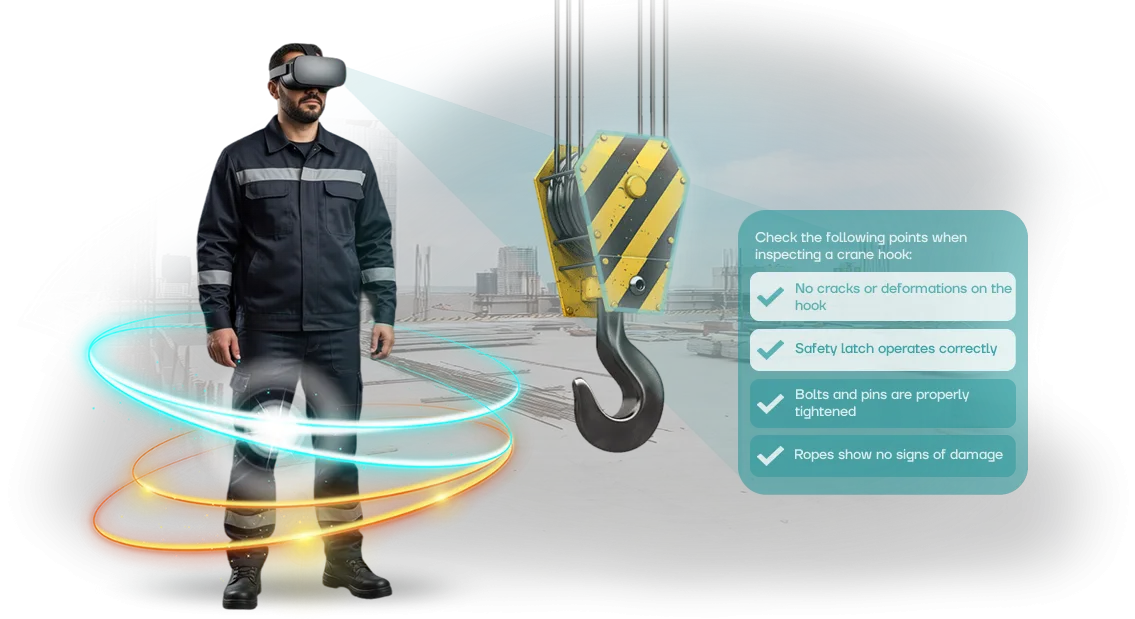
VR electrical safety moves training from the classroom into conditions as close to reality as possible.
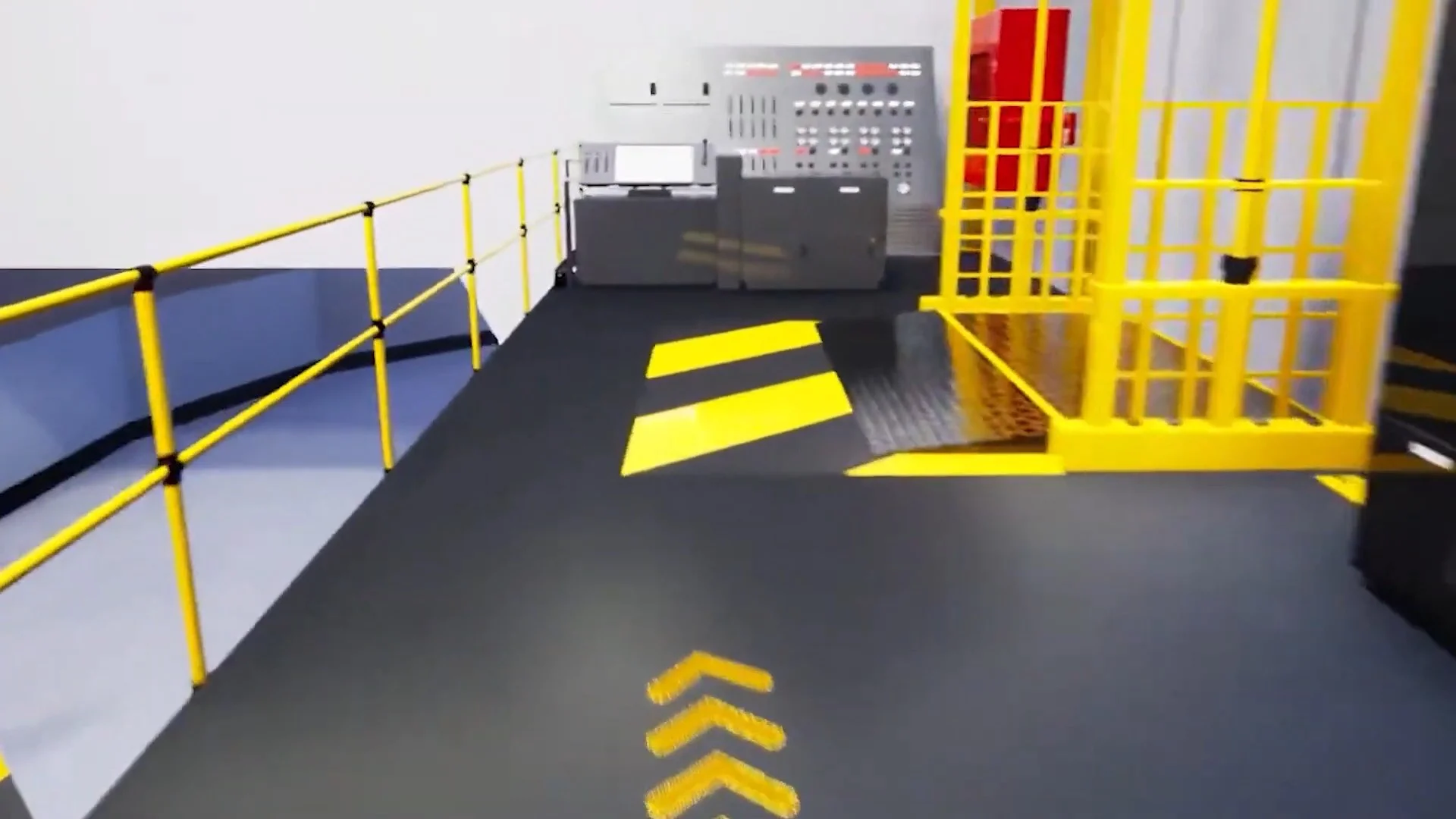
The electrician enters a virtual power facility where they must make the right decision under pressure: choose the right tool, verify the absence of voltage, and set up a work area barrier.
A virtual safety trainer for electricians allows mistakes without consequences and builds correct scenarios to the point of automation.
Such training changes the statistics: the number of errors in the field drops significantly because a person has already experienced the critical situation. VR occupational safety for electricians becomes not a formality but a risk management tool. Employees return from the simulator with real experience, not just a tick in a logbook.
We develop exactly these programs — tailored to your production needs, considering the specifics of your facilities and regulations. This is a short path to safety that can be measured: fewer incidents, greater staff confidence, savings on fines and downtime.
What a VR Trainer for Occupational Safety and Electricians Delivers
Electricians work with live voltage every day, where the price of a mistake is life and health. Ordinary lectures and tests do not convey the feeling of real risk, so knowledge is quickly forgotten.
A VR trainer transports the trainee to a virtual substation: they see live wires, hear the hum of equipment, and must make the right decision. A mistake in the simulator is safe, but the consequences are vivid.
Benefit 1. Reducing workplace injuries
The employee practices emergency situations and hazardous work methods to the point of automation. They learn to notice violations at the preparation stage, not at the moment of electric shock.
After implementing such simulators, the number of incidents drops by 30-40%, according to international practice. We build training on current regulations and standards, including ISO 45001, so every scenario meets modern occupational safety requirements.
Benefit 2. Engaging staff in training
Lectures and briefings are done "for show" — employees sit through them and forget everything. VR completely changes the attitude: a person does not watch slides but is immersed in the situation.
Material retention rises to 80% because memory, actions, and emotions are all engaged. People themselves ask for new scenarios, and staff turnover decreases thanks to renewed interest in the profession.
Benefit 3. Fast verification of electrical safety knowledge
Instead of a multi-hour exam with paper tests — a team run through virtual situations. The trainer records every action: the correct sequence of operations, use of PPE, response to an emergency.
The supervisor immediately sees an objective assessment for each employee in a personal dashboard. The check takes 20 minutes instead of half a workday, and the results do not depend on the examiner's mood.
Our engineers adapt scenarios to the specific equipment at your facility. You get a ready-made system for regular skills verification: safety becomes measurable, and those responsible for occupational safety can rest easy.
VR Training Formats for the Chief Power Engineer's Department
The chief power engineer's department has different tasks: some need to be trained quickly at scale, others need to be checked before authorization, and others need to learn how to make decisions in abnormal situations. One VR format does not cover all scenarios, so we tailor it to the specific task.
VR Training Formats
| Format | Target audience | What it gives the client |
|---|---|---|
| Mass training | Electricians, new employees, shift personnel | Fast coverage of the entire shift, a unified knowledge standard, less time spent on briefings |
| Authorization checks | Candidates for high-risk work | Objective assessment of actions, automatic error logging, lower injury risk |
| Emergency scenario training | Line personnel, supervisors | Practicing procedures without risk to people or equipment, stable response skills |
| Manager training | Chief power engineer, shift supervisors | Analytics on subordinates, management decision practice, team control |
The formats are easy to combine: for example, after mass training, authorization checks run automatically, and managers receive reports on each employee's progress. As a result, you cover both training and control with minimal organizational time.
How We Implement VR Trainers: From Brief to Launch and Support
Anyone responsible for safety knows: the only way to teach an electrician to act correctly is through practice — but a mistake on a real site costs too much.
We have structured the process so that VR training implementation takes a consistent timeframe, with no surprises or firefighting. You receive a finished trainer, instructions, and support — all work goes through transparent stages.
- Brief and audit of electrician workflows. We study your regulations, typical switching operations, frequent errors, and hazardous zones. The output — a clear understanding of which skills to train first.
- Scenario and methodology approval. Together with your safety experts, we define training situations: from work permits to actions during a short circuit. We set assessment criteria.
- Trainer prototype development. We quickly demonstrate the key episode — you verify the logic and fine details before the full build, without wasting time.
- Full trainer assembly. We create a realistic environment, scenarios, control questions, and a hint system. The employee completes the full training cycle and sees their progress.
- Testing with your people. A pilot group runs through the training, we collect feedback and refine details so the trainer is convenient and intuitive for your employees.
- Launch and handover. We install the program, set up workstations, and train your instructors. No dependency on us in daily operations.
- VR project support. We develop the trainer together with you: add new scenarios, update regulatory requirements, and provide technical support. You can always expand the program to other professions.
This approach allows you to launch VR training implementation within 4-8 weeks and achieve visible results — reduced injuries and faster skill acquisition for new electricians.
What Is Included in the VR Trainer Delivery for the Occupational Safety Department
We deliver a ready-to-use working tool to the occupational safety department, not a "raw" product that needs finishing. The package includes everything needed to start training electricians within the first days: from scenarios to instruction for your staff. Below is the VR trainer delivery package.
- Training scenarios tailored to your needs — we practice typical electrician situations: working under voltage, switchboard maintenance, emergency response. Scenarios are modeled based on your regulations and typical personnel errors.
- Methodological materials for the instructor — a ready-made lesson plan, assessment checklists, and recommendations for error review. The instructor does not need to invent anything: open the plan — run the session.
- Instruction for your staff — our specialists train your personnel to use the trainer and its built-in control system. You get a team that runs training independently without our constant involvement.
- Simple training completion reports — see which electricians have completed a scenario, where errors occurred, and who is ready for a retake. Data can be exported for audits and internal control.
- Access to scenario updates — we regularly expand the library with new situations and adjust details to changes in regulatory requirements. Your trainer never becomes outdated.
- Support for the entire usage period — we answer questions, help with failures, and support the rollout when you launch training for new groups of employees.
This package closes the question "what exactly did we get for the money": you receive not a demo video but a full-fledged tool for regular training, knowledge verification, and protecting personnel from real risks on site.
Case Study: Factory Reduced Electrician Injuries by 37% in Six Months
When the energy service of a machine-building plant approached us, electrician training was based on paper briefings and display boards. Employees passed exams formally and saw real switchboards and schematics for the first time only on site.
Injuries caused by inattention repeated year after year, and the workshop manager understood: fines and commissions would not solve the problem.
We proposed replacing part of the classic training sessions with a virtual simulator. The electrician enters a digital copy of their own workshop, works with high-voltage equipment, and learns to act during a short circuit — without risk to life.
Every mistake immediately becomes a lesson rather than an investigation report, so the skill is reinforced faster than with ordinary video viewing.
Implementation Results
Six months later, the EnergoProm plant recorded a 37% reduction in electrician injuries. Initial briefing time dropped from two working days to four hours, and new employees went on site having already practiced hazardous scenarios in a safe environment.
Mistakes that previously led to burns and downtime are now made by almost every newcomer in the simulator — but without consequences, and about 80% of them are never repeated in real work.
The workshop manager noted the main effect was not savings on fines but the habit electricians developed of verifying de-energization and thinking before every action.
Why This Works at Other Facilities
We have implemented the same approach at metallurgical, construction, and logistics sites — scenarios are adapted to the customer's specific equipment and regulations.
Factories come back for new modules: after the first course, we added seven more — from working in confined spaces to emergency switching operations.
If you want to see the effect at your own facility, start with a short pilot in one area. We will prepare a scenario for your workshop and show before/after results based on real injury statistics and personnel training speed.
How to Choose VR Training for the Specifics of Your Electrical Networks?
Many managers ask: why doesn't a standard VR trainer cover the needs of their electrical installation crews? The answer is simple — your networks are unique: your own distribution scheme, your own equipment, your own regulations, and typical errors.
A universal scenario shows general rules but does not teach working with your specific risks — and that reduces the value of such training.
Therefore, choosing a VR trainer should start not with a catalog of ready-made programs but with the question of how well the scenario can be adapted to your specifics.
We build training around your tasks: we study documentation, analyze typical operations and emergency situations characteristic of your networks.
Based on this, we create individual VR scenarios where the electrician operates in a familiar environment — with your panels, disconnectors, and voltage levels.
Adapting training to your electrical networks delivers a tangible effect: the employee does not just memorize instructions but develops safe skills in conditions as close to real as possible.
They learn to notice exactly the hazards found at your sites and respond to them correctly. This reduces the number of errors and improves the safety culture without stopping production.
This approach also pays off in terms of time: after completing an individual scenario, a specialist starts independent work faster, and repeated briefings consume fewer resources.
In addition, you get a transparent picture — which topics cause difficulties for specific employees — and can strengthen their training precisely.
The main criterion when choosing VR training is the depth of customization to your conditions. Ready-made modules are good as a base, but real safety comes from scenarios born from your practice. Tell us about your networks — we will offer a solution that works for your results.
Addressing Doubts: Does VR Training Pay Off and Will It Break Down?
Clients often ask us: isn't it too expensive, won't the equipment break, won't we have to retrain staff? Let's go through each point and explain how it works in practice.
Any new equipment raises questions — especially when it comes to employee safety. We collected the most common doubts and answer them directly, based on experience from dozens of implementations.
How much does it cost and when will it pay off?
The cost depends on the number of employees and scenarios. For electricians, this is usually 5-10 training modules and an equipment set.
VR replaces part of the expensive off-site training sessions: annual savings per employee are calculated individually and come from reduced time and materials.
The simulator pays off within the first 6-12 months of operation, and the main effect is fewer injuries and less downtime.
What if the equipment breaks down?
We use professional devices that are checked before every course. The equipment comes with a warranty and free replacement in case of malfunction. For the client, this means: training will not be disrupted, and employees will not lose a workday.
Will employees find it difficult to learn?
The interface is designed so that the instructor only helps put on the headset once. After that, the employee follows on-screen prompts. Even those who have never used VR get comfortable within the first 5-10 minutes. Briefing time decreases while engagement grows.
Will VR replace a live instructor?
VR complements live training: the instructor sees results and reviews errors after the session. The simulator takes on dangerous and rare scenarios that cannot be reproduced in reality. This makes training safer and the instructor more effective.
Order VR Electrical Safety for Electricians and Protect Your People at Work
Accidents when working with electricity are among the most expensive for business: injuries, downtime, fines, and reputational losses.
A VR trainer does not replace regulations but lets an employee safely experience real dangerous situations that in real life could cost their health. You get a tool that works on prevention rather than dealing with consequences.
What is included in the order and what you receive:
- Consultation and audit of your scenarios — we select scenarios to match your tasks and regulations.
- Prototype demonstration before full development starts — you see how the trainer looks and feels.
- A ready-made training program with a results control system — we record who completed the training, how they answered, and where they erred.
- Full support: from equipment setup to instruction for your team.
- Integration into current processes and reporting — training is not "separate" but inside your system.
- Updates and technical support after implementation — the trainer lives and evolves with you.
After implementation, your electricians and contractors practice procedures without risk to life. This reduces the likelihood of errors on site, strengthens the safety culture, and protects you as the person responsible for people.
Order a VR trainer for electrical safety right now — we will discuss your situation, show how the solution covers your risks, and provide timelines and cost. We respond within a day and work without hidden conditions.