

VR electrical safety training: Why do employees violate the rules?
Employees do not violate electrical safety rules out of spite or laziness. Most violations are a consequence of rules being memorized formally: a person passes the test, signs the log, but in a real situation acts on autopilot, repeating a habitual and dangerous sequence.
Electrical injuries are one of the most severe categories of occupational injuries. Even a short discharge can lead to disability, and for a company it can mean downtime, fines, and reputational damage.
At the same time, classic occupational safety instruction almost never checks how an employee will behave in the face of a real threat—it only records knowledge of paper-based rules.
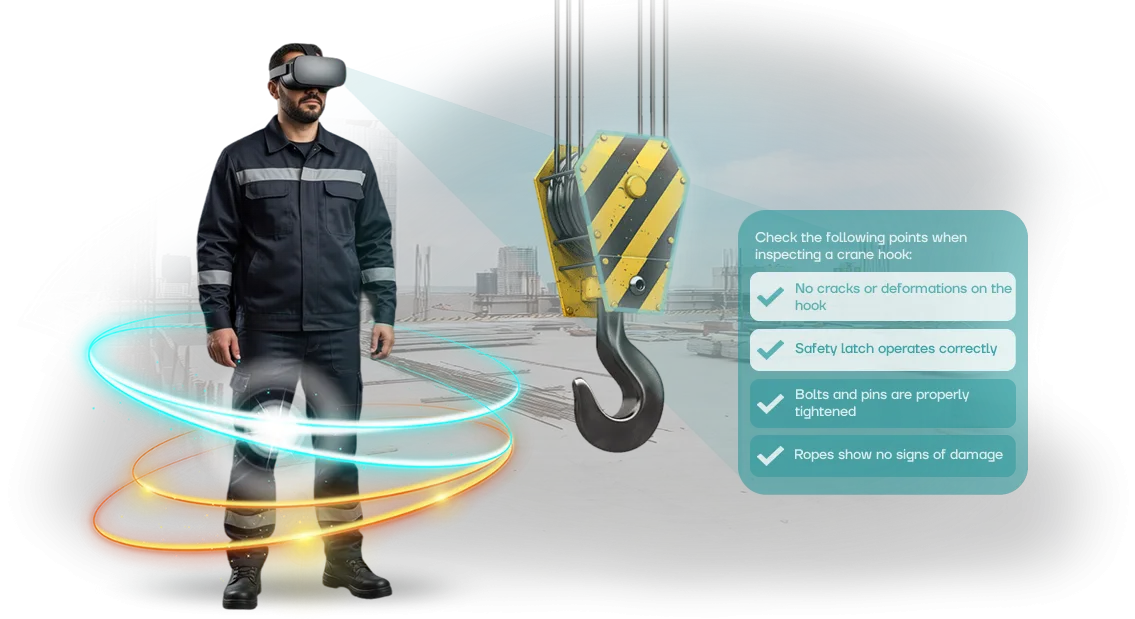
This is where VR training works: it converts knowledge into skill. The employee enters a realistic situation with dangerous voltage, makes decisions, and sees the consequences of an error—but without any threat to health or life.
Such experience is remembered for a long time and reduces the number of violations through a conscious attitude to risk, rather than under duress.
VR electrical safety training makes it possible to practice rare but critical scenarios: equipment failure, a colleague's mistake, working under voltage—and to do this before they happen at a real facility.
We develop VR electrical safety simulators tailored to the specifics of your production: taking into account your facilities, equipment, and typical personnel errors.
This gives the occupational safety department trained employees and clear statistics on training completion—without stopping production and without risk to people.
Benefits of virtual electrical safety training for business
Traditional electrical safety training often boils down to lectures and tests that do not form lasting skills. The employee knows the theory but in a real emergency becomes lost: does not see the danger, acts from memory rather than from the situation. This is a direct path to injuries and production downtime.
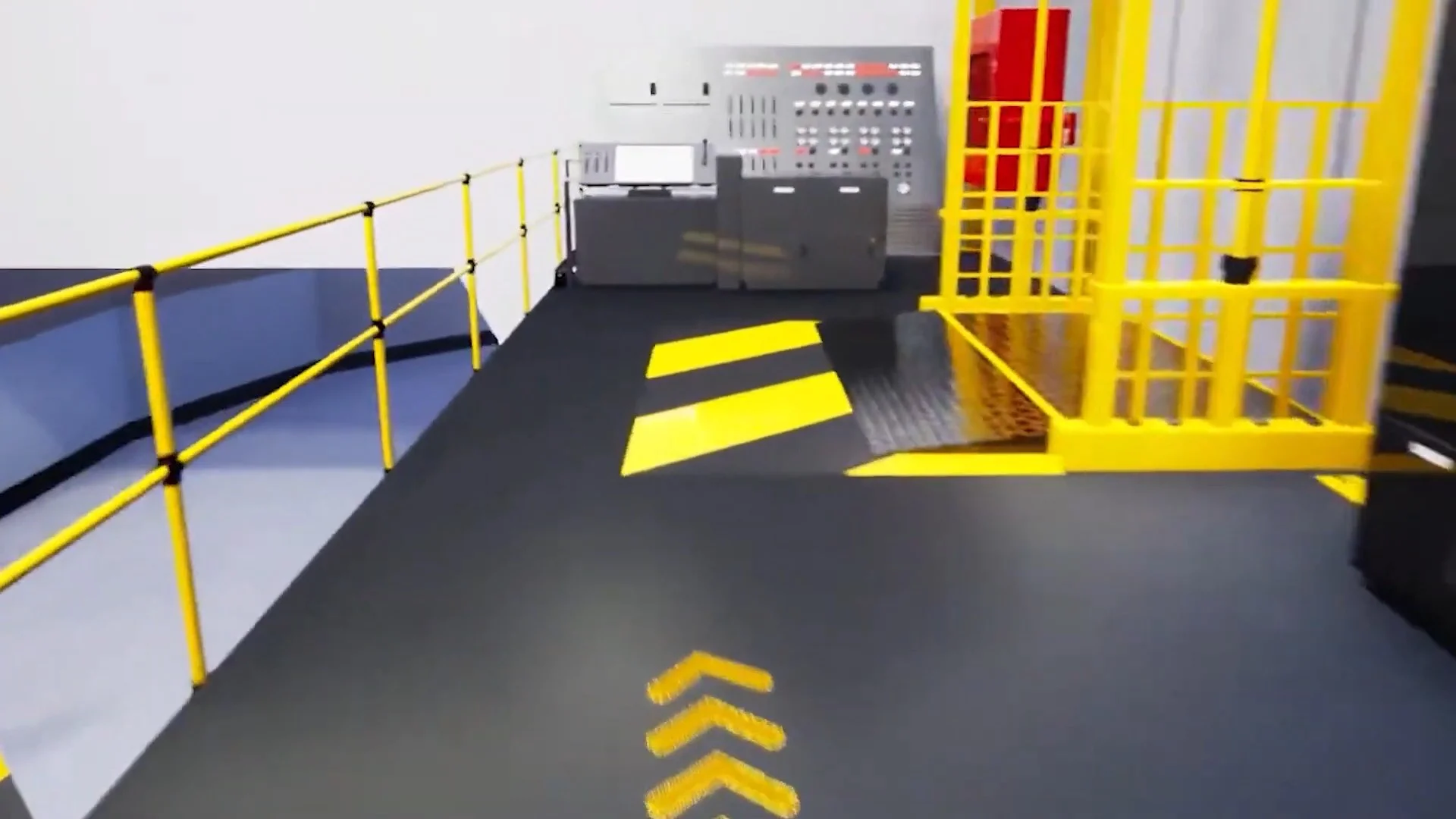
A virtual simulator solves this problem: it moves the employee to a realistic facility with an operating electrical installation where it is possible to make mistakes without consequences.
We develop scenarios based on real regulations and typical violations specific to the enterprise. Our engineers use professional equipment and deeply developed scenarios, so every minute of practice in a headset prepares a person for actions in high-risk conditions.
Employees become engaged in the process—this is not passive listening to instruction but active problem-solving. They search for hazardous factors, make decisions, and see their consequences in a visual simulation.
As a result, the material is better remembered, and safe behavior becomes a habit rather than an abstract requirement.
For business, this means lower accident rates, reduced costs for investigations and compensation, fewer downtime events due to injuries, and lower insurance payouts.
Training in a virtual environment is cheaper than organizing training grounds or off-site instruction, and it pays off by reducing risks and preserving staff health. Investing in a VR simulator is an investment in stable production operations and the protection of people.
Formats of virtual electrical safety simulators
The tasks of electrical safety training differ: some need to quickly familiarize newcomers with the rules, others need to practice actions during an accident, and still others need to check personnel readiness for a non-standard situation.
If the simulator format does not match the goal, training becomes a formality rather than a risk-reduction tool.
We develop virtual electrical safety simulators (VR electrical safety training) in four formats—from short courses to full immersion in the environment of a workshop or substation.
The selection depends on the audience, the frequency of training, and the level of employee responsibility, so the customer pays only for the required level of immersion.
| Format | Target audience | Value for the client |
|---|---|---|
| Short interactive course (up to 20 minutes) | New employees, contractors, visitors | Quick absorption of basic rules without stopping production |
| Scenario with action choices | Workers, electricians, maintenance staff | Diagnostics of typical mistakes and reinforcement of the correct sequence of operations |
| Full immersion in the work environment | Employees with permits, teams at complex sites | Skill practice in a virtual copy of a workshop or substation with realistic conditions |
| Emergency scenario | All personnel, safety officers | Training for actions in case of electric shock, fire, or equipment failure in a safe environment |
Each format is integrated into the existing training and occupational safety system: results are recorded, the person in charge sees who has completed the training and which topics caused difficulties.
If necessary, scenarios are supplemented with knowledge-check questions and automatic assessment of the employee's actions.
Thanks to this, training ceases to be a one-time event and becomes a managed process: you see the real level of personnel preparedness and can repeat difficult topics in a timely manner. Employees get safe experience that helps avoid injuries and downtime in real work.
How we develop virtual electrical safety training
We turn occupational safety requirements into a ready-made VR simulator that employees can complete without interrupting real practice. The implementation stages are designed so that you control the progress: see scenarios, approve intermediate results, and understand deadlines. Below are seven steps from the brief to launch.
- Brief and task immersion. We study your electrical safety instructions, regulations, and typical employee errors. Together we determine which scenarios should be practiced first and what result should be considered successful.
- Approval of the training methodology. We turn requirements into a scenario: what the employee sees, what actions they take, where they get a hint, and how the result is evaluated. You approve the methodology before development begins—changes at this stage are inexpensive.
- Prototype and work plan. We create a prototype to show what the training will look like: the scene, controls, and difficulty levels. We fix the team composition, deadlines, and responsible persons, and you get the opportunity to adjust the interface before production starts.
- Development of the VR simulator. We build the product itself: the virtual environment, action logic, assessment system, and instruction. At this stage the simulator can already be shown and tested on individual tasks.
- Internal testing. Our engineers check that the simulator works stably and correctly evaluates user actions. We eliminate errors that could interfere with training or distort results.
- Pilot launch. We conduct training on a control group of your employees and collect feedback. Based on the results, we make edits for usability and realism—before all specialists see the simulator.
- Launch and support. We hand over the finished product, train administrators, and set up the training process. We stay in touch: help update scenarios, answer questions, and support the simulator in operation.
This procedure removes risks: each stage is agreed with you, and unexpected surprises are identified in the pilot group rather than during a full-scale launch. You understand what you are receiving and at what point, and you can always influence the final result.
What is included in the delivery of a virtual electrical safety simulator
We have assembled a complete delivery package for a virtual electrical safety simulator—so that you get not just a program but a ready-made solution for employee training.
You do not need to understand technical details: we provide everything needed for launch and daily operation, plus we support you at every stage.
- VR simulator with ready-made scenarios. Virtual situations cover typical electrical safety tasks: working with equipment, actions during an accident, freeing an injured person. The employee is immersed in a realistic environment and practices skills without risk.
- Methodological materials for the instructor. We have prepared a course program, a lesson conduct schedule, and knowledge assessment questions. You will not have to develop a manual from scratch—just follow a ready-made plan.
- User and administrator instructions. Detailed descriptions of how to launch the simulator, connect a group of employees, and track their progress. The instructions are written in plain language understandable to both instructors and technical specialists.
- Maintenance and update guide. It describes how to care for the equipment, install new versions, and what to do in case of failures. The regulations allow you to keep the system operational without unnecessary requests to us.
- Training for your instructors. We conduct a personal session with the team that will work with the simulator. After that, your specialists will be able to work with employees independently.
- Reporting and analytics system. You see who among your employees has completed the course, how much time the training took, and what mistakes were made. This helps control the process and proves compliance with occupational safety requirements.
- Technical support and content updates. We are in touch throughout the entire period of operation: answer questions, help solve problems, and periodically update scenarios so that training meets current requirements.
This package covers the entire cycle—from the first demonstration to regular sessions. You get not a "raw program" but a working tool that quickly integrates into your training system and reduces your staff preparation costs.
Case study: electrical safety training reduced accident rate by 73%
For one of the leading energy holdings—let's call it EnergoProm—we developed a VR electrical safety simulator. In the year before implementation, the enterprise recorded 11 electrical injuries, two of them severe.
On-site instruction did not produce the desired result: employees knew the rules on paper but did not learn to recognize dangerous situations in a real environment. Management suffered direct losses—sick leave, fines, and reputational risks before supervisory authorities.
Figures before and after
We replaced part of the lectures with training in a virtual environment. A worker enters an exact copy of their workplace and practices actions in case of short circuits, insulation damage, and other emergency situations. The price of a mistake is an "electric shock," but without any real threat.
In the first year, electrical injuries decreased by 73%, and the number of human-caused incidents fell from 8 to 2. Repeated violations halved.
Training also began to take half the time than in a classroom, and memorization of algorithms was noticeably higher: 94% of employees rated the course as "excellent."
What this gave the business
Downtime due to injuries and related payments disappeared. Instruction costs were significantly reduced—the project paid for itself in four months.
The success of the program allowed the holding to deploy VR training across all 12 branches and order an additional module for work in electrical installations.
We continue to support the system and add scenarios as safety requirements change. For business, this means predictability: fewer accidents, lower costs, and higher personnel readiness for non-standard situations.
How to choose a virtual simulator format for your task?
A universal VR simulator does not exist—the choice depends on what task you are solving. One customer needs only a short 10-minute scenario for mass instruction, another needs a multi-hour simulator with action assessment and an automatic report.
Therefore, the first question is not "which simulator is better" but "what exactly do you want to change in the work of your employees."
Start with three parameters: what we train (knowledge, skills, or reactions in an emergency), who will take the training (tens or hundreds of employees), and how you will measure the result.
For example, for regular instruction, a format with short sessions and automatic checking fits, while for practicing rare emergency scenarios, an immersive simulator with several branching event paths is better.
The budget also affects the format, but not in the way people usually think. More expensive does not always mean more effective: often 70% of the value comes from a simple scenario that covers the main risk area.
We help choose a depth of development that will give the maximum result for your budget, and we offer phased expansion—from one scenario to an entire library.
Our team has been developing VR simulators for industry and services for ten years, so we know how to translate your task into the language of format: audience, duration, number of simultaneous users, need for statistics, and integration with your training system.
Thanks to well-tuned tools, we do the selection and budget assessment quickly—you get a clear plan and deadlines without going into technical details.
To get a sense of formats and budget, start with a short consultation—request a selection of options for your task. We will send a comparison of formats and a cost estimate, and you decide which scenario to implement first.
Frequently asked questions about implementing virtual simulators for occupational safety
Managers ask the same questions before launch: how long will implementation take, what equipment is needed, and who is responsible for its operation.
These are right questions—the answers determine whether the training will fit into current processes and whether it will require constant attention from your team.
We work on a "turnkey" basis: we select scenarios ourselves, set up equipment, and train employees. You do not need to understand technologies—it is enough to allocate a room and time for sessions. Below are answers to questions that most often come up in meetings with clients.
How long does implementation take?
A ready-made scenario can be launched in 1–2 weeks, including equipment setup and instruction of your personnel. If you need an individual program taking your regulations into account, allow from a month. We give the exact timeline after the brief; it is fixed in the contract.
What equipment will be required?
A professional VR kit—headset and controllers. We select it according to your tasks, provide it for rent, or help you purchase it. Employees only need a free space of 3x3 meters and a power outlet; the rest we take care of.
What happens if the equipment breaks?
We use equipment designed for intensive use and provide a warranty. While repairs are being made, we provide a replacement, so the training schedule is not disrupted. Breakdowns are rare, but even then you do not stop the process for even a single day.
Who will support us after launch?
A dedicated manager answers employee questions, helps update scenarios, and takes into account changes in regulatory requirements. Support works throughout the entire period of simulator use—you are never left alone with the technology.
Implementation of a VR simulator is not a "black box" but a manageable process with clear deadlines and a clearly defined area of responsibility for both you and us. You get a training system that works without constant oversight from your internal team.Order a virtual electrical safety simulator for your facility
Leave a request—and within one business day you will receive a proposal for your facility. We will clarify the details ourselves: number of employees, training areas, occupational safety requirements.
You do not need to understand technologies—our team will offer a solution that fits your budget and timeline.
After contacting us, you receive:
- Expert consultation on electrical safety and VR training—we will advise which scenarios will deliver results and which can be left out.
- Project assessment and budget range—without hidden payments or "surprises" along the way.
- A demo scenario at your facility—we will show how the simulator looks and feels before full development starts.
- Timeline calculation and launch plan—an understanding of when training will start working and who is responsible for each stage.
- Integration with your training system—employees take the training through their usual portal or according to a schedule.
- Post-launch support—we update scenarios to reflect changes in regulations and maintain the equipment.
The main thing is that you do not risk your budget. First we show how the simulator solves your task, then we fix the terms in the contract and take on all the work ourselves: from the scenario to installation and instructor training.
You can order development and receive a proposal in one minute—fill out the feedback form. We will contact you within a business day, clarify the details, and prepare a solution that will reduce injury risks and confirm the safety of your facility.