

Why Do Risks and Fines Grow Without an Emergency Response Simulator?
Every day, incidents occur in production that could end in tragedy. According to Rostrud, most accidents are the result of incorrect actions by an employee in the first minutes of an emergency.
Equipment sits idle, investigations are underway, insurance premiums rise, and the company’s reputation takes a hit that is hard to recover from.
Fines for occupational safety violations increase year after year. For a medium-sized enterprise, one serious incident entails significant direct losses, not counting indirect losses from shop floor downtime and lost orders.
And the most expensive thing is people’s lives and health: insurance payments and lawsuits do not compensate for the loss of trust among employees and their families.
Traditional briefings and posters do not build staff readiness for emergencies. People pass tests, but in a real situation they become lost: they cannot assess the environment, find an exit, or use protective equipment. An emergency response simulator solves this problem.
It creates scenarios as close to reality as possible and allows every employee to practice actions to the point of automation—without risk to life and without stopping production.
We cover this: a team of engineers with 10 years of experience designs simulators for the specific needs of an enterprise. Our solutions help reduce industrial accident rates, prepare staff for abnormal situations, and avoid fines. Tell us about your production—we will select a scenario and show you how it works.
What an Emergency Response Simulator Provides for Emergency Preparedness
Traditional briefings and posters give employees knowledge, but do not build the main thing—the ability to act in an emergency when every second counts. The cost of a mistake in a fire, gas leak, or accident is high: people’s lives, fines, and production shutdown.
That is why managers are increasingly replacing classic lectures with an emergency response simulator.
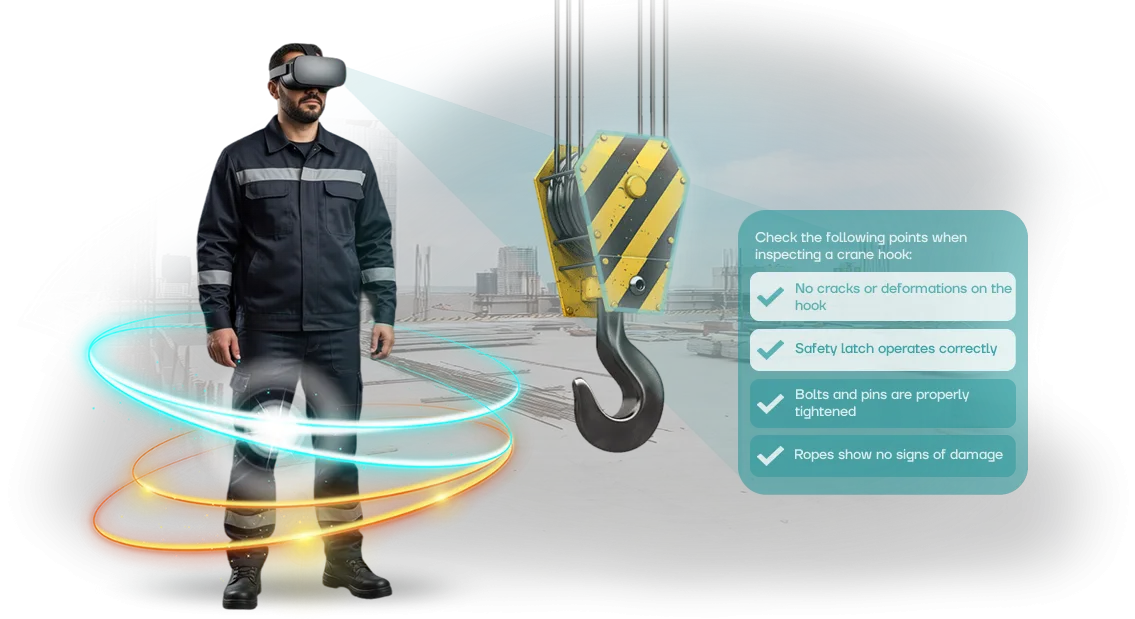
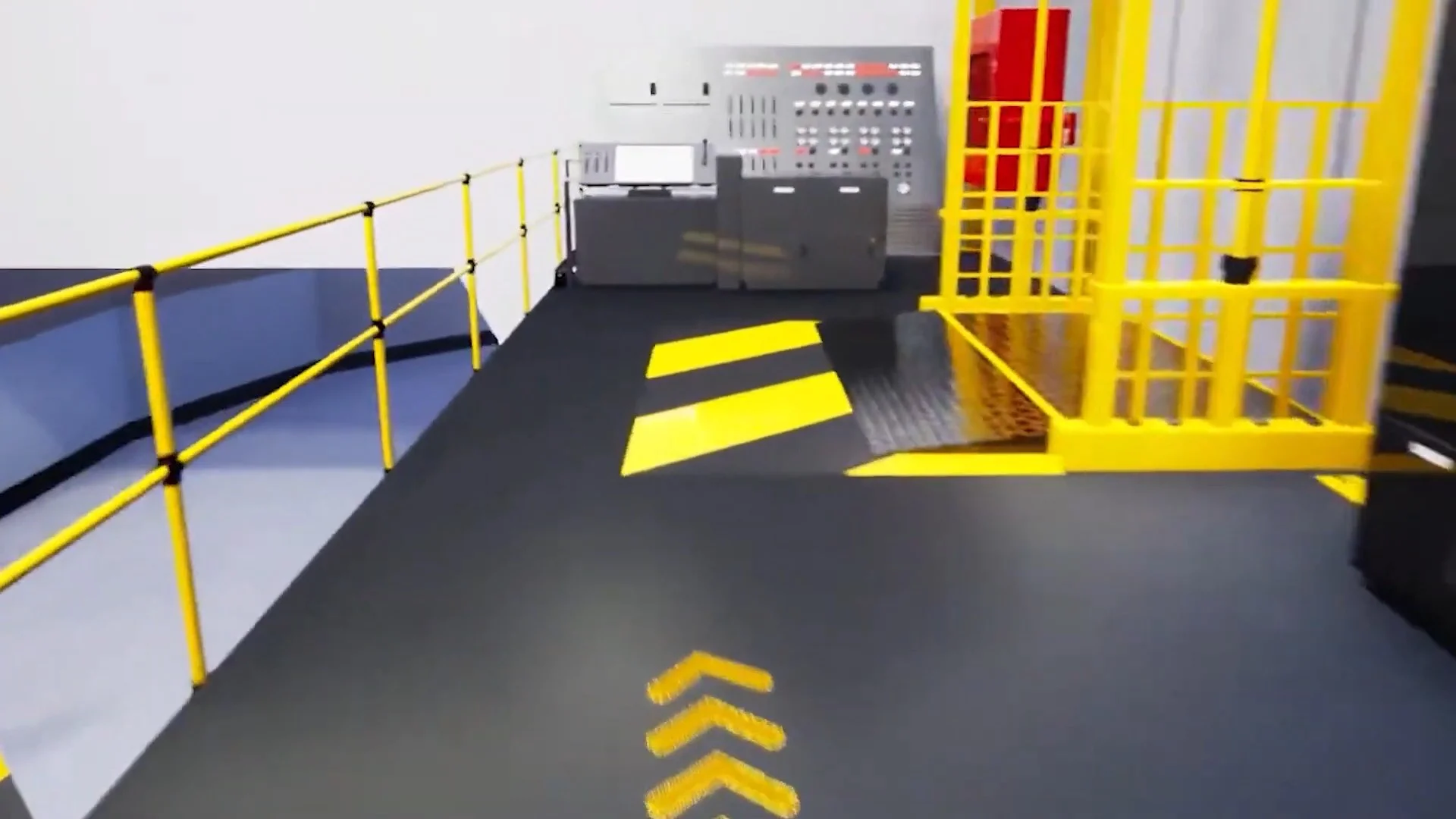
A VR trainer immerses the employee in a realistic emergency environment and forces them to make decisions under stress.
Unlike an educational film, here each worker repeatedly rehearses the algorithm: localize the source of danger, find an exit, provide first aid, contact the dispatcher.
The brain remembers not only the sequence of actions but also their own emotions, so in a real situation a person reacts faster and more confidently.
This approach directly reduces workplace injuries. Skills practiced to automation eliminate panic and confusion, and therefore reduce the number of accidents and incidents.
The manager gets training checkpoints: you can see who has absorbed the material, who is confident, and who needs additional training. Training is conducted without risk to the health of employees or equipment, and reports are generated automatically after each session.
At the same time, an emergency response simulator significantly saves budget. You don’t need to purchase consumables, rent a training ground, or stop the line to simulate an accident. Training can be done remotely and at a convenient time—just give an employee a headset.
The costs of organizing briefings are reduced many times over, while effectiveness, on the contrary, increases.
The main result after a few months is fast response and coordinated team actions in any abnormal situation. Employees stop perceiving occupational safety as a formality, and the company gains protection from costly downtime and reputational risks.
Investments in VR training pay off through reduced injuries and accident rates, and your people are ready for any challenges.
VR Trainer Formats for Different Industries
Different enterprises have different risk levels, staff sizes, and training budgets, so the VR trainer format is tailored to the task: in one case, individual skill practice is needed, in another—team exercises in VR.
| Format | For whom | What it provides |
|---|---|---|
| Individual scenario | New employees, workers | Automation of actions without risk and material costs |
| Team exercises in VR | Shifts, crews, emergency services | Coordination and role distribution during an accident |
| Industrial scenarios | Oil & gas, energy, metallurgy | Reduction of injuries and downtime, compliance with regulations |
| Knowledge control | Occupational safety, HR | Objective assessment with results history |
Individual safety training is suitable for mass training: each employee goes through the scenario at a comfortable pace and does not block the work of others.
Team exercises in VR allow you to check a unit’s readiness for an abnormal situation and hone interaction under time constraints.
Scenarios are built on real work processes and regulations, including the requirements of Rostechnadzor and industry standards. This ensures skills transfer to real work without retraining.
The format and content of the scenario are fixed in a prototype—the client sees the result before full development.
How We Develop a Trainer for Your Business Processes
The development of an emergency response simulator is not done in a vacuum, but according to your regulations, instructions, and production specifics.
Therefore, the process is structured as a transparent chain of approvals—you participate at every stage and know in advance what you will get. This eliminates rework and unnecessary costs: the trainer is created specifically for your employees’ tasks.
- Brief and audit. We study your occupational safety documents, typical emergency scenarios, and personnel requirements. We identify which skills need to be practiced first.
- Scenario design. We simulate an emergency situation together with your safety specialists. We define correct and incorrect actions, as well as checkpoints for assessment.
- Prototype approval. We show the key scene of the future trainer before full development. You see the logic, graphics, and methodology—we make edits before the main resources are invested.
- Full version development. We create a realistic environment, training hints, and an assessment system. The trainer automatically records errors and generates a clear report for the instructor.
- Pilot launch. We test on your employees, collect feedback, and adjust details. At this stage, interface usability and completion speed are refined.
- Launch and instructor training. We deploy the trainer on your equipment, provide instructions, and conduct a training webinar for those who will work with the system.
- Support and development. We update scenarios for new regulations, add additional emergency situations, and help with training statistics.
As a result, you get not a “boxed product” but a tool that already takes your procedures into account and is ready to use. The simulator becomes part of your safety system, not a separate experiment.
What Is Included in the Delivery of an Occupational Safety Trainer
The client receives not a “raw” VR application, but a ready-made training complex that can be launched within a week after delivery. No hidden investments: no need to buy additional scenarios, hire contractors for setup, or figure out the technology yourself.
The set includes everything for independent employee training: from methodological materials to training your instructors and warranty support.
The delivery set includes:
- Ready-made VR emergency response scenarios. Practice of actions in case of fire, chemical leaks, and workplace injury—with different difficulty levels and realistic branching events.
- Methodological materials for the instructor. Lesson plans, a training session scenario, criteria for evaluating employee actions, and analysis of typical mistakes.
- Training for your company’s instructors. A practical training session after which your specialists independently conduct classes without our involvement.
- Technical documentation. Clear instructions for launching, configuring, and maintaining equipment, as well as an update schedule.
- Warranty and support for the entire service life. Updating scenarios to meet new requirements, consultations, and equipment replacement during the warranty period.
- Perpetual use license. Train employees without limits on the number of sessions and users.
The savings are obvious: instead of buying separate trainers and services, you get a single set that pays off through reduced injuries and fines. And support ensures that training always meets current occupational safety requirements and is ready for inspections.
Case Study: How VR Training Reduced the Number of Accidents and Fines
Most managers think of VR training only as an “expensive toy” for the HR department until they see the numbers. Industrial accidents are not only a risk to people’s health, but also direct losses: line shutdowns, investigations, fines, and rising insurance premiums. This is where an emergency response simulator pays off fastest.
How We Reduced the Accident Rate at an Enterprise
For the Volzhsky Metallurg Production Holding, we developed a VR simulator for actions during a molten metal spill and fire.
Operators practiced evacuation procedures, communication with the dispatcher, and localization of the source in conditions as close to real as possible, but without risk to health.
Before that, training consisted of lectures and posters—employees knew the instructions, but acted slowly in stressful situations.
Results were measured after six months. The number of emergency incidents at the site decreased by 40%, and staff reaction time during training alarms was halved.
The main outcome: over the year, the enterprise did not receive a single order from supervisory authorities, and the amount of saved fines and downtime exceeded the cost of developing the trainer by three times. Payback was less than five months.
An additional bonus was increased engagement: employees themselves asked for access to additional scenarios, and newcomers started working independently two weeks earlier.
A year later, the enterprise ordered three more modules from us—for gas rescuers, electricians, and high-altitude workers.
Why These Results Can Be Repeated
The effect is achieved not by the magic of virtual reality, but by a systematic approach: we build scenarios on the basis of real regulations and incident analyses, and after each session we give the client a report on typical employee mistakes.
Thus, training becomes a risk management tool, not just a “course for show.” If you want to try this result on your production—start with a demo: we will simulate one of your scenarios for free and calculate potential savings.
How to Choose the Right Trainer Format for Your Task?
Choosing a trainer format starts not with equipment, but with the task: what exactly needs to change in employee behavior. If the main goal is to practice fire actions to automation, a short individual session will work.
If you need to teach a team to act in a coordinated manner—a group scenario with role distribution will be required. We select the format for your conditions: number of employees, training frequency, site specifics, and skill levels.
Key criteria are typical mistakes you want to eliminate, training time, and the method of evaluating results.
For example, for mass briefing of newcomers, a desktop version with quick scenario changes is effective, while for testing the skills of experienced workers—full immersion with realistic consequences.
It is important that the trainer integrates into the existing training program, not exists separately.
Our practice shows: most often the client needs not one most expensive scenario, but a combination of formats—a basic module for everyone and an advanced one for risky specialties.
This approach reduces budget, maintains engagement, and allows quick scenario updates for new regulations.
Come with a description of your situation—we will offer two or three options for your scale and budget, with a forecast of timelines and results. You should choose based on the criterion “what will change in employees’ work after training,” and we will take care of the rest.
Frequently Asked Questions About Implementing an Occupational Safety Trainer
Before implementing a VR trainer, managers ask the same questions: about timelines, equipment, scenario adaptation, and support. We answer the main ones—briefly and to the point.
How long does trainer development take?
A standard emergency response scenario takes two to six weeks, depending on detail and the number of situations. After the brief, we fix a plan with intermediate checkpoints, so you see progress. Urgent projects are discussed separately.
What equipment will be needed?
We use industrial VR headsets and controllers that withstand daily training. We will help you choose a set for your budget or provide it for rent during the pilot. An ordinary room and computer are enough—no expensive reconstruction.
Do you adapt scenarios to our regulations?
Yes. We study your instructions and safety requirements and turn them into interactive scenarios. After initial tests, we make edits, and employees receive a clear report on their actions in a critical situation.
What about technical support after launch?
We train instructors, support the launch, and stay in touch. When new regulations appear, we supplement scenarios; one-off modifications are done by agreement—the trainer does not become outdated.
Shall We Discuss Your Task? We’ll Send a Commercial Proposal and a Trainer Demo
To order an emergency response simulator, you don’t need to understand technology deeply or defend a budget before management blindly.
We will prepare a commercial proposal for your industry, show a VR trainer demo, and calculate project timelines before the work starts—you will know exactly what you get and what it costs.
What you get after submitting a request:
- VR trainer demo on your scenario or a ready example—assess realism and usability before purchase.
- Commercial proposal with transparent pricing: development, modifications, equipment, and support—no hidden payments.
- Project timeline estimate by stages: from brief to launch with employees.
- Examples of trainers for your industry—we will show how we solved similar tasks in industry, energy, construction, and logistics.
- Format recommendations: stationary classroom or mobile kit, how many employees can train daily.
- A personal project coordinator—he will be in touch at all stages and answer questions.
After the demo, we will help calculate training economics: how many working hours the trainer will save compared to classic briefings and how quickly it will pay off. You will be able to make a decision based on numbers, not assumptions.
Leave a request—we will discuss your task, answer questions, and prepare a commercial proposal with a demo within two business days. Start with a short conversation—it is not binding, but will give clarity on timeline and budget.