

First responder VR training: preparing your team without risk
Traditional first responder drills always involve compromises: a real emergency is dangerous for the participants themselves, and its scale cannot be controlled.
Organizing a full-scale exercise takes time and resources, and often places staff in conditions far removed from an actual threat. As a result, the team gains only a general idea of the procedures rather than a durable decision-making skill.
First responder VR training solves this problem differently.
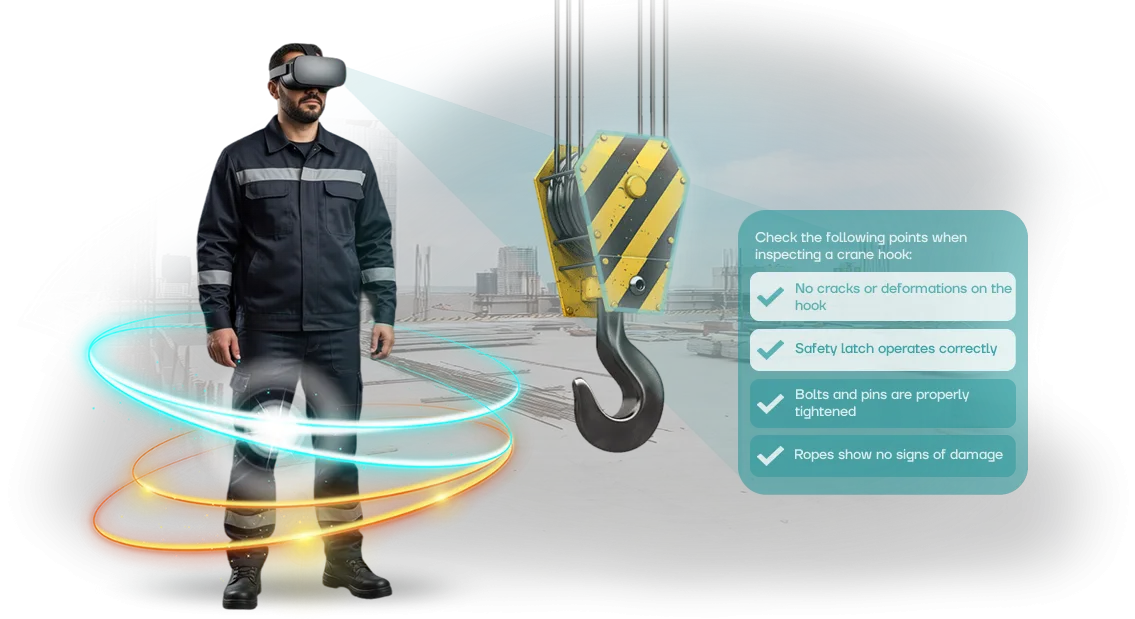
Immersive learning places an employee in a simulation of critical situations where they can make mistakes, try different strategies, and practice actions to the point of automation — without risk to health and without consequences for those around them.
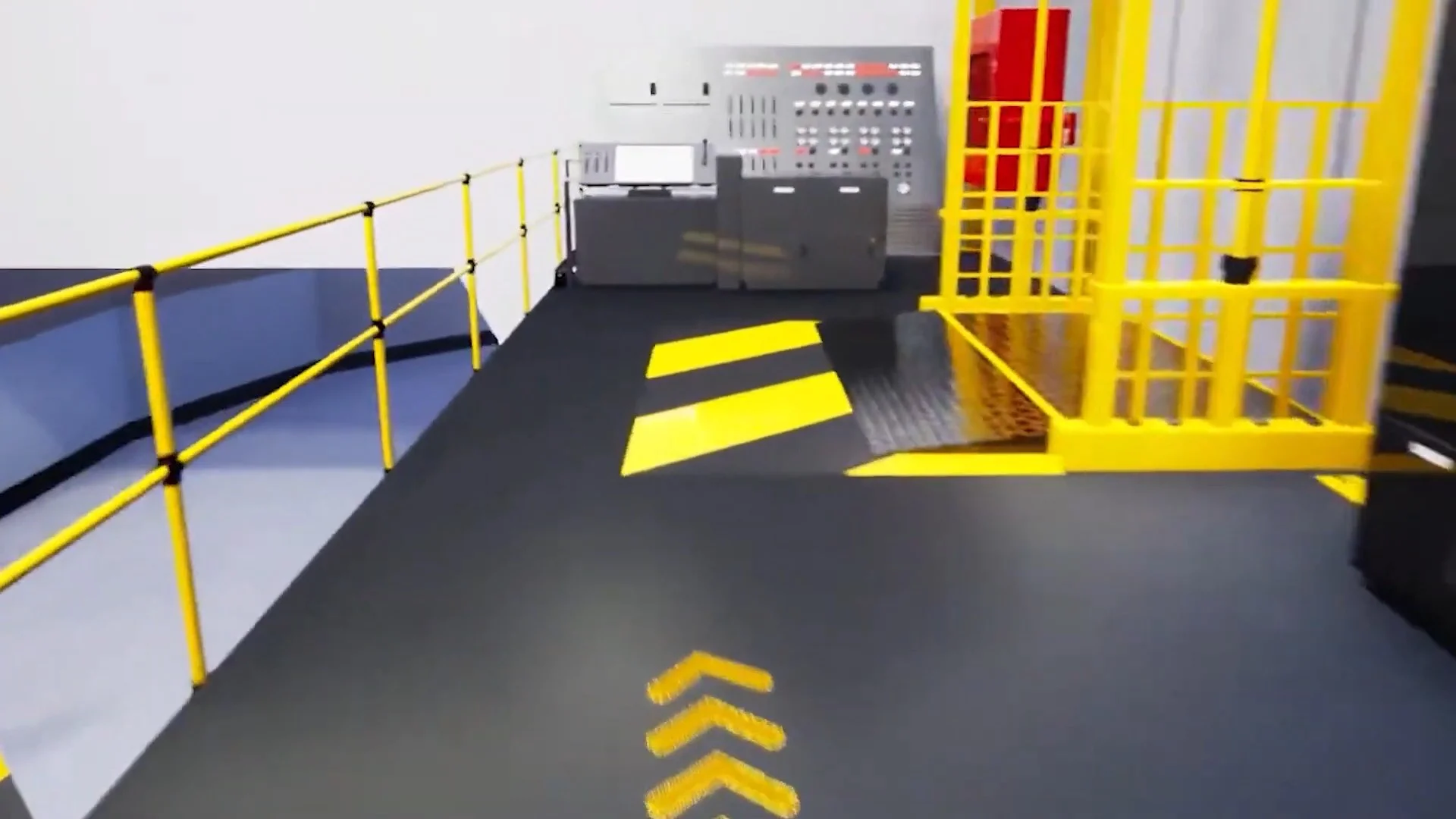
The VR trainer recreates the environment of a real incident: smoke, limited visibility, time pressure, and the need to coordinate actions with the team. This is exactly how readiness to act under high-stakes conditions is developed.
From a manager's perspective, VR training is a controlled and predictable process.
You plan the scenario, complexity, and number of repetitions for a specific group rather than hoping the drills "go well." A simulation of critical situations takes minutes rather than days of preparation and fits easily into shift schedules. The team trains as many times as needed — without booking training grounds or equipment downtime.
The key result is that workplace safety becomes measurable. You see how each employee acts in a critical situation: reaction speed, completeness of the procedure, ability to work as part of a team.
This is not an "eyeball" assessment but data you can use to precisely strengthen the team's weak points.
VR trainers do not replace real exercises, but they close their main shortcoming — the lack of practice.
Personnel gain experience that was previously available only through rare and expensive training, while you gain confidence that the team is ready for unforeseen circumstances at any moment.
5 results of immersive training you will notice immediately
By deploying VR trainers, you get measurable changes in staff performance. Here are five results you will notice within the first few months.
Skill development without interrupting operations. Employees practice complex scenarios — evacuation, fire response, first aid — in short sessions. A hands-on format is absorbed better than lectures, so the skill level of an entire shift becomes predictable.
Reduced injury rates. Virtual training models dangerous situations without real risk. A person trains the correct reactions, and when similar conditions occur on site, they act decisively. The result: fewer accidents, less downtime, and lower associated costs.
Practicing skills to the point of automation. A scenario can be repeated as many times as needed, and the system records every mistake. The employee refines their actions to the point of automation before meeting a real threat. This increases reaction speed and reduces the number of errors at the critical moment.
Staff confidence. Those who have already experienced an emergency scenario in VR do not panic in a real situation. They make decisions faster and follow instructions more precisely. This is immediately visible in the team: calm, discipline, clear actions without prompts.
Training budget savings. VR replaces part of off-site exercises and training-ground rentals. One program works for hundreds of employees, and the cost per additional trainee is minimal. On an annual basis, you achieve significant savings without compromising training quality.
Trainer formats for emergency services: choose yours
Emergency services prepare in different ways: a rescuer needs to refine individual actions, a medic needs to triage casualties quickly, and a squad needs to work as a single mechanism.
That is why we do not build one universal trainer but match the format to the specific task — from individual skill practice to full-scale exercises involving an entire shift.
Each format addresses its own task: reducing reaction time, fine-tuning interaction within a unit, or verifying the overall readiness of a department. The table below shows the three main options most often chosen by emergency service managers.
Three formats for different tasks
| Format | Who it's for | What it delivers to the client |
|---|---|---|
| Individual training | Rescuers, medics, special vehicle drivers | Practicing procedures to the point of automation without risk to people; objective assessment of each employee's actions |
| Group exercises | Firefighting crews, search and rescue teams | Team coordination, role distribution, interaction in near-real conditions |
| Full immersion | Exercise managers, pre-shift briefings | Realistic environment with multiple development scenarios; readiness check for the entire unit |
Formats can be combined in a single trainer: first individual practice, then a joint exercise for the whole shift. We will select a solution for your tasks and budget — start with a short brief and we will handle the rest.
How trainer development works: 6 steps from brief to launch
To ensure a trainer genuinely builds skills rather than serving as mere entertainment, we have structured the development process into six clear stages. At every step, you know what is happening and can influence the outcome.
-
Brief and task analysis. We dive into your employees' working conditions: which situations are the most dangerous, where mistakes most often occur. We define learning objectives and outcome assessment criteria.
-
Trainer scenario. Together with your experts, we describe realistic situations — from fire response to casualty evacuation. We approve the scenario before production begins so you can see in advance what your personnel will learn.
-
Plan approval and solution selection. Our engineers select suitable equipment and architecture for your device fleet and budget. You receive a work plan with timelines and cost — no hidden stages.
-
Virtual scene production. We create environments, equipment, and interfaces that replicate the real setting. We show you draft versions so the interface and logic are convenient for your employees specifically.
-
Testing with the target audience. We validate the scenario with active professionals: rescuers, firefighters, medics. We collect feedback and refine details that are hard to notice without real practice.
-
Deployment and support. We install the system, train the instructors, and hand over the materials. After launch, we support the trainer: we help with updates and add new modules as your tasks evolve.
What is included in the complete package for your team
When you order a VR trainer, it is important to receive not just an application but a working solution. We have assembled a complete delivery package so you can launch training within a week and remain independent of developers in the future. Here is exactly what the package includes:
- A ready-made library of scenarios for first responders: practicing response to fire, traffic accidents, chemical threats, and other incidents. Scenarios are adapted to your internal regulations and site specifics.
- Methodological materials for trainers: course program, step-by-step lesson plans, assessment criteria, and checklists. Instructors can conduct training without developer involvement.
- A perpetual license for use by an unlimited number of employees — no rental fees, hidden charges, or additional levies.
- Training for your trainers: hands-on instruction after which they independently launch scenarios, manage groups, and review mistakes.
- Regular package updates: new scenarios and content refreshed to reflect changing regulations and technologies.
- Technical support for the entire term: we help with installation, answer questions, and support updates.
The result is an autonomous training system that pays for itself through reduced drill preparation time and lower injury rates. Ready to discuss your scenario? Contact us.
Case study: how a VR trainer accelerated ambulance team response by 40%
For a regional ambulance service, MedReact, we developed a VR trainer for practicing emergency protocols. Previously, new employees spent weeks training on mannequins and paper instructions, and panic still arose in real situations.
The virtual trainer made it possible to practice critical scenarios in a safe environment, without risk to the patient and at any convenient time.
The result: the team's response time to a typical call dropped by 40% — from a minute and a half to 54 seconds. This became possible because the response procedure was refined to the point of automation: the dispatcher, driver, and paramedic work as one unit.
The first 30 employees completed training in two weeks instead of two months. After the pilot launch, the client expanded the program to all substations and signed a follow-up contract for maintenance and further development of the trainer.
We use professional VR equipment and our own scenario methodology, so the project was launched in just 6 weeks. An employee simply puts on the headset and goes through the scenario — and all mistakes are reviewed immediately, with a breakdown of each action.
Management receives transparent reporting: who practiced what, which skills are lacking, which scenarios need to be strengthened.
Training turns from a formal procedure into a real safety tool that reduces downtime, and every minute saved on a call directly affects the preservation of a patient's life.
How to choose a VR training format for the specifics of your service?
Choosing a VR training format for first responders starts not with technology but with your service's tasks. If employees need to practice basic fire, traffic accident, or chemical release response — ready-made scenarios will work.
But when it comes to your specifics — building features, equipment, internal regulations — customization is unavoidable.
We recommend first assessing which mistakes recur in exercises and real call-outs, and which situations are the most dangerous.
The scenario is built around them: a short 10–15 minute session to practice one skill or a full-scale simulation with multiple casualties and a changing environment.
Budget also influences the format. The optimal path is to start with a ready-made module that covers 80% of basic tasks and achieve results within a few weeks.
Then modifications are added for your protocols: site layout, equipment types, weather conditions, actions of a narrow crew. This approach keeps costs controlled: you pay for the required scope and expand the program as needed.
The key is not to choose a format by appearance but to rely on measurable outcomes: employee reaction time, number of correct actions, reduced injury rates. We will help you select a scenario for your service's specifics and calculate the cost and timelines.
Usually 2–3 test sessions are enough to understand whether the program meets your needs, and the first full-fledged training sessions can be launched as early as this quarter.
Frequently asked questions about deploying immersive trainers
The decision to implement VR training most often comes down to four questions: budget, hardware, safety, and guarantees. We answer them directly — no fine print and no hidden conditions.
How much does VR training for employees cost?
The cost depends on the number of scenarios and the number of trainees. For a basic program with 3-4 situations, the cost is calculated after an audit of your scope, and when scaled across several departments, the cost per employee decreases.
Trainers pay for themselves through reduced injuries and downtime. We will prepare a precise estimate after the brief.
What equipment is required?
A headset and a laptop are enough — we configure everything for your hardware. If you do not have equipment, we can offer rental or assemble a turnkey set. No dedicated VR room is needed for sessions: 2x2 meters of free space is sufficient.
Is it dangerous for employees to be in virtual reality?
The training is built on stationary scenarios: a person moves within the virtual environment but physically remains in place. An instructor accompanies the group at the start, and the pace is calm. We provide a briefing beforehand — the risk of discomfort and falls is reduced to zero.
What guarantees do you provide?
We work under a contract with fixed deadlines. After launch, the trainers remain under our support: we update scenarios when regulations change, help with administration, and respond quickly to failures. If something goes wrong, we fix it at our expense.
Submit a request: get demo access and a cost estimate
A request is not an obligation — it is an opportunity to evaluate the solution before committing budget.
We provide free consultations on first responder training scenarios, show how the VR trainer fits into your preparation program, and help calculate the impact on real outcomes — from reaction speed to fewer errors in critical situations.
Along with the consultation, you receive demo access to a working trainer. Not slides and presentations but a live scenario: you go through an episode yourself and evaluate engagement and ease of control. This way, you make a decision based on practice rather than promises.
What you get after contacting us:
- A consultation with a training expert: we will select a format for your specifics — firefighters, rescuers, ambulance.
- Demo access to the trainer: test the realism and usability with your own team.
- A cost estimate for your scale: a fixed quote with no hidden surcharges.
- Launch timelines: we state the start date before work begins and monitor every stage.
- Instructor training: your employees will be able to launch training sessions independently.
- Post-deployment support: updates and scenario refinements together with you.
Submit a request — we will respond within one business day, discuss your tasks, and prepare a proposal with demo, estimate, and timelines. No obligations: you decide whether to move forward or not.