

Injuries During Demolition Work: How to Protect Employees and Your Budget
Demolition work combines risks you don't find in regular construction: collapsing structures, debris underfoot, sudden loss of support. Even an experienced worker can get injured because of a moment's inattention.
And for a manager, each such situation means a headache of paperwork, investigations, and explanations.
The cost of an incident is not limited to a sick leave certificate. Deadlines slip, the work site shuts down, and fines are paid for safety violations.
Add rising insurance premiums and loss of reputation — and it turns out that one serious case eats up the profit of several projects. Not to mention the moral strain on the team and the urgent need to replace an employee right in the middle of a shift.
But teaching adults to work safely on demolition is difficult. Instructions are skimmed, lectures go in one ear and out the other, and knowledge quickly fades after the exam.
On a real site, mistakes are unforgiving: a missed piece of debris or a wrong decision can turn into a serious injury in seconds.
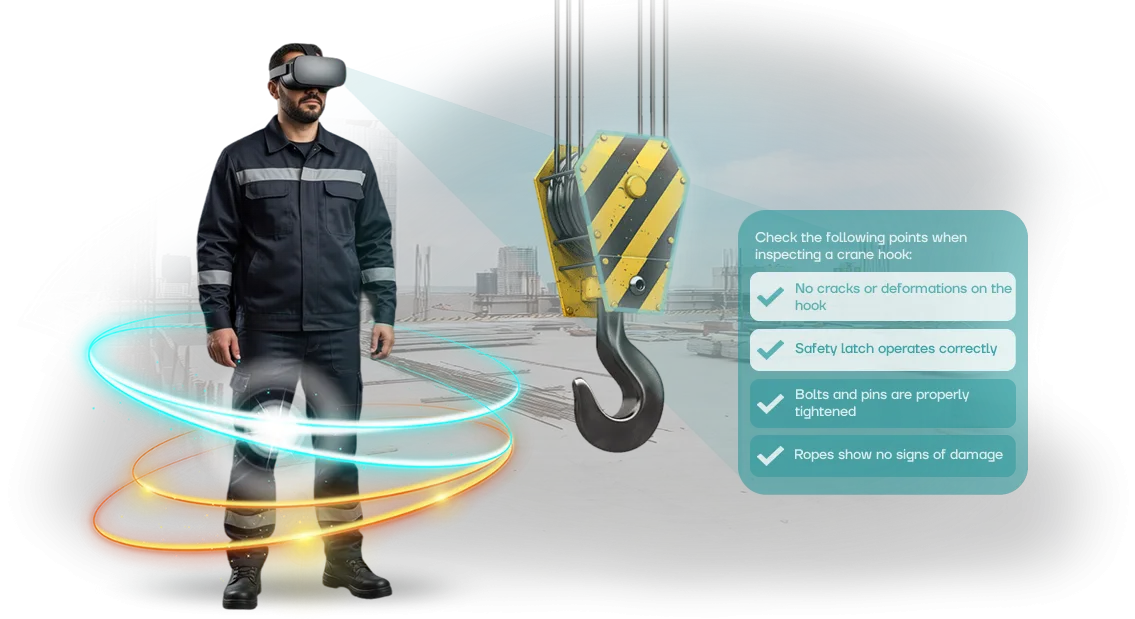
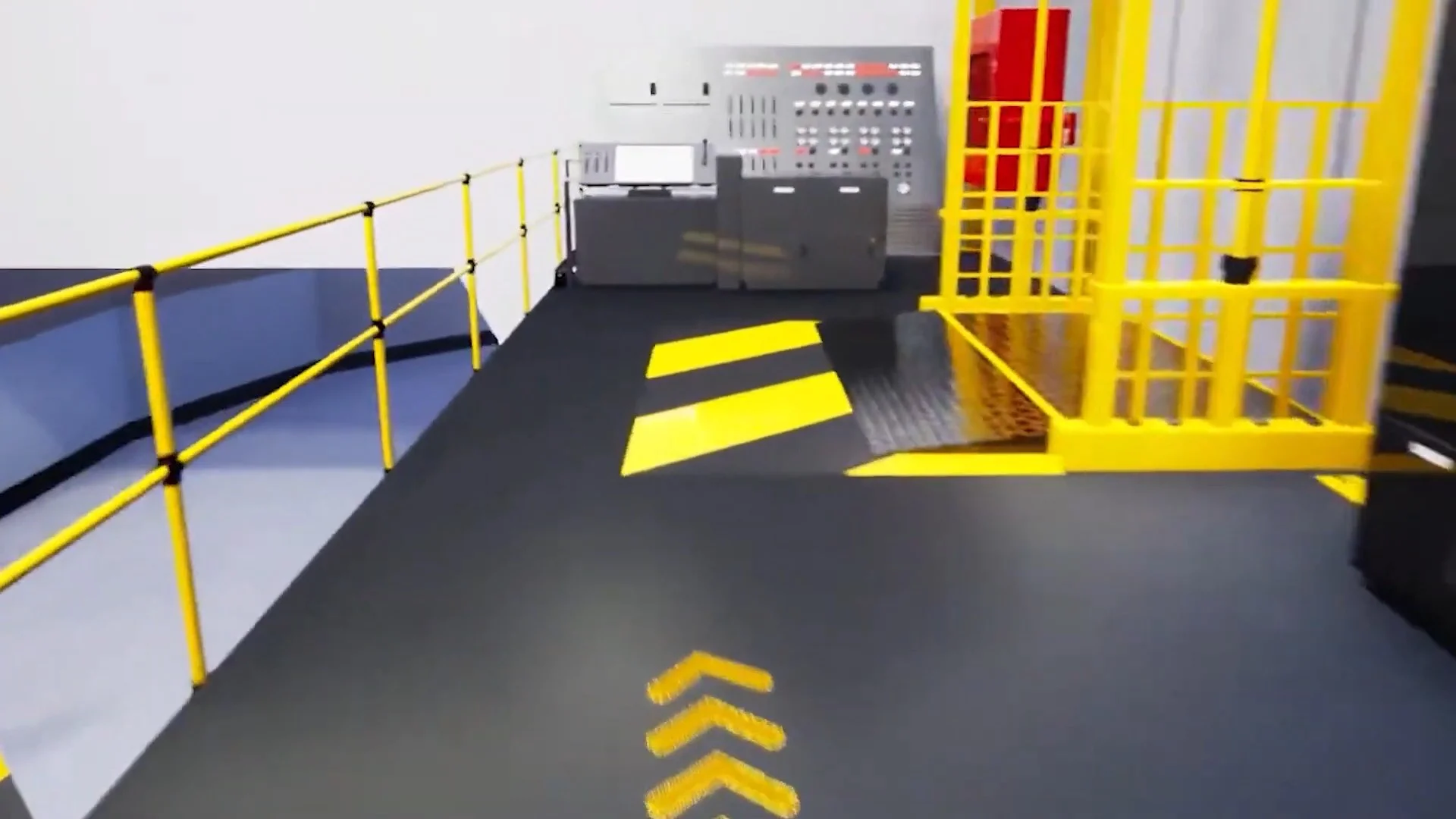
VR safety training immerses an employee in a virtual demolition site: the same protective clothing, the same tools and surroundings. The person practices spotting dangerous zones and making decisions under time pressure — but without any risk to health or property. This format turns rules from boring theory into practiced behavioral skills for demolition work.
We use professional VR simulators so that your people return from the site healthy, and your budget is not spent on the consequences of accidents.
One scenario practiced in a virtual environment costs less than one incident — so the client gets measurable value: reduced injuries and preserved revenue.
What VR Safety Training Delivers: 5 Measurable Outcomes
VR safety training often becomes a formality: employees sit through the hours, but in a real emergency they act on instinct. The result is injuries, crew downtime, citations, and fines.
To avoid this, you need practical skills drilled to the point of automaticity — not just a checkmark confirming a briefing was completed.
The simulator transports an employee to a real site — the same machinery, the same risks, but in a safe environment. That's why training results can be measured in numbers that matter to a manager:
| Outcome | How It Affects the Business |
|---|---|
| 30–40% reduction in incidents | Fewer injuries and unplanned work stoppages |
| Training engagement rises to 95% | Personnel actively work through scenarios instead of just "serving time" |
| Material retention up to 80% | Skills stay for months rather than being forgotten by lunch |
| Savings on downtime and employee replacement | The crew doesn't lose working hours because of accidents |
| Reduced risk of fines for safety violations | Inspections go more smoothly, and citations become fewer |
These figures are not promises but benchmarks achieved through scenarios that mirror your actual working conditions. The manager gets transparent statistics for each employee: who meets the standards and who needs additional practice.
And there's more: we adapt the simulator to your regulations and technological maps. This closes the gap between "knows the rules" and "acts correctly." Check your personnel's readiness before an inspector does.
VR Simulator Formats for Demolition Work to Suit Any Task
Safety in demolition work is not about formalities but about risk control. An employee needs to know the rules and be able to act in an emergency; a manager needs to confirm that training took place.
Different tasks require different levels of preparation: some only need a refresher on the instructions, while others need to practice actions until they become automatic.
We have compiled VR simulator formats that cover the full spectrum — from pre-shift briefings to a complete course for the crew.
VR Simulator Formats: What to Choose
| Format | For Whom | What It Delivers for the Client |
|---|---|---|
| Express briefing | Contractors, newcomers, employees before going to a site | Quick refresher on rules and risk zones — 15–20 minutes per person |
| Typical scenario simulator | Demolition crew specialists | Practice of actions during structural collapse, tool handling, and work in confined spaces |
| Full training course | Crews and work supervisors | Systematic training: theory, hands-on VR practice, knowledge assessment, and work authorization |
The key difference is the depth of training. The express briefing fits into the regular site access procedure, while the full course delivers a true "presence effect": the employee sees the consequences of mistakes without any real risk.
We adapt the scenarios to your site, your instructions, and the typical incidents that occur in demolition. You get not a "quest" but a working safety tool that is easy to implement and hard to ignore.
How a Project Works: From Brief to Training Launch
We have structured the development process so that every step is clear and transparent for the client. This is a turnkey project: you receive a ready-to-use VR simulator integrated into employee training, with no unexpected deadlines or hidden stages.
VR simulator development stages:
-
Brief and task audit. We study the specifics of your demolition work, typical hazards, and safety requirements. We record goals and evaluation criteria.
-
Scenario and methodology approval. Together with your specialists, we develop the scenario, identify critical errors, and define how to practice them. You approve the content before development begins.
-
VR environment development. We create a realistic model of the work site, add interactive prompts, and build an action analysis system. At each stage, you see intermediate versions and make adjustments.
-
Pilot group testing. We run a trial session with several employees, collect feedback, and adjust difficulty, wording, and interface.
-
Implementation and setup for your infrastructure. We install the hardware and software, connect the simulator to your training tracking system, and configure reports.
-
Launch and support. We train your instructors to work with VR, run the first sessions, and support the process. After launch, we stay on support and update content when regulations change.
This approach delivers key benefits: you control every stage, understand what is happening at any moment, and know in advance exactly when your employees will start training.
As a result, VR implementation goes smoothly, and your personnel gain a real skill for safe demolition work.
What's Included in the VR Simulator Package for Safety Training
Getting a VR simulator means getting not just equipment but a complete solution for training employees in safe demolition practices. Everything should work right after installation — without lengthy setup, searching for subcontractors, or dealing with documentation.
We structure the delivery package so that you have everything needed to launch training and track its results. The standard package includes:
- A VR simulator with pre-installed demolition scenarios. The employee enters a realistic construction site environment and practices safe techniques without any risk to life.
- Training scenarios tailored to your tasks. Basic situations — structure dismantling, tool work, emergency response — can be adapted to the specifics of your site and typical violations.
- Instructor methodology materials. Ready-made lesson plans, evaluation criteria, and error review checklists — no need to build a program from scratch.
- A results tracking system. The manager sees who completed training, how many attempts were made, and which mistakes keep recurring. This helps close gaps in a targeted way and prepare reports for supervisory authorities.
- Instructions for personnel. Quick guides on setup, proper use of VR equipment, and safety rules — an employee can start training without an engineer's help.
- Support during implementation and after. We help launch training, prepare your instructors, and stay in touch: we update scenarios when regulations change and respond quickly to questions.
In the end, you get a working turnkey training system — from the first launch to regular practice sessions. Employees rehearse dangerous situations in a safe environment, and you have objective data on who is ready for real work and to what extent.
This reduces injuries, accelerates onboarding for new employees, and addresses the concerns of supervisory authorities.
Case Study: How Injuries Were Reduced on a Site in 3 Months
Standard safety briefings are not enough for demolition work: workers sign papers, watch videos, and forget half the material a day later.
On a real site, the price of such a mistake is no longer a test score but an injury, a stopped shift, and dealings with supervisory authorities.
We encountered this pain point while working with a construction contractor. Minor incidents were frequent on the site, and workers responded slowly to emergencies.
We developed a VR simulator for demolition work: employees were immersed in scenarios involving structural collapse, falls from height, and the risk of electric shock before ever setting foot on the construction site.
How the Project Was Built
The foundation was real situations from the site. Each employee first assessed hazardous areas, then practiced the correct actions in the virtual environment and received a review of their mistakes.
The simulator did not require production to stop: training took place at a convenient time, and the entire shift was covered without losing working hours.
What Changed on the Site in 3 Months
Three months after launch, the number of incidents on the site had roughly halved. Workers' reaction time in emergency situations improved many times over: people stopped acting at random and began following a practiced sequence of steps.
Managers received clear data — who completed the training, who repeated it, and where specific employees still had weak points.
- Employees became more conscious about using protective equipment because they saw the consequences of mistakes in the simulator.
- The company stopped losing time to downtime caused by injuries, and the demolition schedule was maintained.
- New workers integrate faster: instead of long lectures, there is hands-on practice in a virtual environment.
- The business owner got measurable safety results rather than "paper" signatures.
This approach can be applied to your site as well. We adapt scenarios to the specific risks and conditions of your company so that training is as close as possible to real tasks.
How to Choose the Right Format for Your Crew?
Choosing a VR training format for a demolition crew depends not on how "trendy" the technology is but on specific needs: how many people need training, how often the team changes, and which operations carry the most risk.
If you need to quickly familiarize the whole shift with safety rules and procedures, short introductory modules that can be completed in one session are enough.
If the focus is on complex tasks, non-standard situations, or practicing emergency response, then individual scenarios are better, where each specialist trains at their own pace.
Use two criteria: crew size and the nature of the work. For a crew of 5–10 people, group training with a shared error review is convenient — you practice team coordination and immediately see weak points.
For larger teams with constant rotation, a modular system is more effective: a basic course for everyone plus advanced blocks for experienced demolition workers. This way, you don't waste time re-explaining what is already known, and newcomers get up to speed faster.
Practice shows that a combined approach works best. For example, the first two days — total immersion in a virtual site for the whole crew to develop a common algorithm, then individual sessions to practice specific operations based on the site's specifics.
A month later — short 15-minute refresher tests. This approach reinforces the skill and reduces violations without taking people away from work for long.
We select the format for your crew after a short analysis of your tasks: we take into account crew size, shift patterns, types of demolition work, and client requirements.
In the end, you get a program that fits into your production schedule rather than requiring it to be rebuilt. The training results are always measurable: how many people completed it, what errors occurred before and after, and how much faster new employees reach the site.
Answers to Common Questions Before Ordering
Clients often postpone ordering a VR simulator because of three concerns: whether the equipment will break, how to fit training into current processes, and whether a ready-made scenario will suit real demolition conditions. That's normal — let's address each question honestly.
What if the VR equipment breaks down?
We deliver a package that has passed quality checks and include spare components. In case of a failure, we replace the device within 2-3 business days — the training process will not stop. A technical specialist stays available throughout the project.
Is it difficult to integrate a VR simulator into training?
All you need is a room of 10-15 square meters and a power outlet. We handle the setup in one day and train your employees to use the system. The simulator easily fits into your safety training schedule: your instructor runs the sessions after a short preparation.
Can the scenarios be adapted to our specific site?
Yes, that's a key part of our work. We study the real risks of demolition: structural falls, power tool use, emergency response. The scenario is built on your safety instructions, not abstract theory.
Still have a question? Write to us — we'll tell you how we solved similar challenges for organizations in your industry.Leave a Request — We'll Calculate a Scenario for Your Tasks
Leave a request and we'll prepare a cost calculation for a VR training scenario tailored to your specific safety requirements.
You don't need to understand technical details: you describe the specifics of your demolition work, and we propose a ready-made solution for your regulations, budget, and deadlines.
After your inquiry, you'll receive not just a commercial proposal but a clear implementation plan: which scenarios will suit your employees, how to integrate training into your existing process, and what results to expect. This saves you weeks of independent research and negotiations with subcontractors.
What You'll Receive After Your Request
- A calculation for a VR training scenario for your specific types of demolition work, from common violations to emergency response practice.
- Example scenarios from our practice — you'll see what the training looks like and what skills it develops.
- An implementation plan with timelines and stages, from content preparation to launch and instructor training.
- An assessment of scope and cost — transparent, with no hidden surcharges or technical details you don't need.
- Recommendations for integrating VR simulators into your existing safety management system: how to record results and confirm training completion.
- Answers to questions about equipment and room requirements — we'll advise what fits your budget.
We work remotely and have already helped dozens of companies implement VR safety training. Leave a request — within one business day we'll send you the calculation and example scenarios.
After that, you decide whether the format suits you, and we take care of everything else: from development to launch and support.