

Injuries in Electronics Manufacturing: Why Safety Briefings Don’t Work
In electronics manufacturing, the cost of an error is especially high: micro-injuries when handling small components, burns from soldering equipment, electrical shock during line maintenance.
Meanwhile, standard occupational safety briefings have long become a formality — the employee listens to a lecture, signs the log, and within a few days is acting out of habit, ignoring hazardous factors.
The problem is that theory does not build safe behavior as a skill. You cannot explain on a poster how to act in a sudden fire or equipment failure if the employee has never seen such a situation in real life.
This is why injury rates in electronics manufacturing remain high even with perfectly written documentation.
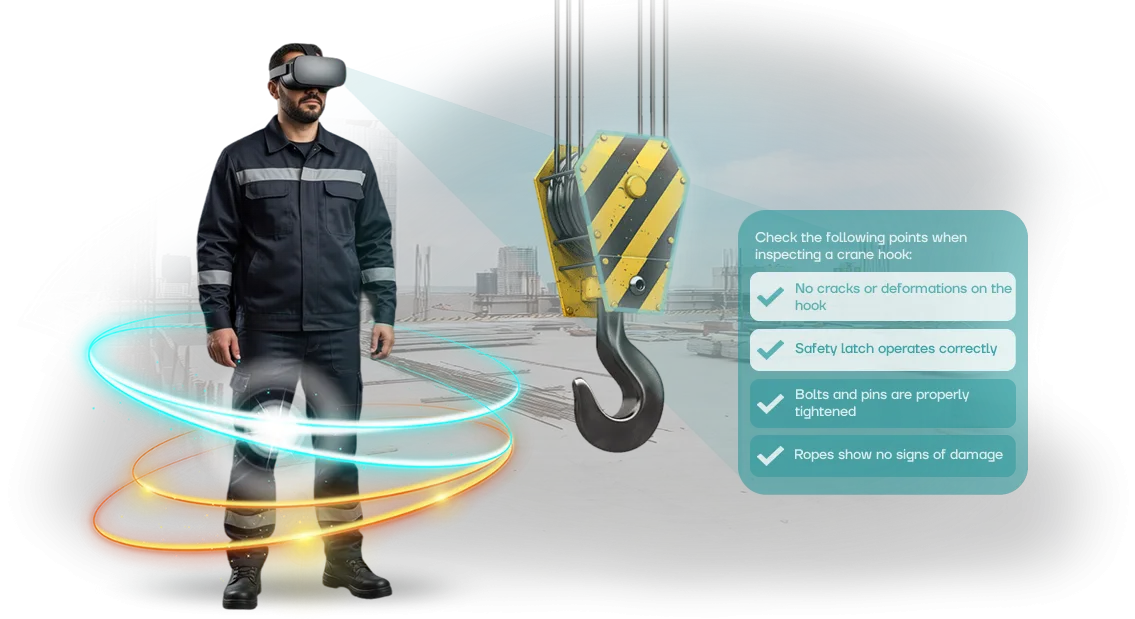
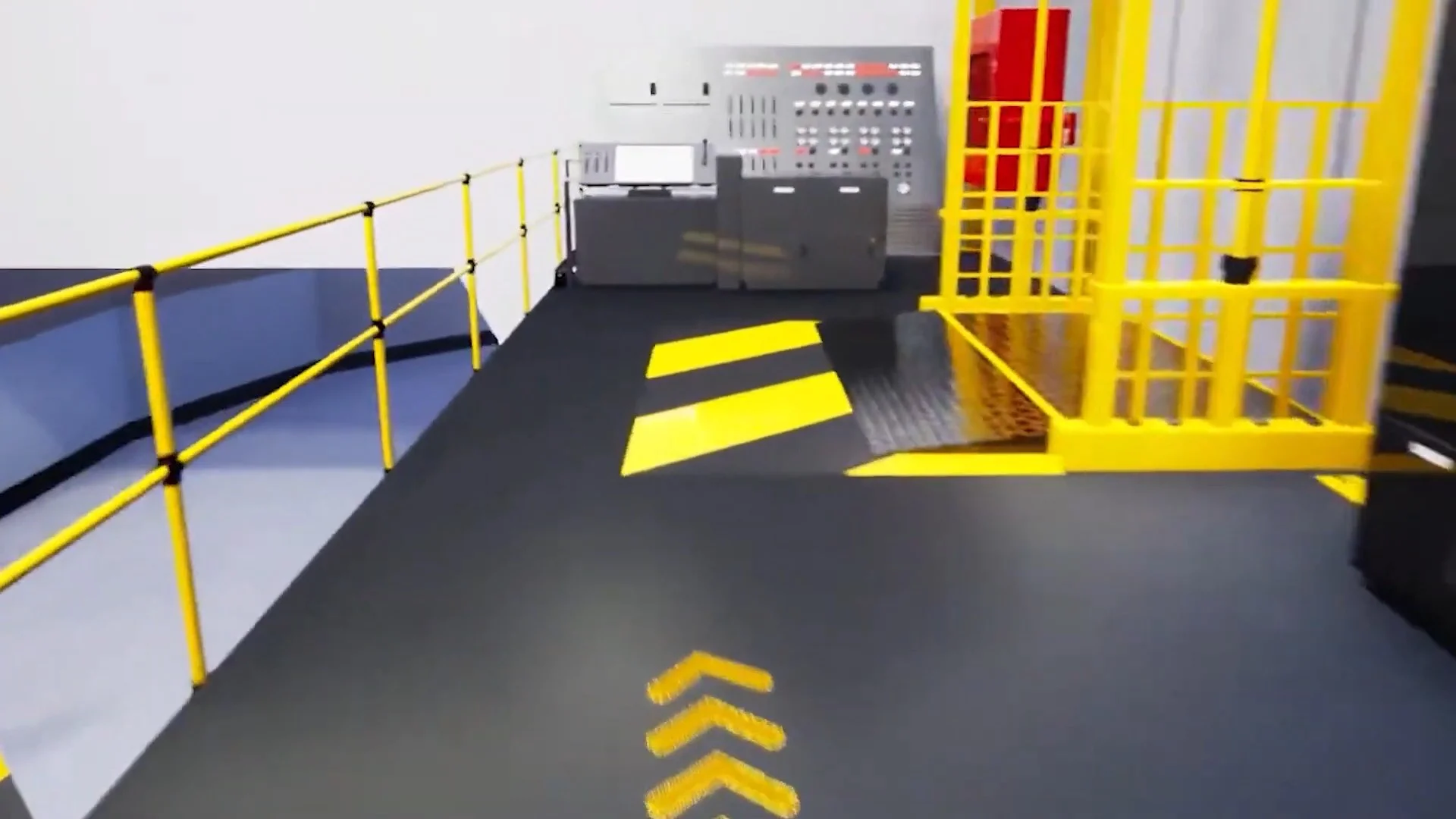
VR training changes the approach to occupational safety. The employee enters a realistic workshop environment and practices response procedures firsthand: from proper work station organization to evacuation during an emergency.
Every mistake is followed by instant feedback, and emotional engagement locks in the correct responses for the long term. This is not a replacement for safety briefings but their full evolution.
Companies that implement VR simulators report a noticeable decrease in injuries and an increase in discipline: employees begin to see risks before the shift even starts. Newcomer onboarding accelerates, and refresher training takes minutes instead of hours.
We develop simulators tailored to the tasks of the electronics industry — from training on component handling to practicing emergency response. We model your specific lines, your procedures, and your risks so that employees arrive on the production floor prepared.
What VR Safety Training Gives Employees
Traditional occupational safety briefings often become a formality: employees listen to a lecture, sign the log, and within a week forget the key rules.
For the electronics industry, where the cost of an error is people’s health and expensive equipment, this approach is unacceptable. VR training changes the very principle: instead of passive information intake — active action in conditions as close to reality as possible.
Research by PwC showed that employees complete VR training 4 times faster than in a classroom and remember the material 4 times better. The reason is full immersion and emotional engagement.
The employee does not just watch; they live through the situation: smoke, chemical spill, equipment failure. These are exactly the scenarios that form the core of our simulators for the electronics sector — from working on assembly lines to maintaining cleaning systems.
The main value for the customer is practicing skills without risk. A mistake in VR does not lead to injury or breakdown, but the brain records it as real experience.
As a result, by the time of an actual inspection, personnel already have automatic responses: correct sequence of actions, speed, control over their own safety.
This reduces the number of incidents on the production floor and shortens the time spent on initial safety training for new employees.
The economic benefit is also obvious. VR training does not require renting space, purchasing consumables, or pulling mentors away from their work.
One equipment kit allows you to train entire shifts without stopping production, and programs are easily updated when procedures change.
The investment pays off through reduced injuries, downtime, and fines — plus employee engagement grows, as staff perceive the format as modern and respectful.
Implementing VR simulators also addresses compliance and audit issues. Management gets objective statistics on each employee’s training completion: time, number of mistakes, retry attempts.
This data can be used in incident investigations and to build a system of continuous improvement in safety culture. In the end, the company does not just meet occupational safety requirements — it creates an environment where safety becomes a habit.
VR Simulator Formats for Electronics Industry Tasks
Every workshop follows its own rules: for some, the main risk is chemicals; for others, electricity; for others, micro-damage from static. Generic “out-of-the-box” VR courses do not account for these nuances, so employees do not take them seriously.
We design simulators around your specifics — with your equipment, emergency scenarios, and occupational safety requirements.
Below are the main formats we use for electronics industry tasks. You can combine them into one training program or start with the most critical one for your production.
| Simulator format | For whom | What tasks it solves |
|---|---|---|
| Emergency response practice | Line operators, setup technicians, maintenance personnel | Drills the response procedure for fire, chemical spills, or equipment failure to the point of automation. Reduces panic and errors in real situations. |
| Electrical safety | Electricians, service engineers | Teaches safe work on energized installations, proper use of PPE and tools. Verifies understanding of hazardous zone boundaries. |
| Chemical safety | Electroplating employees, etching area staff, reagent warehouse workers | Practices handling corrosive substances, spill response procedures, and disposal rules. Reduces the risk of burns and poisoning. |
| Evacuation and emergency behavior | All personnel, including office employees | Simulates smoke, emergency lighting failure, and narrow passages. Teaches how to quickly find exits and help colleagues without panic. |
This approach replaces the “general words” of a briefing with real skills: the employee tries, makes mistakes in a safe environment, and remembers the correct actions through their own experience.
After VR training, a short test is enough — and you know who is truly ready to work and who is still a hazard to themselves and others.
We build the scenario ourselves: we take your procedures, workshop floor plan, workstation photos, and turn them into a realistic simulation.
You do not need to configure anything — just allocate a space and a training schedule, and we support the project from brief to results report.
How We Develop a VR Simulator: 7 Stages for the Customer
We know it is important for the customer to understand how the work is structured and when the first results will appear. That is why the VR safety simulator development process is as transparent as possible: you participate at every stage and control timelines and budget. Here are the seven steps your project goes through.
Stages of work on your VR simulator
-
Brief and immersion in your specifics. We study your procedures, production characteristics (for example, electronics assembly), and typical employee errors. We set goals: reduce injuries, improve briefing quality.
-
Scenario approval. We prepare a detailed simulation scenario with realistic workplace situations. You see all dialogues and actions and make edits in line with your instructions.
-
Prototype and plan. We create a visual mockup of the scene. You understand what the future simulator will look like, and we approve a development plan with interim delivery dates.
-
Development and control. We build the simulator on professional VR equipment and regularly show you intermediate versions. This way you get exactly what you envisioned.
-
Testing with your employees. We train a small group, collect feedback, and refine the simulator to perfection. You avoid the situation where “everything works, but it is not clear how to use it.”
-
Launch and instruction. We install the simulator, check its operation, and train your staff to work with the system. Employees complete training without leaving the production floor.
-
Support and development. We help with reporting, update scenarios for new procedures, and add modules. You get not a one-time service but a long-term partner.
At every stage you receive clear documents: scenario, test protocols, launch report. This keeps the work free of surprises, and the result meets expectations.
What Is Included in the Delivery of a VR Safety Simulator
You receive a ready-to-use solution, not just a VR scenario. The delivery package includes everything needed to launch training quickly and keep it relevant over time.
- A VR simulator adapted for the electronics industry — interactive occupational safety scenarios: from working with electrical equipment to emergency response. Employees practice skills without risking their health.
- Methodological materials for the instructor — ready-made class scenarios, assessment sheets, and recommendations for reviewing mistakes. This saves your specialists from developing a program and makes training outcomes transparent.
- Installation and operation instructions — clear guides for your personnel. The VR zone is deployed by your own team without hiring contractors.
- Technical support — we support the project at all stages: help with installation, answer questions, and perform scheduled maintenance so the simulator always runs smoothly.
- Access to updates — the simulator will evolve with your tasks. Get new scenarios and adjustments when regulations or internal procedures change.
- Training for your instructors — a short practical course that lets your employees conduct sessions and manage the system independently.
This package covers all key stages: from delivery to ongoing support. You are not left alone with the technology — we stay in touch and help ensure the VR simulator delivers real value from the first day.
Case Study: How We Reduced Injuries on a Production Line by 38%
The electronics industry is one of the most demanding when it comes to safety: even a small operator error can lead to injury or costly scrap. Traditional briefings provide theory but do not practice behavior in emergency situations. That is why one electronics manufacturer came to us for a VR simulator.
We developed immersive scenarios for the client (let’s call them ElectroTech — name changed) that replicate their real workshop: hazardous zones, component handling, emergency situations.
The employee “lives through” the training in a virtual environment — makes mistakes, sees the consequences, and remembers the correct procedure without risk to health.
For the client, we collected statistics on each employee: who has mastered the topic and who needs additional practice.
Implementation results
In the first year, injuries on the production line fell by 38%. Initial safety training began to take one-third less time, and the number of repeated occupational safety violations dropped by half.
The head of the occupational safety department received clear analytics: which scenarios cause difficulties, which workshop areas require additional control, and where training should be strengthened.
The economic effect was also significant: fewer injuries — fewer downtimes, payouts, and inspections. Most importantly, employees stopped treating training as a formality — they now ask for access to new scenarios and understand risks better.
After the first results, the client ordered three more modules from us for other workshops and new employees. This confirms that VR training pays off not only through reduced injuries but also through greater responsibility among personnel at all levels.
Answers to Frequently Asked Questions about VR Safety Training
Customers in the electronics industry most often ask what will happen to the VR equipment, who is responsible for the result, and how quickly employees will start training. We have gathered answers to these and one more important question — about the warranty.
Will the VR equipment break down on the workshop floor?
We use professional headsets designed for intensive daily use. The contract includes warranty service and replacement of faulty components.
The scenarios are built around current occupational safety standards GOST 12.0.230, so both inspectors and your safety specialists accept the results.
Who is responsible for the training result?
We adapt the simulator to your procedures and conduct instruction for those in charge. Then employees train at their own pace, and if difficulties arise, a personal manager helps remotely.
We are responsible for ensuring that your personnel truly practice the skills and close out the checklist items.
How soon can we launch the simulator?
A typical timeline is two to three weeks from contract signing to access. For urgent projects, we prioritize your scenarios and accelerate the launch. We fix the dates in a schedule so you can see the milestones in advance.
What does the warranty cover?
We provide a written warranty for the equipment and the software. During the warranty period, we update scenarios free of charge if regulations or internal instructions change. It works: customers come back to us for additional modules.
Didn’t find your question? Write to us — we will send examples for the electronics industry and show how to integrate VR training into a work schedule.How to Choose a VR Simulator That Fits Your Production Specifics?
You should choose a VR simulator not by resolution or headset models, but by how accurately it replicates your real production risks.
For the electronics industry, this is especially important: here you have microscopic components, sensitive equipment, and the danger of electrical shock.
The right simulator does not just “show a picture” — it models your actual workstations, instructions, and typical errors that lead to injuries and scrap.
Focus on three key criteria. First, realistic scenarios: the employee must practice actions on a virtual copy of your workshop and equipment, with the same protective interlocks and sequence of operations.
Second, measurable results: the simulator must record every action, show where the employee makes mistakes, and automatically generate a report for the occupational safety department.
Third, flexibility: the technology should be easy to adapt to a new product line or changed procedure without buying a new solution.
Ask yourself: which operations at your production facility are the most dangerous? Which errors lead to injuries, component damage, or line stops? Which emergency situations currently cannot be practiced without risk to people? The answers to these questions are the technical specification for a good VR simulator.
For example, electronics often require a scenario for working with power tools or replacing boards under voltage — such situations are dangerous and expensive to train in reality, but in a virtual environment they can be repeated dozens of times.
It is important that the simulator be understandable to any employee without instructions and provide instant feedback.
Then it becomes part of regular training: a newcomer completes virtual preparation before being allowed near real equipment, and an experienced worker refreshes skills and passes an electronic knowledge check.
This way you get not a one-time entertainment but a tool that reduces injuries and errors while protecting the company from regulatory claims.
We develop VR simulators for specific customer tasks: we model your workshops, scenarios, and procedures, and provide support and content updates. Describe your specifics — we will help you choose a format that covers your actual risks, not just “nice-looking virtualization.”
Order a VR Safety Simulator with a Guaranteed Result
To get started, simply leave a request and fill out a short brief. This takes 10-15 minutes but lets us immediately capture your goals, production specifics, and occupational safety requirements.
If your documents and instructions are already ready, the start can take just 2-3 days after signing the contract.
Implementation timeline
We work according to a transparent plan: we handle development, testing, and launch. The timeline is fixed in the contract — you know the completion date from day one.
For standard scenarios (for example, working with power tools, actions in case of fire), creating the simulator takes 2-4 weeks. Complex multi-scenario programs take up to 8 weeks, but each stage is approved and you see interim results.
What you receive after ordering
- A clear technical specification and cost estimate before work begins — no hidden fees.
- Fixed timelines and a result guarantee: if the simulator fails internal testing, we refine it free of charge.
- A ready-to-use simulator that runs on the equipment you already have.
- Instructions for employees and the administrator — no technical knowledge required to run training.
- Free support after launch: scenario updates based on your new instructions during the warranty period.
- A methodology for embedding the VR simulator into the training program — from a pilot group to full employee coverage.
The result guarantee means that after implementation you get a tool that genuinely reduces the risk of injuries and confirms training completion. And if further refinement is needed, we turnkey-adapt the scenarios to changes in procedures.
To order a VR occupational safety simulator, call us or leave a request on the website. We will advise you on how to start the project quickly, calculate exact timelines, and answer any questions about implementation.