

Why VR simulators are vital for the oil and gas industry
In the oil and gas industry, the price of a mistake is measured in human lives, environmental damage, and the company's reputation.
Production facilities are classified as high-risk, and most accidents occur due to human factors: an employee fails to assess the situation in time, violates regulations, or simply doesn't know how to act in an emergency. Personnel training in occupational safety is not a formality but a key factor in industrial safety.
Traditional briefings and lectures do not build lasting skills: an employee may know the rules but act incorrectly in a stressful situation. Performing routine operations in real conditions is impossible — the risk is too high.
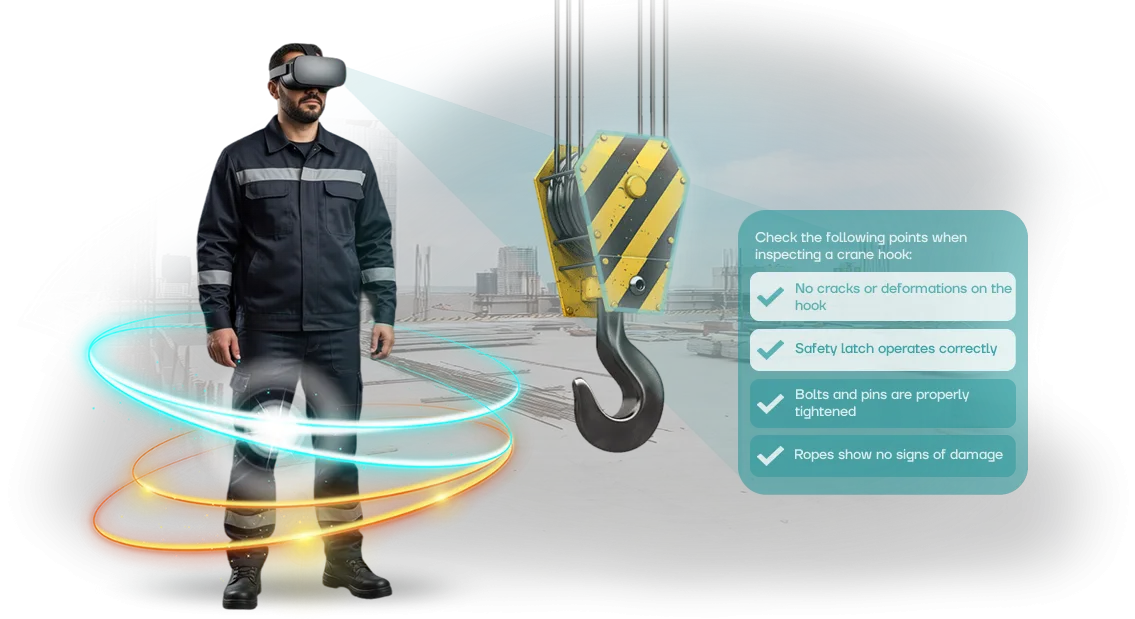
VR occupational safety training solves this problem: the simulator immerses the employee in a maximally realistic production environment where they repeatedly practice dangerous scenarios without the slightest threat to themselves or equipment. This format builds muscle memory and automatic responses that kick in at critical moments.
For the company, this means measurable business results: fewer accidents, injuries, and labor discipline violations. VR simulators allow modeling rare but critical situations — gas contamination, fires, pipeline ruptures.
In reality, creating such conditions for drills is impossible or too dangerous, but in a virtual environment, every employee can refine their actions to automation. Upon completing training, you get personnel who don't just know the rules but react quickly and correctly.
We have been developing VR simulators for industrial clients, including oil and gas enterprises, for more than 10 years.
We rely on real regulations, emergency scenarios, and the specifics of each particular production facility — so the training becomes a controlled risk-reduction tool. We are ready to meet your need for reliable occupational safety training.
What benefits VR occupational safety training provides
In the oil and gas industry, the price of a mistake is an employee's health and life, downtime, and reputational losses. Classic briefings and lectures provide a foundation but do not build lasting skills: the employee listens, and in a real emergency acts on autopilot. This approach has long ceased to meet safety requirements.
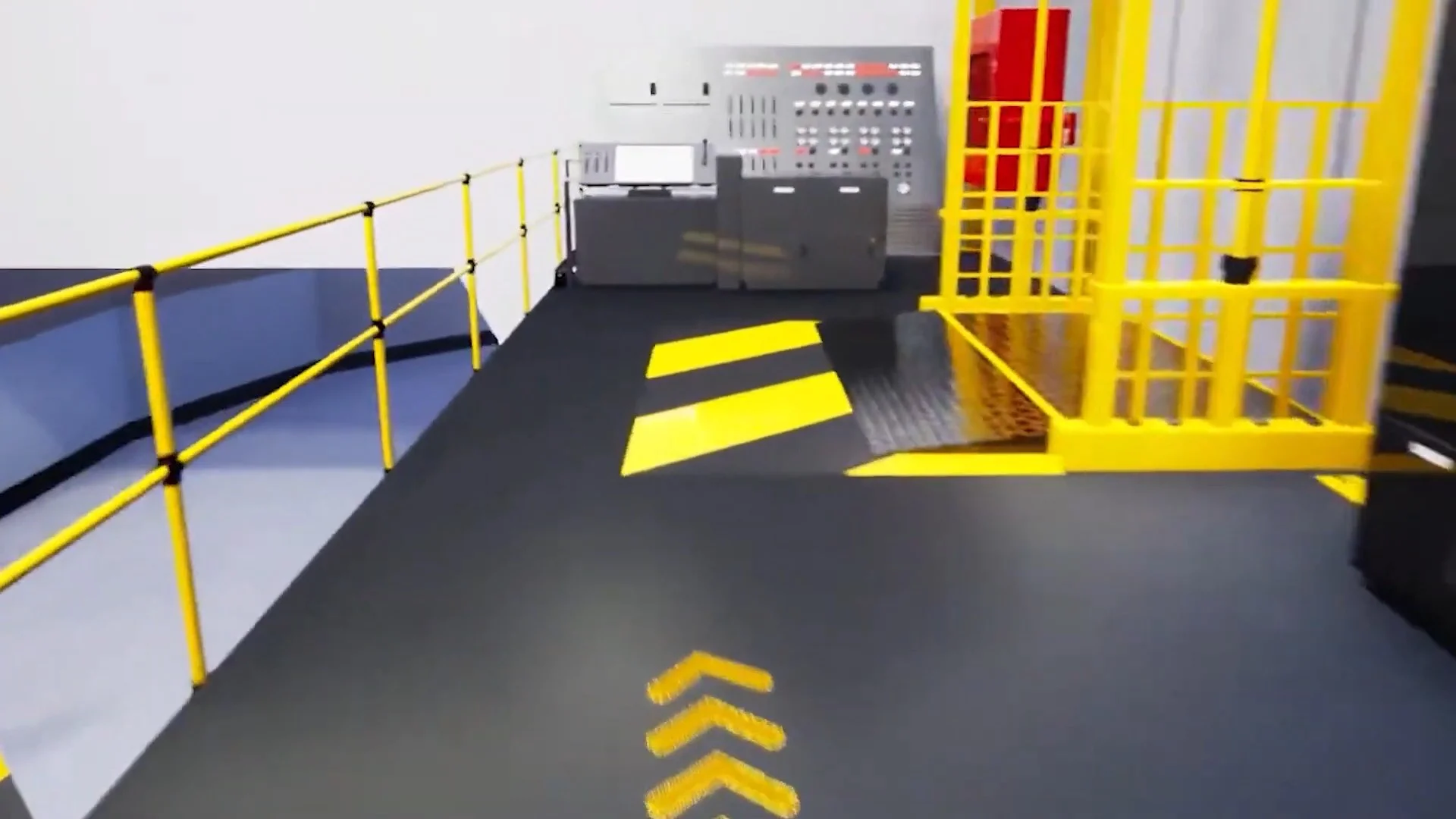
Immersive VR training solves this problem. The employee is fully engaged in the process: they enter a realistic environment — a workshop, a drilling rig, or a site — and learn to make decisions in conditions as close to real-life as possible.
Emergency scenarios can be reproduced hundreds of times without risk to personnel, so every worker practices the algorithm to automation rather than just reviewing an instruction.
The key advantage for a manager is the ability to assess reactions and training effectiveness. The simulator records accuracy of actions, decision-making speed, and the number of errors for each employee.
This objective data reveals who is truly ready for the job and who needs additional preparation. Such analytics improve the quality of the entire occupational safety system.
Another plus is budget savings. Instead of off-site courses and renting training grounds, the organization gets a permanent training tool that works at any facility. There is no need to pull crews off shifts or adjust to instructor schedules. Training is faster, and the result is higher.
Implementing VR simulators in an oil and gas company is an investment in safety that pays off: fewer incidents, lower costs for eliminating consequences, and confidence for personnel and management. This is exactly what we focus on when developing programs for client tasks.
VR simulator formats for different training tasks
Occupational safety training in the oil and gas industry addresses various tasks: initial briefing, practicing actions during an accident, and crew qualification improvement.
There is no universal format — that's why we distinguish individual simulators, group training, and virtual training grounds. A properly chosen format delivers exactly the result the company needs: fewer errors, higher personnel readiness, and easier certification.
We select the format based on the scale of tasks and the number of employees — from a single worker to an entire shift. The table below shows which format suits which situation.
| Format | For whom | What it gives the client |
|---|---|---|
| Individual simulator | A single worker, typical workplace scenarios | Quick skill practice, automatic error tracking, readiness for knowledge checks |
| Group training | Crews, shift rotations, jobs requiring interaction | Practicing coordination and role distribution in emergencies, reducing risk from human factors |
| Virtual training ground | Complex exercises, large production facilities | Modeling emergency scenarios at facility scale, training decision-making under pressure without real threat |
| Combined format | Companies with multiple sites | A unified training standard for all branches, saving time on business trips and organizing classes |
When choosing a format, we start from your tasks: where the risks are higher, which scenarios are critical, how many employees need training.
We'll help build a program, integrate simulators into the existing training system, and prepare instructors — so virtual sessions become part of the regular work of the occupational safety department.
How a VR simulator is developed for your project
You will get a transparent process: you always know what stage the project is at and what you receive as a result. We take on all the organization — from the first brief to launch and ongoing support — while your team only approves key decisions.
-
Brief and scenario analysis. We record your regulations, instructions, and typical employee errors. We study real situations at your production facility so the simulator reflects exactly your risks.
-
Scenario design. Our methodologists turn occupational safety into a training story: emergency situations, actions during incidents, safety algorithms. We approve the scenario with you before detailed development begins.
-
Prototype development. We build a working version with key mechanics and visual style. You see what the training will look like and make edits before launch — this saves time at the final stage.
-
Full simulator assembly. We fill the scenario with details: object behavior, reactions to actions, error tracking. We run internal testing to eliminate glitches and inaccuracies.
-
Testing with your employees. We organize a pilot group — 5–10 people go through the training, and we collect feedback. This helps adjust complexity and the interface for real users.
-
Integration into the training process. We connect the simulator to your accounting system or launch it as a standalone course. We provide administrator instructions and train your specialists to work with the platform.
After launch, we stay in touch: we update materials, add new scenarios, and help with technical issues. As a result, you get a working tool that integrates into the occupational safety system and reduces the number of incidents.
What is included in the VR simulator delivery package
The delivery package is designed so you don't waste time on custom modifications.
The package includes not only the VR simulator itself but also everything needed to launch training and track results: scenarios, methodological materials, an administration system, and warranty obligations.
- Scenarios for typical and emergency situations — modules on actions in case of fire, gas contamination, oil product spills, and working at height. Each scenario models the real risks of oil and gas facilities.
- Methodological materials for the instructor — a ready-made lesson procedure, briefing scenario, questions for reviewing errors, and employee assessment forms.
- Administration system — a personal account with a training log: you can see who completed a scenario, with what result, and which operations caused difficulties.
- Knowledge assessment tools — customizable examination scenarios for employee certification with automatic protocol generation.
- Briefing for your team — we train administrators and instructors to work with the simulator, upload student groups, and review final reports.
- Simulator updates — when industrial safety standards change, we supplement scenarios and methodological materials. Updates are included in the contract, not ordered separately.
- Warranty service and support — equipment replacement in case of malfunction, consultations, and issue resolution during the warranty period. You contact a single channel rather than searching for different vendors.
The full delivery scope is fixed in the contract — you know in advance what you receive and what you pay for. Ultimately, this is a complete tool for the occupational safety department: from ready-made scenarios to automatic reports and regular updates.
The project launches without involvement of your IT specialists, and all technical aspects remain our responsibility.
Case study: VR simulator for the oil and gas industry
When it comes to the oil and gas industry, the price of a mistake is measured not in fines but in human lives and the company's reputation. Standard briefings do not build lasting skills: an employee knows the theory but gets lost in a real emergency. We proposed to a large oil and gas holding company to close this gap with VR simulators.
For one of the SeverEnergoNeft sites, we developed a course of virtual scenarios: equipment depressurization, local fire, and evacuation during gas contamination.
Operators, shift personnel, and shift supervisors practiced actions in conditions as close to real life as possible but without health risks. The simulator recorded every action and highlighted errors immediately after completion.
Implementation results
Three months after launch, we measured training indicators. The number of errors during practical skill practice decreased by 60% — employees stopped confusing operation sequences and responded faster to emergencies.
The onboarding time for new employees was reduced from three months to two weeks: instead of lengthy lectures, newcomers immediately gained hands-on practice in a virtual environment.
The holding's management continued the collaboration and expanded the program to five sites. Now the simulators are also used for annual retraining — this maintains personnel skills without interrupting production.
For us, this is the main effectiveness metric: not the number of installed kits, but the actual reduction in accident rates and the speed of employee adaptation.
How to choose the right VR simulator format?
Choosing a VR simulator format depends on three practical factors: the number of employees who will undergo training, the project budget, and the type of production risks.
Start with the training scale. For a small crew, a compact system with three to five scenarios is sufficient; for hundreds of employees across the country, you need a solution that can be deployed at multiple sites or used without interrupting production. In the first case, you get a quick result; in the second, uniform personnel coverage.
The budget determines the starting point. With a limited budget, choose a ready-made scenario adapted to your regulations: training can be launched within a few weeks. If the budget allows, custom development provides maximum immersion in real work situations.
Most often, companies start with a pilot project on one group, evaluate the result, and roll it out across all departments.
The type of production dictates the content of the scenarios. The oil and gas industry involves working at height, in confined spaces, and with hazardous substances.
Each type of work needs its own simulator: one practices actions during a leak, another — evacuation from a drilling rig, a third — routine repair work per regulations. This is what determines the value of a simulator, not the number of headsets or server capacity.
We select the format for your task: we calculate coverage, clarify risks, and propose the optimal option in terms of timelines. Send us a description of your production — we'll get back with a solution.
Answers to frequently asked questions about VR simulators
When the topic of VR simulator implementation comes up, occupational safety specialists and managers ask the same questions: how safe is it, will we have to purchase additional equipment, how will the simulator fit into existing training programs.
We understand these concerns — so we've collected answers to the most common questions. If you don't find yours — just write to us, we'll tell you more.
How safe is VR training for employees and equipment?
Completely safe. The simulator imitates dangerous situations without real risk: an employee can make a mistake in the virtual environment but will not be physically harmed and will not damage anything.
For the oil and gas industry, this is especially important — you practice emergency scenarios that cannot be reproduced in reality without threatening people and production.
In terms of well-being: modern equipment undergoes checks and is adjusted for each user, so discomfort and motion sickness are minimized. Sessions are short, and a pre-training briefing teaches proper headset use.
What if the equipment breaks down or fails?
We bear full responsibility for the system's functionality. Throughout the entire service period, you receive replacement of faulty equipment without prolonged downtime — this is stipulated in the contract.
If the simulator is used in multiple departments, we provide a backup set so that scheduled training never stops.
The typical recovery time is no more than a few working days. This is sufficient for daily training programs, and if necessary, we'll back it up with an additional remote access solution — some sessions can be conducted without a physical headset.
Can we use the VR simulator with our existing training programs?
Yes, integration is one of the key advantages. The simulator doesn't replace your current system — it supplements it: virtual session results are easily exported to your learning management system or training log.
We develop custom scenarios based on your regulations and verify that final assessments meet your internal quality standards.
We'll configure roles for instructors and administrators so they can track each employee's progress, generate reports, and review tasks when needed. No replacement of your familiar reporting — just a convenient addition to it.
What guarantees do you provide for implementation and the simulator itself?
We provide a warranty on equipment and software for the entire contract term, as well as free support during the launch phase.
Our specialists train your instructors to work with the simulator, help create a training schedule, and adapt scenarios to the specifics of your production.
If, after the trial period, it becomes clear that some scenarios don't fit, we'll refine them — this is also part of our commitments. We're interested in the simulator delivering results for you, so quality assurance doesn't end with equipment handover.
If you still have questions — ask us directly. We'll advise on how VR training will fit into your occupational safety system and, if needed, arrange a live demo of the simulator for your team.Order a VR simulator for occupational safety training
Occupational safety in the oil and gas industry is an area of heightened responsibility: an employee's mistake can be costly, and classic briefings don't provide the necessary level of engagement.
A VR simulator solves this problem, but many clients wonder: where to start, how much it costs, and whether the solution will fit our specific scenarios. We've removed all barriers: leave a request — and get specific answers tailored to your task.
What you get after contacting us
- A consultation with a VR training expert — we'll analyze your production processes, typical risks, and advise where the simulator will deliver maximum effect.
- A demo mode of an existing simulator — you'll see how an employee interacts with the virtual environment and can assess the quality of scenario development before purchasing.
- A commercial proposal with transparent terms — we fix development timelines, approval stages, and cost without hidden surcharges.
- An economic benefit calculation — we'll show how the simulator reduces training costs, lowers accident risk, and minimizes downtime from suspensions.
- Recommendations for integrating into your training system — we'll figure out how the simulator will complement existing briefings, certification, and work with contractors.
- A personalized implementation plan — from pilot launch to scaling across all company divisions.
Submit a request on the website or call us — within a business day we'll send a commercial proposal and arrange demo access. Start with a short conversation that will save you months of independent analysis.