

military training simulation software: why this is needed
Every commander knows the true cost of training: in battle, there are no second takes. A mistake during exercises is a reprimand, but a mistake in a real situation means losses of personnel and equipment.
Traditional methods — firing ranges, training grounds, briefings — provide a foundation, but they don't cover the essential part: non-standard situations, sudden threats, and coordinated unit actions in conditions as close to combat as possible.
The result of such training is predictable: soldiers become confused when the situation changes, commanders don't have time to restructure tactics, and correcting mistakes takes months.
This is a direct path to reduced combat readiness and increased losses in a real encounter with the enemy. The department head sees this in the numbers: ammunition costs are rising, but standard test results are not improving.
Modern military training simulation software solves this problem systematically. A soldier and a unit practice any scenario in a safe virtual environment — from defending a populated area to responding to an ambush — as many times as needed, until it becomes automatic.
Every run is recorded and analyzed action by action, and weaknesses become the subject of additional training rather than a reason for losses.
For a manager, this means measurable results. Combat readiness grows without additional spending on consumables and training grounds, the time to bring a new recruit up to standard decreases, and commanders get objective data for decisions.
Our team implements such simulators for the specific tasks of your department — from practicing individual training to coordinating entire units. We're ready to show how this works on your scenario.
What implementing simulators gives your unit
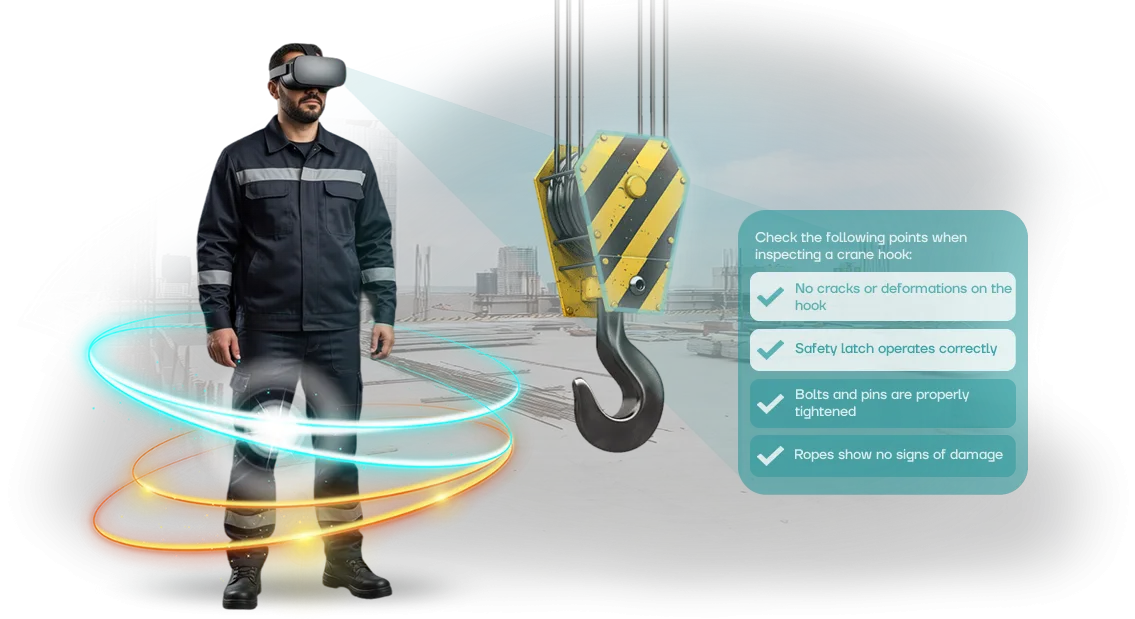
Modern combat training simulators place a unit in an environment as close to real combat as possible: weather conditions, noise, tactical situation.
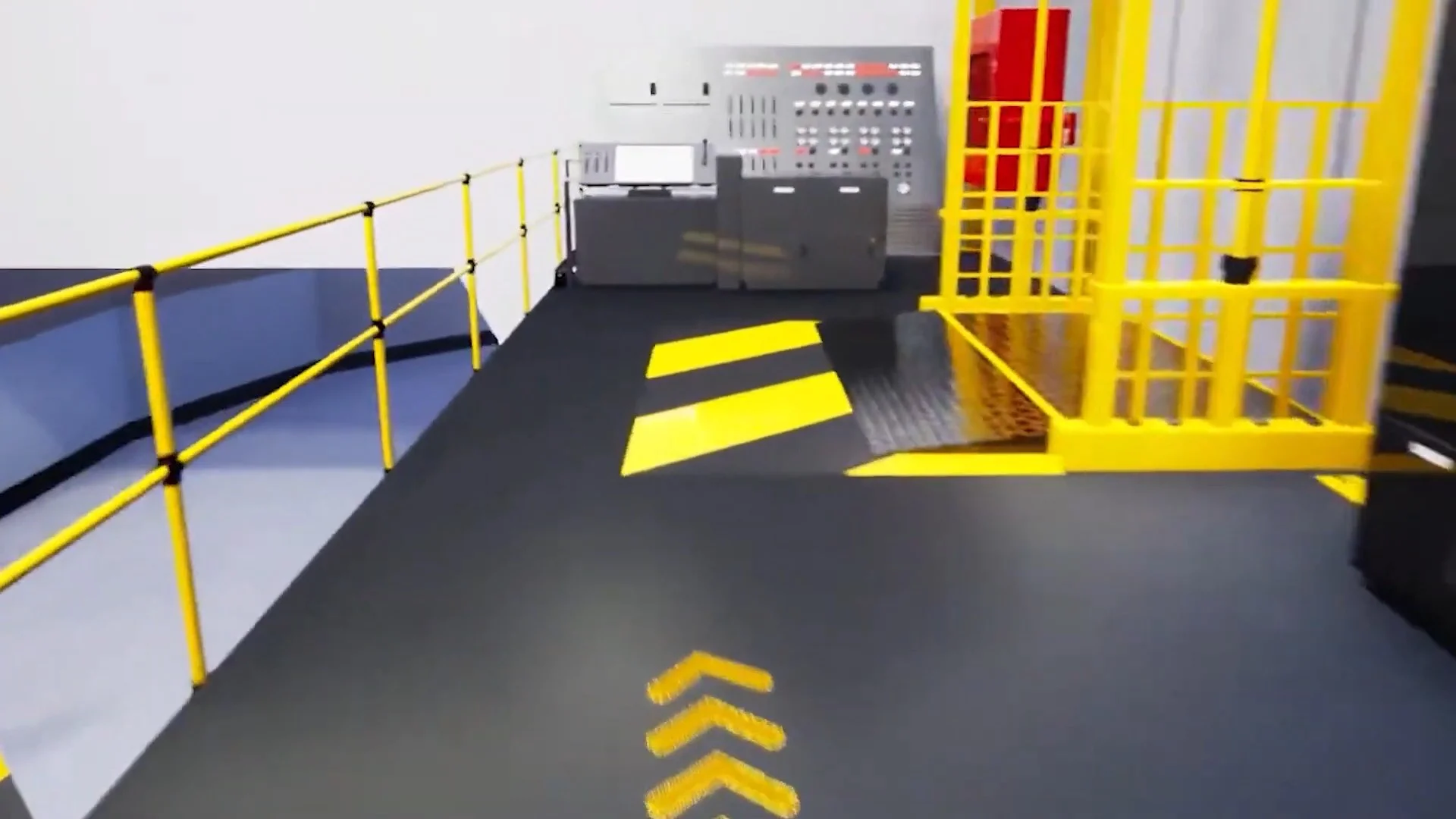
This realism is achieved through professional virtual reality platforms — our solutions are based on Unreal Engine, so a soldier operates in surroundings indistinguishable from a real training ground.
A virtual training ground is safe by definition: a mistake that in reality would cost an injury or equipment here only costs another run at the task. A cadet can practice a complex element dozens of times without risking their life or burning through resources.
This changes the approach to training — instead of cautious attempts, soldiers gain experience at the edge of their capabilities, and the instructor calmly reviews each action.
The savings become obvious after the first sessions: no costs for fuel, ammunition, equipment depreciation, or training ground rental. The unit trains in any weather and at any time, and the cost per hour of training decreases several times over.
In our practice, implementing simulators reduces the training budget by up to 40% without losing quality.
The main thing is that simulators accelerate learning. Skills that previously took months to practice are now reinforced in a few weeks: the system records progress, highlights weaknesses, and adapts the scenario to each individual soldier.
The commander sees an objective picture of each person's readiness rather than general grades and can precisely strengthen weak links.
Simulation training formats for your tasks
Every training program has its own specifics: some need to practice actions in a workshop, others need unit coordination in field conditions.
We select the simulation format for your task — from occupational safety to combat training — rather than fitting the task to a ready-made solution. This gives a predictable result and a reasonable budget.
Basic simulator formats
Below are three options that we adapt to your infrastructure, number of trainees, and safety requirements. In each case, you get a ready-made course, instructor guidelines, and clear progress metrics.
| Format | For whom | What it gives the client |
|---|---|---|
| Stationary simulators | Training centers, enterprises with a constant flow of employees | Practicing actions to automaticity, objective assessment of each person, maximum realism without risk to people or equipment |
| Mobile complexes | Units in the field, facilities with multiple sites | On-site training without travel or downtime, rapid deployment in any conditions |
| VR classes | Group sessions on occupational safety and combat training | Full immersion, quick scenario changes, low cost per session with high throughput |
Whichever format you choose, we stay in touch after launch: we update scenarios, prepare instructors, and help with additional equipment. The main thing is that training brings measurable results: fewer mistakes, faster reactions, higher confidence among trainees.
Stages of developing a simulation solution
For military and industrial training, the main thing is a predictable result and timeline. That's why the process is structured so that at every stage you understand what you're getting and what benefit it will bring to your personnel.
-
Brief and task audit. We study scenarios, regulations, and requirements. We define goals, success criteria, and project boundaries — we work without "surprises."
-
Plan and approval. We prepare the budget estimate, timeline, and team composition. You approve the plan and see checkpoints.
-
Scenario approval. We show a prototype: how actions, mistakes, and prompts look. Instructors make edits before development starts.
-
Development. We build the simulator on professional equipment. Intermediate versions are visible regularly — the process is transparent.
-
User testing. We test with real employees and collect feedback. We eliminate shortcomings before launch.
-
Launch and implementation. We deploy the solution, train instructors, and hand over documentation. Employees start without delays.
-
Support and development. We update scenarios, add new situations, and adapt to regulation changes. This is a long-term tool, not a one-time delivery.
Each stage ends with a concrete result — a document, prototype, or finished version. You always know where the project stands and when the results your unit needs will be ready.
What's included in the simulator delivery package
We deliver not "raw" code but a ready-made solution for the training process. The package includes everything needed to launch training in the first week and continue working without constant involvement of our engineers.
- Simulator software. A complete package with scenarios, a group management module, and progress tracking. It deploys on your site and is configured for your tasks.
- Methodological materials. Course programs, lesson scenarios, assessment sheets, and instructor guides — a proven foundation, no need to develop methodology from scratch.
- Instructor training. On-site and remote sessions: employees master simulator operation, error analysis, and result review, then pass the knowledge on within the unit.
- Technical documentation. Operating, maintenance, and update guides. Clear to any engineer who wasn't involved in the development.
- Warranty support. For the entire warranty period — scenario updates, troubleshooting, and consultations by phone or messenger. You can extend support if desired.
- Adaptation to your program. We refine scenarios to match your regulations, standards, and training specifics.
This package eliminates the main risks: you're not dependent on the developer in day-to-day operations and get a tool that works for results immediately after installation.
We accompany the project from the first inquiry to the point when your instructors run sessions independently.
Case study: how we improved training effectiveness by 30%
The military training center Forpost approached us — they were preparing soldiers for urban operations. The main problem: real exercises were expensive and time-consuming — every trip to the training ground required logistics, consumables, and instructor involvement.
At the same time, complex scenarios were difficult to practice due to weather and safety requirements.
We developed a VR simulator with multiple scenario levels — from individual skill practice to coordinated group actions. The system records every action of the trainee: reaction speed, accuracy, correctness of decisions.
The instructor sees the full picture and reviews mistakes immediately, without waiting for the exercise to end.
Results over three months:
- Time to practice basic skills decreased by 40% — instead of multiple trips to the training ground, cadets reached the required level right in the classroom.
- Accuracy of combat task execution increased by 25% — through repeated practice of critical moments without risk to life.
- Overall training effectiveness improved by 30% based on control standard results.
Here's what our clients say: "Previously we ran one exercise per week; now soldiers practice skills every day. Progress is visible within a month, and training ground costs have halved." — Head of the training center.
"The simulator allows us to create situations we could never model in reality — for example, a sudden attack in a confined space. Cadets stopped getting confused because they had already seen it in the virtual environment." — Tactical training instructor.
"I could practice a complex element as many times as I needed and wasn't afraid to make a mistake. When we went to real exercises, everything worked on the first try." — Cadet.
After this, the client ordered an additional module for practicing night operations. The simulator is now used for basic training of all new groups.
How to choose a simulator for your budget?
The cost of a simulator is directly related to the task it solves. If you need to practice one standard scenario for a group of 10-15 people, a basic configuration is sufficient — its cost is calculated after audit.
A full-fledged center with multiple scenarios, 20-30 employees working simultaneously, and automatic reporting for each participant represents a significantly larger investment, but the effect is completely different: the instructor focuses on program development rather than personally monitoring each person.
To make an accurate choice, assess three parameters: the number of employees training simultaneously, the number of scenarios to practice, and whether detailed action analytics are needed. These drive the price.
Everything else is details that don't significantly affect the cost, so a configuration can always be matched to real tasks rather than "maximum specifications."
The optimal path is to start with a pilot project. It will show how the simulator works on your scenarios and provide accurate figures for the budget.
After the pilot, you expand the program to new topics or increase the number of workstations — and every decision is confirmed by results, not guesses.
We help you choose a simulator without unnecessary options: we discuss goals, state an honest cost, and offer several options for different budgets. Before payment, your specialist will see a demonstration on their own scenario, and we stay in touch after launch.
This way you pay for what actually reduces risks and accelerates training, not for features that don't affect results.
Frequently asked questions about implementing training simulators
Before launching a training simulator, managers tend to ask the same questions: how to fit it into current processes, whether a separate room is needed, who will maintain the equipment, and when the first results will appear. We've collected answers to the most common ones — short and to the point.
The simulator is implemented for your site and tasks: our engineers deliver, configure, and check the equipment themselves, and staff are trained within one or two days. From then on, the system operates autonomously, and we remain in touch.
What if the simulator breaks down?
All equipment is covered by warranty, and the average response time to a request is 24 hours. If a fault can't be fixed remotely, an engineer will come and replace the component on-site or provide a replacement kit. No training downtime.
Is it difficult to organize a launch?
No. All you need is a room of at least 12 square meters and a standard power outlet. We handle delivery, installation, and calibration, and also create an equipment layout plan. All we need from you is access to the room — we'll do the rest.
When will the simulator pay for itself?
In most cases, within the first year. You save on consumables, emergency downtime, and instructor costs: one simulator replaces several real training sessions and operates around the clock. We'll calculate the exact payback model for your scenario.
Shall we discuss your project? Request a consultation
Every project starts with a consultation — it's free and carries no obligation. Tell us about your tasks, and we'll suggest how to solve them quickly and within your budget. You'll get a transparent estimate with no hidden work or unnecessary costs.
We create VR simulators for occupational safety, industrial safety, and military training — in every case, it's about practicing actions in extreme situations.
Our engineers understand the specifics of your industry, so from the very first conversation they talk about scenarios, not implementation details.
After your inquiry, you'll receive:
- A cost and timeline estimate for your task — before work begins, with no imposed options.
- Demo access to ready-made simulators so you can assess the format and quality with your own eyes.
- Format selection: a stationary VR classroom, a mobile kit, or a simulation for group training.
- An implementation plan: room preparation, installation, instructor training, and launch.
- Guarantees: we lock in requirements and results in the contract and support the project after delivery.
Leave a consultation request through the form on the page or contact us directly. Within one business day, we'll send you an estimate, suggest a time for a call, and prepare recommendations for your budget. We'll start with a conversation — then comes a clear plan and a result you can measure.