

Why does your team need military simulation training systems?
Traditional exercises are expensive: fuel consumption, logistics, training ground rental, and the risk of injury. Moreover, complex scenario drills are often limited by weather, regulations, and the impossibility of creating a truly dangerous environment. As a result, soldiers acquire routine skills, and commanders get little data for error analysis.
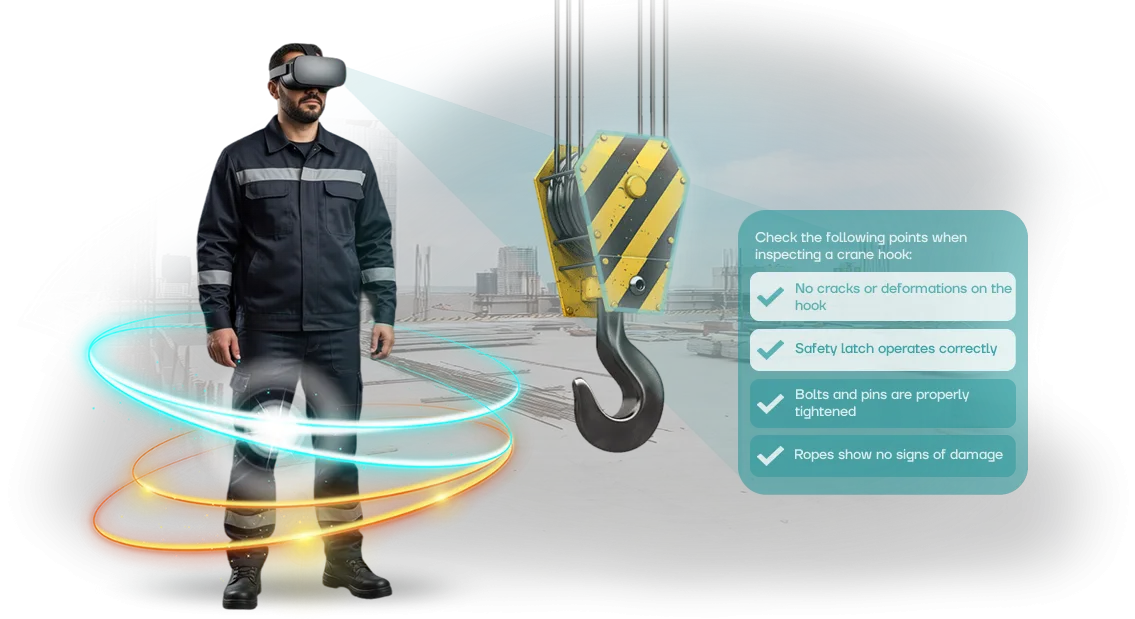
Military simulation training solves these problems. Realistic simulators immerse military personnel in conditions as close to combat as possible—from urban warfare to operations in confined spaces.
At the same time, training safety remains absolute: a mistake does not cause injury but provides immediate feedback and the opportunity to repeat the action.
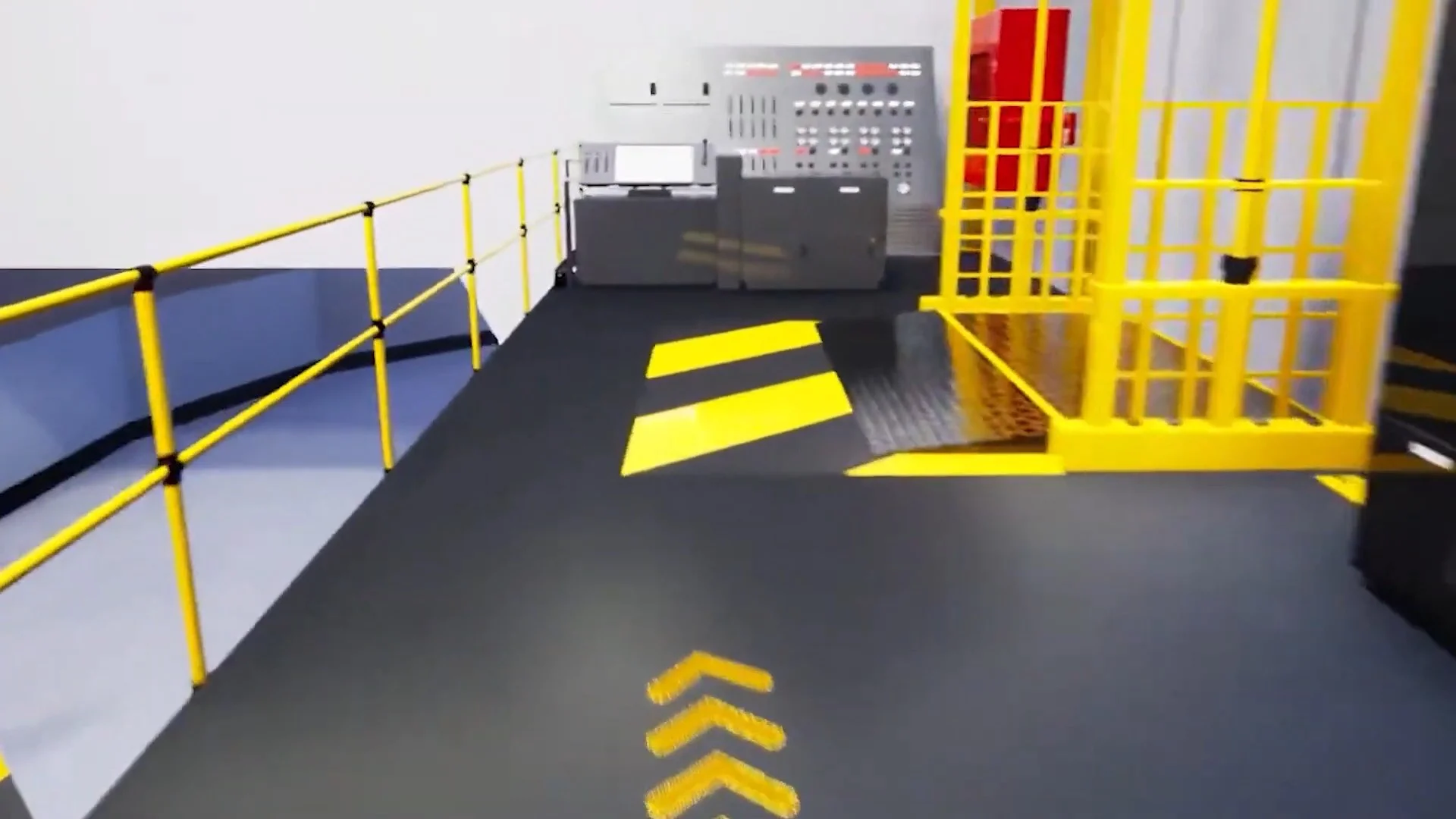
A virtual training ground lets you run scenarios as many times as needed and simulate rare, critical situations that are impossible or too dangerous to reproduce in reality.
Military training becomes predictable: you see each soldier's progress, understand which skills are lacking, and adjust the training program without extra costs.
We help implement military simulation training systems tailored to your tasks—from individual modules to a full virtual training ground. We handle design, assembly, and support so you get a working tool, not just technology.
What you get from implementing VR simulators
Military training demands precision, but every mistake in real-world conditions leads to equipment repair costs and risks to personnel.
VR simulators move skill practice into a virtual environment where complex scenarios can be repeated until they become automatic, without consuming resources. The outcome is measured with objective data, not the instructor's subjective assessment.
Reduced training costs
Real exercises mean fuel, ammunition, equipment wear, and logistics. A virtual training ground cuts these costs significantly: the same scenario can be practiced unlimited times, and equipment does not break down. The investment pays off within the first few months of using the simulator.
Safety for personnel
The most valuable asset is the human being. In a VR simulator, a service member gains experience with extreme situations without real danger. Mistakes are reviewed and corrected before they become habits, while the instructor observes every action in a safe mode.
Rapid skill development
Virtual time accelerates the training cycle: a scenario launches in minutes, not hours. A trainee performs dozens of repetitions per shift, so skills become automatic faster than with conventional training. This is especially important when time is limited before a mission.
Objective analysis of every action
The system records trajectories, reaction times, action precision, and decisions at every phase. The instructor sees not “generally okay” but numbers and a comparison with the benchmark. This reveals gaps that are invisible to the eye and makes training manageable.
The training methodology is based on the regulations of the Combat Manual and the requirements of specialized agencies, so the simulators integrate into your existing training program without restructuring processes.
Military simulator formats for your task
Choosing a military simulator format is not about equipment; it is about how you will achieve your training goals. A stationary complex, a mobile variant, and an individual simulator cover different scenarios—from cohesive unit operations to individual skill practice.
We select the format based on your training program, number of trainees, and deployment conditions. Below is a comparison to help you decide.
Format comparison
| Format | For whom | What it gives the client |
|---|---|---|
| Stationary complex | Units with a permanent training base | Full immersion, practice of group and crew interaction, high realism |
| Mobile complex | Field deployments and on-site training | Training without interrupting service, quick setup, coverage of multiple locations |
| Individual simulator | Targeted specialist training | Flexible schedule, resource savings, daily practice of specific skills |
These are the basic options—combining them often delivers the best results. For example, a stationary complex for coordination and several individual simulators for daily training.
After a short briefing, we will propose the optimal configuration and, if needed, develop a custom format for your task.
How we deploy a project: from brief to support
For military and law enforcement agencies, predictability is critical: every stage must confirm that the simulator solves a specific combat or training task. That is why we structured the process so you can see intermediate results and influence them.
We base it on our own methodology, Turnkey Simulator, which has been proven across dozens of projects and guarantees launch within the agreed timeline.
- Briefing and immersion — we study your regulations, typical mistakes, and scenarios. We document the skills each soldier or employee must practice and define success metrics.
- Analytics and concept — we propose the simulator format, scenarios, and evaluation criteria. We align with you before development begins to avoid unnecessary costs.
- Prototype and approval — we show an interactive draft of the future simulator. You see the logic and interface and can make changes before full development starts.
- Development — we build a complete simulator with your instructions, objects, and skill assessment system. We use professional equipment to ensure stable results.
- Testing with your personnel — we run a pilot group, collect feedback, and refine scenarios. You receive a simulator already tested by real users.
- Launch and integration — we deploy the system on your equipment or in a secure environment and train instructors. Administration does not require a programmer.
- Support and evolution — we update scenarios, add new inputs, and monitor stability. On request, we prepare completion analytics for certification.
What is included in the delivery of a complex for your center
You get not just a VR program but a complete training complex for a military simulation training center. We handle the entire chain—from setup to commissioning—so your instructors and students start working from day one.
The delivery package includes:
- Ready-to-use VR simulator tailored to your tasks — a turnkey package with installation, configuration, and verification at your site.
- Training scenario library — several dozen situations, from routine operations to emergency incidents. Scenarios are built according to your regulations and can be extended to match specific needs.
- Methodology and training materials — lesson plans, instructor guides, and evaluation criteria. This allows you to conduct training systematically and measure each employee's progress.
- Training for your staff — hands-on sessions for instructors and operators: how to launch scenarios, support a training session, review mistakes, and generate reports.
- Technical support — we help on request: update scenarios, refine modules, and resolve issues within agreed timelines. You are never left alone with the simulator.
- Warranty and modernization — we define commitments in the contract and, if necessary, expand the program to meet new requirements and regulations. If refinement is needed, it is planned in advance, not “whenever it happens.”
Such a package fulfills the center's main mission—consistently preparing people for real-world conditions without risk to life or equipment.
Real case study: how we improved training effectiveness
For military simulation training systems and occupational safety simulators, speed and training quality are everything. When every mistake is costly—from equipment breakdown to risk of life—training must not merely deliver theory but build lasting skills. One of our clients, a major oil and gas operator, faced exactly this challenge.
Case study: 40% fewer errors in three months
Before implementation, employees went through paper-based briefings and watched videos, but during on-site checks they repeated the same mistakes. We analyzed real incidents and turned them into VR scenarios: leaks, fire, work at height, and emergency response.
After three months of regular sessions, the number of errors in control tests dropped by 40%, and the time to train one employee was almost halved—the simulator itself identifies weak points and offers another attempt.
Client feedback
The client's occupational safety manager assessed the result as follows: “For the first time, people stopped treating the briefing as a formality. They actually see the consequences of their actions and remember the correct procedure at a reflex level.”
The complex has now been replicated across several production sites, and a repeat request for scenario refinement confirms that the client received a tool that pays off through reduced downtime and accidents.
We integrated training into the regular workflow: scenarios are updated whenever regulations change, and reports on each employee are automatically generated for certification. Managers see not a “checkmark” confirming course completion but the team's actual level of readiness.
Test your training scenario the same way we tested the client's case: ask how many mistakes your employees make after a briefing. If the number is above zero, a VR simulator will help reduce it.
How to choose the right training format for your specific needs?
The choice of training format is determined by four key criteria: the number of trainees, scenario complexity, budget, and mobility requirements. There is no universal solution—for each unit, it is important to find a balance between realism, coverage, and cost.
If you need to train several groups simultaneously, a stationary solution with multiple entry points is optimal: people train in one location, the instructor controls the process and sees everyone's progress.
When trainees work in shifts or at different locations, a mobile kit lets you travel to the site and conduct training without interrupting the production cycle.
Scenarios also affect the format. Short modules suffice for practicing individual skills—actions in a danger zone, response algorithms in abnormal situations.
Coordinated group actions, role distribution, and communication in low-visibility conditions require an environment where multiple participants are in the same space at the same time.
If this is not accounted for, training becomes a formality—just ticking a box—rather than real preparation.
Budget and mobility are linked: a stationary facility requires a larger initial investment, but with high trainee throughput, the cost per training hour ends up lower.
A mobile variant is less expensive upfront but limited in the number of simultaneous positions and requires time to set up. Also note that a portable solution does not always provide the needed level of immersion for complex group scenarios.
Our recommendation is to start with a pilot scenario for 10–20 trainees to test how the format fits your specific needs and to measure completion speed and knowledge retention.
Then you can scale the solution: add stations, expand the scenario bank, or move part of the training to a stationary format. We will find an option for your tasks and budget so that training delivers measurable results—fewer errors and shorter personnel preparation time.
Answers to frequently asked questions about implementing simulators
Implementing simulators is a responsible decision. Doubts usually concern timelines, budget, reliability, and warranties. We have gathered answers to these questions based on real projects—from occupational safety to military simulation training.
If you do not find your question here, write to us—we will help calculate a project for your conditions.
Is the simulator reliable under intensive use?
Yes. We use professional equipment and run verification before delivery. If a failure occurs, our engineers will connect remotely or come to your site.
How long will implementation take?
Usually 4–6 weeks including installation and configuration. We work in stages without stopping your operations, and the timeline is fixed in the contract.
What budget should we set aside for the project?
The cost depends on the number of scenarios and positions. The simulator saves on real exercises and consumables, so it typically pays for itself within the first year.
Is it difficult to integrate the simulator into an existing program?
No. We adapt scenarios to your tasks—from occupational safety to military training. An instructor can master the system in one day; we train your staff and hand over instructions.
What warranties do you provide?
The warranty on equipment and work is from one year. It includes repairs, scenario updates, and consultations. Support can be extended separately.
Ready to discuss your project? We will send a calculation and plan
Before investing in VR simulators, you want to understand what exactly we will do, how much it costs, and when results will appear. So the first step is a short conversation about your tasks.
We will determine which scenarios you need—from practicing fire response to military simulation training—and prepare a personal calculation within two business days.
In response to your inquiry, you will receive:
- A transparent estimate broken down by stages and timelines, with no hidden work.
- A presentation with case studies and demo materials tailored to your specific needs, including military simulation training.
- A custom proposal: module composition, scenarios, and integrations aligned with your training program.
- An implementation plan with a pilot launch, instructor training, and result monitoring.
- Recommendations for conducting training and evaluating the progress of employees or military personnel.
- Fixed timelines and areas of responsibility—you see the entire path from idea to regular training sessions.
No fluff and no promises of “everything at once”: after a short briefing, you receive a document with figures that you can base your decision on.
All that remains is to submit a request—then we will contact you within one business day, provide a consultation, answer your questions, and send a ready proposal.