

Tactical VR Simulator: How to Train Personnel Without Risk to Life
Every year, companies lose employees and money due to mistakes that could have been practiced in safe conditions. Traditional occupational safety training is briefings, posters, and occasional hands-on workshops.
A person formally passes the check, but in a real emergency acts not according to instructions but on reflex — and reflexes are formed only through practice.
A mistake on the production floor is expensive: injury, downtime, fines, loss of reputation. Studies show that after passive training, only a small portion of the information remains after a few weeks.
That is why companies are increasingly moving from lectures to simulators, where an employee experiences a dangerous scenario firsthand.
We meet this need with a tactical VR simulator — immersive training that is as close to real-world conditions as possible.
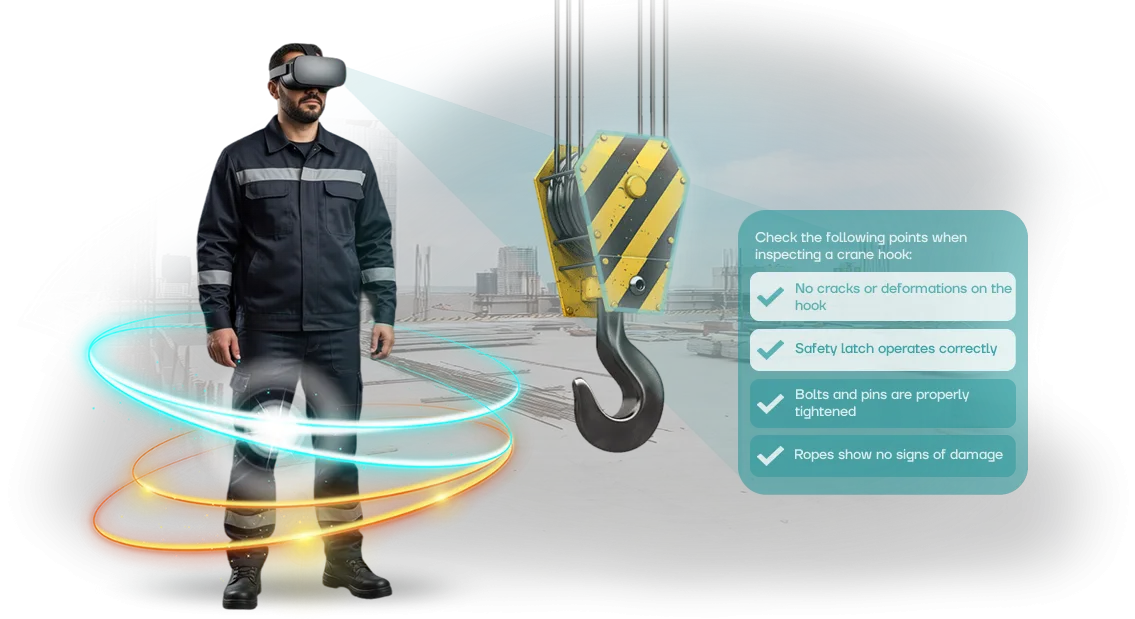
The employee puts on a headset and finds themselves in situations that are difficult to simulate at a training ground: fire, chemical leaks, working at height, transport accidents. They make decisions with their voice, hands, and body movements — just as they would in reality.
At the same time, a mistake does not lead to injury, and the scenario can be replayed over and over again.
This approach trains not memory but skill: attention, reaction speed, the ability to act under stress and coordinate a team. Unlike passive video viewing, VR provides full immersion — the brain remembers the situation as personal experience.
This also changes staff attitudes toward safety: instead of a boring obligation, it becomes an engaging and clear training that employees complete with involvement.
For the company, this means fewer incidents, lower insurance burden, and faster readiness of employees for real tasks. A tactical VR simulator pays for itself after preventing just one serious accident.
Why Modern Simulators Are More Effective Than Lectures and Briefings
Classic briefings provide a lot of information but do not build lasting skills. After a week, the employee remembers only a small part of the rules, and in an abnormal situation acts on intuition — this leads to injuries and accidents.
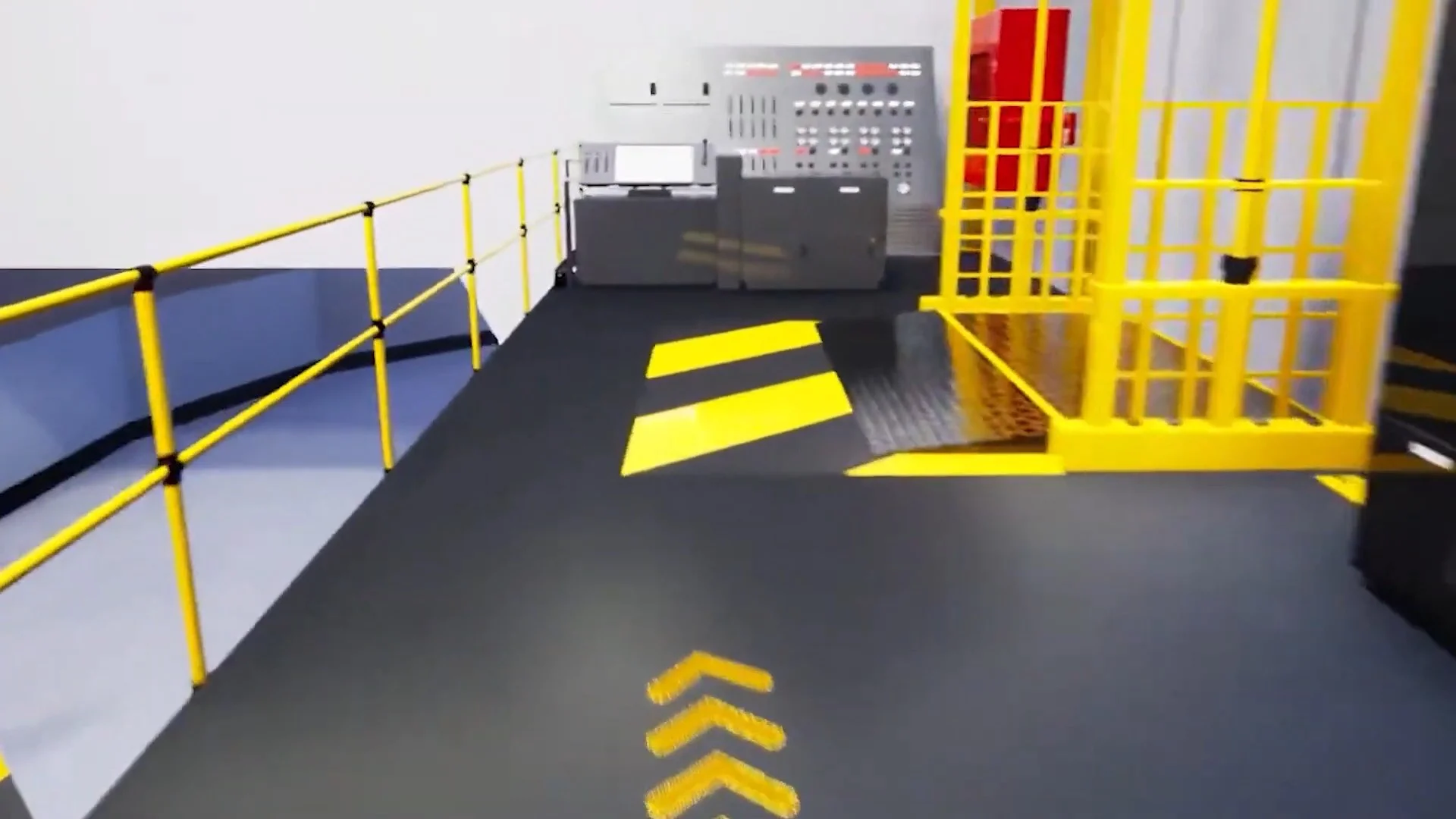
A modern VR-based simulator completely changes the approach: instead of listening, the employee acts. A person enters a virtual production facility where they need to make decisions, move around, and respond to signals.
According to PwC, training in a virtual environment takes on average four times less time than lectures, with higher engagement. For the company, this means faster shift readiness without loss of training quality.
Immersive training delivers high information retention because it engages visual, auditory, and motor memory simultaneously. Practiced scenarios become habits: in a real situation, the worker automatically performs the required algorithm.
Such a result cannot be achieved with a simple test or briefing — this requires practice, but practice without risk to life.
Training in VR space is completely safe: we simulate falls from height, fires, leaks, and equipment failures. An employee can make a mistake and see its consequences in the virtual environment while remaining unharmed.
This makes it possible to practice the most dangerous scenarios that cannot be demonstrated at a real facility.
The business benefit is obvious: fewer injuries, lower insurance and downtime costs, faster onboarding of new employees. Training takes place without stopping production, and the simulator pays for itself by reducing the number of incidents and accidents. The team gains confident skills; the company gains stable and protected operations.
Training Program Formats: Choose Your Scenario
The same simulator can be used in different ways — it depends on the task: onboard a new employee, check an employee's readiness, or refine emergency response. We design the training program around your specifics, rather than "pinning" a standard scenario. Below are the typical formats that make up a program.
| Format | Target Audience | Value to the Client |
|---|---|---|
| Orientation scenario | New employees | Quick immersion in the rules without stopping work |
| Periodic assessment | All personnel | Objective evaluation of each employee's knowledge and weak points |
| Emergency response drill | Employees in hazardous areas | Emergency response experience without risk to life |
| Mass training | Multiple teams or branches | Consistent training standard across all departments |
How to Choose the Right Format
If you need to quickly raise the overall safety level, an orientation scenario and a short assessment are sufficient.
When it is critical to practice emergency response, the focus shifts to simulating a real incident: the employee makes decisions under stress and sees the consequences of their mistakes.
This approach reduces training time and lowers the number of incidents on the production floor. It also lets the manager see an objective picture: who is ready to work and who needs additional training.
How We Develop Training: From Brief to Launch
We have structured the process so that you control every stage and know what you will get at the end. No "black box": all decisions are agreed with you before work begins, and intermediate versions are shown on a regular basis.
- Brief and task immersion. We study your regulations, training scenarios, and typical employee mistakes. We determine which skills and actions need to be practiced in the simulator.
- Plan and estimate. We fix the scope of work, timeline, cost, and acceptance criteria. You know in advance what you are paying for and what result you will get.
- Concept approval. We present the simulator scenario, interaction mechanics, and visual style before development begins. We make edits at this stage — it is cheaper than redoing the finished product.
- Implementation and intermediate demos. Every 1–2 weeks, we demonstrate a working version. You see progress, give feedback, and we adjust the course immediately.
- Testing with your employees. We check how clear the training is to complete, where difficulties arise, and refine the interface and scenario.
- Launch and handover. We install the system on your equipment, train administrators, and hand over documentation and instructions.
- Technical support and improvements. We support the project after launch: update scenarios for new regulations, help with operation, and add new modules as your tasks grow.
This approach has already been proven across dozens of projects for industrial companies, logistics operators, and training centers.
Thanks to regular demos, you do not waste time on correspondence — you see the result with your own eyes and make decisions based on facts, not descriptions.
What's Included in the Virtual Simulator Delivery
When you order a simulator, you get not just a program but a complete training solution: content, rights, methodologies, and support. We design scenarios for your tasks — from a standard knowledge check to a detailed simulation of hazardous situations at your facility. Everything is ready to launch from day one, without additional work from your specialists.
The delivery includes:
- Occupational safety training scenarios — realistic situations that match your regulations: working at height, electrical installations, fire safety, emergency response. The employee trains their reactions and practices procedures without risk.
- Virtual environments and objects that replicate your site — participants recognize their workspaces and transfer skills to real life more easily. This increases engagement and reduces onboarding time for new employees.
- Instructions and methodology materials for the instructor — lesson plans, evaluation criteria, and analysis of common mistakes. You do not need to build a training program from scratch; just run the training using the ready-made scenario.
- Software licenses and content rights — you use the simulator legally, can roll it out to other sites, and refine it without restrictions.
- Admin panel for result tracking — difficulty settings, task assignment, and statistics for each employee. The manager sees who completed the training and how well.
- Scenario updates for new risks — when regulations change or new hazards emerge, we update the content. The simulator remains current without your involvement.
In addition, we provide technical documentation and train your instructors. Post-launch support is included in the contract, so you are never left alone with the system. The result is a fully self-sufficient training tool that is easy to deploy and develop.
Case Study: Tactical Simulator for a Security Service
Security services often face the same problem: ordinary drills do not produce measurable results. Employees formally complete briefings, but in a real situation act on autopilot — with mistakes, delays, and unpredictable consequences.
The manager spends the training budget but cannot assess whether the staff is ready for an emergency.
We proposed solving this with a tactical VR simulator — it immerses employees in scenarios that cannot be reproduced at a training ground.
For one security agency, let's call it Shchit-Vostok, our engineers modeled a real environment: a security post, a checkpoint, and a perimeter with simulated intrusion zones.
Every action is recorded, and after the scenario the team receives a detailed debrief of mistakes and a reaction time assessment.
The implementation results speak for themselves. The time to respond to a standard alarm dropped by a third, and the number of mistakes in low-visibility conditions more than halved.
The average score on the final test rose from "satisfactory" to "good," and for the first time in years we saw consistently high scores across all shifts, not just individual employees.
For the client, this means direct savings: personnel no longer need retraining every six months, and the number of incidents at facilities has decreased.
According to our estimates, the annual effect exceeded the cost calculated after audit, taking into account reduced downtime, fines, and costs of repeat drills.
The security service manager confirmed this in a review: "We used to spend weeks preparing for drills and still were not sure of the result. The VR simulator showed us each employee's weak points, and we closed them before a real problem occurred.
Now it is a mandatory part of our program — and it is the best money we have invested in years."
This case is not an isolated example but a typical scenario that we adapt to the needs of a specific service. You get not just a simulator but a training system with clear metrics, economic justification, and post-launch support. Tell us about your facility — we will show you which scenario can be used to build the first pilot.
How to Choose a Training Format for Different Professions?
There is no universal VR simulator for all professions, so the question "how to choose a simulator" comes down to the tasks of the profession. Each specialty requires its own level of immersion and scenarios.
An equipment operator needs to practice a safe sequence of operations and response to abnormal situations.
A rescuer or emergency response team member needs different skills: making quick decisions, changing the plan on the fly, and working as a team. Some professions emphasize precision, others emphasize reaction speed.
That is why, before development, we analyze typical mistakes and the specifics of the profession — this is the basis for choosing the format.
The training format is matched to the profession, and to do this, you only need to assess three criteria. Risk level: the higher the cost of a mistake, the more the scenario relies on abnormal situations. Decision-making style: individual responsibility or group coordination.
The third criterion is frequency of repetition: rare dangerous events need to be trained regularly, and VR provides this opportunity without risk or cost.
For example, working at height suits short modules with step-by-step control, while rescuers benefit from a tactical VR simulator with a changing environment.
We help you choose the format at the brief stage: we analyze the specifics of the profession and target skills — speed, precision, or teamwork. As a result, you get a simulator that addresses a specific training task. Employees adapt to real conditions faster, and the number of incidents and training costs decrease.
FAQ About Ordering Safety Simulators
When it comes to ordering a tactical VR simulator, you evaluate not only the training outcome but also how the equipment will perform after launch. Some worry about breakdowns, others about not understanding the controls, and others that the scenario will become outdated. We have collected answers to the questions clients ask most often.
What if the simulator breaks down?
All equipment and scenarios are covered by warranty. If the problem occurred due to our fault, we will replace the components or fix the issue at our expense. The average response time is no more than one business day.
We can include an extended service package in the contract: scheduled checks, preventive maintenance, and priority engineer visits. You do not need to understand the technology — we handle the maintenance.
Who will support the simulator after launch?
Our engineers stay with the project after handover. You get direct contact with the team: consultations on scenarios, session setup, and reports. If you need to add new inputs — send a request and we will prepare an update.
We provide a short training session for your staff: how to launch a training, collect statistics, and save settings. This usually takes two to three hours, and then the team works independently.
How long does it take to launch the simulator?
From task approval to the first launch — usually a few weeks. First, we discuss the scenario and hazardous situations, then prepare the environment and run a trial session. After that, you receive the finished simulator with instructions and a maintenance plan.
The exact timeline depends on the number of scenarios and the depth of immersion. At the start, we set a roadmap with dates so you can see the stages and plan your training.
What is included in the cost, and what do you pay for separately?
The base price includes scenario development, simulator setup, a usage license, and warranty support. Separately, we discuss equipment rental if you need a trial run before purchasing, and the extended service package.
A transparent estimate with a breakdown by stage is fixed in the contract. No hidden payments: any additional fees are applied only after your approval.
Submit a Request for Simulator Development
Submit a request — and by the next business day, we will get back to you with questions about your task.
This is free and non-binding: you will get a consultation, a preliminary cost estimate, and a launch plan for a tactical VR simulator tailored to your occupational safety scenario.
After you reach out, we follow a transparent process so you can see timelines and budget right away:
- You describe the task: number of employees, hazard zones, and types of skills to practice.
- We conduct a consultation: we clarify training goals and knowledge assessment formats.
- We prepare a cost estimate: we fix the scope of work, timeline, and stages.
- We agree on the development plan: which scenarios will go into the first version of the simulator.
- We launch the project: we assign a team, begin design, and build initial prototypes.
- Within 2–4 weeks, we show intermediate results on your equipment.
As a result, you get not an abstract promise but a clear route: from request to a working simulator. We handle all the technical work, while you control timelines and budget at every stage.
Submit your request — and within a day, you will know how much your simulator costs and when it will start training your employees.