

Why Baby Food Brands Lose Customers at the Shelf
The baby food shelf is one of the toughest territories in any supermarket. A parent approaches the rack with a phone in one hand and a cart in the other, with only a few seconds to choose a jar or pack for their child.
This choice is tied to the fear of making a mistake: the wrong food could cause allergies, digestive issues, or simply not appeal to the little one. This is where packaging becomes the main salesperson — it must instantly convey the product's value and ease anxiety.
Most baby food brands lose at this stage. The product may be perfect in composition and taste, but if the packaging doesn't explain why it's better than the one next to it, the parent won't see it.
Dull design, illegible fonts, abstract promises — and the shopper walks past without even picking up the product. Meanwhile, competitors on the shelf pack their packaging with meaning: they prominently show the benefits, age range, and trust.
Parents are especially conservative when it comes to baby food. They rarely switch brands just for novelty — they need clear arguments for why a new jar is safe and beneficial.
When packaging doesn't provide such arguments, the choice goes to a trusted brand, even if it's objectively weaker. This way, the company loses not just a one-time sale, but the opportunity to build long-term brand loyalty with a family that would buy the product for years.
The situation can be turned around by making packaging a communication tool.
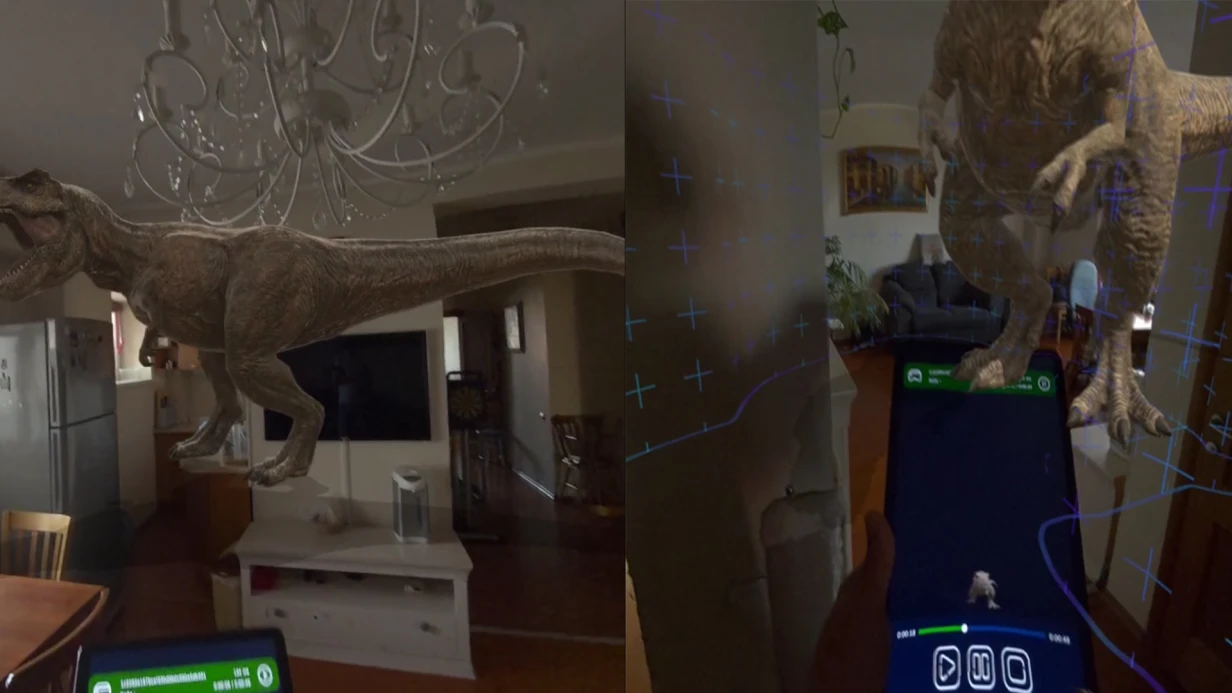
We help baby food brands make packaging come alive: point your smartphone camera at it, and it will tell you about the composition, the origin of ingredients, pediatricians' recommendations, and care for the child.
This way, the choice in the store becomes deliberate, and the brand wins the competition on the shelf and becomes a trusted solution.
What AR Packaging Gives a Brand and Parents
AR packaging turns an ordinary product into a reason for dialogue with the shopper. While the competitor just sits on the shelf, your product offers the child living characters, a mini-game, or a useful cartoon — and that's the one that will be picked up.
For parents, this is a clear value: instead of another "useless" gadget, they get a tool that keeps the child occupied productively — developing, entertaining, or helping with cooking.
Shopper engagement starts from the moment of scanning. The child shows the packaging to parents, asks to buy it again, and parents share videos on social media — so the brand gets reach without an additional advertising budget.
Every scan becomes a touchpoint with the brand, and the emotion from the interaction transfers to the product itself: it gets remembered and chosen next time.
Marketing data is a separate value. You see how many times the packaging was scanned, how much time was spent in augmented reality, which scenarios proved most interesting — and based on this, you adjust content, packaging, and the entire promo campaign.
This isn't "blind" promotion but clear performance metrics that are easy to explain to management.
For brand recognition, AR packaging works like mini-media: it creates a memorable image, increases loyalty, and sets the product apart on the shelf among dozens of similar ones. Parents remember not just the taste or price but the vivid experience it gave their child.
The result is growth in repeat purchases and a lasting association of the brand with care for children's development.
AR Packaging Formats for Baby Food: What to Choose for Your Task
AR packaging for baby food solves different tasks. For a new product, it surprises and holds attention at the shelf. For an ongoing assortment, it gives moms a useful service: recipes, complementary feeding advice, educational games.
That's why we choose the format for a specific product line rather than making one solution for all.
The mechanic is launched by a smartphone camera, without installing apps. Simply point the phone at the packaging — and interactive content appears on top of it. Below is how different formats work for your tasks.
| AR Format | Task It Serves | What It Gives the Customer |
|---|---|---|
| Game AR scenario | New products and limited series | Attracts attention, provokes photos and the desire to share, boosts first purchases |
| Useful AR content | Ongoing assortment | Recipes, educational games, complementary feeding tips — mom returns to the packaging and chooses the product again |
| AR story with a character | Age-based series | Emotional attachment for the child, increased recognition, a reason for repeat purchases |
| Lid interactive | Promotions and joint projects | Quick start without scanning the entire package, high reach and ease of participation |
This flexibility allows you to launch an AR campaign precisely: for a new product, stoke interest in a trial purchase; for an ongoing line, maintain loyalty. Formats are easy to combine, and updating content doesn't require reprinting the packaging.
How We Implement AR Packaging: Stages for the Brand
Launching AR packaging isn't magic — it's a well-tuned process. We break the project into stages so you understand what's happening and when you'll get the result. Below is the path from brief to launch.
- Brief and goals. We discuss what matters specifically for your product: recognition, parent engagement, child education. We fix the desired result and metrics.
- Concept and example. We show a demo example on your packaging — you see how the AR will look before full implementation.
- Development and approval. We prepare the design scene, animation, and texts. You send edits, we incorporate them — and so on until your "yes."
- Testing on real packaging. We check recognition stability across different print runs, lighting conditions, and devices, so all shoppers have the same experience.
- Integration and publication. We upload the solution, connect it to your channel or app. We set up links and QR codes.
- Launch and training. We help launch the campaign, brief your team, and provide a cheat sheet for the marketing department.
- Support and analytics. We collect activation statistics and help with improvements. After a month, we report on results and suggest what to refine.
Every stage is controlled: you know the timelines, see intermediate versions, and the final solution is released only after your confirmation. This format removes risks: you aren't buying a "pig in a poke" but gradually getting a working tool for the brand.
What's Included in an AR Packaging Project: The Deliverables
An AR packaging project is a finished product, not just technology. We hand over a complete package that can be immediately put into production and used in marketing. The delivery includes everything needed for the packaging to start working for the brand from day one.
- AR scenario tailored to the brand's task — a character, game, or educational story that comes alive when the camera is pointed at it. The child engages, and the parent remembers the brand.
- Ready-made markers and layouts — drawn elements that easily integrate into the pack or label design. No need to redesign packaging around the technology: we adapt the solution to your product line.
- Production files — all materials in print quality, accounting for printing requirements. You get a set that can go straight to print.
- Instructions for parents — simple steps: point the camera, see the magic, share with friends. The simpler the entry, the more scans and the higher the reach.
- Training materials for your team — a webinar recording and a cheat sheet on updating content and tracking statistics. Your marketers don't need to dive into technical details.
- Launch support — we help release a pilot batch and verify everything works correctly on popular smartphone models. You get confidence in the result, not a "black box."
After launch, we stay in touch: content can be updated for seasonal campaigns, new promotions, and holidays. The packaging becomes a living communication tool — you can change the stories without reprinting the batch. This turns a one-off campaign into a long-term channel of interaction with shoppers.
How AR Packaging Increased Sales: A Case Study with Numbers
When we took on the project for the baby food brand «Malysh», the task sounded familiar: the shelf is crowded, young parents decide in seconds, and the differences between products aren't visible to the eye. Ordinary packaging gave no reason to choose this particular product.
We proposed making the box "alive" — point your smartphone at it, and it tells the story of the product.
The AR scenario combined value for the parent and interest for the child. Pointing at the pack launched a short animation with a character that showed which natural ingredients the product is made from, and at the end offered the little one a simple attention game.
The parent doesn't need to download anything — the smartphone camera opens everything automatically, and the brand gets a full minute of attention at the moment of choice.
We measured the results two months after launch. Packaging recognition grew by 47% — according to in-store surveys, moms named "Malysh" more often among familiar brands.
Sales in the chains where the promo support for the scenario ran rose by 28% compared to the previous period. In a month, we recorded more than 10,000 scans — these are real brand contacts that didn't require paying an ad account.
The main confirmation was a repeat order three months later: the client asked to extend the AR scenario to the entire product line. We used proven analytics tools to understand which episodes are watched to the end and which are skipped — and refined the story based on that data.
This kept engagement above 70% at every stage. The case showed that AR packaging works not as a one-off attraction but as a communication channel that pays back investments through sales growth.
How to Choose an AR Packaging Format for Your Budget and Task?
Choosing between a simple and complex AR packaging format for baby food is not a technical question but a marketing one.
The first thing we look at is the goal: it's one thing to boost a new product's sales with unusual packaging, and another to build long-term communication with parents and children. The goal determines the budget, format, and launch timeline.
A simple scenario is usually a live image or a mini-story on the box. Such baby food AR packaging doesn't require major investment, launches quickly, and delivers measurable results: visitors scan the packaging, take photos, share on social media.
If the task is to draw attention to a line on the shelf or create a news hook for social media, that's enough.
A complex scenario turns the packaging into a mini-game: the child completes tasks, accumulates bonuses, and advances through levels. Here, long-term value appears — repeat purchases, data collection on preferences, and the ability to personalize offers.
This format is worth choosing when the brand plans regular communication and is ready to update content to keep interest alive.
The rule is simple: don't start with complex until you've seen the reaction to simple. With a limited budget, take one assortment item, add light AR animation, measure engagement and purchases. Once the numbers confirm the hypothesis, expand the mechanic to the entire line.
We help you choose a format that fits your budget and task, build a prototype, and show what to expect from the audience — so the decision is well-considered.
Answering Common Questions Before You Start
Before starting a project, clients ask the same questions — how the technology will behave with end users, whether it might fail at an event, whether edits can be made quickly. That's normal: AR tools aren't routine yet, so it's important to remove risks upfront.
We've gathered the most common questions and honestly explain how it works in practice — without technical jargon or vague promises.
Which phones does AR packaging work on?
No special equipment is needed — a regular smartphone with a camera is enough. We configure the scenario so the app or web version opens correctly on most modern devices: both new flagships and mid-range models that parents most often use.
If part of the audience has a weak device, we provide a simplified mode: the image and animation stay lightweight, don't overload the processor, and don't crash even with a poor internet connection. It's a seamless experience for the user.
How long does it take to create AR packaging?
The standard cycle is three to five weeks from the moment the layout is approved. This includes the design concept, development, testing on different devices, and preparing user instructions. If you already have approved packaging design, the process speeds up.
We work remotely and aren't tied to your region, so we can easily align with your internal processes and marketing calendar. Delays are rare: we always show intermediate versions so you see the process rather than waiting for a result "blindly."
What if the AR doesn't work for a user?
We test every project on 10–15 popular smartphone models before launch. If a failure occurs on some device, a fallback option is provided: the user points the camera at the packaging and gets a short video or a card with the brand's story instead of a 3D object. Either way, they still get value, and you get recognition.
After launch, we stay in touch and promptly fix any errors that arise. This is specified in the contract — you're never left alone with a problem.
Can content be partially changed after release?
Yes. Most often, seasonal promotions, characters, in-store texts are changed, or new games for children are added. This doesn't require rebuilding the app from scratch — just update the content in the admin panel, and it immediately appears for users.
Updates are a way to keep packaging "alive": for New Year we added a story about little animals, for summer a game about fruit. You pay for the project once, and then you keep inspiring parents to return to the product again and again.
What guarantees do you provide?
The guarantee is stated in the contract: the AR scenario works on the planned volume of user devices, we hand over source files and admin panel access, and we personally support launch and maintenance.
If errors related to our work are found during the warranty period (usually 30 days after release), we fix them free of charge.
Another safety net is tests with real focus groups: before launch, you can show the AR version to your loyal shoppers and collect feedback. This reduces the risk of "it didn't land" and helps improve the scenario before the packaging goes to print.
Launch AR Packaging That Makes Your Product Stand Out on the Shelf
Parents choose baby food in seconds: the eye catches a familiar brand, the packaging, and the promise of benefit.
An AR layer turns an ordinary box or jar into an interactive experience — the child brings a character to life, sees the product's story, and mom gets additional reasons to buy. This way, packaging works not just once but every day while it sits on the shelf or in the fridge.
We develop AR packaging turnkey: from idea and design to mass production launch. We tailor the scenario to your audience — whether it's a game for a child, useful information for a parent, or an interactive for a holiday.
You don't need to understand technology: we handle the entire technical side and deliver a result that's easy to scale to any print run.
Show the product, not just the box. Leave a request — and within 1-2 days we'll prepare a preliminary cost estimate, show examples, and propose a concept specifically for your product.
What You Get After Your Request
- Consultation — we analyze your task, audience, and AR campaign goals, and advise which scenario will deliver the strongest response.
- Cost and timeline estimate — an accurate quote for your print run and scope of work, with no hidden fees or surprises.
- Demo or prototype — we show how the AR effect will look and work before production begins, so you can make an informed decision.
- Packaging integration — we help adapt the design and labeling so the QR code or marker scans correctly on any material.
- Support at every stage — from layout approval to post-launch technical support. If anything goes wrong, we're on call.
- Performance analytics — optional tracking counters so you can see how many users scanned the packaging and how long they interacted with the content.
Ordering AR packaging for baby food means standing out on the shelf and creating personal contact with the shopper. Leave a request — and tomorrow we'll discuss how to make your product one that people talk about and choose again.