

Pharmaceutical packaging loses customers — we fix it
The pharmacy shelf greets customers with hundreds of similar boxes. The eye glides over names, and in the few seconds a person takes to choose a product, the packaging either inspires confidence or loses to the one next to it.
The pharma manufacturer's pain is simple: an inexpressive cardboard box makes a quality product invisible, reduces conversion at the pharmacy, and leaves sales to competitors.
Traditional design is limited to a flat surface: type, color, illustration. It is physically impossible to explain the mechanism of action, indications, or safety on it.
The customer hesitates, double-checks information on their phone, but instead of an answer finds ads or negative reviews. This destroys trust in the product before the purchase is even made.
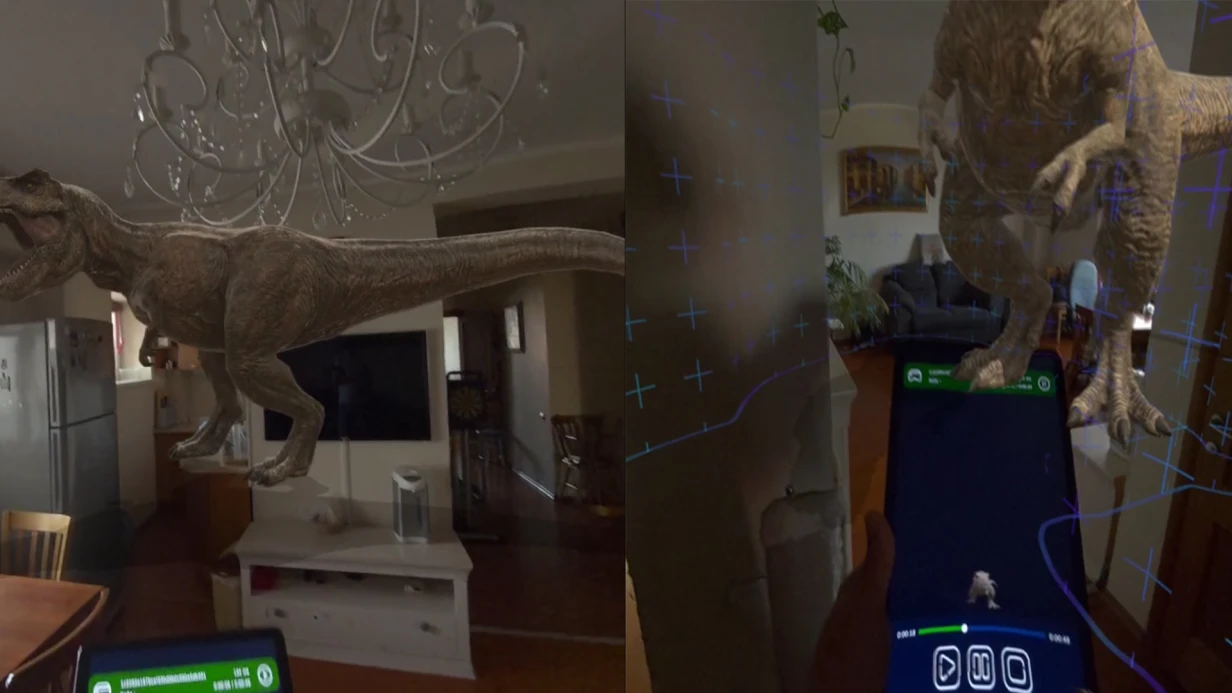
A digital layer of augmented reality solves this problem. The customer points their smartphone camera at the AR packaging and sees a 3D model of the active substance, a clear instruction, or a short video about how the product works.
Complex medical facts become simple and visual, and trust in the brand grows — the decision at the pharmacy is made faster.
For the pharma manufacturer, this is not technology for technology's sake, but a working sales tool. AR packaging makes the product stand out on the shelf, creates a reason to engage with the product, and stays in the customer's memory.
Everything happens without special equipment at the pharmacy — all that is needed is a phone, which everyone already has.
We close this pain turnkey: we design the scenario, develop the AR packaging, and bring it to launch. The client gets not a pretty presentation, but a ready-made solution that increases recognition and conversion at the pharmacy.
What benefits the brand and the patient get from AR packaging
When a dozen similar products sit on the shelf, the deciding factor is not the formula, but how quickly the customer understands the product. AR packaging turns the box into an interactive instruction — and this changes patient behavior before the purchase. Below are the specific benefits that both the brand and the person holding the product receive.
For the brand: growing trust and loyalty
Customers choose what they trust. When the packaging "comes alive" and explains the formula, action, and usage in plain words, the brand comes across as open and caring.
This directly influences the purchase decision and the desire to return to the same product next time.
Equally important, the AR scenario collects anonymized analytics: how many people opened the instruction, which sections they viewed longer. This data helps improve both the product itself and communication with the audience without additional surveys.
For the patient: clear information and fewer doubts
A person without a medical education often gets lost in a long package insert. AR packaging shows a short video: how to take it, when, what it combines with, what to look out for.
This reduces anxiety and the risk of incorrect use — value that is hard to overestimate in pharmaceuticals.
The patient feels that the manufacturer has taken care of them. This leads to higher satisfaction and positive reviews, which in turn build the brand's reputation.
For communication: audience engagement and organic reach
A striking AR scenario makes people want to show it to others. The customer films the packaging, shares the video in messengers and social media — and the brand gets free recommendations from real users.
This is especially valuable in pharmaceuticals because people trust the opinion of loved ones more than advertising.
This mechanic is also easy to use for educational purposes: at conferences, meetings with doctors, or in pharmacy chains. The same AR scenario works both as an instruction and as a product presentation tool.
our team — a team with ten years of experience in interactive projects — helps pharma companies implement AR packaging from scratch: from idea to finished print run. We make sure the technology solves business tasks rather than merely decorating the box.
AR packaging formats for pharmaceutical products
AR packaging turns an ordinary blister pack or box into an interactive communication channel. Instead of static text, the patient gets a visual scenario: how to take the product, what to do if a dose is missed, how to verify authenticity.
The augmented reality format is selected according to the product type — a prescription drug needs instructions and education, an over-the-counter product needs engagement and memorability.
We offer several working scenarios already used in pharmaceuticals. Choose the one for your line — from a strict informational presentation to game-like interaction.
| AR packaging format | Who it's for | What it gives the client |
|---|---|---|
| Step-by-step 3D usage instructions | Prescription drugs, complex dosing regimens | Fewer usage errors, greater trust from patients and doctors |
| Virtual specialist consultation | Products with special usage conditions | Patient feels supported, less likely to deviate from the treatment plan |
| Gamification and quizzes | OTC products, supplements, children's lines | Brand recall, engagement, incentive for repeat purchases |
| Video from the manufacturer or a doctor | New products, market launches | Quickly explains the product's value, builds trust |
| Camera-based authenticity check | All products, counterfeit protection | Patient safety and brand reputation protection |
| Interactive reference for medical representatives | Pharmacy chains, pharma companies | Visual presentation of benefits, faster negotiations |
The key point is that the packaging stops being passive. It works for you: it informs, engages, and protects the brand. And we help choose the format for your specific line and audience, so the budget delivers measurable results — growth in trust, reach, and repeat prescriptions.
How we create AR packaging: the process from brief to launch
For the pharmaceutical industry, AR packaging is not just augmented reality for the sake of effect. It is a way to turn a product box into a useful service: an instruction, training, a dosage reminder, and a channel of trust.
To keep the result on schedule and compliant with all internal regulations, we have built a clear route with approval checkpoints at every step.
At each stage, you see the interim result, understand what is happening, and control the deadlines. No "black box" from idea to launch — only a transparent six-step process.
-
Brief and analysis. We gather the brand's objectives, target audience, and production constraints. For medicines, labeling and readability requirements are critical, so we immediately check how an AR marker will fit into the current packaging design.
-
Scenario and concept. We propose 2–3 interaction options: from an educational animation about taking the product to a virtual consultation. We show how each scenario increases the usefulness of the packaging and brand memorability.
-
Layout approval. We prepare a packaging mockup with the AR marker and visual cues. We separately mark out the zones that must remain unchanged for regulatory requirements — you will not have to redo the design after inspections.
-
Prototype and testing. We build an interactive prototype that opens from a regular smartphone on a real box or blister pack. You test the scenario before the print run, and we make changes quickly and without unnecessary costs.
-
Implementation and quality assurance. We program the final AR experience, set up analytics, and test performance on different devices. We make sure that launching takes seconds and does not require users to install separate apps.
-
Launch and support. We host the AR scenario on your domain and provide QR codes and ready instructions for the print shop. After launch, we support the project: we monitor activity, update content for new batches, and help scale the solution to other products in the line.
What's included in the delivery: the complete AR packaging launch kit
You receive not "a file in an archive," but a working kit that the marketing department, medical representatives, and the legal team can use immediately. We hand over the entire project: from the interaction scenario to ready-to-use launch and reporting materials.
Here is what is included in the delivery at the end of the project:
- AR interaction scenarios — detailed mechanics for each segment: doctor, pharmacist, end consumer. No improvisation: each has their own path and their own scenario.
- Marking and application instructions — we advise on how to integrate the AR marker into the packaging design so that it does not conflict with the artwork and reads correctly from different materials.
- Technical and user documentation — clear instructions for employees and partners: how to launch, what to do in case of failure, how to update content without involving a contractor.
- Team training materials — concise guides and procedures for medical representatives and pharmacists: how to present the AR feature and answer doctors' questions.
- Management reporting materials — launch analytics: number of activations, popular scenarios, audience activity. This data makes it easy to calculate ROI and plan project development.
- Final source files and access credentials — all files, mockups, and accounts remain with you. We do not block the work if you decide to develop the project in-house or with another contractor.
We do not drag out the launch and hand over the complete kit, so the marketing department can immediately start promotion instead of digging into technical details.
This is your asset that works for brand recognition and audience education, not just a one-time "gimmick" for a release.
Case study: how AR packaging increased customer trust
Demand for medicines is growing, but customers are becoming more cautious: it matters to them what exactly they take off the shelf.
A standard package insert does not answer their questions — the text is small, the instructions are dry, and trust in the brand is formed before the purchase. We suggested that a pharmaceutical manufacturer move away from paper inserts and make the packaging "talk."
The challenge
Pharmaceutical company "MedLab" (name changed) was launching a new line of OTC products. The marketing director was looking for a way to make the product stand out on the shelf and explain the formula, action, and contraindications to the customer without a consultant.
The key criterion was to lower the barrier to the first purchase and increase confidence in the choice.
The solution
We developed AR packaging: pointing the smartphone camera at the box opens a short video about the product. Instead of dense text — three screens: the formula in plain language, the usage schedule, and answers to frequently asked questions.
The interactive experience works without installing an app, which is important for an older audience.
We also added a QR code on the packaging with a link to verified information. This gave the company a point of contact with the customer after the purchase — and, at the same time, allowed collecting anonymized statistics on which questions most often concern the audience.
Implementation results
- Product engagement time grew 3.5 times: customers spent over a minute with the packaging instead of the usual 10–15 seconds.
- The repeat order share within the line increased by 27% in six months — customers remembered the brand through the interactive experience.
- The number of clicks from the packaging to the manufacturer's website exceeded expectations by two times.
Most importantly, the attitude toward the product changed: in reviews and social media, customers began calling the product "clear" and "trustworthy." This is a case where technology worked not for the sake of effect, but to solve a specific business problem — increasing trust and, as a result, sales.
This approach scales: the next batch of the product received augmented reality without any code changes — we prepared a template that the manufacturer fills with new data on their own.
How to choose the right AR packaging format for your task?
Choosing an AR packaging format starts with two questions: who will pick up the pack, and what task should that contact solve?
For a doctor and a pharmacist, speed and accuracy matter — dosage, indications, contraindications, and usage schedule must be read instantly, without searching through the insert.
For a patient, simplicity and reassurance matter more: confirmation that they understood the instructions correctly, and confidence in the product's safety.
One scenario rarely covers both audiences, so the first step is to determine who is the primary recipient of the activation.
The second factor is the size of the product line. If you have several or dozens of products, choose a unified format that scales across all positions without redesigning the artwork.
A consistent logic is convenient for everyone: the pharmacist does not need to re-learn for each product, and the brand maintains a cohesive visual style. A user who has encountered the AR marker once will easily continue interacting with other products in the line.
For a flagship product, it makes sense to create a richer scenario — it will make the product stand out on the shelf and act as a driver of interest.
The point of contact also matters. At a pharmacy display, a person needs a compact reference and a quick answer; at a doctor's office, a well-argued story about the product's benefits; at home, a calm instruction without rushing.
A universal marker with a single scenario may not work in all three situations — and that is normal. The important thing is to choose the priority channel and adapt the format to it, while keeping the others as secondary.
The conclusion is this: the format is determined not by technology trends, but by the "audience — product line — point of contact" combination. Answer these three questions for yourself, and the choice of scenario becomes obvious.
Our team helps break down the task and select an AR packaging format that solves a marketing problem rather than simply adding a visual effect.
Answers to frequently asked questions about AR packaging development
We understand that before launching AR packaging, you have practical questions: how long will it take, will you have to redesign the packaging, and will customers actually use the feature?
We answer the most common ones so that you can assess the risks and benefits before the project starts.
How long does AR packaging development take?
A typical project takes two to four weeks — from concept approval to testing on real devices. If you already have a finished packaging mockup and a clear target audience, the timeline can be reduced to one or two weeks.
Which smartphones will the AR work on?
We configure the scenario so that it opens on most modern Android and iPhone devices. No special equipment is needed — just the smartphone camera that every customer already has.
To access the content, the user simply points the camera at the packaging and opens the AR page through our platform.
Will we have to change our packaging design?
No. The AR marker is embedded into the existing layout: it can be a logo, an illustration, or a separate QR element. The changes are minimal and do not affect the mandatory legal information, serial numbers, or artwork that has already been approved.
What happens when the packaging is reprinted or the line changes?
The AR content is tied to the marker, not to a specific print run. You can update animations, add video instructions, or change promo mechanics without reconfiguring the packaging itself. This means that once created, the AR installation continues to work on new batches of products.
Who provides technical support after launch?
We support the project for as long as the AR packaging is in use. If operating systems change or failures occur on certain devices, we update compatibility and restore functionality. You do not need to involve your own IT department — all support is already included.
Ready to launch AR packaging for your brand?
AR packaging for a pharmaceutical product is not just a "trendy gimmick," but a working communication channel with the patient.
By pointing their smartphone camera at a blister pack or box, a person gets clear instructions, a dosage reminder, or an authenticity check — without separate apps. This increases trust in the brand, reduces support calls, and boosts product loyalty.
Wehave been creating interactive solutions for events, museums, and brands for over 10 years, and now we are bringing this experience into pharma.
We will start with a free consultation: we will review your packaging, propose AR scenario options, and calculate a format for your budget. You will receive the consultation on the same day you reach out, and a detailed project plan within two business days.
Here is what you get immediately after your request:
- Get a consultation — we discuss for free how an AR scenario will solve the task for your specific product and audience.
- Calculate the format and budget — we select a solution from a simple 3D model view to a multimedia scenario with video instructions.
- Assess the timeline — we give exact dates after the brief and meet them: all approvals are built into the planning stage.
- See a prototype before launch — you test the interactive experience on real packaging, make changes, and only then approve the final version.
- Get support with printing and labeling — we help adapt the layout so the AR works consistently across different print runs and materials.
- Train your team — we show how to update content and add new scenarios without involving developers.
To order AR packaging, simply leave a request on the website or message us in a messenger. The project starts as early as one week after the scenario is approved.
Contact us now — by tomorrow you will have a proposal with solution options and a cost estimate, and all that remains is to choose the right format.