

How to get customers to notice your cookware?
In a store, your cookware is just one of dozens of similar frying pans, pots, and sets. A shopper walks past the aisle in half a minute and doesn't have time to see how your product is better than the one next to it.
Such a product easily gets lost on the shelf, and sales go to whoever has already attracted the buyer's attention with packaging.
It's not about product quality — that only becomes obvious after purchase. While the box sits on the shelf, you have no chance to tell about the advantages: non-stick coating, durability, convenient storage.
It is in those thirty seconds that the decision is made whether the item goes into the cart or the shopper walks past.
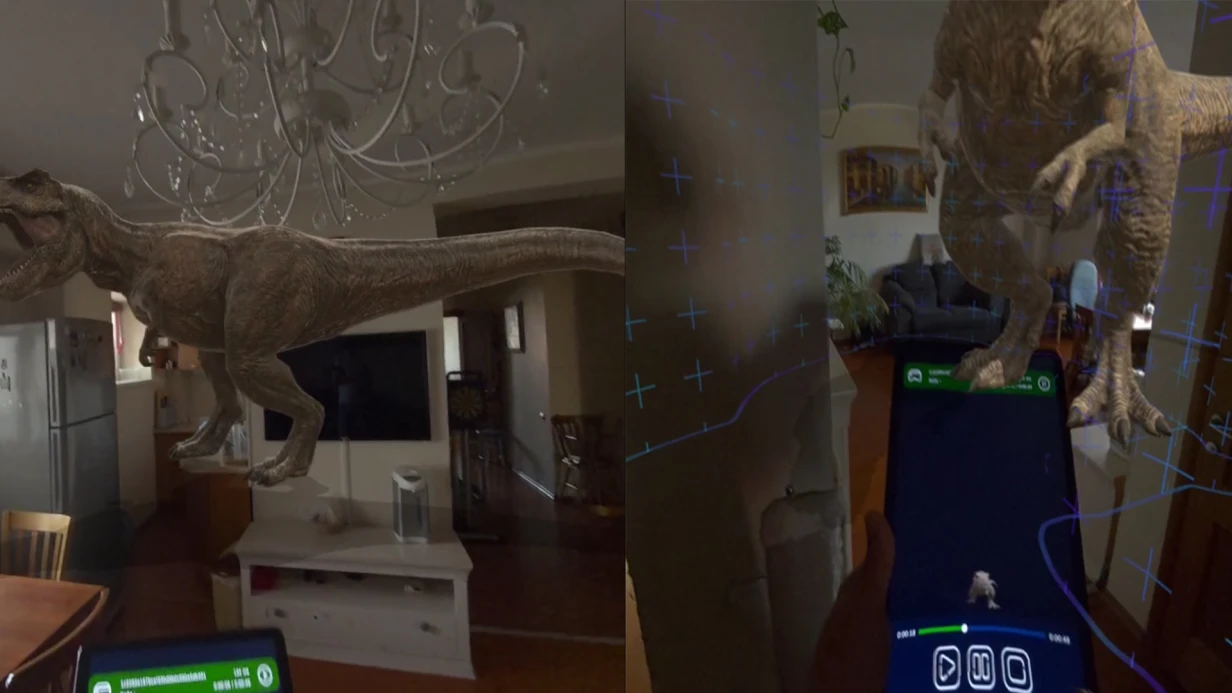
Packaging with augmented reality solves this problem. A person points their smartphone camera at the box — and sees the frying pan in 3D, can rotate it, examine details, or launch a short recipe video.
Attention to the product is held several times longer than usual, and the buyer gets a reason to stop specifically at your shelf.
This way, you stand out on the shelf without increasing your advertising budget and without a sales assistant. The buyer engages with the interactive content themselves, remembers the brand, and often shares the experience with friends or on social media. Even if the purchase is postponed, they will remember you and come back on the next visit.
We deliver such projects turnkey — from scenario to ready print run, so you don't need to understand the technology. Below we'll show how augmented reality packaging helps your cookware stand out on the shelf and turn an ordinary trip to the store into a stable source of sales.
What AR packaging gives your brand and customers
An ordinary box is silent until opened, while the purchase decision is made in seconds. AR packaging turns the package into an interactive showwindow: the buyer points the camera and immediately sees your brand in action. The same trick that made IKEA catalogs so alive now works for your product.
Brand recognition
When a buyer points their smartphone at the packaging, they see the logo, brand color, and slogan in motion. This kind of presentation is remembered many times better than a static label — the brand stays in memory even before the product is used.
Every AR interaction can easily be turned into a photo or video that the person shares on social media: one post gives the kind of reach you would have to pay for in advertising.
Customer engagement
AR holds attention at the decisive moment of choice. Instead of a second on the shelf, a person spends two or three minutes with the product: examining the pot from different angles, opening recipes, and seeing how the cookware behaves on the stove.
This kind of product introduction removes the doubts that usually prevent a purchase. The longer the interaction, the stronger the emotional connection to the brand — and it works not only in the store, but also when the buyer takes the box home.
Sales growth
AR packaging becomes your personal salesperson at the point of sale.
It shows the product's benefits without opening the box, and answers the questions "why exactly this frying pan" and "what to cook in it." As a result, the buyer makes a decision faster and is less likely to put the package back on the shelf.
And a satisfied buyer comes back for more items in the series — this is how AR helps build repeat sales and grow the customer base without extra advertising spend.
AR installation formats for different tasks
AR works where the buyer has already noticed the product — but a regular image doesn't hold their attention. Interactivity turns seconds of contact into minutes of engagement: the visitor examines details, tries out a usage scenario, and remembers the brand.
So the format is determined not by developers but by the campaign goal: a showwindow-magnet, an event-experience, or packaging as media. A properly selected format saves budget and delivers measurable results.
We've gathered three proven formats that cover different tasks — from attracting traffic to increasing loyalty. Below is a cheat sheet for choosing: who it suits and what it gives. In every case, we keep the focus on simplicity for the visitor and clear analytics for the client.
| Format | Who it's for | What it gives the client |
|---|---|---|
| Interactive showwindow | Stores, showrooms, shopping centers | Attracts attention from foot traffic, increases time at the showwindow and the number of entries; works as a "magnet" without additional advertising |
| AR zone at an event | Organizers of exhibitions, festivals, corporate events | Creates an engaging experience after which guests share photos and videos; increases reach and brand recall |
| AR packaging for cookware | Cookware manufacturers, retail chains | Turns an ordinary box into an instruction, a brand story, and a reason for repeat contact; stimulates repeat purchases and builds loyalty |
How AR packaging development for cookware works
Developing AR packaging for cookware is not a one-off sketch but a structured process that starts with a brief and ends with a working interactive experience on the store shelf.
We support you at every stage so you get a predictable result and don't waste time on technical details.
- Brief and immersion in the task — we discuss the packaging goals, target audience, sales channels, and product features. We determine what result you need: better recognition, buyer engagement, or usage education.
- Concept and scenario — we propose AR interaction options: a 3D model, animation, a game element, or a recipe demonstration. We show how it will look specifically on your type of cookware.
- Layout approval — you receive a prototype you can open on a smartphone. We make revisions before the packaging goes to print — this saves budget and time.
- Production preparation — we adapt the layout for the print run and make sure the special graphic element on the packaging is reliably recognized by a smartphone camera. We take into account the materials and shape of the cookware.
- AR campaign launch — we host the interactive experience on a server, set up access via QR code or packaging recognition, and run test launches on different devices.
- Support and analytics — after launch we review the statistics: how many opens, how long users interact, and what the conversion to action is. We adjust the scenario if necessary.
In the end, you get not just a "nice gimmick" but a working tool that strengthens the packaging, sets the product apart from competitors, and delivers measurable results.
What you get as a result of the project
The project doesn't end with delivering a "picture on a phone." The result is a working tool that your team can use immediately and without unnecessary questions — from launching at an event to regular sales through the packaging.
That's why the delivery package includes everything you need for a quick start and further development of the AR scene.
- A ready AR effect for cookware packaging: the product comes to life, a recipe, or a brand story when you point the camera at it.
- All source files and rights to use the materials — you are not dependent on us when you want to change something.
- Clear instructions for configuration and launch: who on your team can activate the AR and in how many minutes.
- Hands-on staff training — we run a demo session so managers and promoters can confidently show the effect to customers.
- Delivery of AR to the devices and venues you need, with no "surprises" on the day of the event.
- Post-launch support: we help update the scene, add a new product, or adapt the effect for the next campaign.
Each item solves a specific business problem: the packaging starts selling, merchandisers understand how to engage the buyer, and marketing gets a ready-made tool for social media and exhibitions.
You are never left alone with the technology — we support the result exactly until your team feels confident.
At the end of the project, you get not a one-time image but an asset that works for recognition and repeat purchases. And if you want to scale the idea to other cookware lines, it will be quick: the base is already ready, you just need to add new scenarios.
Case study: how AR packaging increased sales by 1.5 times
A buyer sees a pot or frying pan on the shelf — and cannot tell how it will behave on the stove. An ordinary label doesn't convey the feel of the product, so the purchase decision is often postponed.
We suggested that the KukhPro brand make the packaging come alive: instead of a flat image, augmented reality that shows the cookware in 3D, in detail, and in action.
Simply point a phone at the box, and an interactive scene opens up in front of the potential buyer. They can see how heat is distributed, what the handle looks like, and how modern the frying pan looks on the stove. No apps and no complicated steps — just a camera and a QR code.
In a few seconds the person gets a full "feel" of the product without taking it off the shelf.
Project results
During the first quarter, sales of the AR-packaging line grew by 1.5 times. One in three buyers who pointed a phone at the box spent more than a minute in augmented reality — ordinary labels don't deliver that kind of engagement.
At the same time, purchase decisions were made more often right in the store, and the number of returns noticeably decreased.
After the initial results, the client expanded the project to the entire cookware line and integrated AR mechanics into their advertising campaign. For us, this is the main indicator: when a client comes back for more, it means the solution brings them measurable value.
What if I have specific packaging requirements?
Yes, and this is exactly the case where a standard template won't work. Specific requirements for cookware packaging are not a problem: different shapes, materials, print runs, and storage conditions. For us, this is a reason to include custom logic rather than simplify the task to a standard box.
We start by analyzing your packaging — shape, texture, space for the marker, and the conditions in which it will be stored and transported. The marker will work reliably on glossy boxes, matte film, and non-standard round containers.
The main thing is to clarify the specifics in advance so the buyer can bring the packaging to life with a smartphone without any effort.
An individual approach is not only technical adjustment but also adaptation of the AR mechanics themselves. If the packaging is small or has a complex design, we position the marker so it doesn't interfere with the branding and is still reliably recognized.
We test the scenario on real samples from your print run, not just in ideal stand conditions, so the result is predictable from the very first launch.
For cookware, this gives flexibility: from minimal marking for a mass-market line to a vivid AR scenario for gift sets. Seasonal collections, regional versions, limited editions — all of this can be built into a single project without losing quality or production speed.
Tell us about the specifics of your packaging — we'll offer a solution that fits into your process and is convenient for the buyer. We'll send examples of similar solutions within one business day.
Common doubts before ordering AR packaging
Before ordering AR packaging, clients often have similar doubts: isn't it too complicated, too expensive, or too unpredictable? Let's go through the main fears and show how we address them in practice.
Is it difficult to implement? We don't have our own development team.
No. You get a ready-made "turnkey" solution: we develop the scenario, set up recognition, and test it on different devices. All you need to do is place the AR marker on the packaging — everything else happens automatically.
All the technical work stays on our side, and for you it's simply a new point of contact with the buyer.
How much does it cost and when will it pay off?
The cost depends on the format: from a simple AR marker with video to an interactive 3D model of your pot or frying pan.
We'll choose an option that fits your budget, and the return is measured not only in sales: packaging with augmented reality stays in customers' hands longer, gets photographed and mentioned on social media — that's extra reach without an advertising budget.
What if the buyer has an old device? Will everything break?
It works in a browser, no app installation needed. Recognition is calibrated to react correctly to the marker even in poor lighting and with a blurry image.
Before launch, we test the scenario on different phone and tablet models — you get a stable result, not a "lottery."
And most importantly — we stay in touch after launch: we help with edits and answer your team's questions. Support is part of the service, not a formality.Order AR packaging development for your products
Sales start at the store shelf. When a dozen similar pots and frying pans sit side by side, it's the packaging that decides whether the buyer picks up the product.
AR packaging turns an ordinary box into an interactive showwindow: point a smartphone camera at it — and the product "comes to life," shows itself in action, tells about its benefits, and gets remembered. Our team create such solutions turnkey for cookware manufacturers and brands.
By ordering AR packaging development, you get not just technology but a tool that increases brand recognition and reduces resistance to purchase. We start with a free consultation: we analyze your goals, audience, and usage scenario.
After that, the team creates the design, the interactive scenario, and tests everything on real devices. All you have to do is launch the print run and distribute the marketing materials.
What you get after placing an order:
- A ready AR interaction scenario adapted to your audience and sales channel.
- Design and animation integrated into the packaging and brand style.
- Easy use with no app installation — the buyer sees the result immediately.
- Training for your team and a quick-reference guide.
- Launch support and quality guarantee under the contract.
- Scan analytics to evaluate the return on the promotion.
To discuss an AR order, contact us in any convenient way: by phone, email, or through the form on the website. The first consultation is free — we'll show you how AR packaging will work specifically for your products, and give you an idea of timelines and budget. Leave a request today to gain a competitive advantage by the next sales season.