

Luxury Clothing Packaging Is Losing Its Wow Factor
When a customer receives a box from a luxury brand, they expect a special moment. But standard packaging—logo, paper, ribbon—has long stopped surprising anyone. All brands look the same, and customers grow accustomed to identical boxes. The emotion of unboxing fades, giving way to routine.
The consequences are immediate: the brand loses the customer’s attention at the most important moment—after the purchase. Instead of sharing the experience on social media and returning for another item, the customer simply throws the box away and forgets the brand.
Lost opportunities include free reach, repeat sales, and the loyalty luxury brands spend years building.
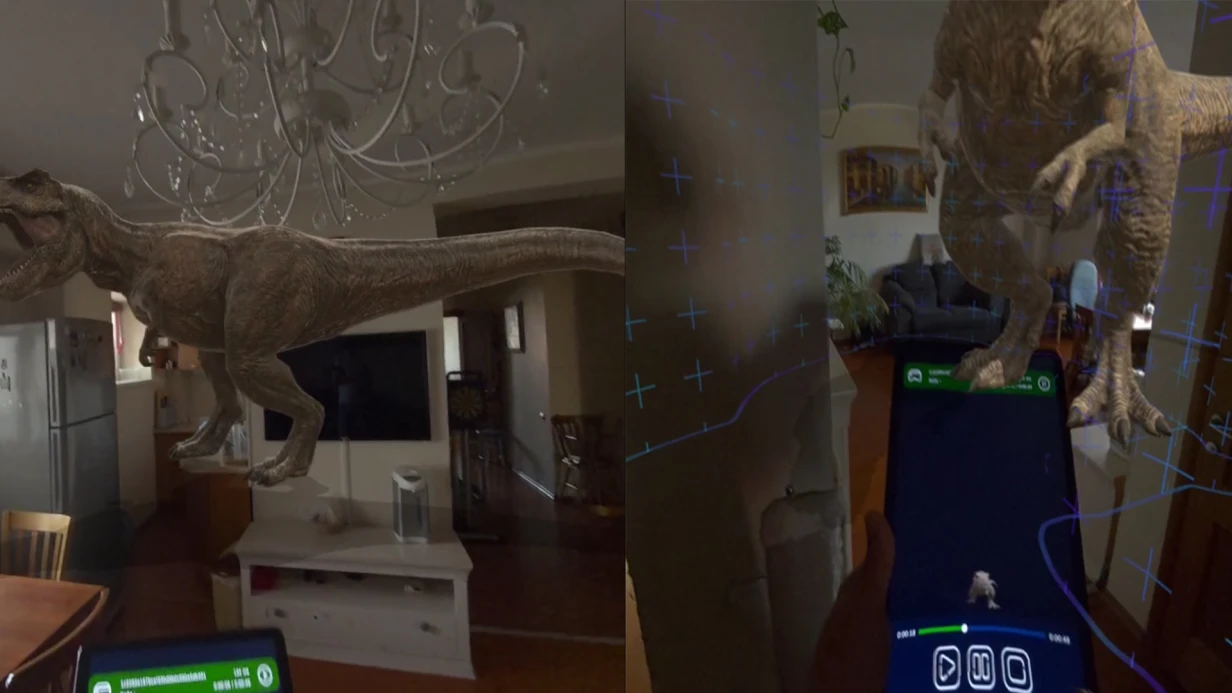
Augmented reality in packaging brings back the wow factor. The customer points their smartphone camera at the box and sees the brand’s story, the collection, or a personal video message from the designer.
Unboxing becomes an event worth sharing: every such moment is free advertising for the brand on social networks. Luxury packaging stops being just a box—it becomes part of the brand experience.
AR packaging also solves another important task: brand protection. With augmented reality, it’s easy to verify product authenticity: just point the camera at the marker. This undermines the counterfeit market and guarantees the buyer that they are holding a real luxury item.
We have been creating AR installations for events, museums, and brands for over 10 years.
We help you integrate augmented reality into your packaging—from idea to launch—so that every customer gets an unforgettable experience and stays with the brand for a long time.
What Benefits AR Packaging Brings to a Brand
AR packaging turns an ordinary box into an interactive portal into the brand’s world. Luxury houses already use this technology to surprise customers—for example, Dior has launched AR experiences in its boxes.
For your brand, this is not just a trendy gimmick but a working tool: it increases recognition, creates a viral effect, and strengthens audience loyalty.
The main power of AR packaging lies in emotion. The customer points their smartphone camera at the box, and the brand’s story comes to life: a virtual showcase of the new collection, an interview with the designer, or exclusive content available only to owners.
People want to show this experience to others: by our estimates, every customer takes a photo or video and posts it on social media. This is free reach that continues to work after the purchase—your customers become ambassadors.
Customer experience is critical in the luxury segment. AR packaging adds depth to the unboxing ritual: a person doesn’t just take out an item, they experience a small event associated with the brand.
This increases the value of the purchase in the customer’s eyes and creates a desire to return for new experiences. As a result, AR packaging directly impacts repeat sales and average order value.
Another benefit is data collection. An AR solution allows you to gently track which scenes attracted attention, how long the person studied the content, and which product seemed interesting to them.
This data helps segment the audience more precisely and make personal offers—without violating privacy, which is especially important for luxury brands.
We deliver AR packaging turnkey: from concept and design to technical integration with your website and CRM. We work with professional equipment and proven platforms, so the result works consistently on any modern smartphone.
You receive a ready-made tool that increases recognition, collects customer data, and drives repeat purchases.
AR Packaging Formats for Your Brand’s Goals
For luxury clothing, packaging is not about damage protection but about the first physical contact with the brand.
An AR element turns a box or label into a personal invitation into the brand’s world: the customer doesn’t just unpack a purchase, they receive a small show worth sharing.
The augmented reality format is chosen based on the specific goal—from quiet luxury in the form of a minimalist marker to a full interactive performance. We have already implemented several standard solutions that work for the fashion segment.
| AR Format | Task It Serves | What It Gives the Brand |
|---|---|---|
| AR label on a tag or sewn-in label | Authenticity verification and post-purchase engagement | Reduces the risk of counterfeits, provides an additional communication channel with the buyer |
| AR box for gift packaging | Enhancing the unboxing moment | Vivid emotion at opening, social media virality, growth in repeat orders |
| Packaging overlay (AR layer over the box) | Quick design updates without reprinting the batch | Images on the box come to life: new arrivals, promos, collaborations |
| Interactive catalog with AR viewing | Showcasing the collection outside the showroom | The buyer “tries on” looks or sees the item in detail—making purchase decisions easier |
Any of these formats can be easily integrated into existing packaging: we refine the medium and fill it with animation, video, or a 3D model. The brand doesn’t need to change production processes—just embed the marker into the layout.
Tell us which stage of the customer journey matters most to you—the purchase itself, the emotion of unboxing, or post-purchase retention. We’ll choose the format that solves exactly your task.
How AR Packaging Development Works
Developing AR packaging for luxury clothing is a transparent, step-by-step process where each stage is controlled by the client.
We handle all the technology and bring the project to a stable launch, while the brand gets control over every decision and a clear result—an interactive element that enhances the packaging and differentiates the product on the shelf.
-
Packaging brief. We start with goals: what emotions you want to evoke in the buyer, which brand details to emphasize, and what should set your packaging apart from competitors.
We gather all requirements and define success criteria—this way we create an interactive experience that truly sells the brand’s atmosphere.
-
Layout approval. Based on the brief, we prepare several visual concepts that fit the packaging and underline its premium status. You choose the best option, make edits, and the layout is finalized only after your full approval—no surprises at the final stage.
-
Technical implementation. We turn the approved layout into a living AR layer: animation, 3D compositions, smooth transitions.
You see intermediate versions and can test the scenario on a real box or bag—at this stage, it’s easy to adjust details and make sure everything looks as intended.
-
AR testing. We run the interactive experience on different devices and in different lighting conditions to guarantee stable performance.
We fix all errors before the packaging hits the shelves—the customer gets a flawless experience on the first try, and you get confidence in the result.
-
Launch of the interactive experience. We publish the solution, set up the link to the print run, and provide simple instructions for your team. If needed, we give a short training session for merchandisers and consultants so that everyone can show customers how AR works.
-
Support and evolution. After launch, we stay in touch: we update content, add new effects for collections, and monitor analytics. Your AR packaging remains relevant and keeps building brand recognition, and you can make changes at any time.
What’s Included in the AR Project Delivery
After an AR project launch, you receive not just an impressive demonstration but a complete working package. We hand over all materials and knowledge so your team can use the solution independently and quickly make changes for new collections.
The delivery includes:
- Project source files — all layouts, 3D models, and settings in a convenient structure. You are not dependent on specific contractors and can update content for new seasons without unnecessary approvals.
- Staff instructions — simple step-by-step guides in English. Sales consultants and merchandisers can master them in one evening, with no special knowledge required.
- Team training — we conduct an online session for your employees: we show how to launch an AR scenario, change the assortment, and handle typical customer questions.
- Interaction analytics — we set up anonymous data collection: how many people pointed their camera at the packaging, what percentage reached the virtual fitting, how many shared the result. These numbers show real interest in the collection and help plan the next campaign.
- Technical support — a dedicated communication channel during the project. We respond within one business day, fix failures, and help adapt the project to new platforms.
- Compatibility guarantee — we verify that AR works on the main smartphone models your customers use. Nobody will leave an event saying “it didn’t load for me.”
As a result, you get a tool your team uses confidently, not a one-off promotion with an unclear outcome. All materials remain yours—nothing “disappears” after the project ends.
Case Study: Brand Doubled Time Spent with Packaging
When a premium clothing brand noticed that customers opened their packaging in 20 seconds and threw it away, the marketing team looked for a way to extend contact with the product. The box was beautiful but static—it didn’t tell the brand’s story or give anyone a reason to pause.
The task was simple: turn packaging from a utilitarian shell into an engagement tool that works before, during, and after unboxing.
We proposed an augmented reality solution: the customer points their smartphone camera at the branded box, and it comes to life—the collection’s story appears, along with runway video and an interactive accessory try-on.
For Maison Lumière, this became not just decoration but a full communication channel with an audience accustomed to flawless service and expecting new impressions from the brand.
Unboxing Metrics We Achieved
Average time spent with packaging doubled—from 20 seconds to over 40. What mattered even more was the depth of interaction: 68% of customers completed the full scenario to the end, including the transition to the new arrivals catalog.
We also measured the rate of repeated engagement with the packaging: 3 out of 10 buyers returned to the box within a week to review the content or share it with friends.
For the brand, this translated directly into sales: every fifth transition from the AR scenario ended with an item added to the cart. And this happened without changing the collection composition or pricing policy—only by rethinking packaging as a brand medium.
What the Client Gained
The project showed that the luxury segment wins not from the number of advertising contacts but from their quality. Packaging became a reason to return to the brand, and customers began distributing content on social media on their own.
Two months after launch, the brand recorded a 40% increase in unboxing-related story mentions without any additional paid seeding.
Now the Maison Lumière team is planning to scale AR scenarios across the entire gift packaging line, and we are adapting the mechanics for different box formats and product types.
The key takeaway confirmed by this case: AR in packaging is not an experiment for technology’s sake but a working tool for growing engagement and sales in the premium segment.
How to Choose AR Packaging for Luxury Clothing?
Choosing AR packaging for luxury clothing starts not with technology but with answering the question: what should the packaging do to the customer? For one brand, it’s important to retain the client after the purchase and extend the unboxing emotion.
For another—to create a story that spreads across social media and attracts a new audience. A third wants to tell the story of the fabric’s or design’s origin, which cannot fit on a label. Define the primary goal—and only then look at formats.
The first criterion is compatibility with your customer’s device. Luxury audiences use a wide range of smartphones, and the AR scene should run just as smoothly on flagships as on mid-range models.
If the launch requires installing a separate app, more than half of buyers will be lost at that step. A reliable solution is a web format that opens via a QR code from the phone camera: no downloads, no registration, one click.
The second criterion is integration with your ecosystem. Find out in advance how the AR experience will connect to your website, loyalty program, or email campaigns.
You can add a “Save to Favorites” button, a link to the catalog, or a personalized video message from the designer. This turns packaging into a tool for repeat sales, not just a pretty “feature.”
The third criterion is budget and timeline. The difference between a simple 3D sticker and a multi-layered story with animation, sound, and scene changes is anywhere from a few days to several weeks of work.
Based on our experience, we recommend starting with one scenario for a specific collection or event: it gives a measurable result—number of opens, interaction time, share of transitions to the site.
After the first launch, you’ll understand which elements suit your audience and can scale the solution.
And most importantly: in the luxury segment, AR is not entertainment but a form of service. Packaging should look expensive both on screen and in hand.
That’s why we match the visual style to your brand, test the scenario on different devices, and guarantee that the customer will have a flawless unboxing experience—and you will have the reputation of a brand that cares about details.
Frequently Asked Questions About Implementing AR Packaging
A luxury brand is about impression and trust. Before implementing AR packaging, clients ask the same questions: will the launch fail, how long will integration take, and how will it affect buyers? We’ve collected answers to the most common ones—so it’s easier to make a decision.
How long does it take to implement AR packaging?
A typical project takes three to six weeks: from brief to finished print run. The timeline depends on the number of SKUs and the number of augmented reality scenarios. We fix the stages and deadlines in the contract, so you know exactly when the product will hit the shelves.
How complicated is this for our team?
All the technical work stays with us: development, testing, integration with packaging production. Your employees only need to receive the final layouts and a short instruction—launch takes one day.
For customers, it’s even simpler: point the smartphone camera at the packaging—and the augmented reality starts working.
How much does such a project cost?
The cost depends on the scope of work: the number of SKUs, the complexity of 3D scenes, and the need for integration with your CRM or marketing platform. We prepare a transparent estimate before we start and do not change it during the process unless you change the brief.
The budget is easy to scale—you can start with one product line and gradually expand to the entire assortment.
Will it work on all smartphones?
Yes. We make sure AR packaging opens on current iPhones and Android devices, either through the built-in camera or the brand’s app. The customer doesn’t need to install or register anything—this is critical for the luxury segment.
How do you ensure data security?
We work on a protected scheme: scan data is anonymized, and the link to your CRM goes through closed channels. The customer sees only virtual content, and no personal information is transferred without their consent.
Order AR Packaging for Your Brand
Before discussing details, we’ll show you what the collaboration will look like. Leave a request for a cost estimate—it takes a couple of minutes, and by the next business day you’ll receive first ideas and an approximate cost. We talk about your benefits: brand recognition, guest emotions, sales growth.
- Request. Write to us via the form on the website or in a messenger, briefly describe the task: a gift for clients, a promo for a new collection, or in-store interactivity.
- AR packaging consultation. We’ll discuss the format, timeline, and expected effect, and propose solutions that have already worked in the luxury segment.
- Cost estimate and commercial proposal. We’ll lock in the cost, timeline, and stages—transparently, without hidden fees or unnecessary work.
- Work examples. We’ll show similar cases for premium brands so you can assess the quality of execution before the project starts.
- Approval and launch. We create the packaging, test it on different devices, integrate it into production, or launch it at your points of sale.
- Post-launch support. We help with activation, review statistics, and add new effects to the scenario when needed.
We take care of the next steps. All communication is remote, so we work with brands from any city. Leave a request—and we’ll start looking at your task today.