

AR Packaging for Sports Equipment and Gear: A New Sales Standard
Regular packaging for sports equipment and gear stopped selling itself a long time ago. On the shelf or in a catalog, the buyer sees only a box with a picture — they cannot assess the product's advantages. The decision is made based on reviews or price, and the brand loses both margin and loyalty.
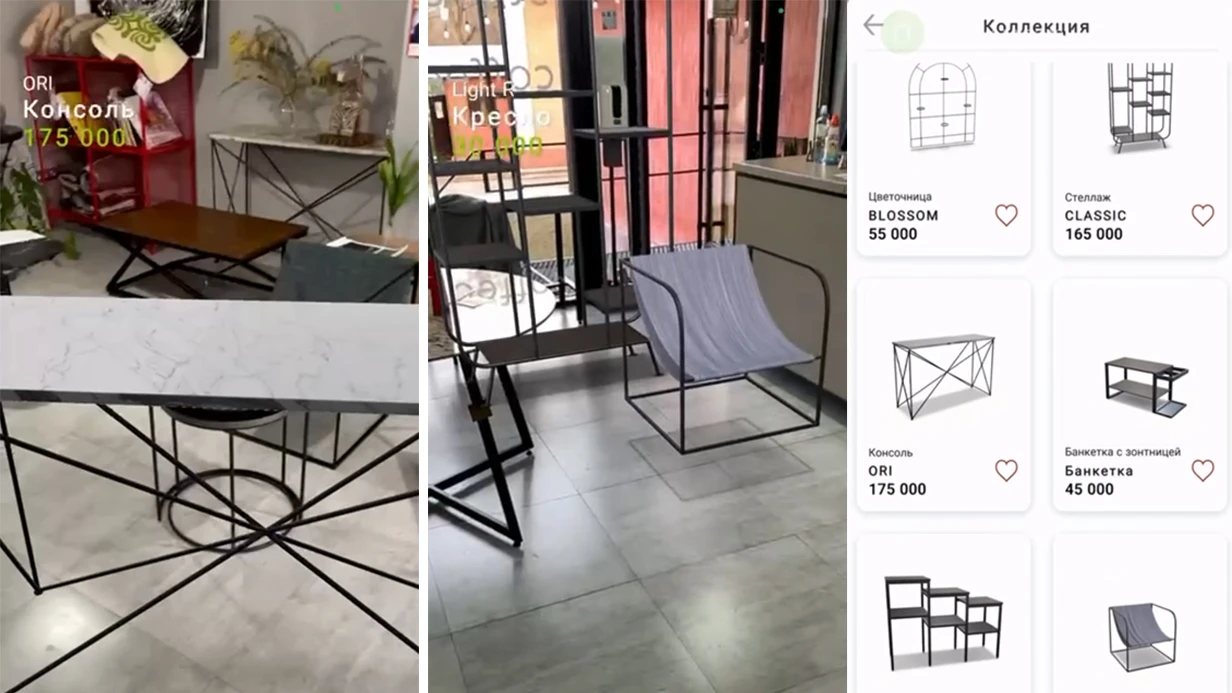
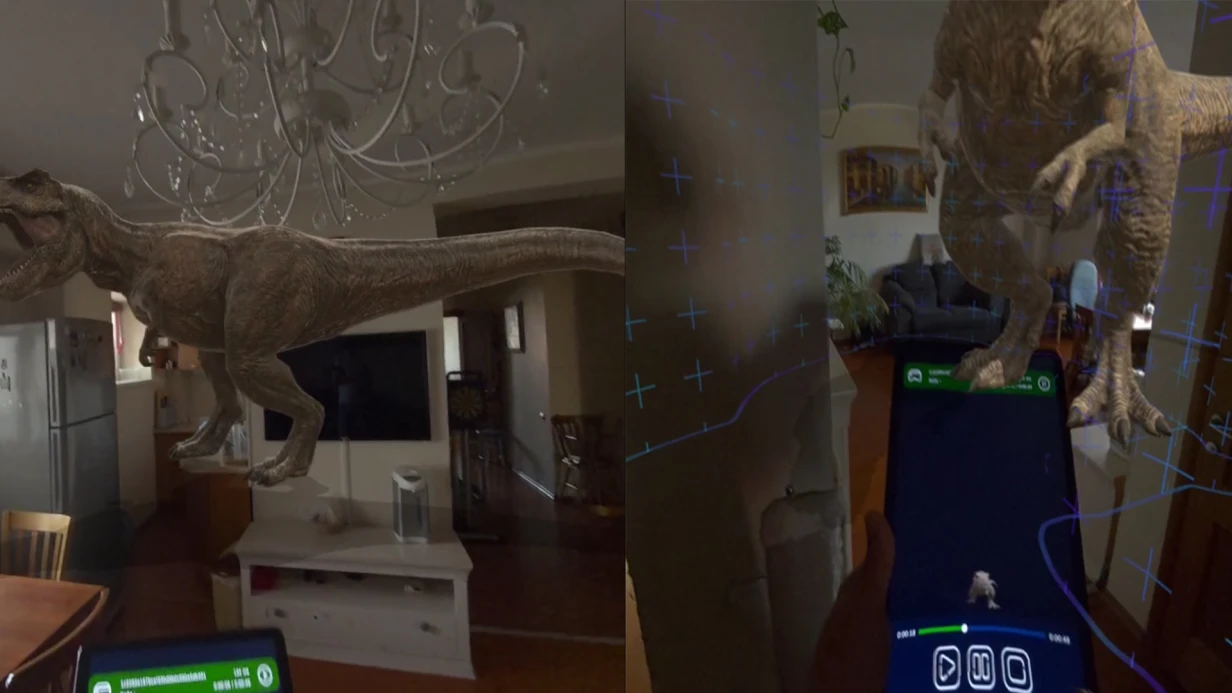
AR packaging changes the game. Augmented reality brings the box to life: the buyer points their smartphone camera, and a 3D model of the product appears on the packaging in motion — the exercise machine, real scale.
Leading brands already use this tool to stand out on the shelf and turn the choice into an engaging experience.
For sports brands, this works on several levels. Engagement: the buyer studies the product for several minutes — conversion grows. Recognition: unusual packaging is a reason to record a video and share it — the brand gets free reach. Trust: the 3D model shows the product honestly, reducing the risk of returns.
AR packaging is effective both in retail and at events, and in working with distributors. At exhibitions, animated packaging attracts visitors' attention, and for buyers it becomes an argument in favor of cooperation. The technology does not require installing an app — everything works through the smartphone camera.
We help sports brands implement AR packaging turnkey: from concept to launch. Over 10+ years, we have completed dozens of projects for brands, events and museums and know how to make augmented reality a sales tool. You get packaging that makes your product stand out on the shelf.
What Benefits AR Packaging Provides in Retail and at Events
A retail shopper and an event guest see hundreds of identical boxes and displays every day. Regular packaging does not hold attention for more than a couple of seconds — it is quickly replaced by brighter competitors.
AR packaging turns the product into an interactive story: point the camera — and the product comes to life, tells about itself and engages in a game. Such interaction is remembered and creates an emotional connection with the brand that static design cannot provide.
Brand recognition grows without an additional advertising budget. When a person sees augmented reality on packaging, they almost always record it on their phone and share it on social media. Each such post is free reach among friends, followers and their acquaintances.
People trust recommendations from real people more than banner ads, so mentions from actual users work more effectively than standard digital campaigns.
At the point of sale, AR packaging shortens the path to purchase. Instead of reading fine print on the label or searching for reviews online, the buyer immediately sees the product's advantages in a clear format: how it works, what it consists of, what tasks it solves.
This removes doubts and increases conversion — especially among those who make decisions spontaneously, under the influence of emotions. The brand gets more sales from the same shelf and the same shoppers who have already come to the store.
For digital marketing, AR packaging becomes a standalone communication channel. It collects data on who interacted with the product and how: how many people activated the scenario, which features they viewed most often.
This data allows advertising campaigns to be tuned more precisely and personalized offers to be made.
And most importantly — the content inside the packaging can be updated remotely without reprinting the run: launched a new promotion or seasonal story — and the old packaging is relevant again.
As a result, AR packaging works on several business tasks at once: it attracts attention in retail, strengthens brand memorability at events and increases conversion at the moment of choice. The buyer takes away not just a product, but a positive experience they want to repeat.
This creates loyalty and stimulates repeat purchases — which means it pays off the investment in packaging through long-term revenue growth.
AR Packaging Formats: From Sticker to Full Integration
Augmented reality in packaging is not necessarily an expensive special project. It can be connected at any stage: from a simple AR sticker that comes to life when the camera points at it, to fully interactive packaging with a game scenario.
For sports equipment and gear, it is especially valuable to show the product in action: exercise technique, setup rules, clear advantages of the model.
We offer three basic AR packaging formats — for different tasks and budgets. Below is a brief table so you can immediately understand which option suits your product and what the client gets.
Main AR Packaging Formats
| Format | Who it's for | What it gives the client |
|---|---|---|
| AR sticker on packaging or label | Brands that want to launch AR quickly without changing the production cycle | Video with instructions, promotion page, brand story. After purchase, the client gets additional value and remembers the product |
| AR label with marker | Equipment manufacturers, retail chains, merch | 3D product showcase, key specifications, reviews. Helps with selection and increases conversion at the point of sale |
| Interactive packaging with full integration | Premium lines, limited series, event launches | Quest, game, personal scenario inside the packaging. Holds attention, creates viral moments and a reason for repeat ordering |
This approach works for any gear: from balls and exercise machines to complex devices. Start with a sticker if the budget is small and you need a quick result. Choose full integration if you are preparing a product launch and want to surprise the audience.
In both cases, you get clear analytics: how many people pointed their camera, how long they interacted and what actions they took. This allows you to assess payback and scale the solution to new product batches.
How We Develop AR Packaging: Project Stages
To make AR packaging truly make sports equipment and gear stand out, it is not enough to simply generate a 3D model. It is important to understand the usage scenario in advance: where the packaging will activate, who will see it and what action it should trigger.
Therefore, we always work according to a transparent procedure, where each stage has a timeline and an understandable result for the client.
AR Packaging Development Stages
-
Brief and task analysis. We discuss the goals, target audience and features of the sports product — what exactly needs to be "brought to life." The output is a technical specification that is clear to both marketing and production.
-
Concept and visual prototype. We propose a style, animation and interaction mechanics with the packaging. You see an example before full development — on familiar devices, without complex settings.
-
Approval and parameter confirmation. We approve the concept, make revisions and set the timeline. No "we'll add it later" — you know the scope of work and the result in advance.
-
Production of the AR scene. We set up anchoring to an image or marker on the gear: ball, exercise machine, boxing gloves, etc. We refine animation, sound and interactive elements so the packaging works quickly and reliably.
-
Testing and integration. We check recognition under different lighting conditions and angles, connect the packaging to launch via an app or QR code. We set up view statistics.
-
Post-production and support. We publish the content, train the staff, prepare instructions for users. After launch, we stay in touch: we quickly fix small issues and update materials if the design or collection changes.
What Is Included in the AR Packaging Delivery for Your Brand
You receive not a separate application, but a complete production kit. It contains all files, layouts and instructions needed for the print run and integration of AR packaging into your channels — from printed materials to events.
No "blank spots": after handover, you fully own the solution and can use it without constant involvement of the developer.
The standard delivery includes:
- Delivery kit — a complete set of files for printing, packaging and installation: label layouts, posters, stickers and promo materials that account for your corporate style.
- Source files for all elements — editable graphics files, scenarios and settings. You can make edits with your own team or hand the project to another contractor without losing quality.
- 3D models and AR scenes adapted to the real dimensions of your sports gear. The models are tested on different surfaces and lighting conditions, so they work both in the sales floor and outdoors.
- Staff training — short memos and video instructions for employees: how to launch AR mode, change content, where to place scan markers. Training takes no more than an hour and does not require in-house technical specialists.
- Integration with promotion channels — QR codes, links and markers for placement in catalogs, on the website, on social media and at exhibition stands. There is one link, but for each task you get a separate launch scenario.
- Technical support for the entire period of use: launch support, update consultations, help in emergencies. Support remains available after the project is completed — a guarantee that the installation will continue to work reliably.
The entire kit is delivered within the agreed timeline, with a test launch at your site. You get a tool that can be replicated, adapted to new collections and used in regular marketing campaigns — not a one-off "single-use" attraction.
Case Study: How AR Packaging Increased Gear Sales by 1.5 Times
Sports gear is hard to sell: the buyer cannot "feel" the product in the box, and dozens of similar models on the shelf cause doubt. As a result, even an interested customer leaves without buying or chooses the cheapest option.
We solved this pain for the brand FlexFit — a manufacturer of home fitness equipment — with AR packaging: the smartphone camera brings the box to life, shows the exercise machine in motion, key features and exercise examples.
The buyer sees the product in action before even opening the packaging. This removes the main barrier — the fear of making the wrong choice.
Sellers no longer need to repeat the same thing twenty times, and the brand gets an additional advantage on the shelf and a reason to share on social media.
Implementation Results
- Sales of the line grew 1.5 times in the very first season — this is the main indicator of effectiveness.
- 70% of buyers scanned the AR packaging in the store, and one in three put the product in their cart afterward.
- At a sports industry exhibition, visitors activated the packaging over 300 times in two hours — the stand became the most visible at the venue.
- A distributor who initially doubted ordered AR packaging for the entire catalog — the reorder came without additional negotiations.
Payback and Scaling
Development investments paid off in the first sales season: conversion growth and additional orders covered the budget with margin to spare. The technology is now being scaled to adjacent categories — sports bags, bottles, mats.
For the client, this means quick launch, clear metrics and sustainable revenue growth without increasing the advertising budget.
How to Choose the Right AR Packaging Format for Your Product
Choosing an AR packaging format really depends not on a technical novelty, but on three things: your goal, your audience and your budget. If these parameters are defined correctly, augmented reality on sports gear works as both an additional salesperson and a brand ambassador.
Therefore, before launching, it is worth asking yourself: what do you want to get — increased recognition, more customer engagement or strengthening your image in the eyes of partners?
Start with the goal. For quick reach and a simple first introduction to the product, a lightweight scenario is suitable: pointing the camera at the packaging opens a short video with exercise technique or care instructions.
This format does not require installing apps and very quickly explains the product's value right on the shelf.
If the goal is deep engagement and a wow effect, use an interactive 3D model: turn the packaging over, and an exercise machine appears in space, with the ability to examine it from all sides and even "try it on" virtually.
The second factor is the audience. For sports stores and mass shoppers, choose the simplest mechanics: one scan, one action, an understandable result.
For training centers and clubs, where clients are already interested in the product, you can create a richer scenario with a workout program, statistics and a folder for saving results. This way you get not just packaging, but a customer retention tool.
The budget determines the depth of the implementation, but does not necessarily affect the effect. Small budget — go with a web version with a single scene that perfectly handles the main task. With a more flexible budget, add multiple scenes, animations and language options.
The main thing is not to chase the number of features: a properly chosen format is always built around one strong idea, not around technical details.
We help determine the optimal format for your product at a free brief: we analyze your goal, audience and budget, then propose a concrete scenario with an understandable result.
This way you get a solution that works on business metrics: from increasing conversion at the point of sale to growing repeat orders through customer engagement.
Frequently Asked Questions About AR Packaging: Honest Answers
Implementing AR packaging for sports equipment raises questions — and that is normal. Most often, clients ask about cost, compatibility with already purchased gear and the complexity of integrating into current processes. We decided to answer directly, without fine print.
How much does AR packaging development cost?
The cost depends on the complexity of the scenario and the number of objects that need to be "brought to life." For testing, we offer a pilot project — it solves a specific task and shows the effect without large investments. After the pilot, you know exactly what you will get and make a decision about scaling.
Will AR work with our existing equipment?
We work with most types of sports gear: from exercise machines to balls and equipment. At the brief stage, we analyze the shape, materials and usage conditions — this allows us to design packaging that does not interfere with athletes and does not require replacing equipment. We configure recognition for each specific model, including non-standard items.
Won't this be difficult for our employees?
Implementation takes minimal time: we prepare clear instructions and conduct short team training. After launch, everything works automatically — the user only needs to point their smartphone camera at the object.
No additional equipment is needed; the smartphones of clients and staff that are already in everyday use will suffice.
How quickly can we launch?
A pilot project — from two weeks after concept approval. A full-scale launch usually takes a month. We handle production, integration and testing, so you get a working product without deploying your own technical resources and without stopping the operation of your facilities.
We understand that it is important to eliminate all risks before launch. Therefore, at the first brief, we freely show examples of solutions for the sports industry and offer a pilot for your task — so you evaluate the result before full payment and make a decision based on facts, not promises.Submit a Request for AR Packaging Development
Want your sports gear to stand out right on the shelf and tell about itself?
AR packaging turns an ordinary product into an interactive sales tool: the buyer points their smartphone camera and sees the equipment in action, real workout scenarios and advantages that a static image cannot convey.
Tell us about your task — and we will offer solution options for free. Submitting a request is the first step to making your product speak directly to the customer.
We do not insist or pressure: after a short consultation, you will receive a project estimate that you can calmly review and come back to us when you are ready.
What you get in response to your request:
- Free consultation — we will discuss which AR mechanic suits your gear: augmented reality in an app or on a website.
- Project estimate within 2 days — by timeline and budget, taking into account your tasks and scope.
- Three implementation options — from a minimal solution to a full interactive scenario. Choose what fits your marketing.
- An honest launch timeline — you will plan the product release instead of guessing when the developers will finish.
- A personal manager contact — one person guides you from brief to finished solution and stays in touch after launch.
The request takes a minute and saves weeks of negotiations. Leave your contacts — we will call back at a convenient time, answer questions and prepare a proposal. Your brand will get a modern tool that customers will remember.