

Shoppers Don't Notice the Advantages of Pet Products
Every day, pet owners walk past shelves lined with dozens of similar foods and accessories. Purchase decisions are made in seconds, and at that moment the packaging itself must explain why your product is better.
Plain paper and typography aren't enough: the benefits remain buried in text, while the shopper looks at a nearby brand with a brighter image.
The problem is not the quality of the product but the way it communicates. On the shelf, there's no time to read the ingredients, study specifications, or compare fine print.
Even a useful, innovative product gets lost among competitors if its packaging doesn't hold shoppers' attention. You need a moment of surprise that stops the eye and turns attention into interest.
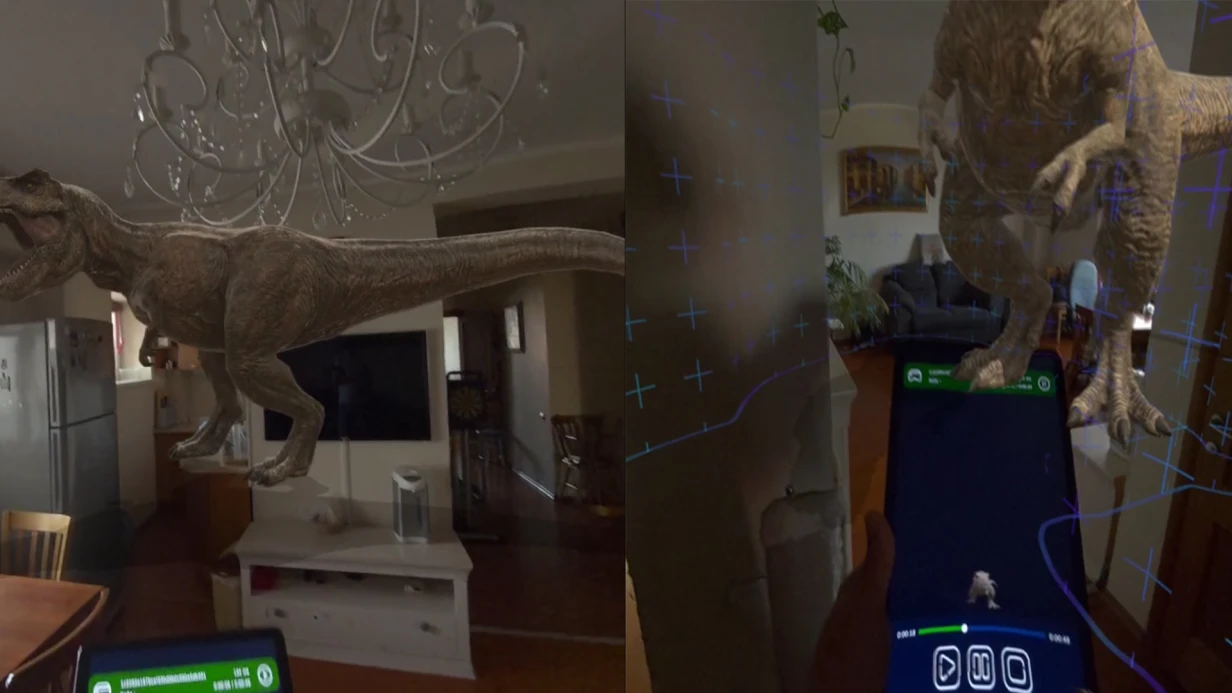
Augmented reality in retail solves this problem. The shopper points their smartphone camera at the packaging — and a 3D pet comes to life, an animation explains the product's benefits, and the product in action is shown.
AR packaging turns an ordinary box into an interactive screen that tells the brand's story in a few seconds.
This approach sets you apart from competitors without extensive advertising. People photograph and record the unusual interaction and share it with friends — that means extra social media reach.
Moreover, the shopper stays with the product longer, remembers it better, and is more likely to return to it next time.
We develop AR packaging tailored to the needs of pet product manufacturers: from concept to a production-ready solution. You get packaging that sells itself, holds shoppers' attention, and gives a clear advantage over shelf neighbors. That's exactly what helps you stand out from competitors rather than get lost.
How AR Packaging Boosts Sales and Brand Recall
Interactive packaging for pet products is a tool that works both on the shelf and after purchase. In the store, it stops the eye: the shopper points the camera at the box and sees a 3D pet, a mini-game, or a useful tip. A few seconds of interaction become an emotion, and emotion becomes brand recall.
We develop AR scenarios built directly into the product packaging. For marketing, this is not just decoration but a measurable channel: increased engagement, repeat purchases, and new leads without additional advertising budgets.
Engagement and Recall
A shopper examines an ordinary bag of food for seconds; AR packaging holds their attention for one to two minutes. During that time, the person gets to "meet" the product, see it in action, and experience a vivid emotion.
That emotion is what determines the next shelf choice — the shopper looks for a familiar brand rather than comparing price.
Loyalty and Repeat Sales
The AR scenario easily connects to a loyalty program: scanning earns points, unlocks a personal discount or a special offer for the pet owner. This turns packaging into an entry point for dialogue.
The shopper gets value — care tips, an online game for the pet — and the brand gets a reason for repeat contact and reorder.
Viral Marketing
People want to share the result of scanning: a video of a virtual dog on the box, a photo of a cat with an AR accessory, a funny moment from a 3D mini-game. Every such post is a free recommendation for your brand on social media.
In this way, a single package starts bringing in new customers and builds the image of a modern, caring manufacturer.
AR Packaging Formats to Fit Your Goals and Budget
AR packaging for pet products does not have to be a complex, expensive project. Sometimes a simple QR code is enough to surprise the shopper and stand out on the shelf; sometimes you need a full-fledged AR game to hold attention and build a loyal customer base.
We break down three main formats and help you choose the one that fits your goal and development budget.
Three Workable Formats
| Format | Who It's For | What It Gives the Customer |
|---|---|---|
| QR code on packaging | Brands that want fast results and broad reach without installing an app | Packaging comes to life: product video, pet care instructions, brand story, discount for subscribing. Minimum entry barrier — the customer points the camera and immediately gets value. |
| AR mask or 3D model | Medium budget; goal is viral effect and social media engagement | The customer "tries on" a pet persona, shares photos with followers, the brand gets organic reach. You can bring the package character to life, add animation or background changes. |
| AR game | Premium brands, event campaigns, loyalty programs | The shopper stays engaged with the brand for a long time: hunts for virtual bonuses, competes, returns to the packaging again. Collect participant data and tie the game to a prize — it works both as a repeat-purchase incentive and as a feedback collection tool. |
The choice of format depends on your goal. If you need to quickly introduce the audience to a new product, a QR code is enough. If the task is to increase brand awareness and generate social mentions, go with an AR mask or 3D model. If you want to build a community around the brand and boost repeat sales, look toward an AR game.
We'll help you choose the right format for your budget and package it into a complete solution — from scenario development to post-launch analytics.
Stages of AR Packaging Development: From Brief to Launch
Working on AR packaging is not a one-off design; it's a small project with its own logic. So that you understand the timeline and scope in advance, we've structured the process into six stages — from the first call to post-launch analytics.
- Brief — you answer a few short questions: what the product is, who the target customer is, and what stops them from choosing you. Based on your answers, we define the objective and key contact points.
- Scenario — we propose what the shopper will see when they point the camera: a 3D pet model, a food demonstration, a mini-game, or a promo code. You approve the scenario, and we prepare the description and screen layouts.
- Development — we create the AR marker on the packaging itself and build in the animation and sound. At this stage, you receive interim versions and can make adjustments so the final result matches your expectations precisely.
- Testing — we check performance on major smartphone models. It's crucial that the scenario launches within seconds, without requiring additional apps or complicated instructions.
- Launch — we hand over final files for the printer, prepare instructions for customers, and a short guide for your team. We help integrate AR into an existing run or bring it to a new one.
- Analytics and support — after launch, we monitor how many people activate the scenario and what they do inside. If we spot bottlenecks, or if you want to refresh content for a new season, we make quick updates.
As a result, you get not just packaging with an "effect" but a measurable tool that works for brand recognition and sales. We stay in touch after project delivery and respond quickly to questions from your team and agency.
What's Included in the AR Packaging Deliverable
You get not just a "live" image but a fully functional sales tool that's ready to work. There's nothing to configure on your own — open the packaging, point the camera, and get both the wow effect and practical value.
The package includes everything you need to implement AR in production and sales without involving developers.
- Ready-made AR scene for your packaging — a live character, a 3D pet model, or an interactive product demonstration adapted to the shape and design of your specific bag or jar.
- AR project source files — the complete file package stays in your ownership. You'll be able to update the scene, change promotions, and edit in-AR texts without paying for every revision.
- Simple activation guide — a reference card for the customer: how to point the camera, what will appear on screen, and how to share the experience on social media. Designed for people completely new to AR.
- Staff training — a short session for your employees: how to demonstrate the effect at point of sale, answer customer questions, and use AR in retail and merchandising.
- Technical support — a dedicated manager and engineer on call: we help with setup and during the first period after launch. Feedback within one business day, no tickets and no week-long waits.
- Content management panel — you change promotional offers, add new product information, and modify the AR scenario yourself whenever needed. No programmer required to launch a new campaign.
- Launch promo pack — ready-to-use QR markers, posters, and copy for shelf, social media, and outdoor advertising. So that as many pet owners as possible learn about the AR packaging launch.
In short: after delivery, you get an independent asset that works for brand recognition, repeat purchases, and collects audience engagement data. Everything else is our responsibility during implementation and beyond.
Case Study: AR Pet Food Packaging — 30% Sales Growth
Here's a real case from our practice: how AR packaging helped a pet food manufacturer increase sales by 30%. The client is a company producing food for cats and dogs.
The marketing team's challenge was to stand out on the shelf among dozens of similar packs and give shoppers a reason to choose this specific brand. Regular discounts weren't delivering the needed effect — they needed something that would hold attention and evoke emotion.
We turned the packaging into an interactive screen. When you point your smartphone camera at the pack, a 3D pet appears that reacts to movement, briefly explains the food's composition, and offers a mini-game.
For the shopper, it's an unexpected bonus and a reason to record a video; for the brand, it's an extra touchpoint with the audience in-store and after purchase. Technically, a smartphone is enough — no additional apps to find, everything works through the browser.
Implementation Example
The project was launched in a federal retail chain. Promotional stands with a "point your camera" prompt appeared on the shelves, and a visible AR marker was placed on the packaging.
Within three months, sales of the new line grew by 30% — the key figure the whole project was built around. Average interaction time with AR content was a minute and a half, and one in three shoppers followed the brand's social media after the experience.
Six months later, the client came back: they asked to extend the project to all flavors in the line.
Client Results
- Sales grew by 30% in the first quarter after the AR packaging launch.
- Nearly 70% of customers who used AR placed a repeat order within six months.
- A follow-up contract: a second version for new flavors and an expanded line.
This is an implementation example that can easily be adapted to any product: from pet food to cosmetics or children's toys. If you want measurable sales growth, let's discuss your product and we'll propose a solution.
How to Choose the Right AR Packaging Format?
Choosing an AR packaging format starts not with technology but with a question: what should the shopper do at the moment of contact with the product?
For a pet food and accessories brand, it might be showing care for a pet, explaining the product's advantages, or simply surprising the customer and leaving an impression. The right format amplifies that action — it doesn't just add a "striking image."
First, look at your audience. Pet owners most often scan packaging at home or in a store — with a smartphone in hand and a pet nearby. If your goal is to explain ingredients or care rules, a compact AR marker on the label that opens a short animation or video will work.
If it's more important to engage people in a game or collect photos for social media, it's better to create a dedicated AR zone on the box or insert where the pet "comes to life" and interacts with the brand. We help match the format to the task, not the other way around.
The second factor is the point of sale and usage scenario. For a pet store shelf, instant readability is crucial: shoppers won't figure out complicated instructions, so AR should launch from the very first scan.
For online orders or gift packaging, you can use a deeper scenario — for example, virtual try-on of an accessory or command training through augmented reality. In each case, we select a solution that works toward brand recognition and repeat purchase.
Finally, don't forget measurability. A good AR packaging format is not entertainment for its own sake but a tool: it can collect scan statistics, show which materials are watched through to the end, and give people a reason to return to the brand.
At the start, we help you define the result you want — greater reach, more time with the brand, or stronger loyalty — and choose the format around that.
If you're not sure which option fits your product best, that's normal. Request a consultation: we'll review your packaging, audience, and goals, suggest two or three suitable scenarios, and help you choose the one that will deliver the maximum effect.
Selecting a solution takes a couple of days and doesn't obligate you to place an order — you simply get an expert perspective from the outside.
Frequently Asked Questions and Concerns Before Ordering AR Packaging
Before ordering AR packaging for pet products, brand owners tend to have the same questions: will it disrupt production, will shoppers notice it, and when will the investment start paying off. We address the main concerns — based on our experience with completed projects.
Isn't it too complicated to integrate AR into the production process?
No. You don't need to change the packaging line or stop shipments: just apply a small trigger marker to the box, and we build all the interactive part into a digital layer. Integration takes a few weeks — from finished layout to a working camera. We handle the technical side: from marker generation to app placement in stores.
What if shoppers don't notice it or don't want to scan?
The mechanics do the work: a person points the camera at the packaging and receives something valuable — pet care tips, an interactive game, a breakdown of the food's ingredients, or a prize draw. This is what drives action.
In our projects, up to a quarter of shoppers interact with the packaging — several times more than with an ordinary QR code linked to a static page.
When will the investment in AR packaging pay off?
Unlike a one-off ad campaign, AR packaging keeps working on the shelf, on social media, and after the purchase — in the kitchen, in reviews, and at the moment of reorder. The cost per contact comes out lower than with traditional promotion, and brand awareness grows.
Payback happens faster, and results are easy to measure: number of launches, interaction time, repeat purchase dynamics.
How difficult is this for our team and printing house?
You won't have to hire AR specialists or dig into development. We run the project turnkey: we create the scenario, design, and animation, set up analytics, and provide a prototype for testing. Your task is to send the packaging layout and approve the concept. From there, we support the process through to the finished product and beyond launch.
Discuss Your Project — Get a Cost Estimate and Examples
Submit a request for AR packaging — we'll send a selection of examples, a cost estimate, and recommendations for your product.
We work with pet product brands and manufacturers: live packaging boosts interest in food, treats, and accessories at the point of sale and after purchase.
If you're still at the idea stage, that's no problem. Our experts will provide a consultation: they'll show how an AR layer fits into the packaging structure, what formats market peers are using, and which option will deliver results for your print run.
What you'll get after submitting your request:
- Cost estimate for development tailored to your print run and task
- Portfolio with AR packaging examples for pet products
- Expert consultation on format selection: from label animation to interactive packaging
- Timeline assessment and integration plan with your printing house
- Tips on using the AR layer in promotion and on the shelf
- Test demonstration on your packaging sample
Submit a request for AR packaging, and we'll prepare a solution shoppers will remember and a shelf presence stronger than your competitors'. We'll include a commercial proposal and portfolio examples so you can evaluate the result before work even begins.