

Why Books and Exhibits Lose Visitors' Attention
Visitors come to a museum or exhibition for impressions, but static display cases and printed catalogs increasingly fail to hold their attention.
Modern people are used to interactive content: screens respond to touch, images come alive, information is delivered briefly and vividly.
Against this backdrop, the traditional exposition loses ground—a book or exhibit without a digital cue remains just an object that people glance at for 10–15 seconds and then walk past.
For a museum and a brand, this means a direct loss of audience: the visitor doesn't engage, doesn't remember the story, doesn't share impressions on social media. This is especially visible among younger audiences who expect a dialogue with content rather than one-sided viewing.
As a result, repeat interest declines, attendance drops, and unique exhibits and publications remain undervalued.
This is exactly where augmented reality for museums and exhibitions comes in.
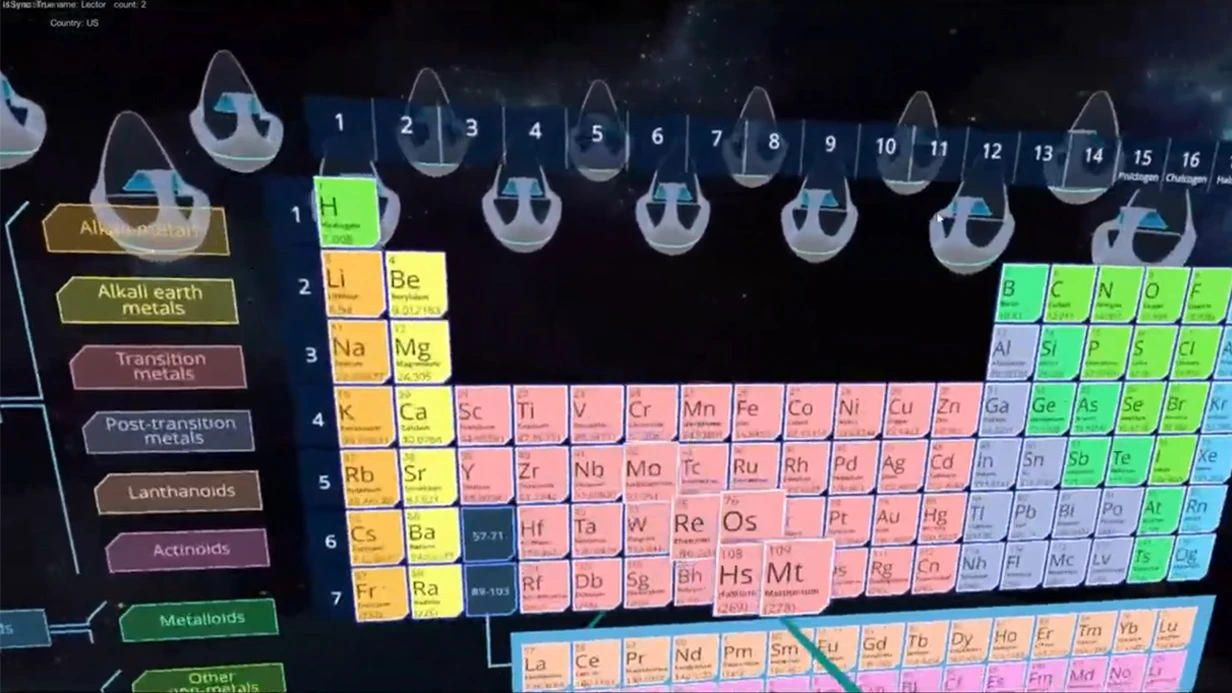
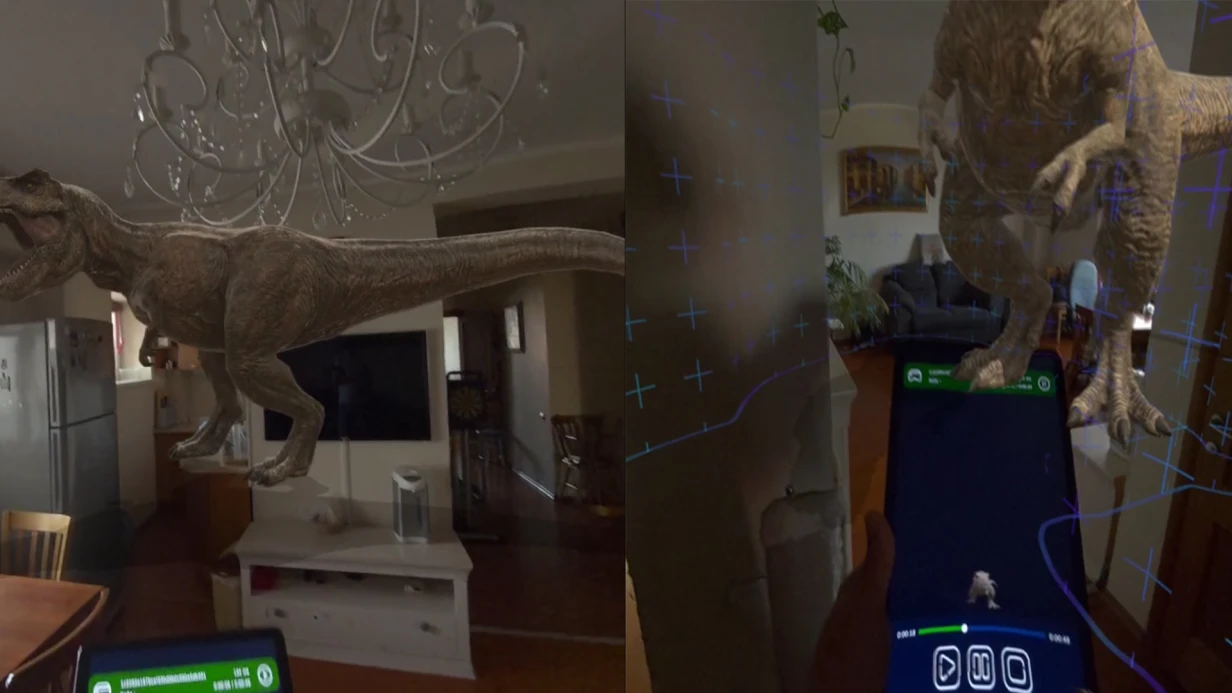
Interactive exhibits turn passive observation into live exploration: just point your camera at a book page or a sign next to a display case—and a 3D model, animation, or historical reconstruction unfolds before the visitor.
This kind of engagement holds attention 5–7 times longer and creates a memorable experience that people want to retell and show others.
We help museums, publishers, and event organizers bring back interest in printed materials and physical objects by embedding an AR layer directly into the existing exposition.
This is not a replacement for the traditional format but a way to amplify its value: a book remains a book, but now it speaks to the reader in their language—the language of visual imagery and interactive discoveries.
This is the bridge that closes the gap between static heritage and the digital expectations of guests.
What a VR/AR Installation Gives Your Brand
Interactive content is no longer a novelty—today it's a working tool that turns a one-time event into a long-term brand asset. A VR/AR installation doesn't just entertain guests: it creates a vivid experience that people remember, discuss, and spread further.
For a business, this means measurable results: increased awareness, expanded reach, and turning visitors into leads—without extra advertising budget.
Emotions That Work for You
An ordinary booth or presentation is quickly forgotten, while an immersive zone holds attention for several minutes—enough time for a guest to dive into the brand's story and capture striking photos.
This kind of experience triggers genuine emotions that become associated with your company, not with an abstract "interactive toy." We delivered this for the Museum of Entertaining Sciences: visitors lingered at the installation three times longer than at classic exhibits and shared their impressions on social media after the visit without any prompting.
Social Media Reach—Free Advertising
Every guest who takes a photo or video inside virtual/augmented reality posts it on their own page—and that content is seen by their friends and followers. On average, one participant generates 3–5 new brand mentions that keep working long after the event ends.
This is especially valuable for museums and exhibitions: the visitor becomes an ambassador of the exposition and brings in new guests.
Recognition and a New Audience
An interactive installation itself becomes a talking point—people talk about it, discuss it in parent chats and professional communities. This attracts not only casual visitors but also journalists, bloggers, and partners.
This format is ideal for digitizing expositions: once part of a collection is converted to AR format, it can be showcased at industry trade shows, in showrooms, and even in online catalogs.
New Leads Without Expensive Traffic
Unlike banners and targeted ads, a VR/AR installation delivers a high-quality contact: a person approaches on their own, interacts, and leaves their details—for example, to receive a photo from the virtual object.
Technically, we ensure this through our own server architecture and professional equipment, so the lead collection process remains stable even at high visitor volumes. As a result, you get a warm base of contacts ready for further engagement.
HR, marketing, and sales teams can use this model for product launches, brand presentations, and anniversaries.
One project pays off not only through emotion but also through concrete numbers: we track the number of participants, depth of interaction, and conversion to leads—and that data becomes the foundation for future campaigns.
AR Installation Formats for Events, Museums, and Books
Choosing the right format determines the success of the entire installation: what works at a two-day festival may not work in a museum or in a book.
That's why we match the solution to the task: a temporary booth for an event, a permanent exhibit for an ongoing space, or AR print media for printed materials.
Three Working Formats
The same scenario can be deployed in different ways—from a wall projection to a cover that comes to life. The table below shows the core formats and the situations where each one delivers maximum results.
| Format | Best for | What it gives the client |
|---|---|---|
| Temporary installation | Event managers, brands, conference organizers | Foot traffic to the booth, photo zone, guest engagement—works from one day up to a week |
| Permanent exhibition | Museums, exhibition centers, showrooms | A lasting point of attraction for visitors; content is easy to update for a new exhibition |
| AR print media | Publishers, marketing departments, authors | Printed materials brought to life: books, brochures, catalogs—no equipment needed on the reader's side |
For books and magazines, AR print media solves the attention-retention problem: the reader points their phone camera at a page and gets video, a 3D illustration, or supplementary content. It works without a special app on site and doesn't require internet at the moment of viewing.
Formats combine easily: a permanent booth is complemented by print media, a temporary installation by handouts with AR markers. This way, one project delivers both a live impression and a long afterlife for the content after the event.
How a Project Goes from Brief to Launch
The project moves through clear VR/AR development stages—you control every step and make changes in time. After each stage, you receive a result for approval. This way, you get an installation that precisely matches expectations.
Stages of Work
- Brief and project immersion — we capture the goals, audience, venue, and expected outcome. Already at this stage we propose the optimal format: an interactive VR zone, AR print media for books, or a virtual tour.
- Concept and scenario — we develop the idea, visual style, and interaction scenario. For an AR book, we show how the illustration will come alive and what the reader will see.
- Project approval — you receive the concept and mockups, make edits. We quickly lock in changes and finalize the technical specification.
- Development and prototype — we build a working prototype on professional equipment.
- Testing and debugging — we verify stability, loading speed, and ease of control. We adapt the solution to the specific venue and lighting conditions.
- Installation launch — we install the equipment, perform final tuning, and hand it over to your team. If needed, we train staff to work with the system.
- Post-launch support — we stay in touch, help with updates, add new scenes, and collect analytics for future projects.
This workflow reduces risk and saves time: you get exactly what was intended, and the installation launches without surprises. You control the process, and we handle all the technical work.
What's Included in the Installation Delivery
When you order a VR/AR installation, you don't get "hardware and a file link"—you get a complete delivery package: everything needed to launch the project on the appointed day.
This is especially important for AR print media for books: the living pages must work from the visitor's very first glance, without setup or hunting for staff on site.
- Installation equipment — selected for the venue format and guest count, pre-tested and ready to go.
- AR content for books — animations, sound, and supplementary materials tied to specific publications and page layouts.
- On-site assembly and configuration — we deliver, install, and verify all scenarios before the event opens.
- Staff instructions — short guides on what to do at launch, during operation, and in case of a failure.
- Client team training — one or two specialists receive all the skills needed to manage the installation.
- Technical support for the entire period — remotely and with on-site visits if the event spans several days.
- Placement plan and operating schedule — agreed in advance so the installation fits the space's logic and doesn't create queues.
The result is a turnkey installation: you focus on guests and the program, not on the technology. The complete delivery package is assembled for a specific task, so there's nothing extra—only what ensures a stable result for your event and your book.
Case Study: How AR Print Media Brought a Book to Life and Increased Sales
A book catalog is the face of a publishing house, but with a huge number of new releases, buyers get lost within a few pages. Ordinary cover photos don't convey the atmosphere of a title, so wholesale clients delay their decision or skip the order entirely. We proposed an approach that moves print media into a format of live engagement with the book.
Instead of forcing readers to look at static images, we placed AR markers on the catalog pages. When a smartphone is pointed at a cover, a short video with the story's atmosphere plays, along with a video message from the author and reviews from early readers. The buyer doesn't have to guess what the book is about—they see it in action within 20–30 seconds.
Importantly, this is not a separate interactive booth but a regular printed catalog you can throw in a bag. Any manager takes it to a meeting, and the client gets augmented reality without installing apps—everything works through the browser. This solution scales easily to 100 or more titles.
For the publisher AuraMedia, we brought 8 catalog sections to life and saw results within the first month: the average time spent studying a title grew 2.7 times, and wholesale supply inquiries increased by a third.
Four out of ten clients who received this catalog from managers placed a quarterly repeat order. Sales costs didn't rise—employees simply spent less time on each presentation.
Now the client is rolling out this experience to every new book collection. For them, AR print media has become not a one-off campaign but a permanent growth tool: once prepared, the layers work for the entire print run and keep generating sales after the run is printed.
How to Choose the AR Installation Format for Your Book?
Choosing an AR format for a book starts not with technology but with three questions: who will read it, what is the goal, and what is the budget. The answers determine whether augmented reality will be a light bonus to the edition—or the central element people buy the book for.
The first reference point is the audience. For a children's book, the effect must trigger from any smartphone without settings and immediately deliver a bright visual.
For an adult audience—for example, in museum print media or gift editions—volumetric scenes that invite closer inspection work better. The installation should account for how a person holds the book and where they read—at home, in a museum hall, or at an exhibition.
The second reference point is the goal. If you need to impress event guests and collect social media mentions, we choose striking scenes with motion and sound.
If the task is to explain complex material, we build interactive layers: the reader taps the page, rotates objects, gets reference notes. This turns the book into an educational tool that easily fits into an event scenario and increases the time spent with the brand.
The third reference point is budget and print run. For smaller publications, a simple solution is enough: the page comes alive via a marker, and no separate app is needed—a standard smartphone browser works.
For large projects, book series, and exhibitions, we offer a deeper format: multiple scenes per page, adaptation to different print formats, and integration with guided tours.
During a consultation, we'll suggest the optimal option ourselves, so you don't overpay for unnecessary features.
The main advice is not to look for a one-size-fits-all solution for every book. The right format is determined by the "audience—goal—budget" combination, and that's the balance we help you build on every project.
Frequently Asked Questions About VR and AR Installations
Before launching a VR/AR installation, clients tend to have the same doubts: will the launch go wrong, will it require complex maintenance, is it safe for guests. We answer the key questions—briefly, based on 10 years of experience.
Will installation assembly disrupt venue operations?
No. We assemble and configure everything in advance, and we arrive at the venue ready for launch. On the day of the event, only a final check is needed—it takes no more than an hour and doesn't interfere with space preparation.
What if the equipment fails right in the middle of the event?
Key components are duplicated, and a specialist is on duty at the event to resolve any issue instantly. In 10 years of practice, we've learned to anticipate emergency situations before they affect guests.
Is it safe for visitors?
Yes. We plan safe routes, barriers, and stable structures, and route cables into protective channels. If the installation involves movement, an assistant is nearby to help the guest get comfortable and enjoy the experience.
What does installation support cost?
The cost includes preparation, assembly, technical support on the day of the event, and dismantling. You get a fixed estimate with no hidden payments, and we take full responsibility for the result.
Calculate the Cost of an AR Installation for Your Task
The exact cost of a VR/AR installation for a book depends on what you want: a "brought-to-life" cover, an educational AR layer with 3D models, or a full interactive scenario with animation and sound.
Once the task is clear, we can quickly calculate the price and offer formats that deliver maximum impact.
To make the cost calculation accurate, submit a request for development—we'll assign a personal consultant, review your task, and get back to you with a specific proposal within one business day.
Checklist for the request:
- Project type: AR print media for a book, installation for an event, exhibition, or brand.
- Audience: readers, visitors, or clients—who will interact with the project.
- Goal: increased engagement, awareness, a memorable experience, or additional reach.
- Format: number of pages or AR zones, planned session duration, place of use.
- Timeline: what event or date the launch is needed for, whether there is a hard deadline.
- Style expectations: photorealism, stylization, video layer, voiceover.
After the request, you'll receive a free consultation, cost estimate, format suggestions, and realistic timelines. We'll show which options fit your budget and which deliver the strongest audience response.
Leave your request—we'll start with a short call or email to lock in the task. You'll learn the cost of the VR/AR installation before development begins and can plan the project without surprises.