

Why Event Programs Lose Guests' Attention
Guests open the event program and set it aside a minute later: the schedule gets lost among logos, and the text doesn't answer the main question — "what's in it for me?" Guests' attention drifts to their phones, and even a well-prepared stage doesn't save the day — the audience has already checked out, and key segments are only half-heard.
That's how boredom at an event is born: visitors have no reason to return to the program, ask a sponsor a question, or find the right booth. The organizer invests in content but gets no payoff — reach drops, partners are unhappy, and no one accepts the next invitation.
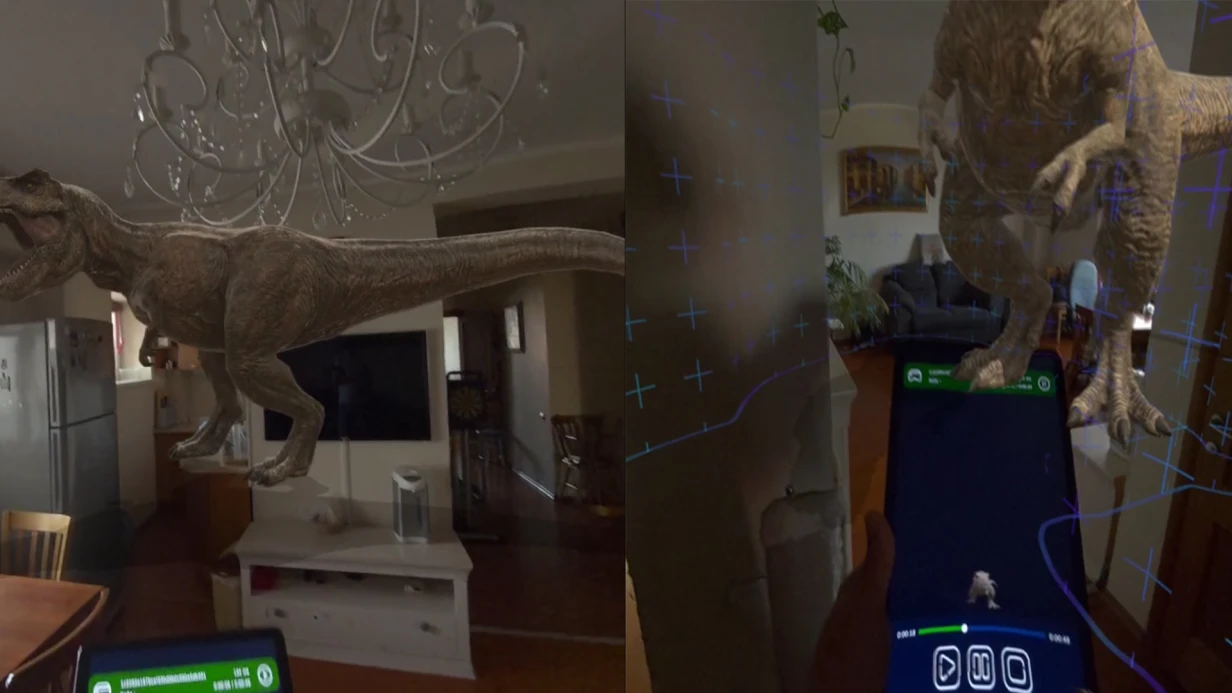
We solve this with AR printing: guests point their smartphone at the page, and the program comes to life — videos, interactive maps, special offers, and hidden bonuses appear. This turns a printed piece into an interactive experience for guests, not just a sheet of paper.
People stay inside the event longer, share their impressions more willingly, and remember the brand that made it happen.
AR printing solves the guest-attention problem even before the event starts: the program becomes a quest where every step unlocks something new.
For a business owner, this means measurable engagement — you can track which pages were scanned most often and extend the event's life after it ends.
AR Printing for Event Programs: 5 Benefits
The event program is the guest's first point of contact with the brand, but most often it's paper that gets read and forgotten.
AR printing turns the program into a living interactive channel: point your smartphone at it — and a video, 3D model, or special offer opens before your eyes. For the organizer, this technology delivers five concrete, measurable benefits.
Benefit 1. Audience Reach Without Extra Advertising
Every guest receives a program in their hands — that's already a completed contact. AR elements build a chain: scan, view, comment, repost on social media. Reach grows through the participants themselves, not through a promotion budget.
Benefit 2. Brand Recognition People Remember
Augmented reality delivers the emotion of surprise — which is exactly what guests remember after the event. Logos, brand colors, and characters come to life on the program's pages and stay in memory longer than ordinary print. The association "brand = vivid impression" is cemented automatically.
Benefit 3. Attendee Leads Without Extra Steps
AR printing guides guests straight to the target action: session registration, filling out a form, subscribing to a newsletter. No need to dictate links or ask people to search for a website — just point the camera at the program page. The fewer steps between interest and a lead, the higher the conversion.
Benefit 4. Guest Engagement During the Event
With AR, you can show interactive product presentations, video greetings from speakers, hidden bonuses, or mini-quests. The program turns from a simple reference guide into a playing field that holds guests' attention and drives activity. People photograph and record AR scenes — that's natural user-generated content.
Benefit 5. Measurable Results for Reporting
You can see how many attendees scanned the program, which sections were in highest demand, and how many guests reached the lead form. This data easily turns into transparent performance metrics for an internal report or a client presentation.
"At the last festival, every second program became interactive — fifteen hundred interactions in two days. The format paid for itself before the event even ended," — Festival Organizer.
AR Printing Formats for Different Tasks
AR printing turns standard media — badges, booklets, postcards — into interactive points of contact with the guest. Just point a smartphone camera, and static print comes to life: videos, 3D objects, hidden materials.
For an organizer, it's a way to make an event stand out and give every attendee a personal experience without installing additional apps.
| Format | Who It's For | What It Delivers to the Client |
|---|---|---|
| AR Badges | Business conferences, forums, exhibitions | Attendees scan each other's badges — contact exchange becomes a game, networking gets livelier, business cards don't get lost |
| AR Booklets | Concerts, tours, premieres | Program pages come alive with video greetings and behind-the-scenes content — guests study the booklet longer and share it on social media more often |
| AR Postcards | Invitation campaigns, promo | The recipient sees a 3D greeting or event teaser — response to the mailing grows, and the postcard is kept as a souvenir |
| AR Posters | City-wide event promotion | Passersby scan the poster and land directly on the ticket-purchase page — the path from interest to registration is shortened |
| Interactive Program | Large festivals, business forums | All printed materials are unified by a single AR navigation: map, schedule, speakers — attendees always know where to go and what to see |
We select the format for each specific event and integrate AR markers into layouts before printing. As a result, you get print materials that work for engagement and memorability, not ones that gather dust on a shelf. Tell us about your event — we'll propose a solution with a clear business outcome.
How We Create AR Printing: Stages of Work
Any AR printing project goes through a clear sequence of stages — from brief to on-site support on the day of the event. You see the timelines, approval points, and areas of responsibility in advance, so the process stays transparent and edits don't derail the launch.
-
Brief and goals. We discuss what the AR printing should accomplish: retain guests, collect contacts, visually present the program. Together we choose the points of contact — event program, badge, invitation, navigation signs.
-
Interaction concept. We prepare the scenario: what the guest will see when pointing the camera, which objects and layers will come to life on paper. We lock in the number of scenes, timelines, and the approval checklist so every stage proceeds according to plan.
-
Layout and design. We embed AR markers into the program layout so they don't interfere with reading and reproduce correctly in print. The design stays true to the event's style, and all that's needed to activate it is pointing a smartphone camera.
-
Layout approval. We show how the print "comes alive" on real screens before sending it to the printer. You see the result in advance and make edits before the print run — this eliminates surprises at the venue.
-
Launch on the day of the event. We set up and test scenarios for the venue conditions: lighting, different phone models, guest flow. At the start, the team runs a final check and handles any unexpected situations.
-
On-site support. We're available all day: we help guests whose camera isn't working, quickly adjust scenes if the schedule changes. After the event, we hand over a report — how many scans, which zones were more active, what the resulting reach was.
What's Included in an AR Printing Package
We don't hand over "source files" — we deliver a complete kit ready for printing and launch. Everything you need for standout AR printing comes in one package, from marked-up layouts to guest instructions and day-of-event support.
- AR markers — ready-to-use graphic markers formatted for programs, tickets, posters, and badges. No finishing work needed before printing; just send them to the printer.
- Design layouts — several layout options styled to match your brand identity. The printed pieces will blend seamlessly into the event's look and won't feel out of place.
- Guest instructions — a short "point your camera and here's what happens" guide. We place it directly on the printed piece or an insert so every visitor figures it out in 10 seconds.
- Announcement materials — ready-to-use texts and tips for social media and your website. Attendees learn about the surprise in advance and look forward to it, which means event reach grows even before it starts.
- Demo version for testing — a test page where you can see how the image comes alive on different smartphones before the print run. You calmly verify the effect and make adjustments.
- Technical support on the day of the event — we set everything up and support the launch so guest questions are resolved quickly and without your involvement. You handle the program, not the tech.
- Source file handover — after launch, you receive the project files and access to content management. If you want to update the effect for the next event, you can do it without new development.
This isn't just a "picture with augmented reality" — it's a clear-cut package you can use right away. You get a predictable result: the print is produced, guests know what to do, the technical side works, and you keep everything needed for a repeat launch.
Practical Example: AR Interactive at an Exhibition Drew a Line
At an annual industry exhibition, organizers handed visitors printed programs with an AR marker. Just point a smartphone at the page — and the venue map "came alive," booth bonus offers appeared, and invitations to business sessions popped up. Guests didn't have to download anything: everything worked right in the browser.
The interactive feature turned an ordinary booklet into a reason to approach a booth and linger. By lunchtime on the first day, a line had formed — people were showing each other how the program came to life and asking organizers where they could get one too.
The second print run was snapped up in three hours, and a single copy was scanned up to three times.
Results the Client Saw
Over two exhibition days — more than 1,200 activations from a single QR code on the cover. Average interaction time with each page was about a minute, and roughly 40% of active participants left contacts for the prize drawing.
For comparison: with ordinary paper materials, a booth is usually visited thanks to booth staff; here, visitors came to the interactive on their own.
The organizer, agency EventPro, noted it was the first time they'd seen such a lively response to printed materials: "Guests didn't throw the program away — they carried it with them and recommended it to others.
The interactive gave us measurable growth in interest, not just an entertainment effect." A month later, the agency ordered AR interactives for three more events.
This example shows: AR printing works for the client's goal — increasing reach, collecting contacts, and creating a news hook around the brand. And it's not a one-off campaign but a repeatable tool that's easy to scale to any printed medium.
How to Choose the Right AR Printing Format?
Choosing an AR printing format starts not with the technology but with the goal of your event — what guests should feel and do.
For a business program with a tight schedule, a compact marker on the cover or inside the program is enough: a person points the camera and immediately gets a video greeting from a speaker or a link to a presentation.
If the goal is to surprise and engage the audience at a social reception, AR pages with animated graphics, hidden details, and multiple layers of content that unfold gradually work better.
The next criterion is your audience's profile. For the general public at an exhibition or museum, simplicity is key: one intuitive gesture, instant app response, and a hint right on the page.
If many guests are older or don't use modern apps, choose a format that requires no mandatory installation — for example, launching through the browser camera via a link or QR code. This removes the main barrier, and navigating the program doesn't turn into a programmer's manual.
Third — development timelines and your preparation cycle. Classic AR printing for an already-printed run is a fast option; it can realistically be implemented in a few business days: we receive the layout, set up page anchoring, you upload content and test on your own devices.
If you want a custom scenario with 3D objects and characters tailored to a specific program segment, allow more time — but it pays off with deeper engagement and vivid impressions people talk about.
Don't forget about the printed piece's own lifecycle either. If the program is reprinted for every event, choose a format with simple content replacement — just upload new videos or graphics on our side, and the print run keeps working without reconfiguration.
In the end, the right choice is a balance between the event type, guests' level of readiness, and production timelines.
We help you look at your case from the outside, recommend the optimal format for your budget and approved layout, and after the print run is out, we quickly set up the AR and handle all technical matters.
Common Questions and Doubts from Organizers
Organizers often hesitate about adding AR to a program: what if the tech fails at the most critical moment, guests won't understand how to use it, or a whole team of specialists will be needed. These fears are understandable — reputation and the attendees' experience are on the line.
We've been working with AR at events for over 10 years and we know: predictability matters more than technical flair. That's why we take preparation, testing, and support onto ourselves — the organizer just accepts the result.
The accumulated experience of our team allows us to close all typical risks at the planning stage.
What if AR doesn't work on the day of the event?
Tech fails when there's no redundancy. We use professional equipment with duplication of key elements: if the primary channel fails, the launch switches to the backup automatically.
A few days before the event, we do a full run-through at the venue; on the day, we do a final check. To guests, a failure looks like an instant switch to backup mode that they don't even notice.
Do guests need to install an app?
No. Everything works through the smartphone camera in the browser: point at the marker — get the animation. No downloads, no registrations, no instructions.
This matters for audiences of any age — from schoolchildren to top executives — nobody will opt out because it's too complicated.
How much time is needed to prepare AR effects?
The standard cycle is two to four weeks, depending on scenario complexity. For event programs, we usually fit into two weeks: you approve the layout, we prepare the content and align the details.
If the deadline is urgent, there's an express option — but it's better to allow the full timeframe so there's time to test on real devices.
Is a technical specialist needed at the venue?
One coordinator from the organizer's side is enough — our team monitors the launch remotely and can step in if necessary. All settings and logic are verified in advance, so there are no complicated manipulations at the venue. We support the project from brief to event completion and stay available throughout the entire day.
What if guests don't understand how to use AR?
We build hints right into the interface: a large "Start" button and a short animated example. We also place a QR code with a video instruction at the stand or in the program.
Over 90% of visitors launch the effect on the first try, and the rest get help from neighbors — which turns into additional interaction and lively discussion.
In every project, we start from the event scenario and eliminate all technical risks in advance. If you still have doubts — let's discuss your case on a free consultation and show examples of similar projects.Order AR Printing for Your Event
An event program often works for a few hours — and then gets thrown away. With AR printing, it becomes a standalone brand carrier: guests point their smartphone camera at the page and see a 3D object, a promo video, or a special offer. It surprises, holds attention, and creates a reason to share the experience on social media.
We take on the entire process — from idea to finished print run. You send us the program layout and describe the task, and we create AR for your event.
No technical complexity for the client: you get a working solution, tested on different devices, and files ready to send to print.
What you get after reaching out:
- A free consultation and cost calculation within one business day.
- Format selection matched to the event type: conference, presentation, exhibition, private celebration.
- A prototype demonstration before the print run — you see the result in advance.
- Print-ready files with AR markers built in and guest instructions included.
- Technical support on the day of the event — if anything goes wrong, we're available.
- The option to add an AR layer to already-printed programs without reprinting the run.
To order AR printing, leave a request for development — we'll send a commercial proposal with exact timelines and cost. Or simply call: we'll discuss the idea, answer your questions, and advise on how to best use the AR effect for your specific guests.