

When Regular Textbooks and Teaching Aids Are No Longer Enough
When a student opens a textbook, their attention is immediately hijacked by their phone — static pages lose the competition for the student's focus. A familiar scenario: the text gets read, but a week later only a small fraction remains in their head.
The problem with educational materials isn't the authors' effort, but the format: pictures and text can't work the way modern perception demands.
Even the best teaching aids lose their meaning if a student flips through them mechanically. Retention drops, the teacher has to repeat the same things, and motivation gradually fades.
This is a familiar pain point for publishers and educational program developers who want results, not just "printed products."
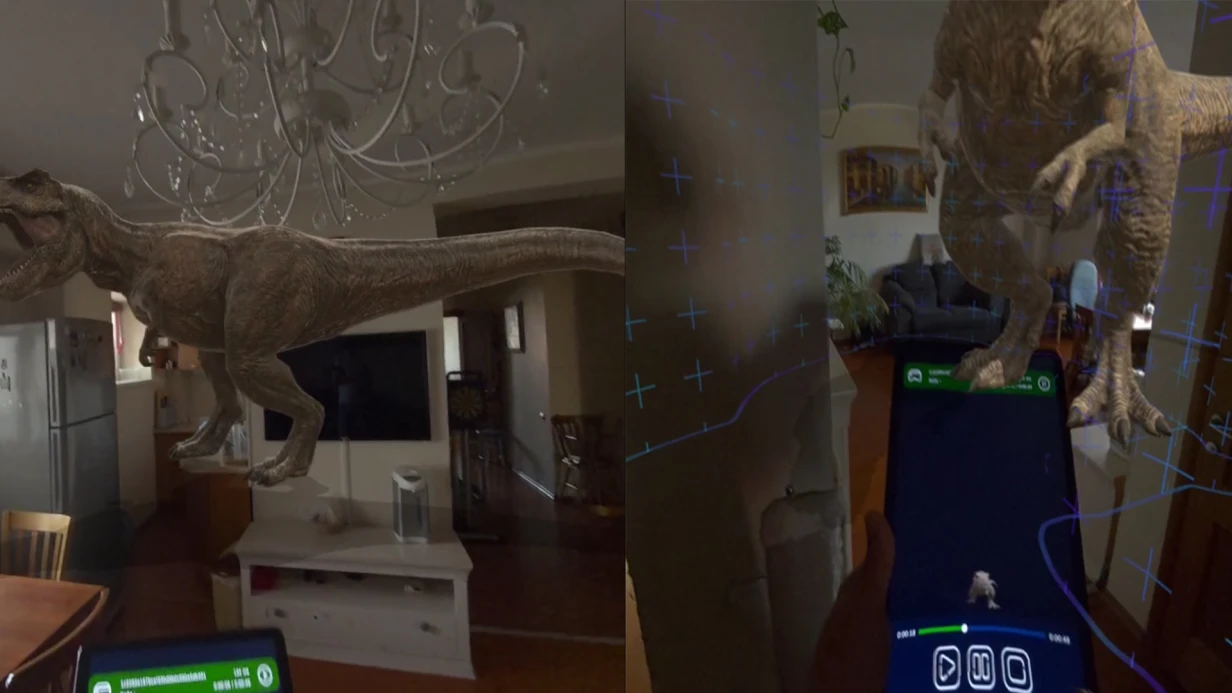
The solution is to bring the page to life. Simply point a smartphone camera at the spread of a textbook or teaching aid — and the material starts moving, showing processes, revealing three-dimensional models.
The student sees what is described rather than just reading an abstract formulation. This format holds students' attention far longer and turns passive reading into active learning.
We create AR printing that enhances existing printed materials without replacing the textbook with a tablet.
It's not a rejection of familiar programs but an important addition: the student gets visual clarity, the teacher gets a live tool, and the client gets a modern product that improves retention and raises the value of your publication in the eyes of schools and universities.
What AR Printing Gives Your Educational Materials
AR printing turns an ordinary page of a textbook or teaching aid into an interactive scene. Instead of a static picture — a three-dimensional model, a short animation, or an explanatory video that launches from a smartphone.
The student stops passively flipping pages and starts interacting with the material — that's the main step toward greater engagement.
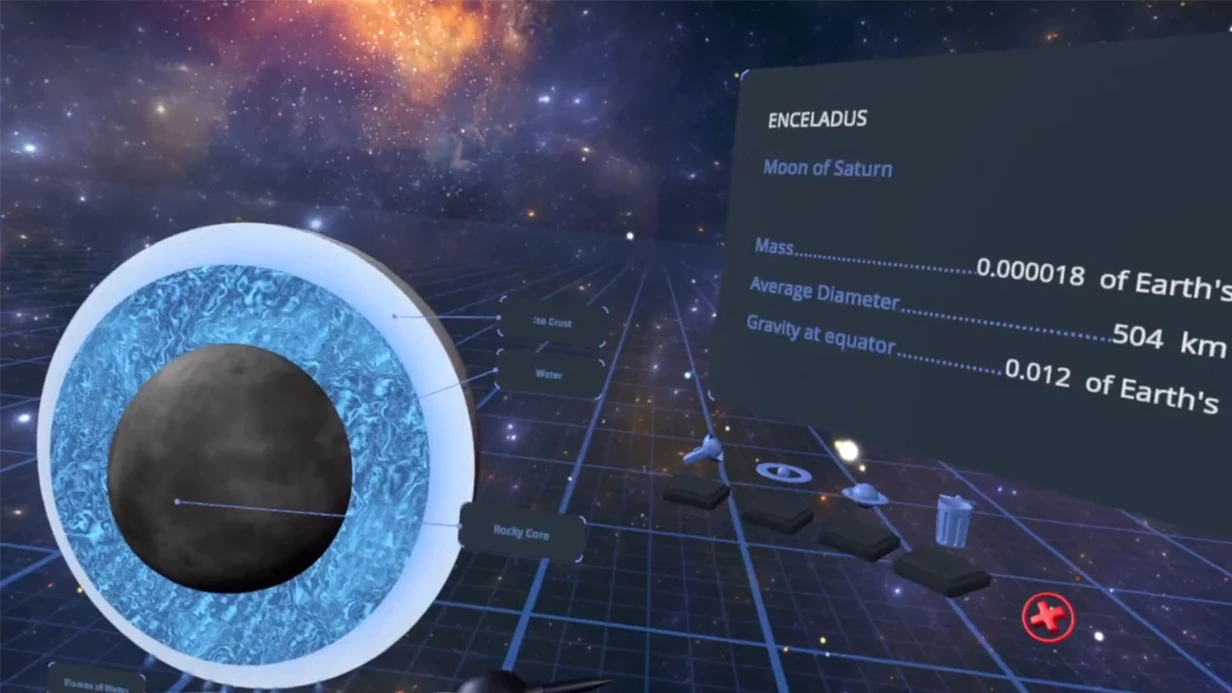
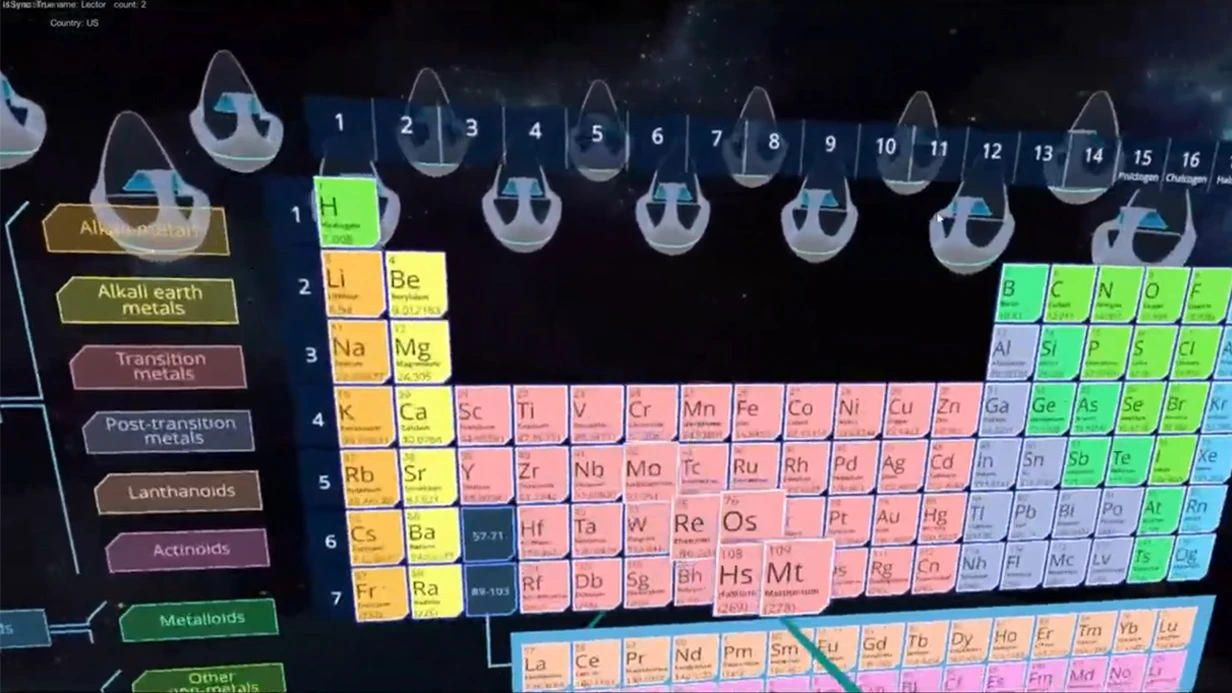
The first result teachers notice is visual clarity. Complex diagrams in anatomy, physics, or engineering disciplines become three-dimensional: you can examine a part from all angles, break down the structure of a mechanism, study a process in motion.
What previously required lengthy explanations and imagination is now visible immediately. This saves class time and lowers the comprehension barrier for students of different skill levels.
The second result is memorization. When a student rotates the model themselves, chooses viewing modes, and repeats the action several times, the information sticks through motor memory.
According to data from our projects for educational institutions, this format improves material retention several times over compared to regular text. The aids are no longer "read and forgotten" — students return to them, show them to each other, and discuss them.
The third benefit is whole-group engagement. Interactive elements spark genuine interest and discussion, which is especially important for blended learning and independent work.
Students are more willing to open a textbook when they know that inside they'll find not just text but a small discovery.
For authors and publishers themselves, this is also a way to collect feedback: you can see which pages and assignments are viewed most often and which sections cause difficulties.
Finally, AR printing makes a publication competitive. When two textbooks on the same topic sit side by side, the one that offers more learning opportunities wins.
Teaching aids with augmented reality pass expert reviews more easily, receive grants, and attract the attention of universities and schools to your brand.
This isn't just a "gimmick" — it's an argument for procurement and a reason for publications in professional communities.
AR Enhancement Formats for Teaching Aids
Augmented reality brings the pages of printed teaching aids to life and turns them into an interactive tool: the teacher explains the material, and the student sees three-dimensional models, diagrams, and processes right on the page.
The key is to choose the right format, since it depends on the audience's age, the learning objective, and the project budget.
| AR Format | Who It's For | What It Gives the Client |
|---|---|---|
| AR marker on the page | Textbooks, workbooks, reference guides | Visual clarity without reprinting the edition: point a smartphone camera — and a 3D model, video, or slides appear. Quick implementation. |
| Educational AR cards | Preschoolers, early elementary students | Game-based learning: characters and animations hold attention and speed up memorization of letters, numbers, and phenomena. |
| Interactive spread | Middle and high school grades, teaching method complexes | Dosed presentation of complex material: videos, diagrams, and graphs appear when pointing at page elements. |
| AR installation | Classrooms, museums, laboratories, exhibitions | Sense of presence and event appeal: you can interact with three-dimensional objects, hold presentations, and defend projects. |
Whichever format you choose, the reader needs no special skills — just a smartphone with a camera. Our team select the format for the specific task and budget: from a simple marker to a full-scale installation.
The result is measured not by technical parameters but by how quickly children absorb the material and how much easier the teacher's work becomes.
How Turnkey AR Printing Development Works
We built the AR printing development process as a transparent roadmap: you always know what's happening with the project and what result you'll get at each step.
For textbooks and teaching aids, it's especially important that the solution works in real conditions — in the classroom and at home — so we include a testing stage with the target audience.
-
Brief — we discuss the goals and scenario: which pages will come to life, who the AR is for, and how it will help in learning. You formulate the tasks, we clarify the details and propose solutions.
-
Concept — we prepare the visual style and interaction logic. We show an example on the actual pages of your publication so you can see the future result before production begins.
-
Approval — we lock in the scenarios, the list of markers, and the timeline. You get a clear project description with no unexpected changes.
-
Implementation — we create the AR scenes and the software shell. We work with proven tools and verify compatibility across different device models so students won't run into issues when launching.
-
Testing — you try the working version on your own devices, and we test it with the target audience. We make adjustments so the mechanics are clear and fast.
-
Launch — we hand over the finished modules with instructions for the publisher, teachers, and students. We advise on how to distribute the AR materials and update them for subsequent editions.
This approach eliminates the main risks: mismatched expectations, lengthy rework, and "surprises" at the final stage.
You control the progress, and we make sure the AR printing actually works in your curriculum and delivers measurable results — student engagement and convenience for the teacher.
What's Included in the Delivery of an AR Project for Your Publication
The delivery of an AR project for a textbook or teaching aid is not "files sent by email" but a complete package that can be immediately embedded in the print run and put to use.
You get everything needed so teachers and students can launch augmented reality without special training or an IT department.
Here is the full checklist of what's included in the delivery:
- AR markers for printing — ready-made layouts that embed directly into the publication's design. They've already been checked for contrast and size, so they're reliably recognized by a smartphone camera.
- The app — branded or under your own brand. Works on major phone and tablet models; the user simply downloads it once. No complicated settings or registrations.
- Teacher's guide — methodological recommendations on how to use AR in class: where to point the camera, what assignments to give, how to fit it into the lesson plan. Saves your time on staff training.
- Content updates — by agreement, we update videos, 3D models, and interactive elements so the publication stays current. You don't need to reprint the run because of new material.
- Technical support — during the launch stage we help with setup, and after the release we answer questions from teachers and readers. You're never left alone with the technology.
- User instructions — a short "how to bring a page to life" guide for students and readers. It can be placed on the cover or flyleaf.
- Activity report — see which sections are launched most often, how much time is spent in the app, and at what stage difficulties arise. This data helps improve future editions.
Delivery takes 2–4 weeks after the layouts are approved — you receive the complete package, all usage rights, and a clear action plan. If needed, we add a training webinar for your methodologist or editorial team so everyone feels confident from day one.
Case Study: How an AR Textbook Boosted Class Engagement
An ordinary textbook struggles to hold a class's attention: static pictures, dense text, and ten minutes later half the students are looking at their phones.
We suggested that one school enhance its teaching aids with augmented reality: point the camera at a page — and a diagram, a 3D model, or a process animation comes to life right on it. No complicated equipment, just the regular tablets already available in the classroom.
After two months of using such a textbook, class engagement grew by 78%: students raise their hands more often, flip through pages on their own, and ask to "see it again." The physics teacher noted that difficult topics — like the structure of the atom — are now explained in one lesson instead of two and are remembered better. In her words, children don't see AR as a game but as a way to understand the topic.
Here's her feedback: "Before, to show a three-dimensional model, I had to take the class to the computer lab or print out pictures. Now I just open the textbook and the kids explore on their own. Even those who usually get distracted work until the end of the lesson."
For us, this project confirmed that AR in education isn't entertainment but a working tool. our team adapts such solutions to a specific curriculum and publisher, and the school gets a complete package with methodological recommendations and teacher training.
Please note: we work with publishers and schools to ensure augmented reality fits into the learning process without adding extra burden on the teacher.
How to Choose the AR Format for Your Educational Materials?
Choosing an AR format for educational materials starts not with technology but with the question: who will use the aid and how? If it's a mass-market textbook for schoolchildren, what matters is ease of launch and compatibility with parents' and students' smartphones.
If it's a teaching aid for educators, what matters is convenience of lesson preparation and the ability to update content without reprinting the run.
For illustrated textbooks and workbooks, formats tied to a page or a separate marker work well: the student points the camera — and gets a 3D model, a video experiment, or an animated diagram.
For teaching aids where material needs to be supplemented as the curriculum evolves, it's better to choose an option with a separate app or online catalog: the same textbook can easily "come to life" again and again, adding new layers without printing a new run.
Budget also determines the format. If the print run is large and keeping the cost per copy low matters, simply scanning a page in the app requires nothing beyond a code on the cover.
If the goal is to create a premium installation for presenting the textbook at an exhibition, a richer format with additional scenes and game mechanics can be used.
It's important to remember: more expensive doesn't mean more effective; the best format is one a student can launch without instructions.
The key is to define the goal upfront: increase engagement, visually demonstrate complex processes, or help the teacher explain a topic faster. The type of textbook will suggest the needed depth, and the budget will determine the way to implement it.
We usually recommend starting with one section or one chapter to gauge student reaction and only then scaling the solution.
We'll help you choose the right format for your textbook, teaching manual, or series of aids: we'll analyze the audience, the usage scenario, and print constraints, and propose an option that solves the task without unnecessary costs. Send us a sample of your materials — and we'll show how AR can work specifically for your case.
Frequently Asked Questions About Implementing AR in the Learning Process
To keep AR from turning into an "expensive toy," the main fears need to be addressed — the fear that it might break, not fit into the curriculum, be too complicated for teachers, or stand out too much in the budget.
We've implemented interactive textbooks and teaching aids in more than 40 schools and publishing houses, so we answer these questions honestly — based on experience, not promises.
What if the AR content doesn't work on students' devices?
We test every installation on a wide range of hardware — from budget smartphones to school tablets. The app automatically adjusts settings for the specific camera, so 9 out of 10 devices launch the scene immediately.
If there's one student left with an old phone, a backup web version is available — it opens in any browser and requires no installation. For the school, this means the lesson won't be derailed by technology.
Is it difficult to integrate AR into an existing curriculum and teaching manual?
No reworking of the lesson plan is needed.
An AR marker is placed on the appropriate pages of the textbook, and the student simply points the camera at the illustration — it "comes to life." The teacher uses the interactive element as a supplement to the explanation, not a replacement.
We provide a short teacher's guide and methodological recommendations for each block — you can integrate it into the lesson as early as the second class.
What if the server goes down or the internet drops in the classroom?
The content loads into the device's memory on first opening, so all 3D models and animations work offline. The internet is only needed for updates and analytics collection.
We host the data on a fault-tolerant server architecture, but it isn't the bottleneck: the database takes up to 100 MB for the entire aid, which is less than a single mobile game.
How much does it really cost to implement AR in a textbook, and will it blow the budget?
The cost depends on the number of "animated" spreads, the level of interactivity, and the print run. We always calculate a "turnkey" scenario: development, hosting, a year of support, and teacher training.
For print runs from 500 copies, the interactive cost per book turns out to be comparable to the price of regular printing — the difference pays off through the increased value of the textbook and the reduced time spent explaining the topic.
What if teachers don't figure it out and stop using AR after a couple of weeks?
We build simplicity into the project scenario: at most one action for the student — point the camera. The teacher doesn't need to learn an interface — it works through the standard camera of a smartphone or tablet.
The package includes a one-page guide and a 3-minute video instruction. We support the implementation, and at the end of the month we send a report on which pages were used most often — it's easy to see the real value.
This approach removes the three main barriers: technical failures, the fear of "hard to implement," and an unclear budget. Instead of an experiment, you get a predictable tool that fits into existing processes and immediately boosts student engagement.The next step is to show the result on your material. Send us a page layout from your textbook or teaching aid — within two working days we'll prepare a demo version with a working AR marker. You'll evaluate the interactivity on your own content before signing any agreement.
Order AR Printing for Your Project
Placing an order for AR printing means getting a complete solution, not just a layout. We handle every stage: from analyzing your educational material to launching an interactive experience that will work reliably on students' and teachers' devices.
After placing an order, you receive:
- An AR layer prototype — you can clearly see how the page will come to life before the final build. Make changes without additional costs.
- Testing on different devices — we verify that the interactive content works correctly on both modern models and older ones, so every user gets the same experience.
- Support with embedding into the textbook or teaching manual — we help adapt the layout to the requirements of the print house and the educational institution.
- Training for your team — we show how to update content, change scenes, and add new pages without involving developers.
- Guarantee of technical stability for the entire usage period — we fix any failures within the agreed timeframe.
- Transfer of all source files — you remain the owner of the AR printing and can develop the project with any contractor.
This approach removes the main risks: you don't have to guess how the interactive content will behave in real use, and you see the result in advance. You can place an AR order at any stage — even if you only have an idea and a couple of digitized pages.
Tell us which textbook or teaching aid you'd like to bring to life — we'll propose a prototype and a testing plan within two working days.