

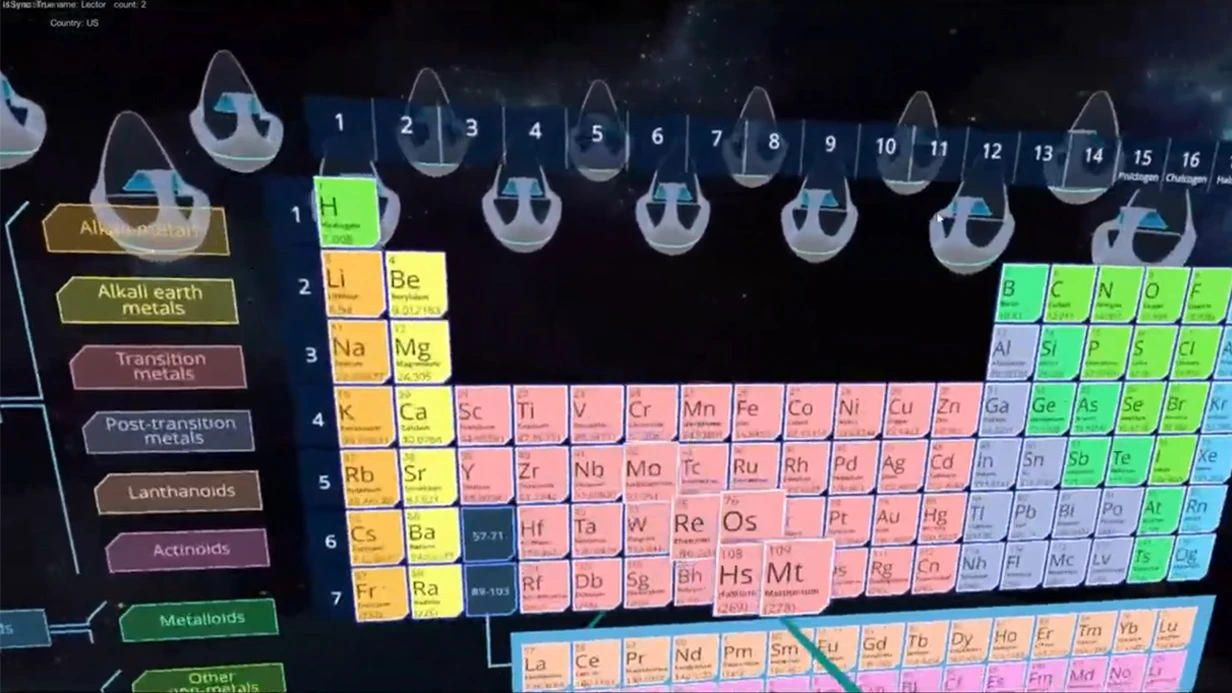
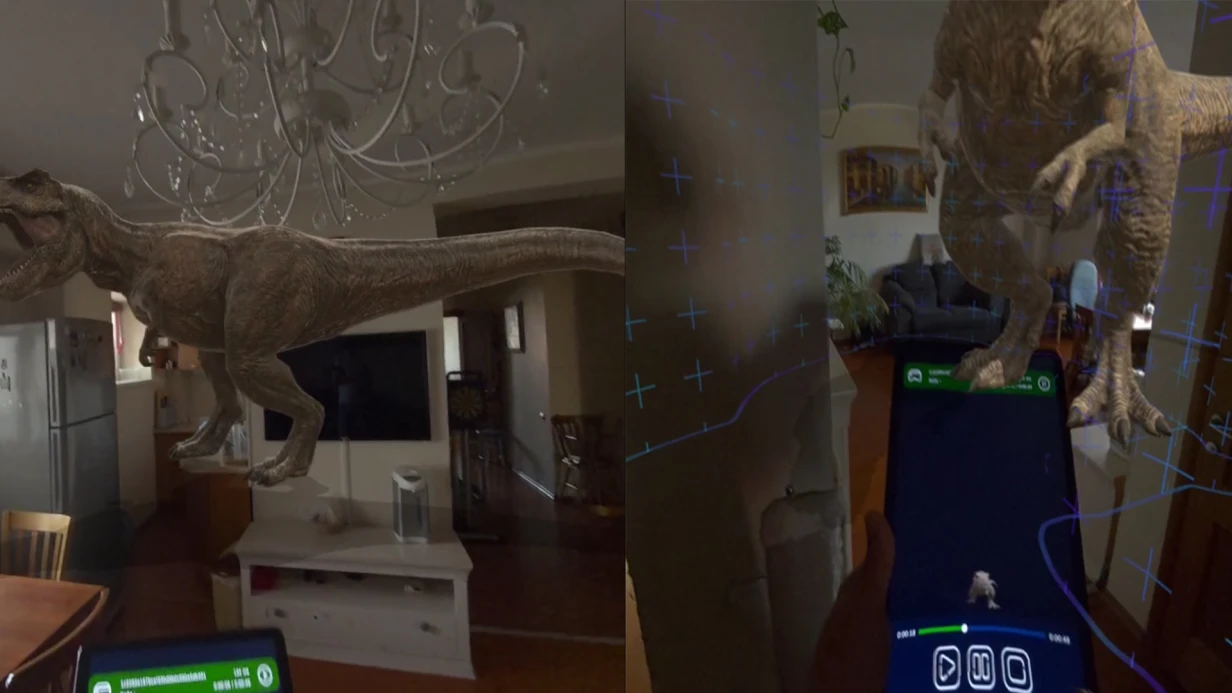
Guests remember only emotions: location-based AR creates them
Guests rarely remember booths and slides, but they always remember what they felt.
Location-based AR turns an ordinary space into a living scenario: visitors point their smartphone camera and discover digital objects tied to a specific point of the venue—this makes them want to follow, explore, and share their impressions.
This geolocation-based augmented reality holds attention many times longer than passively viewing a banner. Every participant gets involved through action: collect artifacts, wake up a character, find a hidden bonus.
Guest engagement becomes measurable—you see how many people completed the route, how much time they spent, and what sparked a lively response.
And emotion is what brings new customers. People photograph and record the most vivid moment, post it on social media—and the brand spreads without additional advertising costs. A memorable brand is built not on a slogan, but on the impression a guest takes away.
We help you design location-based AR for your goal: from scenario concept to on-site launch. You get interactive events that build awareness and grow your participant base long after the event ends.
What you get from interactive installations
Interactive installations change the usual logic of an event: instead of booths to be looked at, you create a space where people participate. The visitor is no longer a passive observer—they try, interact, feel emotions, and become part of the brand's story. This is a fundamentally different level of engagement that stays in memory for a long time.
The first and main benefit is guest emotions. People forget numbers and specs, but they remember that they were interested and had fun. An immersive format holds attention several times longer than a regular presentation or video.
In those minutes, a guest absorbs the brand's atmosphere, builds trust, and forms a positive association. A vivid experience is what gets discussed after the event and recommended to others.
The second benefit is brand awareness and reach. Interactive zones are designed for sharing impressions: guests take photos, record videos, and tag the brand's pages. Each such post is free advertising that extends the audience far beyond the venue.
One visitor with good content can bring dozens of new potential customers. As a result, you get not a one-time spike, but a long-term brand presence in the information space.
The third benefit is leads for your business. A well-designed installation collects not only attention but also contacts. The interaction can be tied to registration, a survey, or a promo code—it feels natural and doesn't annoy.
You get a database of interested people who have already shown activity and are therefore easier to convert into customers. In addition, interaction analytics shows which scenarios resonate and helps improve future campaigns.
The key point is that an interactive installation is not entertainment for its own sake. Every element is designed around a business goal: increasing reach, collecting leads, improving loyalty.
Our team supports the project from idea to launch and helps measure results so you can see a clear return on investment. If you want your event not just to happen but to deliver measurable value—this is the tool that works.
Location-based AR formats for any venue
Location-based AR brings physical space to life: digital objects are reliably "anchored" to real points, so visitors see the magic exactly where you plan it.
The format works for museums, festivals, exhibitions, showrooms, and even outdoor routes—it doesn't require changing infrastructure, only a smartphone or tablet camera.
To help you quickly get oriented, we've gathered typical location-based AR formats and the effect they deliver for business. Venues differ—but the approach is the same: a turnkey scenario that keeps guests engaged and works toward your goals.
| Format | For whom | What it gives the client |
|---|---|---|
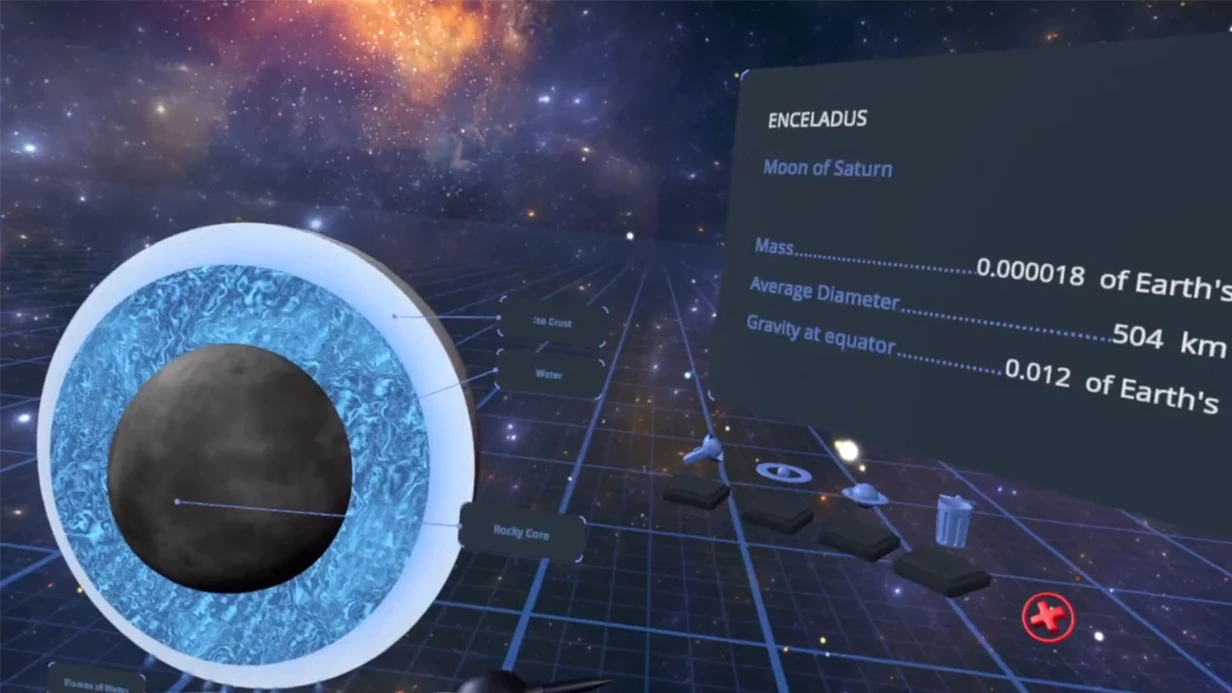
| AR guide through the exhibition | Museums and galleries | Brings static exhibits to life, adds audio and video, increases time spent viewing and repeat visits |
| City AR quest | Festivals and holidays | Distributes guest flows, creates a shared scenario, stretches a walk around the venue to 2–3 hours |
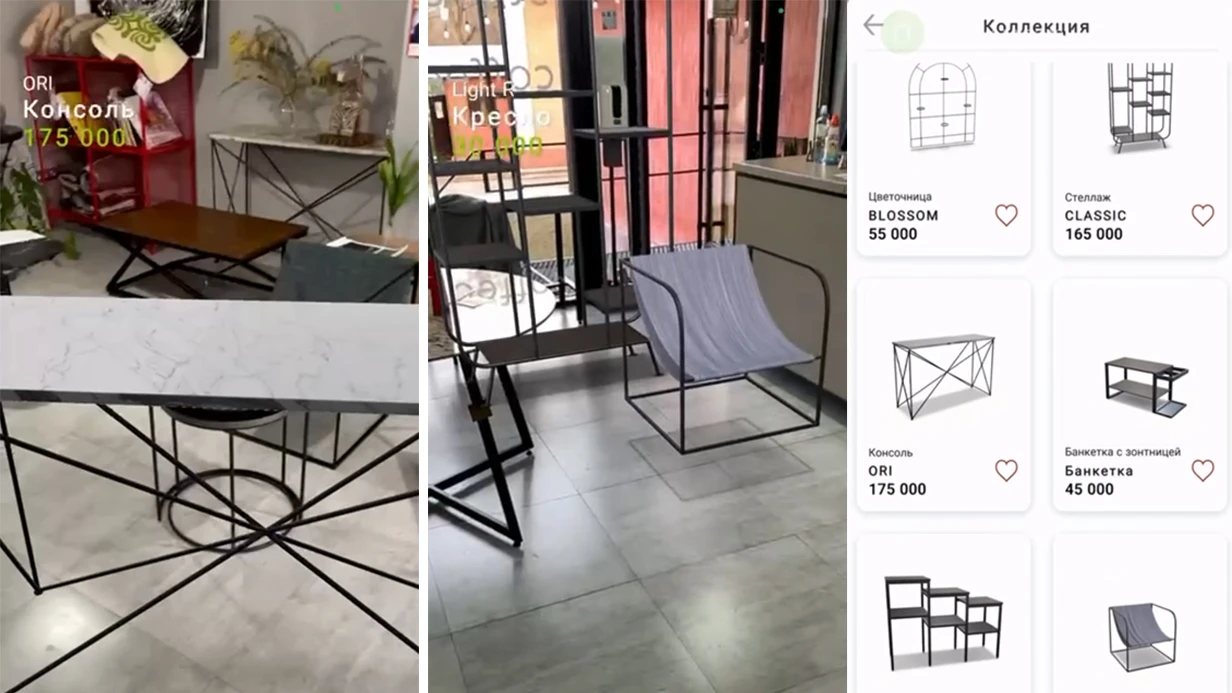
| Interactive storefront | Showrooms and salons | Lets people "try on" a product in augmented reality, encourages photos and contact collection |
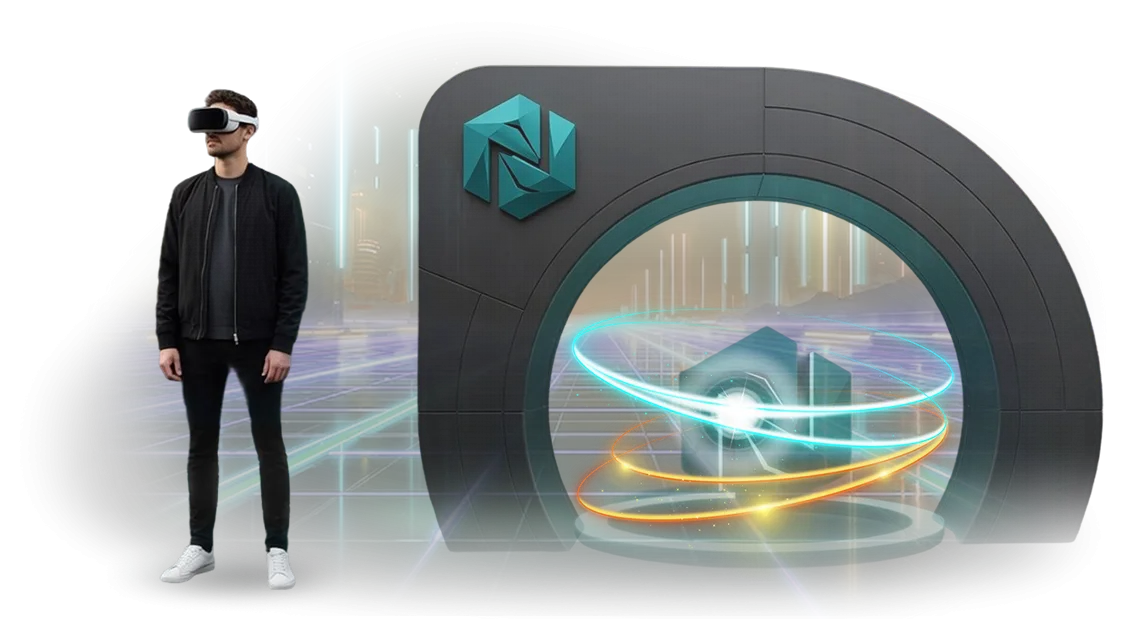
| VR pavilion | Exhibitions and conferences | Draws a queue at the booth, provides vivid emotions and content for social media and press |
AR for museums and VR for exhibitions are just part of the scenarios. For each project, we create interactive displays based on the space and visitor behavior. You get a ready installation format: concept, development, installation, and event integration.
Any of these formats turns visitors from observers into participants—they stay longer, take more photos, and come back more often.
How the project goes from brief to launch
We structure the process so you see results at every stage. No "black boxes": you know what happens when you receive the first materials and how we make decisions. Below is the typical path from brief to installation launch that most projects follow.
-
Brief and immersion in the task. We analyze the goals, audience, and venue specifics. We set priorities: whether it's reach, engagement, or repeat visits. The output is a clear technical specification everyone can work from.
-
Concept and plan. We offer two or three scenarios for using geolocation AR and show how guests will interact with the installation. We estimate the load and timeline for each stage.
-
Approval and budget estimate. We approve the schedule and budget before production begins. You clearly see what you pay for at each step and can adjust the scope without losing quality.
-
Production and assembly. We create a prototype, test the mechanics on real devices, and adapt it to the venue. At this stage we make changes that are impossible to see on paper.
-
Test launch. We rehearse with the team and check stability under a large flow of visitors. We eliminate weak points before the official opening to avoid surprises on event day.
-
Installation launch and VR support. Our engineers are on call on launch day, and afterward we continue to support the project: we update content, monitor statistics, and extend support if the scenario needs to evolve further.
What's included in the delivery and what support is available
You get a complete turnkey solution from idea to launch. You don't need to dive into technical details: we'll prepare the equipment, content, and settings for geolocation AR so the installation runs reliably and attracts visitors from day one.
The delivery package includes everything you need to launch the installation at your venue—at a festival, in a museum, or in an urban space:
- Equipment and delivery package — professional devices selected for your event format. Everything will be delivered, connected, and verified before the start.
- Ready-made AR content — the story and interactive mechanics adapted to your audience. This could be a tour, a quest, a "living" exhibit, or a new product presentation.
- Installation setup — our team arrives on site, assembles the system, configures geolocation, and runs a full test. You get a working system by the agreed deadline.
- Staff training — in one day your employees learn to start and stop the installation, change schedules, and quickly answer visitor questions.
- Warranty and technical support — official warranty on equipment and all work, plus quick help from our engineers throughout the entire service life.
- Clear documentation — short guides for daily use and scenario management, so even a new employee won't be lost.
Installation is carried out according to a pre-approved plan: we take into account the venue's specifics, visitor numbers, and safety rules. On event day you'll get not just installed equipment, but a fully configured scenario.
Staff training is designed so your team feels confident afterward. We show them how to launch different modes, track visitor activity, and solve typical issues without contacting the developers.
The warranty covers the equipment, software, and stable operation of the installation. If any questions arise, our engineers respond remotely or come to the site—depending on the complexity of the task.
Case study: we brought an exhibition to life—results in 2 weeks
Visitors remember emotions, not labels. For the Museum of Urban History, we created a geolocation-based AR tour: digital characters come to life next to exhibits, guide guests through the halls, and tell stories tied to specific locations.
No apps or special equipment required—just a smartphone in the visitor's hand. We built and launched the project in two weeks without stopping museum operations. The exhibition remained unchanged: the entire digital layer was overlaid on the real displays.
What changed for the client
In the first month, over 1,200 visitors went through the installation. Average time in the halls increased from 18 to 42 minutes—people started examining exhibits, discussing stories, and looking for clues to the next hall.
Visitors photographed every scenario and shared the shots—social media reach grew without any ad spend.
On peak days, up to 90 sessions ran in two hours, and not a single phone "froze"—the installation worked steadily with 30–40 people in the hall.
After the visit, 73% of participants left reviews with photos, and every third guest returned with their family within the first week.
The client quickly saw the difference: after a month, they ordered a second phase—an AR quest for the children's program—and then extended installation support for a year.
The project paid off through increased attendance and repeat visits, so the museum plans to expand the format to other halls.
How to choose a format for your budget and goals?
Any installation begins not with choosing the "most expensive" or "trendiest" technology, but with answering the question: what should happen to guests after they leave?
One event just needs to surprise the audience and collect striking photos; another needs to route visitor flows through the halls; a third needs to bring people into a store or showroom. Format and budget follow the goal, not the other way around.
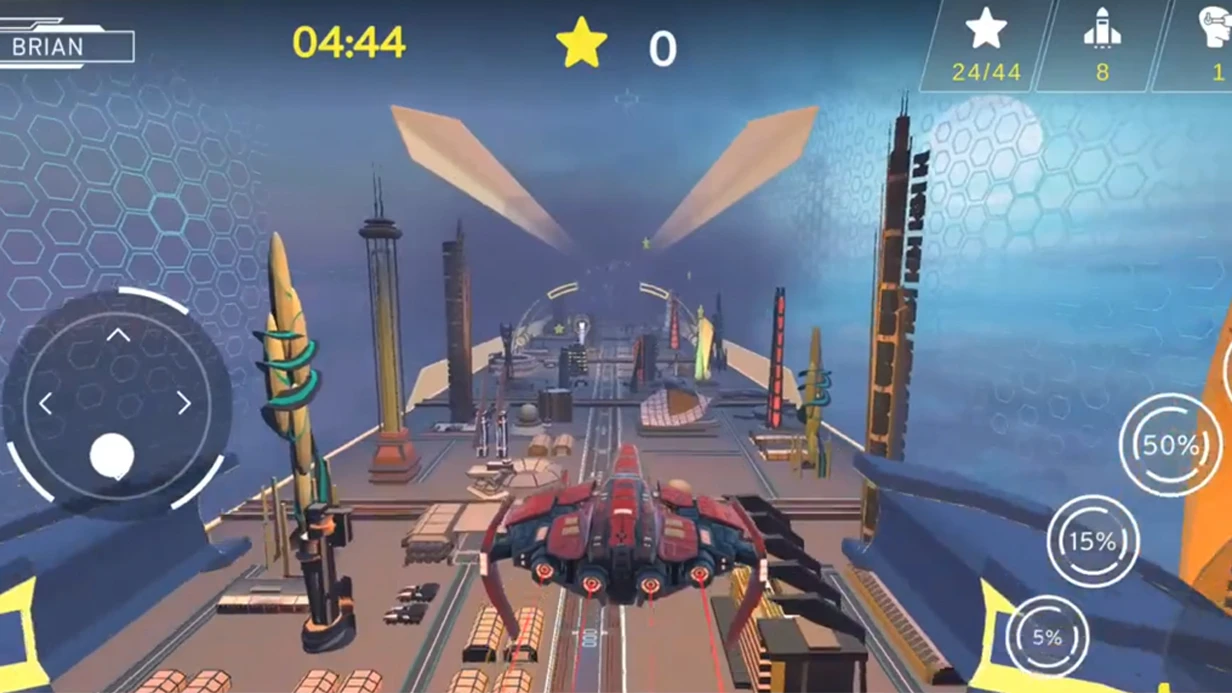
Geolocation AR is especially strong where space and movement matter. An ordinary office or hall can be turned into a playing field without expensive physical scenery—guests turn on their smartphone camera and interact with their surroundings.
This is convenient for streets, parks, festivals, and shopping centers: people choose their own route, so they stay inside the scenario longer.
The price of AR here directly depends on the scale of the location and the complexity of the scenario, but the investment pays off through organic reach: every participant shares their impression on social media.
Another common request is a compact installation for a museum or brand booth where visitors come one by one or in small groups. Here, the depth of the impression matters more than the number of simultaneous users.
Accordingly, the budget shifts from development to scenario and content: the question is not "how many objects can be seen," but "what emotion a person takes away." If the desired result is navigation and information, there's one format and one price; if it's emotional immersion, there's another.
To avoid overpaying, evaluate three things before the brief: how many people should pass through the scenario per hour, what state they're in (rushing past or already stopped), and what result can be measured.
When guests use their own phones, we see real engagement: how many became participants, how many reached the finale, how many returned. These numbers make it clear whether the budget actually worked—or just left an "effect of presence."
Our team will recommend a format for your goals and budget, offering two or three options with different price points and outcomes. You're not choosing a technology—you're choosing how you want your audience to behave.
Frequently asked questions and client concerns
Before launching a geolocation AR installation, clients have the same concerns: will we make the date, will the equipment break down in the middle of the event, is it safe for guests, and will the story fit the venue. We answer these questions—briefly and to the point.
What if the installation breaks down during the event?
We provide spare kits and backup scenarios. Engineers monitor operations remotely and, if necessary, come to the venue to quickly restore everything. For your team, this means minimal risk and maximum confidence during the event.
How long does development take?
A basic AR game for an event launches in 2–3 weeks; a complex branded story takes 1.5–2 months. The timeline is fixed in the contract after the brief and a test at your venue. If we start early, we can do everything without rushing and with the right quality.
Is it safe for guests?
Visitors use their own smartphones; they don't download or install anything. The installation requires no physical contact—just point the camera at the activity zone. We take guest flows into account so routes don't cross or block movement.
Do you adapt the installation to my venue?
Yes, that's a mandatory step. We visit the site, assess the space, light, Wi-Fi, and GPS signal, and then configure the scenario. We add virtual markers so it works even indoors with unreliable internet. In the end, you get a story created specifically for your space.
Order an installation today—what happens next?
Immediately after you submit a request, you get a personal manager who guides the project through launch. We understand that you don't need "technology for technology's sake," but a result—guest impressions, social media reach, and repeat visits. That's why the first steps take just a few days.
Here are our next steps after your request—a process honed across dozens of projects.
- Consultation. We discuss the task, venue, and audience. We recommend which format—geolocation AR, virtual try-on, or interactive display—will deliver the maximum effect.
- Brief and estimate. We set goals, timeline, and budget. We send a transparent cost estimate within 1–2 business days, with no hidden costs.
- Prototype and approval. We show the scenario, visual style, and mechanics. You provide feedback, and we incorporate it—before development starts.
- Development and testing. We build the installation and test it on different devices under conditions similar to your venue.
- Launch and support. We bring the equipment, set everything up on site, train your team, and stay in touch on event day.
- Post-event analytics. We share engagement numbers: how many guests used the installation and how long they interacted. Based on the data, we evolve the project further.
This way, you know the stages, timeline, and budget in advance. Ordering an installation today means getting a clear plan and confidence in the result.
To speed up project kickoff, prepare an approximate event date, venue, and expected number of visitors. We'll take care of the rest.