

Developer Conference: How to Stand Out Among Dozens of Booths?
A developer conference is dozens of booths and information noise. Your booth can easily get lost: attendees walk past and an hour later no longer remember what they saw.
And the goal of the organizer or brand is to stand out at the conference, be remembered, and make useful contacts.
Ordinary banners and giveaways don't hold the attention of a technical audience. Developers value interactivity and the chance to try the technology themselves. That's why a conference booth should be a point of attraction, not just another poster.
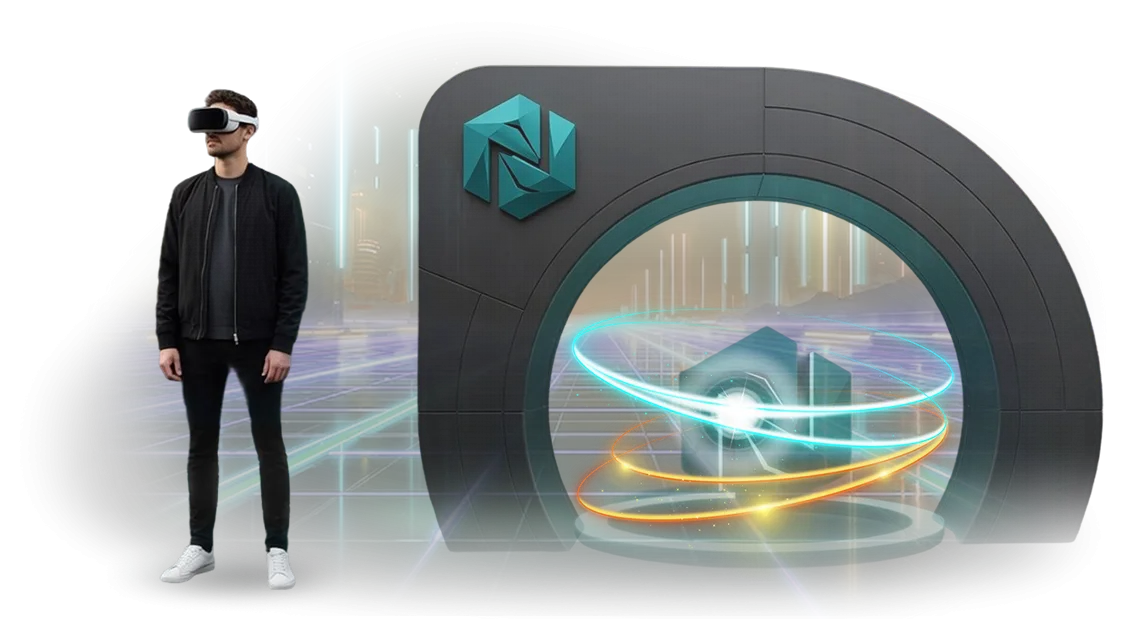
VR and AR installations turn the booth into an immersive space where the attendee becomes part of the product. They stay for 5–10 minutes, are amazed, and share the experience on their own. That's real attendee engagement.
The unique experience extends beyond the event: social media posts and hallway conversations keep working for the brand after the conference. For the organizer, this is an argument for sponsor renewal and a status of an event where technology has a place.
We specialize in VR/AR installations for events and brands — from idea to equipment and on-site operation. We'll help make your booth visible and effective, leaving you only to talk with guests. We solve the challenge of standing out at a conference, and we do it through the right solution.
What a VR Installation Brings to Your Event
At a developer conference, attendees' attention is the main resource. In one day, they pass dozens of booths, listen to talks, and by evening barely remember who showed what.
A VR installation breaks this routine: instead of talking with a consultant, a person steps into another world where they can touch, try, and film everything on their phone. That's the experience people discuss in the hallways and remember after the event.
Such immersion keeps guests at the booth several times longer than a casual glance at a display. While a person goes through a short VR scenario, the team manages to show the product, answer questions, and unobtrusively collect contacts.
It's not just entertainment but a full-fledged communication point with an interested audience that has already shown interest through its actions.
Then social media comes into play. Guests record videos from the virtual space, post stories, and tag the brand's page — so the event keeps working for another week after the conference ends.
Each post boosts brand recognition among other developers and clients who weren't at the event and brings free reach without additional ad spend.
Finally, a VR booth helps collect contacts. A well-thought-out scenario ends with a form where the guest leaves an email for a result or bonus, and the organizer gets a base for future mailings.
Combined with a vivid impression, this turns one-time interest into long-term product attention and provides clear ROI numbers for the booth.
That's why we build installations on professional equipment and tailored to the specific event's goals: so that in one day you get a memorable experience, online reach, and a lead base.
If you'd like to discuss a VR booth for your conference — write to us, we'll show examples and calculate a format for your goals.
VR Installation Formats: How to Choose Based on Your Goal
There is no one-size-fits-all solution: virtual reality at events solves different tasks — from loud promotion to employee training.
So before launch, it's important to understand what exactly the interactive zone should do: attract attention at a developer conference, effectively showcase a product, or generate social media reach. The format depends on this, not the other way around.
Which VR Booth Format to Choose
| Format | Who It's For and Why | What It Gives the Client |
|---|---|---|
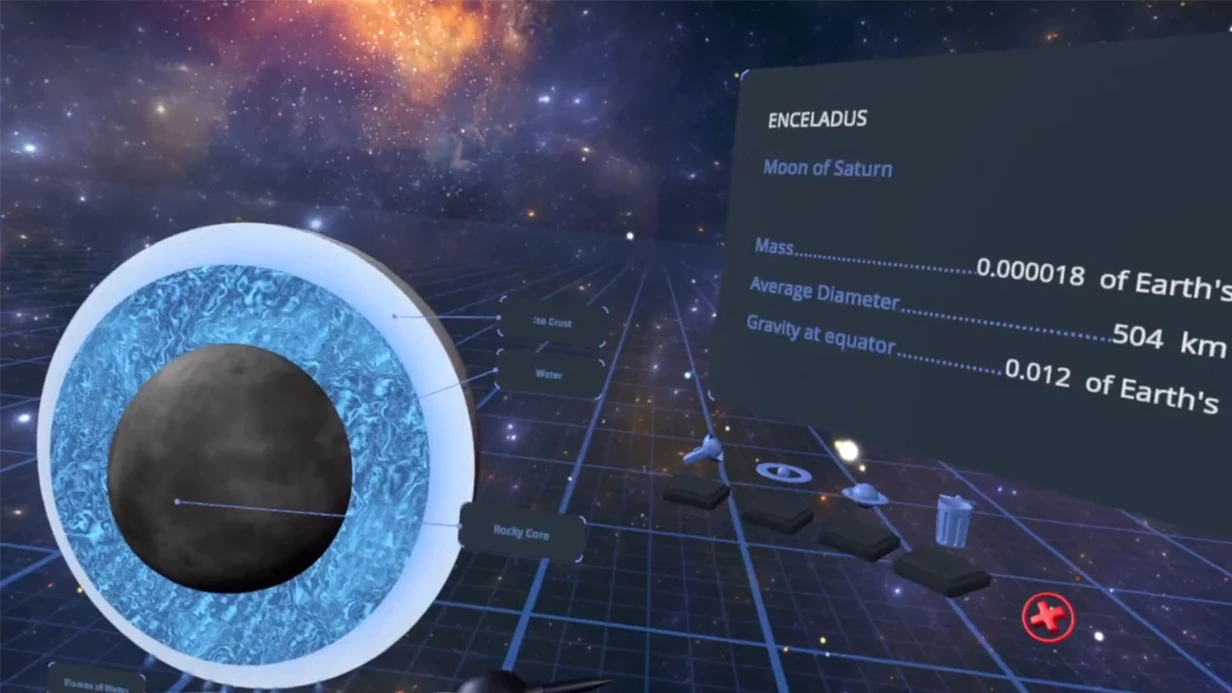
| Individual VR Session | Product presentation, detailed demonstration of solutions, working with an expert audience | The guest stays one-on-one with the product for 5–7 minutes, has time to dive into details, and asks smart questions — such contacts are more valuable than superficial ones. |
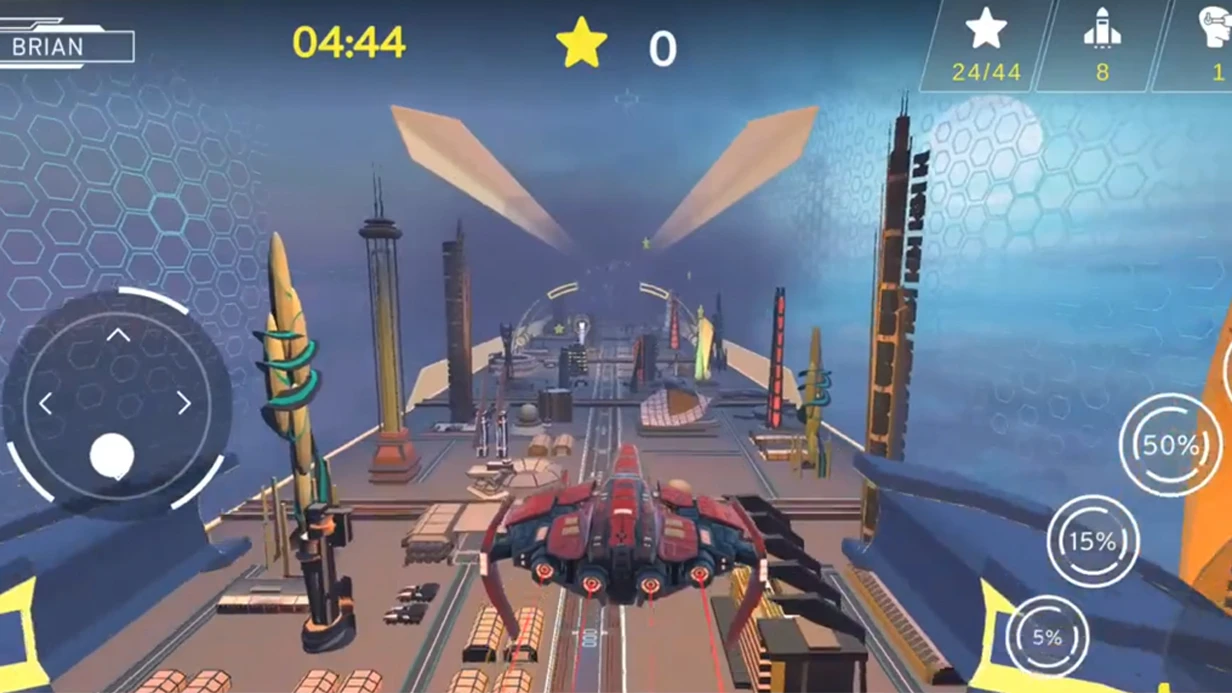
| Multiplayer VR Zone | Entertainment, attracting attention, creating lively buzz | The competitive format draws a line, and spectators around it boost interest in the brand even before they themselves put on a headset. |
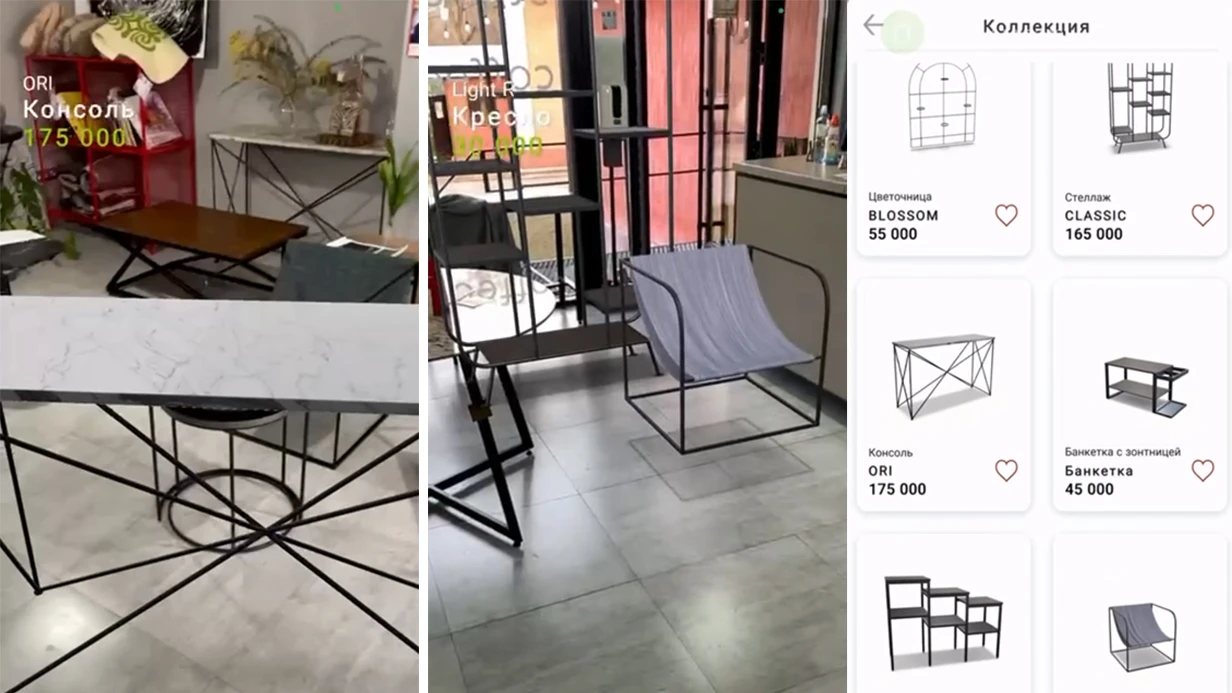
| AR Mask or Interactive AR Zone | Social media promotion, viral reach, working with a young audience | Participants try on virtual objects and share photos in their own accounts, so reach continues to grow after the event ends. |
| VR Quest or Team Scenario | Training, team building, team cohesion | Information is absorbed through action rather than slides — employees remember material better and enjoy the process. |
If the main goal is to showcase a complex product at a developer conference, choose individual sessions: they provide deep engagement and live dialogue with specialists.
If you need wide recognition and emotions — go with multiplayer or AR effects, they engage passers-by more easily.
We help find a balance between the goal, the venue, and the audience, and then take over the entire launch — from scenario and content development to equipment and on-site support on the event day.
For VR booth formats, this means you get not a 'pricey toy' but a working interactive zone that solves a specific business task.
Developing a VR Booth for a Developer Conference
Developing a VR booth for a developer conference is a project where every detail affects attendees' experience. We've structured the process so that you see results at every step, not just at the finish. Below are the VR booth development stages your project goes through from idea to VR zone launch.
-
Brief and goals. We gather requirements: who your audience is, why you need the booth, what venue constraints exist. We define success criteria — you get a clear brief and understanding of the result.
-
Scenario and concept. We propose the installation idea and scenario: what the visitor sees, how long the session lasts, and how the booth fits into the program. We align the creative part before work begins.
-
Plan and estimate. We prepare the technical plan, equipment list, and precise schedule. You know the budget and timelines in advance — no surprises or hidden fees.
-
Development and assembly. We create content, configure the system, and build the booth at our facility. We run tests and show you a working sample before going on-site.
-
Trial run. We come to your venue and test all scenarios under real conditions. We make adjustments so there are no glitches on the conference day.
-
On-site operation during the event. Our staff manages the VR zone: they greet guests, assist with equipment, and handle issues promptly. You focus on the program and your guests.
-
Analytics and results. We provide statistics: number of sessions, average time, feedback. We recommend ways to use the booth after the conference and remain on support.
This installation creation process makes the VR zone launch manageable and predictable — you get a turnkey result right on schedule.
What's Included in a VR Booth Delivery: Full List
When you order a VR booth, it's important to understand exactly what's included in the contractor's work. You get not just equipment but a full service: from scenario concept to on-site technical support. Below is the delivery list we formalize in the contract.
- Virtual reality equipment: headsets, controllers, and computers configured for your scenario. All devices are checked before departure to work without failures on the event day.
- Custom content: an interactive presentation, training quest, virtual tour, or simulation — tailored to your event or product goal.
- Zone installation and design: stands, background structures, hidden wiring. The booth looks neat and fits the overall event style.
- Logistics and preparation: we deliver the equipment, set it up, and test it a few hours before opening. You don't need to hire separate contractors for assembly.
- On-site support during the event: a technical specialist stays on site for the entire time the booth is operating. They resolve issues, replenish sessions, and manage the queue so guests don't have to wait.
- Training for your staff: your team learns to greet guests, conduct briefings, and manage session flow — booth management doesn't depend on the contractor.
- Backup equipment and quick replacement: if a device fails, we'll swap it out without stopping the zone's operation.
- Warranty on the entire set: if technical issues arise, we respond per the contract and resolve them as quickly as possible.
We document the list, deadlines, and responsibilities of both parties in the contract. You know exactly what you're paying for and don't need to coordinate multiple contractors. Your job is to welcome guests and watch their reactions; we handle the technical side entirely.
Case Study: How a VR Booth Doubled Attendee Time at the Expo
Challenge and Approach
A developer conference is an audience that's hard to hold at a booth. Developers come for talks, rarely approach promoters, and don't read posters, but they do try new technologies with interest.
At the major industry conference DevMeet, we installed a VR installation that turned an ordinary expo into a place people kept coming back to.
The goal wasn't entertainment but a measurable result: to hold attendees at the booth longer and collect quality contacts.
We created a 3–4 minute scenario — the guest solved a small task in a virtual environment with a digital mentor, and at the end could leave a contact to receive a recording of their immersion. That became the motivation: people wanted the video, so the contact was intentional.
Numbers That Convinced the Client
Measurements showed that attendee time at the booth doubled compared to neighboring exhibits. Instead of the standard 15–30 seconds of walking by, people had full sessions, called colleagues over, and returned again. The booth became a conference attraction, not just another exhibition module.
The key business metric: 85% of booth visitors left their data. These aren't random business cards but interested professionals who themselves wanted further communication with the brand.
Organizers got reach without expanding the floor area and additional content for social media — participants readily shared recordings of their sessions.
The next year, the client returned and ordered three VR zones with different scenarios. For us, such a repeat contract is the best indicator: a VR installation pays for itself not as an 'attraction' but as a working tool for collecting contacts and audience time.
How to Choose a VR Format for a Specific Event?
Choosing a VR format starts not with equipment but with the event's goal. If you have a developer conference — the audience is tech-savvy and interested in putting on a headset and exploring the scenario themselves.
For a museum exhibit or brand presentation, a short moderated story with a host works better. Ask yourself: what should a person take away after four minutes — delight, product understanding, or just a vivid photo?
A simple criterion helps understand whether VR is right for your event: guest flow and time.
At a conference with four hundred attendees, one station with a ten-minute scenario will create a queue; it's better to set up two or three stations or shorten the scenario to three minutes.
At a private event with twenty guests, on the contrary, you can offer a full individual session — it will become the centerpiece of the program.
The cost of a VR installation depends not on 'having VR at all' but on configuration: number of stations, rental duration, graphics complexity, and staffing.
So don't start with the question 'how much does VR cost'; start with event parameters — zone area, operating hours, visitors per hour. We can estimate the budget in one day and propose a solution that pays off through guest interest and subsequent mentions.
Ultimately, the choice comes down to three questions: what should the visitor feel, how many people need to pass through, and what budget is justified by the task scope.
Describe your event, and we'll recommend a format — from a compact VR booth to a smartphone AR zone — along with a cost estimate and logistics plan. It's a no-obligation consultation, but it's exactly what helps you avoid overpaying and missing the mark on the impression.
Common Organizer Concerns: Answered in Advance
Conference organizers rarely doubt the value of a VR zone — they worry about its reliability. What if equipment fails at the peak of the event? What if we don't prepare in time? These concerns are understandable, so we address the key questions in advance.
Timelines: a standard VR booth is ready in 2–3 weeks, including scenario development and a test run. For tight schedules, there's an express format for a welcome VR zone — from five business days. We do everything remotely and deliver an already tuned setup.
Complexity: you don't need to understand the technical side. We handle equipment, installation, launch, and support — from the outside it looks like 'just pressed a button.' The team stays nearby while the venue is running, so guests won't be left without help.
The biggest fear is sudden failure in the middle of the event. Here's our honest answer:
What happens if VR equipment breaks during the conference?
Each booth has a backup kit: while one is being used by guests, the second is kept in reserve at hand. If the main device fails, the engineer switches the stream within a couple of minutes — visitors won't even notice a stop.
Additionally, every installation goes through a two-day stress test before your event. We rehearse 'heavy load' demo scenarios: long sessions, peak queues, and restarts without data loss. That's why at conferences our zone runs uninterrupted from opening until the final talk.
The statistics confirm this: in ten years of work, we've never had an event cancelled due to a VR failure. And if force majeure does happen, we'll refund the rental cost and offer a compensation format — for example, a free extra session at the next event.
Put the guarantees in the contract before work begins — that way you get not just a promise but official commitments. And we'll calmly prepare a VR booth that will become the center of attention at your conference.
Get a VR Booth Quote for Your Event in 1 Day
So you don't have to guess whether VR fits your event, we're ready to prepare a VR booth quote in one business day. You send us the task, and the team selects suitable formats and prepares an estimate for your budget.
The quote includes:
- Analysis of your event: format, venue, visitor count, and goals — we match VR to the event, not the other way around.
- A selection of 3–5 VR installations: from compact zones to large-scale immersive shows, with an explanation of why it will work for you.
- Estimate calculation: equipment rental, installation, technical support, staff — no hidden fees or fine print.
- Examples of similar projects: photos and case studies so you can see what it looks like in real life and how guests react.
- Placement recommendations: choosing a spot in the hall, queue flow, and required space — so the VR zone enhances the experience rather than creating chaos.
- A realistic launch plan with dates: when we start preparation, when installation is needed, and when equipment arrives on site.
The VR booth quote is completely free and doesn't obligate you to order. If you approve the project, we take on turnkey implementation: from content development to launch and technical support on the event day.
Leave a request — within one business day we'll send you a selection of formats, an estimate, and project examples. You can order a VR installation for your next launch right now: just write when the event is and how many guests to expect, and we'll start the calculation.