

A Medical Equipment Exhibition Without VR: The Booth Loses Visitors
Visitors come to a medical equipment exhibition to walk through dozens of booths in an hour and figure out who can actually solve their problem. Attention scatters: identical banners, brochures, and tired salespeople blur into one continuous stream.
A booth without a strong visual anchor lets exactly the people ready to discuss a purchase walk right past.
The result is that the participation budget works to no effect. The flow goes to neighboring booths, where visitors can not only see equipment but also have a live hands-on experience with it.
Medical technology is hard to demonstrate in an exhibition format — it is not always possible to bring it, turn it on, and let people touch it.
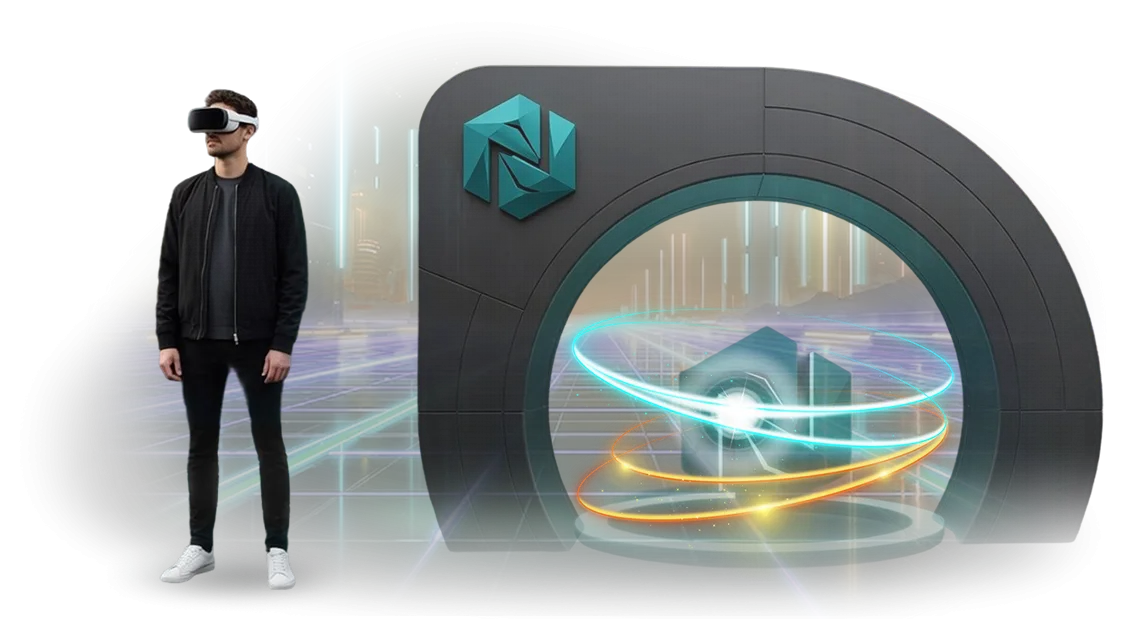
A VR booth solves that: it immerses the visitor in a product usage scenario, holds them at the booth for several minutes, and turns collected contacts into warm leads at the exhibition.
When visitors control the process themselves — exploring equipment in detail, seeing it in action, comparing features — they remember exactly your brand. This works better than any verbal pitch: people leave with an emotion and a concrete understanding of the solution’s value.
Competitors remain in the “one more booth with brochures” zone, while you get quality dialogue with your target audience.
We help close that gap: we design VR booths for the exhibitor’s goals — from concept to launch on-site.
You get not “technology for technology’s sake,” but a tool that stops the flow, engages visitors in interaction, and fills the funnel with leads at a medical equipment exhibition.
What a VR Installation at an Event Delivers: Impressions and Leads
Visitors to medical equipment exhibitions are overloaded with information: dozens of booths, presentations, and handouts. A regular booth holds attention for a couple of minutes, then guests move on to competitors.
A VR installation turns your booth into a center of attraction — people stop here, examine the product, and willingly leave their contact details. Our team develop such solutions so that you get not just a “wow effect,” but measurable business value.
What a VR booth at an event delivers:
- Visitor engagement. Instead of passive viewing — participation in a scenario. Within a few minutes, the visitor “tries on” your product, sees its advantages, and shows interest on their own. This removes barriers and increases the time spent talking with a brand representative.
- Brand memorability. A unique scenario creates a vivid association with your company. After the exhibition, attendees remember exactly your booth, discuss it on social media, and come back to you on the next purchase cycle.
- Measurable leads. The installation records every guest’s actions: interest in specific equipment, interaction time, desire to get a consultation. You receive a structured database for your sales team — not just a list of contacts, but data about intentions.
- Media and blogger hooks. An unusual format always attracts the attention of press and industry reviewers. These are additional brand mentions that keep working long after the exhibition ends.
The bottom line: a VR booth pays off not only in image terms, but also in real agreements. Tell us about your exhibition — we will select an interactive scenario to match your goals and budget.
VR Booth Formats for Exhibitions: Turnkey or Scenario
At a medical equipment exhibition, visitors pass dozens of booths in a couple of hours. To make them stop at yours, you need a VR booth that solves a specific problem: surprise, educate, or collect contacts. We break down three core formats — from image-oriented to applied.
| Format | For whom | What it gives the client |
|---|---|---|
| Image-oriented VR booth | Brands that want to stand out | Engages visitors, creates a “wow effect” and a photo opportunity, increases time spent at the booth |
| Contact collection zone | Medical equipment sales departments | Runs an interactive presentation after which the visitor leaves their data — a base of warm leads |
| Virtual equipment tour | Companies with large-sized equipment | Shows machines in operation, in cross-section, and in complex scenarios that are impossible in an exhibition hall |
The image-oriented format is about reach and recognition. The virtual tour is about trust: a physician sees the machine from the inside, understands ergonomics and application scenarios. And the contact collection zone turns VR into a working tool for the sales department.
If you already have a ready-made VR scenario, we will deliver it turnkey. If not, we will propose our own based on your tasks and budget. In both cases, you get a booth that works for results: more attention, more conversations, more contacts.
How a VR Booth Project Works: From Brief to Launch
Most guests remember not the exhibits, but the experiences. A VR booth at a medical equipment exhibition solves two tasks at once: it draws attention to your booth and helps visitors “touch” a product that is difficult to show live.
To deliver exactly that result, we have built a process in which every stage is transparent for the client. You always know where the project stands, what is happening, and when the booth will be ready to operate.
Key project stages:
-
Brief and task. You tell us about the event goals, audience, and product. We ask the right questions and determine which VR scenario will help visitors best understand your offering. We lock in timelines and budget.
-
Concept and scenario. We propose an idea that fits the event logic and solves the booth’s task: training, product presentation, or a visual demonstration of equipment in operation. We send a scenario description and visualize how it will look.
-
Approval. You submit revisions, and we refine the scenario and visuals. At this stage, you see the full picture before production and understand what result you will get.
-
Production. We build the installation: develop virtual scenes, prepare the hardware and the software side. In parallel, we create an installation plan so that integration into your booth goes smoothly.
-
Installation and setup. We arrive at the venue in advance, assemble the booth, calibrate the equipment, and run test sessions. We check the scenario top to bottom so that everything works perfectly on opening day.
-
Event launch. Our specialists stay with you throughout the exhibition. We manage the process, monitor the equipment, and assist visitors — you calmly handle negotiations instead of technical details.
-
Support and feedback. After the event, we hand over usage statistics: how many people completed the scenario and how long they spent in VR. Based on this data, you can measure the booth’s effectiveness and plan the next activities.
This approach has been proven across dozens of projects for medical and technology brands. We work remotely with any venue in the country — and we travel on-site for installation and launch.
Bottom line: you get a working tool, not a “project in development.” A booth that attracts visitors, presents the product, and creates a reason to talk with potential clients long after the exhibition is over.
What Is Included in the Delivery of a VR Installation for a Booth
For a medical exhibition, a booth must work without failure from the first minute. That is why the delivery package is not just a set of equipment, but a fully configured turnkey solution.
You will not need to find subcontractors, figure out settings, or explain to technical specialists what the brand needs — everything is already packaged into one bundle.
| Block | What is included | What it provides |
|---|---|---|
| Equipment | Headsets, controllers, computing units | Guests go through the scenario without waiting or queues |
| Content | VR demonstration of your medical equipment | Visitors see the product in action and remember its advantages |
| Scenario | Interaction logic, prompts, timing | The user gets oriented in 30 seconds without an instructor’s help |
| Installation and dismantling | We bring, set up, configure, and collect | Your team handles only the exhibition, not the logistics |
| Technical support and training | On-site engineer and staff instruction | Equipment works all days, employees confidently assist guests |
In short, the VR booth includes five mandatory blocks, and each is customized for your task. The delivery package also includes:
- Delivery and installation of the entire zone before the exhibition opens.
- Writing a scenario “from first touch to contact with a manager.”
- Development of VR content based on your materials and instructions.
- Training for your staff: greeting guests, assistance, and handling objections.
- Daily technical support for the duration of the exhibition.
- Insurance and fast equipment replacement in case of force majeure.
- Dismantling and removal of equipment after the event.
Technical support works on-site and online — so the booth delivers results every hour of the exhibition, without downtime and without extra questions for your team.
Case Study: A VR Booth Drew a Queue and Generated 400 Leads at a Forum
At an industry medical equipment exhibition, competition for attention is fiercer than in any other niche: hundreds of identical booths, tired visitors, and a strict time limit for each person.
The vast majority of guests walk past displays, collect brochures, and leave without sharing contacts. A classic booth is a static image that does not hold attention for more than a couple of seconds.
Then our team proposed to a medical equipment manufacturer to completely flip the logic of exhibiting. Instead of the usual posters and monitors — an interactive VR zone where every visitor could see the machine’s operation “from the inside,” from a physician’s point of view.
Soft lighting, carefully designed sound, and a full-immersion effect did their job: guests lined up on their own before the forum even officially opened.
The results exceeded the client’s expectations. Over two days of booth operation, the system recorded more than 900 unique sessions — even though many visitors returned again with colleagues.
The average attention retention time was 4 minutes, which is 10 times longer than a regular booth with promotional printed materials.
But the main thing is leads. At the exit from the VR zone, visitors went through a short registration that collected their contact details in exchange for full access to the demo and a consultation with a specialist.
In this way, we collected more than 400 targeted contacts — physicians, purchasing specialists, and clinic executives who already knew the product “from the inside” and were ready for a substantive conversation.
A month later, the client came back to develop a second booth for another exhibition. As feedback showed, the VR format allowed them to reduce spending on renting additional floor space and paying promotional staff, while at the same time raising the quality of inbound inquiries.
For the medical industry, where trust in equipment is the decisive factor, an “inside” experience proved more powerful than any brochures or presentations.
How to Choose the Right VR Installation Format for Your Event Task?
Choosing a VR installation format starts not with equipment, but with the event’s goals: attract maximum visitors, show the product in action, or train people to work with it.
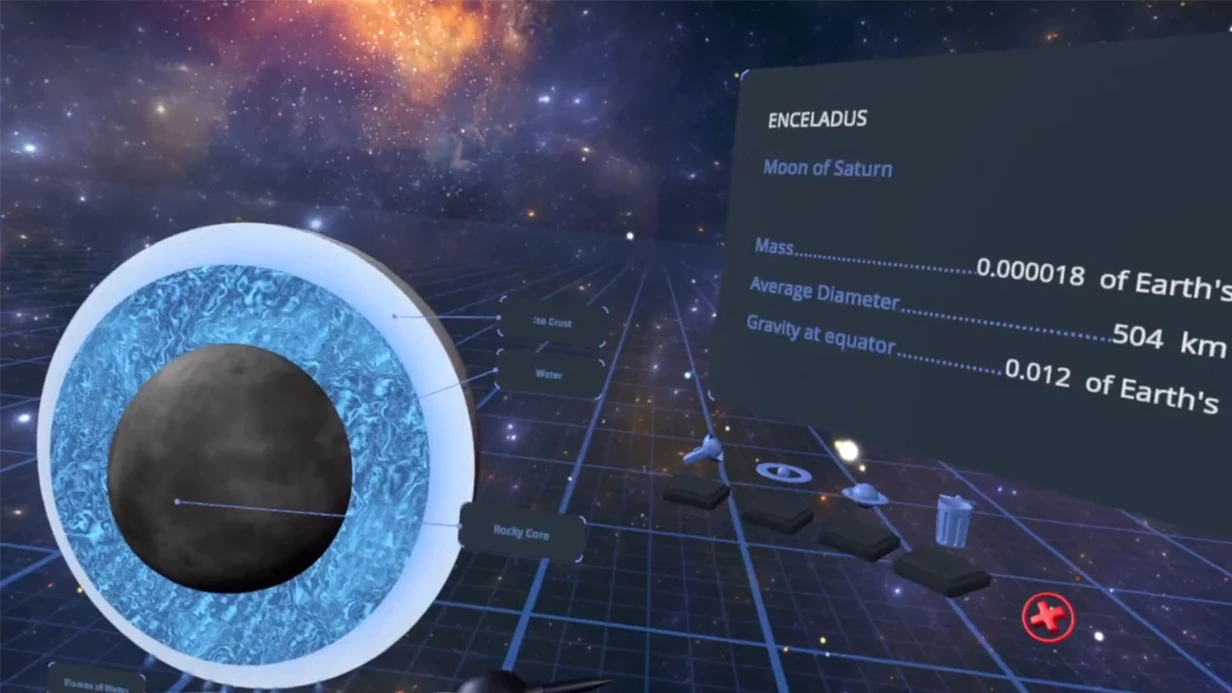
For a medical equipment exhibition, it is important that a physician or purchasing specialist understands the product’s advantages in a couple of minutes — for example, sees how the machine works inside the body or performs a virtual operation.
Start from three parameters: the booth’s goal, its floor area, and the expected visitor flow. If you need a dramatic wow-factor, a headset with a 2-3 minute panoramic video works well.
If the task is to show the structure of complex equipment in detail, an interactive scenario where the user disassembles and assembles components is better.
For a narrow booth up to 6 square meters, choose compact solutions; for spacious zones, opt for full VR areas with multiple stations.
Budget also determines the format: from one-way 360-degree video to fully interactive scenarios with a virtual simulator.
At the same time, a more expensive format is often justified at medical exhibitions because it gives visitors a unique “hand on the manipulator” — this is memorable and increases time at the booth from a minute to ten, increasing the chances of exchanging contacts and getting a request.
We help at the brief stage: we analyze the event goals, number of visitors, booth layout, and budget, then propose a format that solves exactly your task.
Our specialists know the specifics of medical exhibitions and will prepare a turnkey installation — from scenario to installation and support. Leave a request, and together we will determine the optimal solution.
Frequently Asked Questions About VR Booths at Events
When a client hears about a VR booth, they first think not about impressions, but about risks: what if the equipment fails, what if we do not have time to prepare, how do we know it worked?
We have been working with events for a long time and have learned to remove these fears before the start — here are the answers to the four most common questions.
On every project, we act as a reliable contractor: we take on the full cycle — from idea to installation and technical support on the day of the event.
We include backup equipment and an engineer in the estimate in advance; the engineer is on-site and makes sure the booth runs without interruptions.
What happens if the equipment breaks down?
We provide backup kits for any malfunction. An engineer is on duty at the venue: the average replacement time is no more than 10 minutes, so the flow of visitors does not stop and the event schedule does not collapse.
How do you manage to prepare the booth in time for the date?
The standard lead time is from two weeks, including concept, design, and configuration. For urgent launches, we have ready-made scenarios: in that case, the booth is assembled in a few days. The main thing is to agree on the venue and the client’s task.
Can content be updated after launch?
Yes, we retain the ability to quickly change texts, logos, images, and scenarios. The client can replace materials even on the day of the event — this is useful when the program or promotional offers change at the last minute.
How can we measure the return on investment of a VR installation?
After the event, we provide the client with a report: number of sessions, average contact duration, peak activity hours, and visitor engagement. Based on this data, you can see which zones performed most effectively and plan the next event more accurately.
If your question remains unanswered, ask it directly: we are ready to discuss a specific project and explain how a VR booth solves exactly your task.Let’s Discuss Your Booth at the Event? Tell Us About the Task
A properly designed VR booth gathers a queue within the first hour of an exhibition, but choosing a contractor based on portfolio alone is difficult.
Especially when the goal is not “just spin a model,” but showing physicians and clinic executives real scenarios for using the equipment.
That is why we offer a simple path: you describe the task, and we take on the calculation, planning, and implementation. One request — and you get the full project picture, on which you can make a decision in 1-2 days, instead of spending weeks studying technical details.
After your inquiry, you receive a clear plan:
- a preliminary cost estimate aligned with your budget and booth scale;
- realistic production and installation timelines based on the event date;
- a selection of examples for your niche — if needed, we show similar projects from the medical industry;
- recommendations on logistics and placement at the venue, so you can remove the technical burden;
- consultation on content: which scenarios will resonate with your specific audience;
- a dedicated personal manager assigned for the entire cycle — from brief to dismantling;
- a solution presentation before work begins, so you can see in advance what the visitor will experience.
We work remotely and with proven equipment, so we can quickly join a project in any city. Your booth should attract attention, generate business contacts, and create the right impression of the product — and we take on the “how to make it happen” part.
Leave a request with your preferred contact method in the form below. We will ask a couple of clarifying questions and prepare an individual proposal within one business day. This is not binding, but you will get clarity on budget and start timelines.