

Don't get lost at a telecommunications equipment exhibition
When dozens of companies showcase similar solutions, a telecommunications equipment exhibition turns into a stream of identical stands and weary visitors. Guests quickly lose focus: a couple of minutes is all it takes for them to glance at a booth and move on.
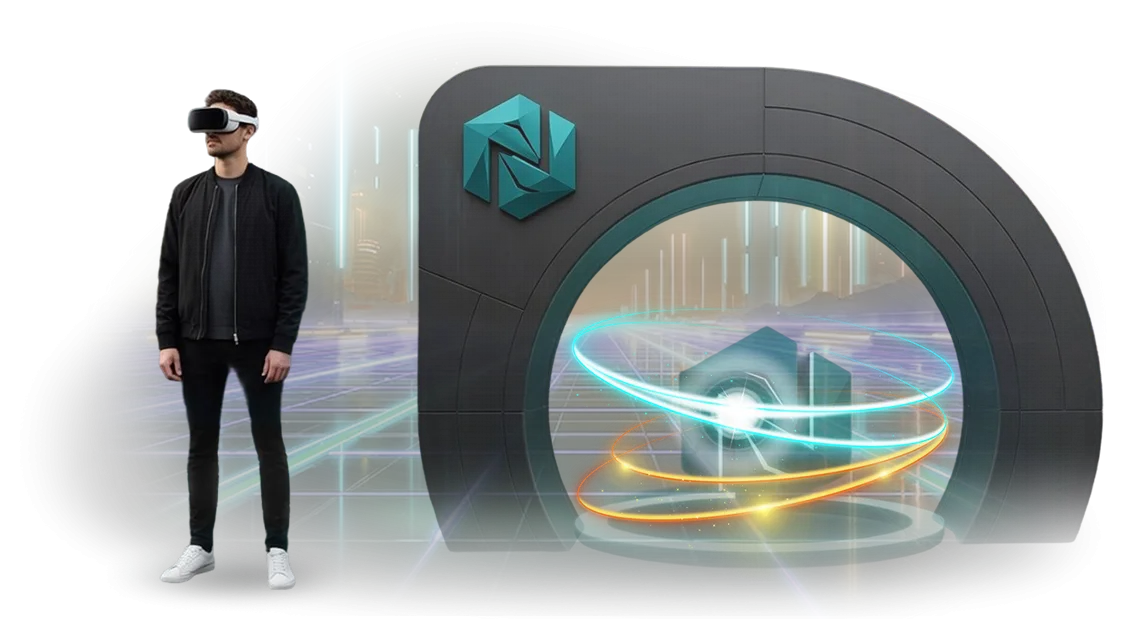
In such competitive exhibition environments, even a quality product goes unnoticed — unless you give people a reason to stop. A VR stand for an exhibition changes that: instead of a static display, it offers a live experience that engages visitors within the first seconds.
People are eager to put on a headset and step into your brand's world. This sparks emotions, and emotions are memorable — they turn into conversations after the event.
Attracting attention at an exhibition stops being a problem: a line forms at your stand with people waiting to try it themselves.
This format is about more than just spectacle. When visitors see interactive technology applied to your product, they perceive you as an expert capable of implementing complex digital solutions.
This builds trust and makes conversations with interested clients substantive: the discussion starts from a first-hand impression, not from an empty catalog.
The result is measurable business value: more time spent at the stand, more contacts in the database, higher brand awareness.
We develop VR installations tailored to your team's objectives — from concept to on-site setup — so your stand sets itself apart from the competition and generates real contacts.
What a VR stand brings to your brand and marketing
At a telecom exhibition, dozens of stands compete for visitors' attention. While competitors hand out brochures, a VR stand turns a passerby into a participant: they put on a headset and step into your scenario.
That's the key advantage of a VR stand — instant engagement without the long explanations nobody listens to. Our team builds these installations to match your brand's goals.
Engaging exhibition visitors
A game is an emotional experience, not passive viewing. Visitors don't read a poster — they drive the story: testing the product themselves and seeing what it can do.
In a single session, they absorb more information than in a conversation with a manager, and they enjoy it along the way.
Keeping visitors at the stand longer
A VR session lasts several minutes — during that entire time, a person stays at your stand. The queue of eager participants attracts new visitors, while your manager has time to learn what caught the guest's interest and suggest continuing the conversation afterward.
Growing brand awareness
A striking installation is a photo spot. Guests film the experience and post it on social media with a mention of your brand. This way, reach keeps growing even after the exhibition closes, and your stand is remembered among dozens of similar ones.
Collecting leads at the exhibition
At the end of the scenario, visitors leave their contact details on their own — it's part of the experience, not a forced questionnaire. All data is collected automatically and delivered to the sales team the very next day. You get warm leads from the exhibition without manually filling in spreadsheets.
We've been building VR stands for telecom brands for over 10 years. We work with professional equipment, so the installation runs reliably throughout the entire event day. Write to us — let's discuss how your brand can amaze visitors and collect maximum contacts.
VR stand formats for exhibitions
At a telecommunications equipment exhibition, dozens of stands fight for visitors' attention, and guests have only a few hours to explore. Standard presentations and videos no longer hold interest — eyes glaze over and information isn't remembered.
A VR stand solves this: it draws the eye, keeps a person engaged for several minutes, and in that time shows your product in action.
Whichever format you choose, we address the exhibitor's main pain point: not a "stand for the sake of a stand," but a working tool for collecting contacts and extending the conversation with a client.
The three basic types of VR installations for exhibitions differ in engagement scenario and budget — here's a guide to help you choose.
| Format | Who it's for | What it gives the client |
|---|---|---|
| Single VR stand | Companies with a narrow target audience and a need for in-depth demonstration | Full immersion of the visitor in the product, 5–7 minutes of brand contact, maximum memorability |
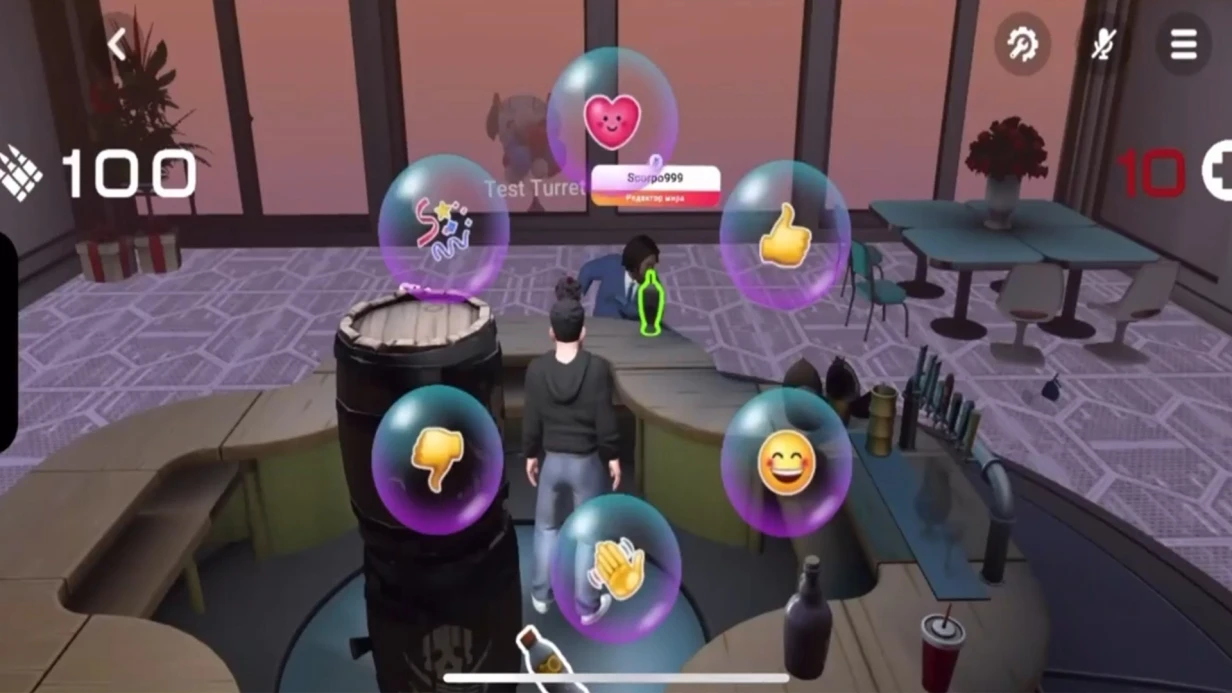
| Multiplayer VR stand | Brands that need to build a queue and create buzz | A shared scenario for 2–4 people: competition, emotions, social media video — crowds attract crowds |
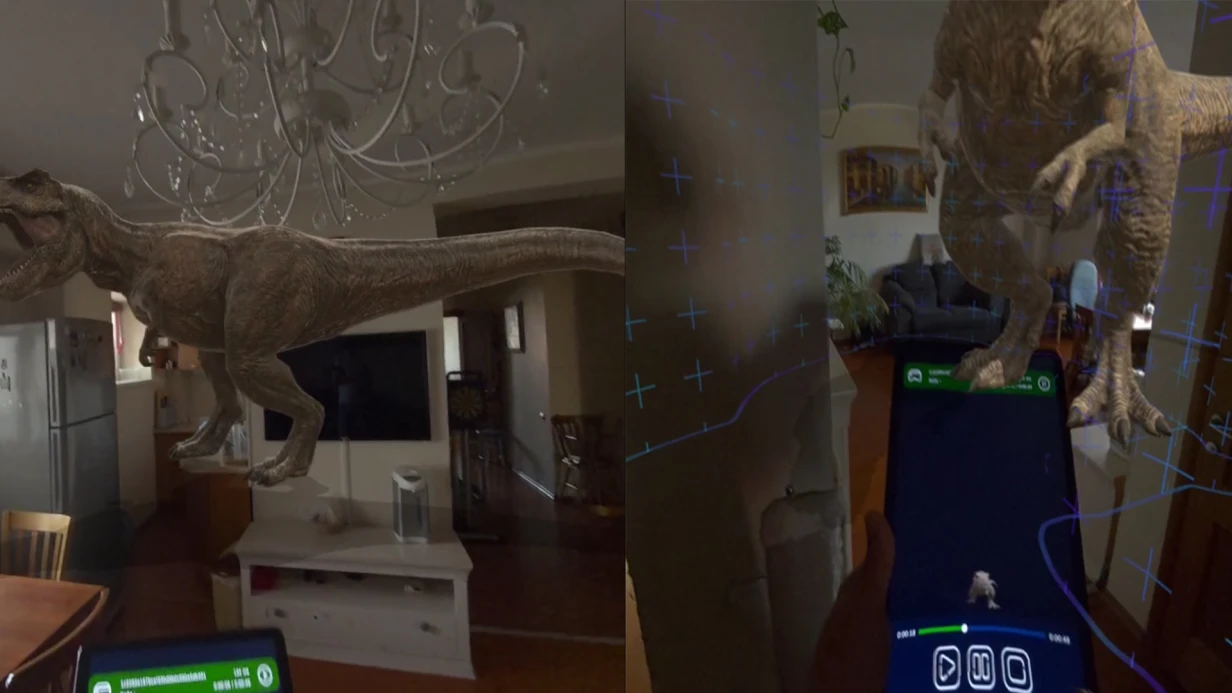
| Hybrid format (VR + AR) | Exhibitors with a large stand and expensive equipment | Augmented reality overlays digital layers on the real product, VR shows it in action — two scenarios in one space |
The single format works when the product is complex and needs a detailed story: visitors fully disconnect from the exhibition noise and focus on your solution.
Multiplayer adds gameplay and competition: people wait their turn to beat the record while spectators gather around — this expands reach and makes the stand a focal point.
We've been developing VR installations for exhibitions for over 10 years and understand how to turn a demo zone into a source of leads. If you're torn between formats, start with the hybrid one: it covers both demonstration and engagement goals at once.
Stages of creating a VR stand: from brief to launch
When you order a VR stand for a telecommunications equipment exhibition, you're solving a specific problem: standing out among dozens of stands and collecting visitor contacts. So you can control every step, we work according to a transparent process.
The VR stand development workflow and virtual reality production stages are well-honed — you always know what stage the project is at and what's happening right now.
-
Brief and scoping the task. We discuss your goals: attract attention, present a solution, collect requests. We study your audience and the specifics of the equipment so the VR experience speaks to visitors in their language.
-
Concept and scenario. We propose an idea for the virtual space that connects the brand with the guest's emotions. We agree on what actions we expect from the visitor and what results you'll get after the session.
-
Design and prototype. We visualize the future stand: its look, interfaces, and logic. You see the result before the main development begins and can make changes while it's still inexpensive.
-
Development and preparation. We build the virtual space on professional equipment, tuning stability and performance. In parallel, we prepare screens, controllers, and the stand structure.
-
Testing and debugging. We run the scenario under near-real conditions: is the interface clear, are there any glitches. We fix everything before moving to the venue.
-
Launch and support. We deliver, set up, and calibrate. Our specialists stay on call throughout the exhibition days and quickly resolve any issues.
What's included in the VR stand package
To make your VR stand a living part of your exhibition rather than "just an expensive gadget," we assemble a complete turnkey package.
You don't need to buy anything extra, configure anything, or brief contractors — you get a ready-made solution you can present from opening day.
- Ready-to-use VR equipment for the exhibition. Professional headsets and stations are calibrated to the stand area so the picture stays stable during peak hours and guests never wait for a "reboot."
- Custom content for your goal. A 3D scene featuring your product or service, interactive scenarios, and branded screens — visitors are immersed in your world from the first second, not in abstract VR.
- On-site setup and configuration. We deliver the equipment, build the zone, and adjust lighting and sound a few hours before opening. By the time guests arrive, the stand is fully ready.
- Stand tech support throughout all event days. An engineer is on hand and resolves any issues instantly — from replacing a cable to setting up a new session. Visitors never notice technical pauses, and your team stays focused on conversations.
- Staff training. In 30 minutes, your employees learn how to start the system, assist guests, and manage the queue — even if they've never worked with VR before.
- Turnkey rental and logistics. The package includes equipment rental and return transport after the event. Multi-day rental is also available, with content quickly updated for each day of the exhibition.
In short, you get not just equipment but a working tool for attracting and holding visitors' attention. Everything needed for reliable stand operation is already included — all you have to do is invite guests.
Case study: VR stand for a telecom company
For a telecom operator, we developed a VR stand for a specialized telecommunications equipment exhibition.
The company's goal wasn't just to showcase new products but to explain its complex network architecture to visitors of all levels — from engineers to procurement directors.
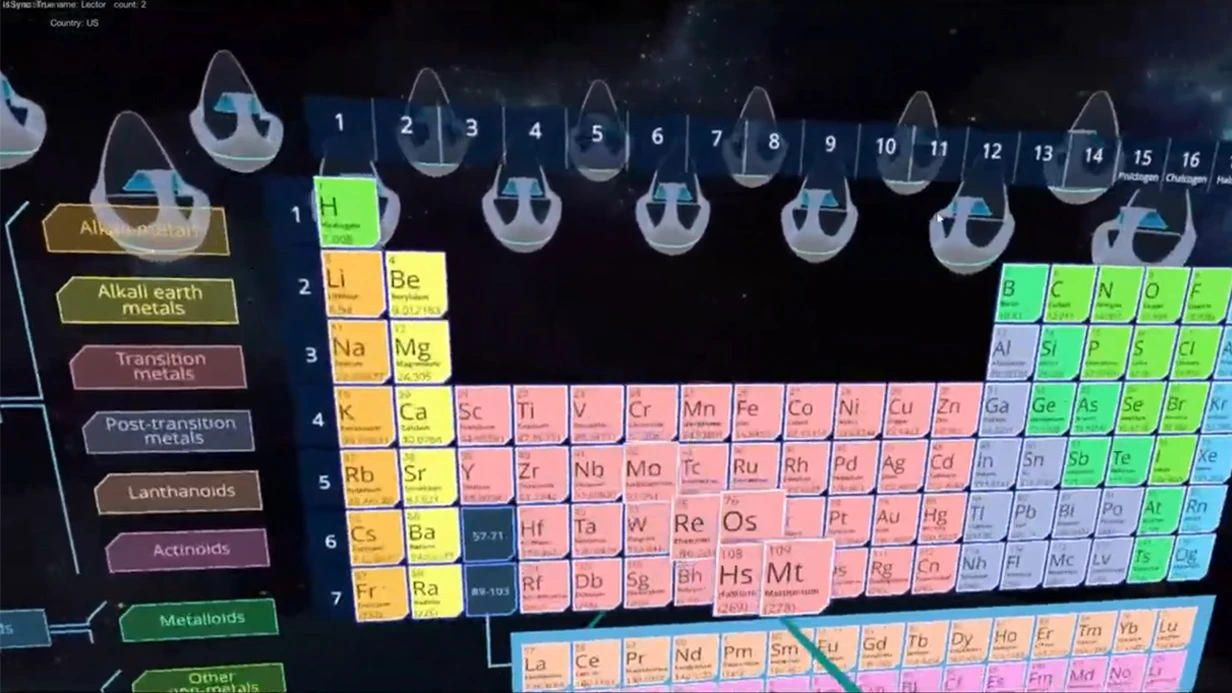
The VR space turned abstract technology into an understandable experience: guests "entered" a city and directed data flows with their own hands, watching how cell towers process requests and what happens when a failure occurs.
The results of the virtual reality experience exceeded expectations: the stand became one of the most visited at the exhibition, with over 2,000 guests over two days against a projected 1,200. Sessions ran non-stop, with a new VR session every 3–4 minutes.
We deliberately kept the scenario short so each person could live out the story without getting tired of waiting in line. After coming out of VR, guests shared their impressions on social media, tagging the operator's account — free reach that kept working long after.
For the operator's team, the main result was 400+ contacts with people who genuinely make equipment purchasing decisions.
Previously, staff had to explain technical details a dozen times over; now the VR stand did it visually and consistently for everyone, while the managers focused on sales.
The project budget paid for itself three times over by the end of the exhibition, thanks to agreements reached right at the stand.
A month later, the operator came back to us with a new order — a VR tour for its flagship office.
For us, that's the ultimate proof: a properly designed VR stand for an exhibition works not as a beautiful art object but as a sales tool and the foundation for a long-term partnership.
How to choose the right VR stand format for your goals?
To choose a VR stand format, start by answering one question: what matters more at this exhibition — broad reach or quality contacts.
At a telecommunications equipment exhibition, visitors arrive with a specific goal: compare solutions, see the technology in action, and understand what sets you apart from competitors. So VR shouldn't just entertain — it should support negotiations and leave a lasting impression.
If your goal is maximum awareness and a striking booth image, a single impressive VR zone where guests take photos and talk about you on social media is enough.
If you need leads, choose a format with a short scenario: in 3–5 minutes a person sees your product in action, and the consultant gets a natural reason to request contact details for a demo.
Next, assess visitor traffic. At large industry events, a single headset quickly accumulates a queue, and some visitors simply walk away. In that case, several parallel stations or a VR panel accommodating 3–5 guests at once works best.
For smaller stands, compact solutions are ideal: a headset at the counter or a tabletop AR setup that takes up little space.
Budget affects the number of VR stations, not whether you can have them at all. Even a modest stand can be equipped with one quality station — what matters is crafting the right scenario and preparing the staff.
If space allows, add 2–3 zones: one showing cutaway equipment, another simulating network infrastructure, and a third for training partner employees. This gives visitors a tangible result and a reason to come back to you after touring the exhibition.
We match the VR stand to your objectives: we calculate expected foot traffic, session length, and visitor behavior.
In the end, you get not just a high-tech attraction but a measurable exhibition tool: it's clear how many people saw the product, how many lingered at the stand, and how many left a request for further contact.
Answering frequently asked questions about VR stands
We've gathered answers to the questions most often asked before ordering a VR stand for a telecommunications equipment exhibition. Short and to the point — so you can see how we manage risks at every stage.
Will the equipment break down in the middle of the exhibition?
We'll make sure that doesn't happen. The entire package is checked before departure, and on-site we run our equipment with a solid safety margin — it's built for heavy visitor flow.
If force majeure does occur, an engineer and spare modules are right there. Replacement takes minutes, not hours — guests won't notice a pause, and your stand will keep working throughout the exhibition.
How long does VR stand installation take?
We handle the installation ourselves. A few hours before the exhibition opens is usually enough: we deliver the modules, assemble the zone, connect the equipment, and run a test session.
You don't need to dive into technical details. You accept a finished, ready-to-use station — all that's left is welcoming visitors. We also handle teardown ourselves and clear the venue quickly.
How do you handle queues so everyone gets a chance to try it?
We plan the session schedule around your format: some want open access, others prefer 10–15 minute time slots. We select the optimal number of zones and pauses for content refresh.
As a result, visitor flow is evenly distributed, everyone gets a full experience, and no crowds form at the stand. You get a lively queue without losing a single guest who was ready to step up.
What if visitors are confused or need help?
Our assistant-instructor is at the stand. The assistant greets guests, helps them put on the equipment, guides them through the experience, and makes sure every user is comfortable.
This takes the load off your team — they focus on negotiations and presentations instead of handling logistics. Guests get support, and you get confidence that everything is running according to plan.
Let's discuss your VR stand: get a quote and demo
At a telecommunications equipment exhibition, visitors walk past dozens of stands in just a few hours. Regular screens and brochures no longer hold attention — you need a reason for people to stop, explore the product, and remember your brand.
A VR stand solves this: it draws the eye, gives guests a vivid experience, and fits naturally into the demonstration of your solutions.
We've already helped telecom companies and integrators create interactive zones at industry exhibitions.
So you can evaluate the result before launch, we'll send you a cost estimate for the VR stand after you reach out, show examples of similar projects, and prepare a virtual reality demo of your scene — based on your materials and objectives.
What you get after contacting us
- A cost estimate for a VR stand tailored to your task — taking into account the exhibition format, visitor numbers, and required equipment.
- A selection of our projects for the telecommunications industry — see what the installation looked like and review client results.
- A virtual reality demo of your scene — experience how visitors will interact with the product.
- A clear launch plan: timelines, stages, responsibilities, and what's needed from your team.
- Support at every stage — from idea to installation and exhibition operation, including technical support during the event days.
Leave a request — we'll discuss your goals, answer your questions, and prepare an estimate. You can order a VR stand today: write to us, and within a few days you'll receive a cost estimate, examples, and a demo.
It's free and comes with no obligation — you make your decision only after seeing what we have to offer.