

Lost leads at a tourism exhibition: how a VR stand brings them back
Every season, hundreds of companies meet at the tourism exhibition, and visitors physically cannot give equal attention to all of them. Your stand is one of dozens of similar ones: a counter, booklets, souvenirs.
Staff manage to talk to only a portion of the guests, while the rest walk past without even stopping. That's how the leads the stand was created for are lost.
The participation budget gets spent, and the contacts that were collected often don't turn into customers: business cards get forgotten, brochures get thrown away, and vivid impressions from a neighboring stand pull attention away.
The key problem is low visitor engagement: they have nothing to remember, nothing to share, no reason to come back. That's why reach stops converting into inquiries, and after the exhibition only a report remains.
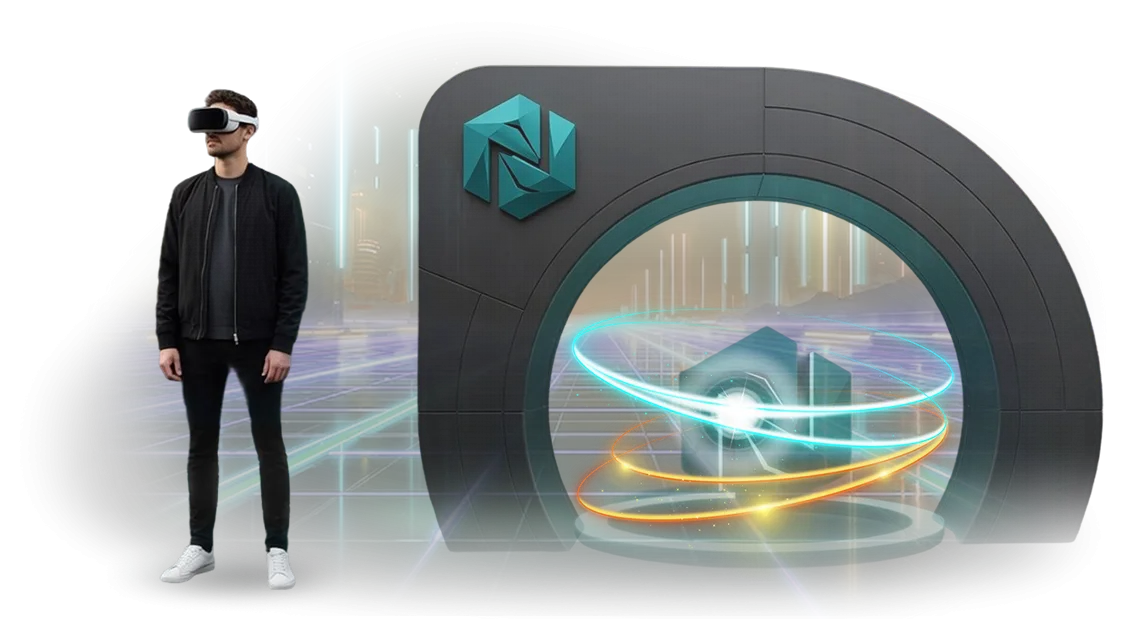
The solution is a VR stand that turns getting to know your offer into an immersive journey.
Instead of a short conversation at the counter, the guest dives into the atmosphere of your tour or resort, experiences emotions that can't be gotten from a brochure, and willingly leaves contacts to get more.
We design such installations for tourism exhibitions to engage visitors, hold their attention for a few minutes, and turn every contact into a warm lead — without extra spending on souvenirs and promotional materials.
What a VR stand delivers at an event: 5 measurable benefits
We work with stands at tourism exhibitions and know for sure: visitors quickly forget regular promo tables. A VR installation is a different tool: it delivers emotion and leaves a trace. The most valuable thing about it is the measurable benefits for the brand.
- Brand recognition. The visitor doesn't just look at your destination, they experience it. This kind of impression gets retold to friends and colleagues after the exhibition.
- Visitor engagement. At a regular stand, guests linger for 20–30 seconds; at a VR stand, for 4–6 minutes. That's many times more time to present tours.
- Targeted leads. After a session, visitors readily leave their contacts for a bonus. Based on our projects, over 2 exhibition days a VR stand delivers from 150 to 300 leads — a ready-made base for email campaigns.
- Social media reach. 70–80% of guests film the VR zone and post it with your hashtag. Reposts keep working after the exhibition and expand the audience without an ad budget.
- Analytics for decisions. When it's over, you get the numbers: number of sessions, time spent in scenarios, popular locations. You see which routes to emphasize in your promotion.
You stop guessing whether the stand worked. You get the numbers — from reach to leads — so the next exhibition budget is spent precisely, not at random.
VR stand formats for a tourism exhibition: choose one for your goal
At a tourism exhibition, a visitor walks past hundreds of stands — and remembers only those where they got an emotion. Regular booklets and videos don't hold attention, but a VR stand lets a person experience moments of vacation right in the hall.
The key is choosing the right format; otherwise, even expensive technology won't work for your goal.
VR stand formats differ in the immersion scenario and the number of participants. A single-user setup suits in-depth exploration of a destination, multiplayer creates the effect of a shared journey, and interactive lets the visitor influence the scenario themselves.
| VR stand format | For whom | What it gives the client |
|---|---|---|
| Single-user | A visitor one-on-one with the destination | Deep immersion — the person remembers the tour details and is ready to discuss them with a manager |
| Multiplayer | Couples, families, groups of friends | A shared journey: emotions get stronger, lively discussion and excitement appear |
| Interactive | Active visitors who like to be in control | Freedom of choice — they decide where to look and what to do, engagement is at its maximum |
The choice of format depends on your goal: collect contacts, increase the time spent at the stand, or launch a wave of social media posts. For each scenario, we have a proven solution.
We select the format to match the task and the audience, and professional equipment guarantees stable operation even during peak exhibition hours.
If you're not sure which format fits, send us a description of your stand and your participation goals — we'll prepare a recommendation and calculate the budget.
How a VR stand is developed: from brief to launch
For most clients, VR stand development is a black box: it's unclear what happens between the first conversation and the exhibition opening day.
We've made the process transparent: at every stage, you see the result, control the timeline, and make key decisions together with the team.
-
Brief and goals. We meet with you (in person or online), discuss your goals for the exhibition, the visitor profile, and the stand theme. You get a completed brief with the agreed points — this is the foundation we build on at all subsequent stages.
-
Concept and scenario. Based on the brief, we develop 2–3 scenario options for the interactive space. You see how a guest will move, what they will see in the headset, and what emotions they will get. You choose the option that best fits your brand and budget.
-
Plan and approval. We approve the concept and draw up a detailed plan: stages, deadlines, checkpoints. You get a calendar with dates and know when to accept intermediate results. All risks are discussed in advance.
-
Implementation and prototype. The team creates the content, assembles the hardware, and configures the software logic. At this stage, you can come and try the prototype in action — the best way to make sure everything is going right.
-
Testing and refinement. We run checks with real users: is the headset comfortable to put on, is the control clear, does the scenario work stably. We fix any flaws so that everything runs without interruptions on opening day.
-
Launch at the venue. We deliver, assemble, and set up the stand on site. We do final testing and stay in contact during the exhibition days — if anything needs adjusting, we resolve it within minutes.
What's included in the VR stand package: a complete list for the event
To make sure the VR stand at the tourism exhibition runs smoothly and attracts visitors, it's important to know in advance exactly what you're getting. We've prepared a full list — so you understand what you're paying for and don't worry about the technical side.
- Equipment. Professional VR headsets with protective covers that are easy to disinfect, charging stations, and cables. Everything is built for heavy traffic — up to a hundred sessions a day without overheating or failures.
- Content tailored to your task. Virtual tours of destinations, interactive resort maps, 3D hotel presentations. We adapt the scenarios to your stand's theme and your target audience's interests.
- Session management system. The guest chooses a scenario themselves, and you see visitor statistics and session durations. This helps you assess interest in destinations and adjust your approach.
- Assembly and setup at the venue. We bring the equipment, assemble the stand, connect it, and test it a few hours before opening. You don't need to look for contractors or deal with technical issues.
- Training for your staff. A short briefing: how to greet guests, help with the headset, launch the demo, and resolve small issues. Your team feels confident even on the first day.
- Support during the exhibition days. Our specialist stays in touch, and if needed — right next to the stand. We quickly solve any problems so the stand never sits idle.
This is the complete delivery package for a VR stand at a tourism exhibition. You get a turnkey working solution: all that's left is to invite guests and manage the experience.
Case study: VR stand for a tour operator — 4,000 contacts in 3 days
For a tour operator, we developed a VR stand for the annual tourism exhibition. The company needed to collect as many contacts as possible in three days and stand out from competitors: regular booklets and counters didn't hold visitors' attention.
We proposed an interactive format — each guest was "transported" to a resort and explored the hotel as if on a real vacation.
Over three days, more than 4,000 visitors came to the stand — every fourth guest of the exhibition. The average time spent with a manager grew to five minutes: the VR session captured people, and they approached for consultations on their own.
The company collected four times more contacts than planned and confirmed a repeat order before the event even ended.
The department head said at the final meeting: "The stand worked for us, not us for it.
Guests didn't just take flyers — they experienced the vacation, and inquiries converted into bookings." That's the value of a VR installation: it pays off not as entertainment, but as a measurable sales tool that brings in customers even during the event.
This format can be easily adapted to any task — from presenting a tour to introducing a hotel or a country. We take on the entire technical side: scenario development, assembly, and support during the days the stand works. So the client's team focuses only on talking with guests.
How to choose the right VR stand format for your task?
Choosing a VR stand format isn't a matter of "which is better" — it's a matter of "which will solve your task." There is no universal solution: what works great at a tourism exhibition with a flow of 500 people a day would fail at a closed presentation event for 30 guests.
That's why the first thing we clarify with a client is the goals: attract attention to the stand, immerse visitors in a new destination, collect contacts, or simply create a wow-effect and a memorable brand image.
The format depends on the goals. If the task is to introduce visitors to travel routes and destinations, a compact VR station is enough, where a person takes a virtual tour of a location in 3–5 minutes.
If you want to create a point of attraction that draws a queue and thus increase recognition, choose a VR zone with multiple stations or a full VR attraction where a visitor is "transported" to another country or travels along a route with a full sense of presence.
Budget and timelines determine the scale of the solution, but not the quality of the impression.
Even on a limited budget, you can create an impressive installation: one quality scenario, thoughtful space design, and clear interaction logic often deliver more than a dozen "raw" demos.
Timelines also affect the choice: some solutions can be adapted and launched within a couple of weeks, while more complex ones — with custom scenarios and design — require a month or more.
We always honestly state realistic timelines and offer an option that makes it to your event without losing quality.
Our role is not to sell "the most expensive option," but to choose a format that pays off. At the start, we consult for free, analyze your task, audience, and venue, and offer 2–3 options that differ in budget and timelines.
You see what you get with each option and make a decision based on clear arguments, not technical specifications. This approach helps you avoid overpaying for unnecessary features and get exactly the result you envisioned when you first thought about a VR stand.
Common questions and concerns from clients before ordering a VR stand
Before ordering a VR stand for a tourism exhibition, clients most often ask about reliability: will the tech fail on the busiest day, who is responsible for safety, and can the installation fit into a non-standard hall. This affects guests' impressions and your reputation among partners.
We remove these risks: we work on professional equipment, bring a backup set, and insure the devices. A technical specialist accompanies the stand throughout the exhibition, and we adapt the layout to the venue. Below are answers to the main questions.
What if the VR equipment breaks during the event?
A technician is on site, and we bring a backup of each key device. Fast replacement or repair takes a few minutes, so the visitor flow doesn't stop even during peak hours.
Who is responsible for the equipment and the safety of guests?
The equipment is insured for the duration of the exhibition, and we handle the assembly and setup. Your staff only deals with guests and content — they don't need to understand the tech. We control VR safety: we eliminate the risk of injuries and damage.
Do you adapt the stand to our venue?
Yes. You send the floor plan and any restrictions — we select the zone configuration, the number of VR stations, and the layout scheme. For small spaces, we offer a compact version without losing the immersion effect, and we account for columns and walkways in advance.
What guarantees do you give for the launch and operation of the stand?
We put the launch timeline and key metrics in the contract: session duration, throughput, waiting time. If we don't meet them, we adjust the terms of cooperation. The warranty on equipment and content covers the entire exhibition period.
Submit a request for a VR stand — get a cost estimate within 24 hours
Exhibition visitors walk past dozens of identical stands — but they can remember yours. A VR stand lets them "visit" a tourist location right in the exhibition hall: look around a hotel, stroll along a route, feel the atmosphere.
But to commit to such a format, you need concrete numbers: cost, timelines, and exactly what the visitor will see. That's why we simplified the process — you submit a request, and within 24 hours you get a cost estimate and an action plan.
Right after you contact us, we take the project into work and come back to you with a ready-made package:
- Response within one business day — we'll call you back, clarify the goals, the stand's area, and the expected visitor flow.
- Cost estimate within 24 hours — the cost of content development, equipment rental, assembly, and support.
- Scenario consultation — we'll advise on how to build the VR tour so visitors stay longer and share their impressions.
- Examples for tourism exhibitions — we'll show solutions where VR helped a brand stand out from its neighbors.
- Itemized estimate — you'll see what you're paying for: no hidden items and no "pay extra later."
- Production and launch plan — timelines for every stage, from the brief to the work at the exhibition.
No obligations: the cost estimate is for your decision, not to "reel you in." If the format doesn't fit your budget or dates, we'll say so — without pressure or long emails.
Submit a request on the page or write to us in a messenger — we'll respond quickly and send the cost estimate within a day. Sometimes the scenario and a preliminary estimate can be agreed upon in the very first conversation.