

Exhibition Space Without VR: Why Guests Walk Past
A trade show visitor makes a decision within the first few seconds: stop at the booth or keep moving. An ordinary exhibition space with posters and brochures gives no reason to linger — the eye glides over the booths, and within an hour they all blend into one monotonous row.
In the end, you pay for floor space and staff presence, while guests merely nod politely and move on to neighbors where they can hold, try, or photograph something.
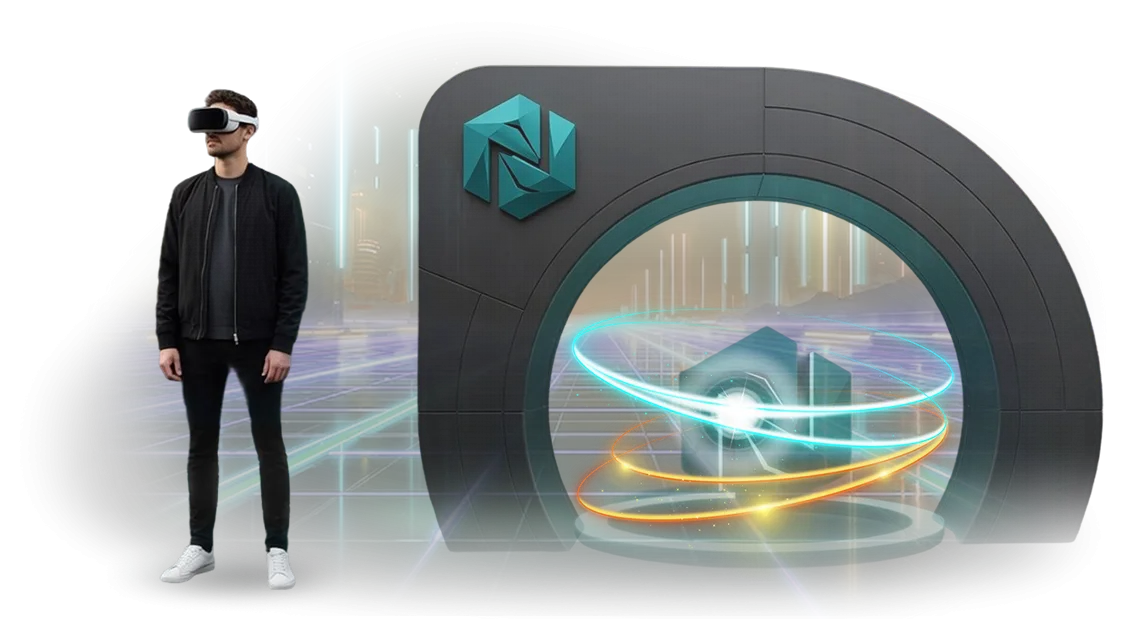
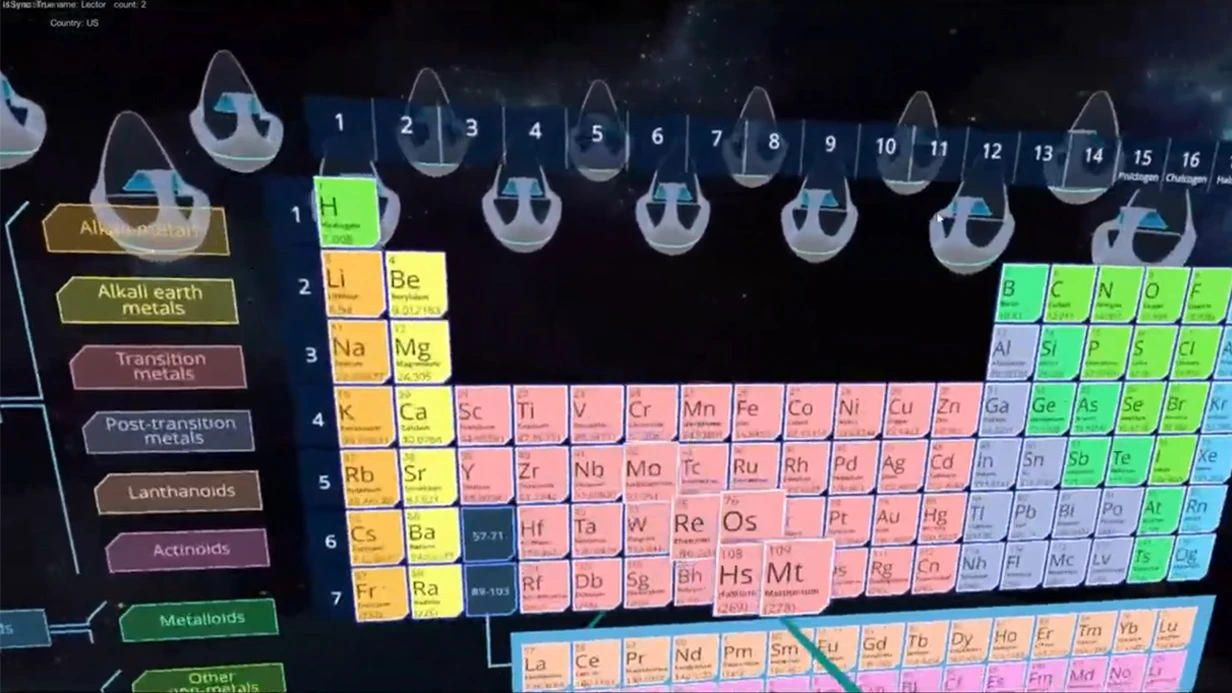
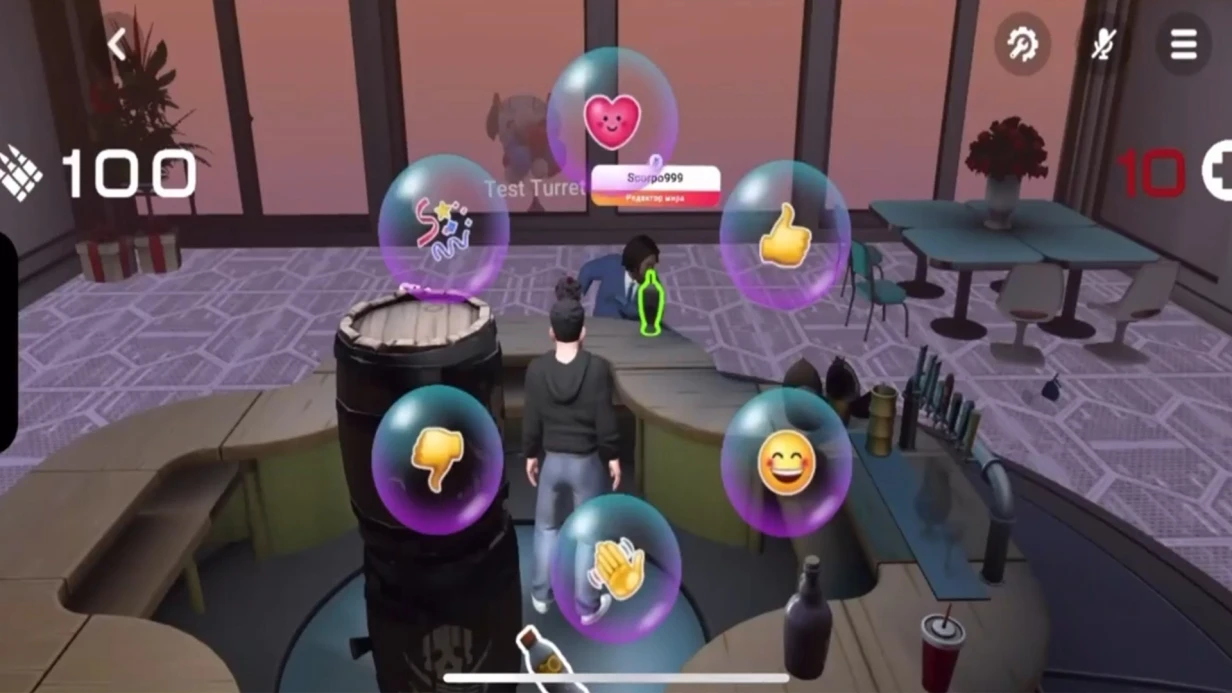
VR for exhibitions turns the booth into a point of attraction: instead of a static image, a person steps inside your product or brand story.
An interactive display holds attention for several minutes, during which the visitor gets to feel the value of the offering, not just read about it.
This way, the exhibition space starts working for you — guests approach on their own, get engaged, and remember your company among dozens of competitors.
Without interactivity, you lose not just attention but measurable results: it's hard to assess how many people were genuinely interested in the product, who left their contacts, and which display generated a response.
A static booth only gives you a count of handed-out flyers, while interactive zones collect visitor behavior data and convert interest into a conversation with your team.
We solve this pain point: we design VR installations around your booth's goals — from driving footfall to demonstrating the product in action.
The client gets not "technology for technology's sake" but a tool that increases brand contact time and the number of qualified contacts. The exhibition space stops being a passive area and becomes a place where memories and deals are made.
What a VR and AR Installation Delivers to a Brand and an Event
An exhibition space is where a brand has a few seconds to stop a visitor. Ordinary poster booths no longer work: guests walk past. VR and AR for brands flip the script: the installation triggers an emotion, and that emotion stays in memory. This is a meaningful introduction to the product, not just attention.
Guest engagement is the core value of interactive solutions. When a visitor puts on a headset or sees augmented reality, they become a participant. It captivates them for several minutes, during which you get to show the product and discuss the details.
The booth stops being a "walk-past" — people gather around, and interest in the exhibition space grows.
Brand recognition grows through striking visuals and an unusual experience. Guests take photos and videos — the reach keeps working after the event. Visual associations become tied to your brand, which matters especially for companies that exhibit regularly.
Exhibition contacts are another outcome. Instead of asking for a business card, you invite the guest to experience the installation and fill out a short form. This way, you get hot leads who are already ready to talk.
Across our projects, this delivers several times more exhibition contacts than a standard booth, and repeat orders follow naturally.
If you want your exhibition space to generate real conversations, new customers, and a memorable image — an interactive installation delivers exactly that. We handle the concept, production, and support; you get a working growth tool.
VR Booth and AR Zone Formats for Event Goals
In an exhibition space, a visitor has just a couple of seconds to decide whether to approach the booth or walk past. Ordinary banners and videos no longer hold attention.
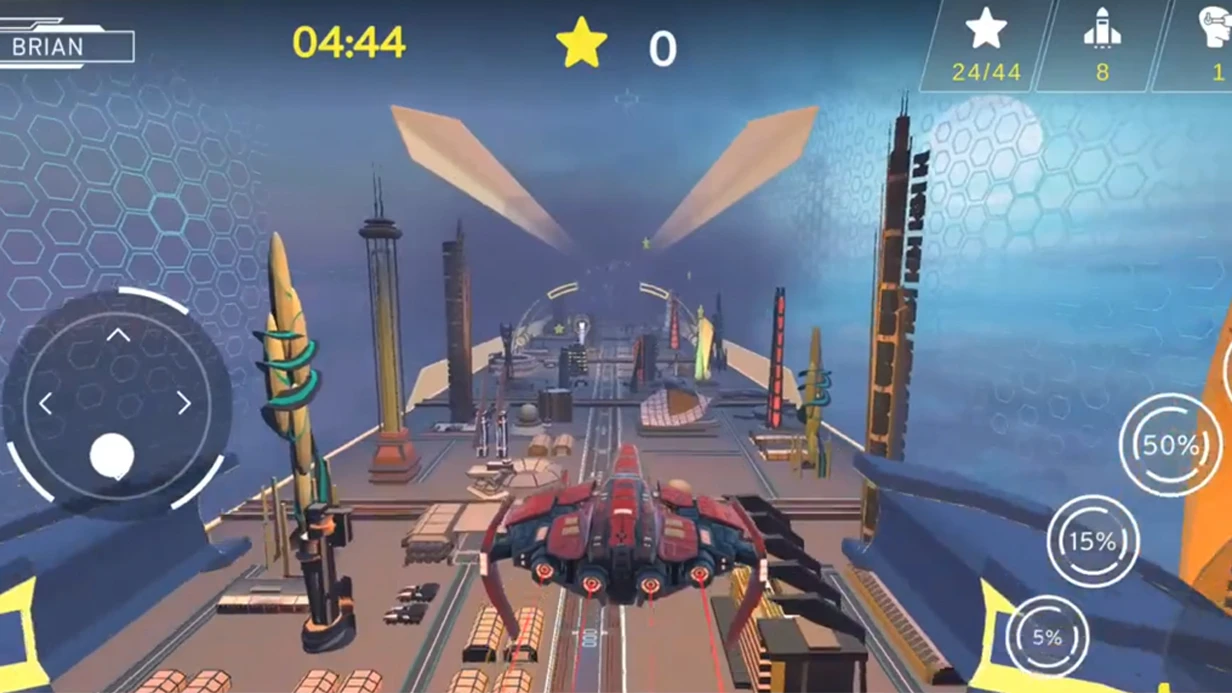
A VR booth and AR zone turn your exhibit into a point of attraction: people stop, line up, and share their impressions on social media on their own.
We match the format to your specific goal: introduce the product, entertain and retain, collect contacts, or showcase an object that's difficult to bring onsite. An interactive booth can work as a standalone zone or part of the exhibition. Here are standard solutions and their impact for your event.
| Format | Who it's for | What it delivers to the client |
|---|---|---|
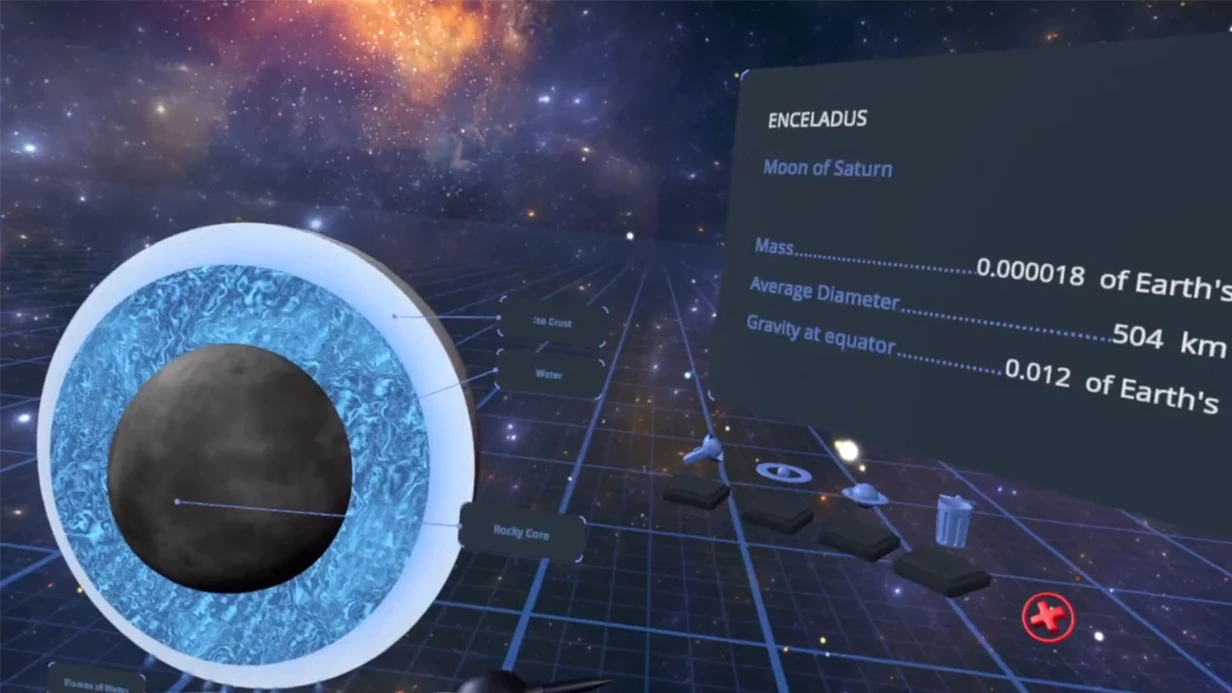
| VR booth | Exhibitions, conferences, dealer meetings | Immersion in the product or service in 3-5 minutes, high visitor flow, and a natural reason for photos and posts |
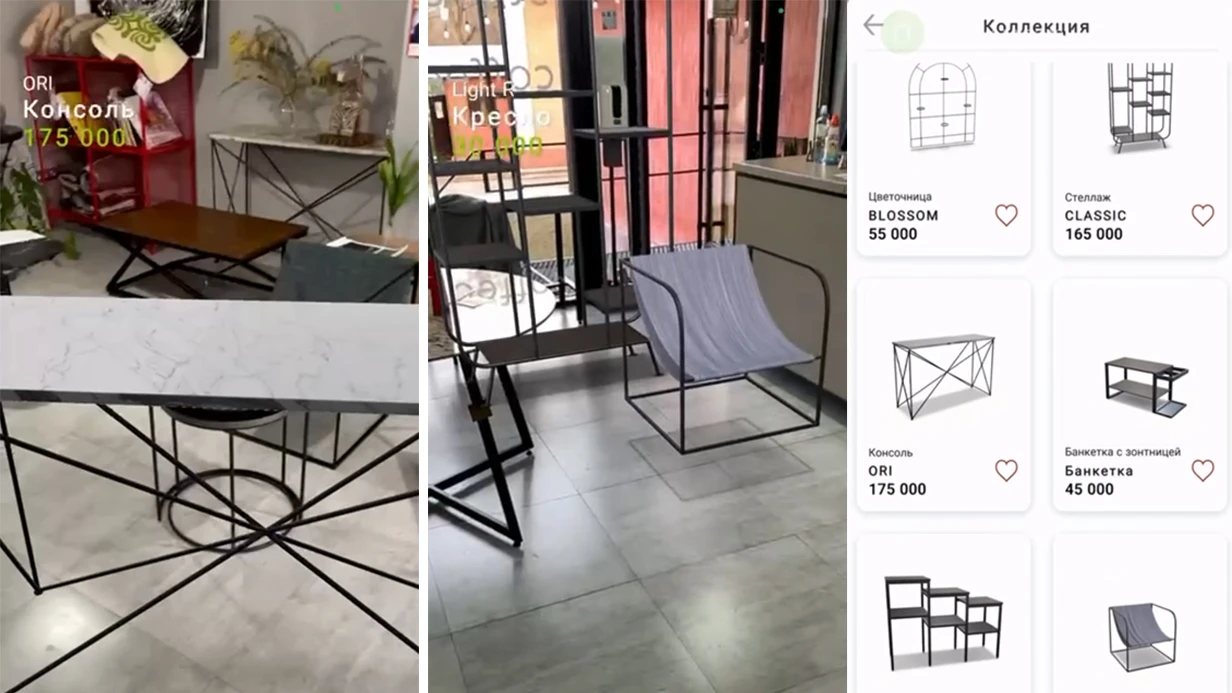
| AR mask / AR zone | Museums, showrooms, openings, and promos | Brings an exhibit or product to life, engages without instructions, and increases time spent at the display |
| Virtual tour | Real estate, manufacturing, tourism | Showcases an object that's hard to open to everyone, reduces the number of personal showings, and expands client geography |
We enhance any of these formats with attendance tracking: we review session statistics, collect contacts with visitor consent, and deliver a report after the event. So you get not just a bright spot in the space, but a measurable tool for working with your audience.
How We Create a VR Installation: Project Stages
A transparent process is what a client needs when deciding to order a VR installation for an exhibition or event.
We remove the uncertainty: you see the stages of building a VR solution, understand when you'll receive the mockup, and when the booth will already be working in your space. No sudden "last-minute" changes — just clear steps.
- Installation brief — a short questionnaire about your goals, audience, and floor space. One 30-minute conversation is enough; after that, we propose the concept ourselves.
- Concept and scenario — we describe what the visitor will see and do, how it reinforces the brand, and how it fits into the exhibition space. We align on the idea before development starts.
- Mockup approval — we show a visual prototype of the future VR zone: design, texts, interaction logic. You make edits before sign-off, not during installation.
- Assembly and testing — we build the installation and check the structure's stability, operational reliability, and comfort for guests of all ages. There is time left for final touches.
- VR booth launch at the venue — we deliver the equipment, install it, and set up lighting, sound, and placement in the space. On the event day, guests walk right in with no hitches or queues.
- Support throughout the event — our specialist stays nearby: helps visitors, quickly resolves unusual situations, and collects session statistics for your report.
After launch, you get numbers you can show management: how many people completed the experience, average interaction time, and audience response.
This way, the VR installation delivers not just emotions but a clear business result — and you save time and stress coordinating with a contractor.
What's Included in the VR Installation Delivery for a Booth
When you order a VR installation for your exhibition space, it's important to understand exactly what's included. Booth projects often drag on because equipment, content, and staff are brought in by different contractors.
We deliver a turnkey solution — from setup to dismantling — so the zone attracts visitors from the very first minute of the show.
What's included in the VR installation delivery:
- Equipment preparation — headsets and stations are set up and tested before arriving at the venue, so there are no surprises at the booth.
- Content tailored to your goal — we develop or adapt the scenario for your brand and event objectives, rather than deploying a one-size-fits-all demo.
- VR zone installation — we deliver, set up, and test everything in advance, before the show opens, so guests immediately step into a working format.
- Booth tech support — a technical specialist stays with the zone all day, quickly resolves any issues, and keeps the queue moving.
- Staff training — a short briefing for your team: how to welcome guests, run a session, and answer questions.
- Backup equipment — replacement in case of failure takes minutes, so visitors never leave without the experience.
- Dismantling and removal — we handle all packing and take-down after the event; you simply close up the booth.
This package removes the biggest risk: the VR zone runs reliably all day, and you don't need to coordinate multiple contractors.
If the format changes, options can be added separately — VR equipment rental for a larger number of guests or extended booth tech support for the full run of the show.
VR Booth in an Exhibition Space: An Automaker Case Study
Case: VR Test Drive for a New Crossover
A major automaker was preparing for the industry's main exhibition of the year. The goal was ambitious: stand out among dozens of competitors and collect contacts of potential buyers of the new model. Standard presentations and brochures no longer worked — visitors walked past without stopping.
We proposed a VR booth where every guest could take a virtual test drive of the new crossover. Within a minute, they "got behind the wheel," chose a route, and felt the car's dynamics — without the risks and limitations of the exhibition pavilion. For Volt Motors, this became not just entertainment but a full-fledged sales tool.
Results the Client Saw
Over the three days of the exhibition, the VR booth ran more than 450 sessions — four times more than expected. The average time guests spent at the exhibit grew from two to seven minutes.
During that time, visitors could explore every feature of the model and leave their contacts for a personal offer.
The main outcome: a base of 380 interested customers. The sales team processed these leads within a week after the show, and the conversion to dealer test drives was twice as high as with contacts collected through traditional methods.
The client's marketing director noted: "We received this flow of qualified inquiries directly from the event for the first time.
The VR booth became the central point of attraction — guests told each other about it and came back to show their friends." After this experience, the company ordered a VR tour from us for its dealer centers — just as at the show, it helps customers "try on" the car before an actual visit.
How to Choose a VR or AR Format for Your Goal?
The choice between VR and AR starts not with the technology but with the goal of your event. If you need to fully draw the guest away from reality, create the feeling of another world and a strong wow effect — choose VR.
This is the ideal option for immersive zones, where each visitor receives a personal, one-of-a-kind story that they later discuss and retell.
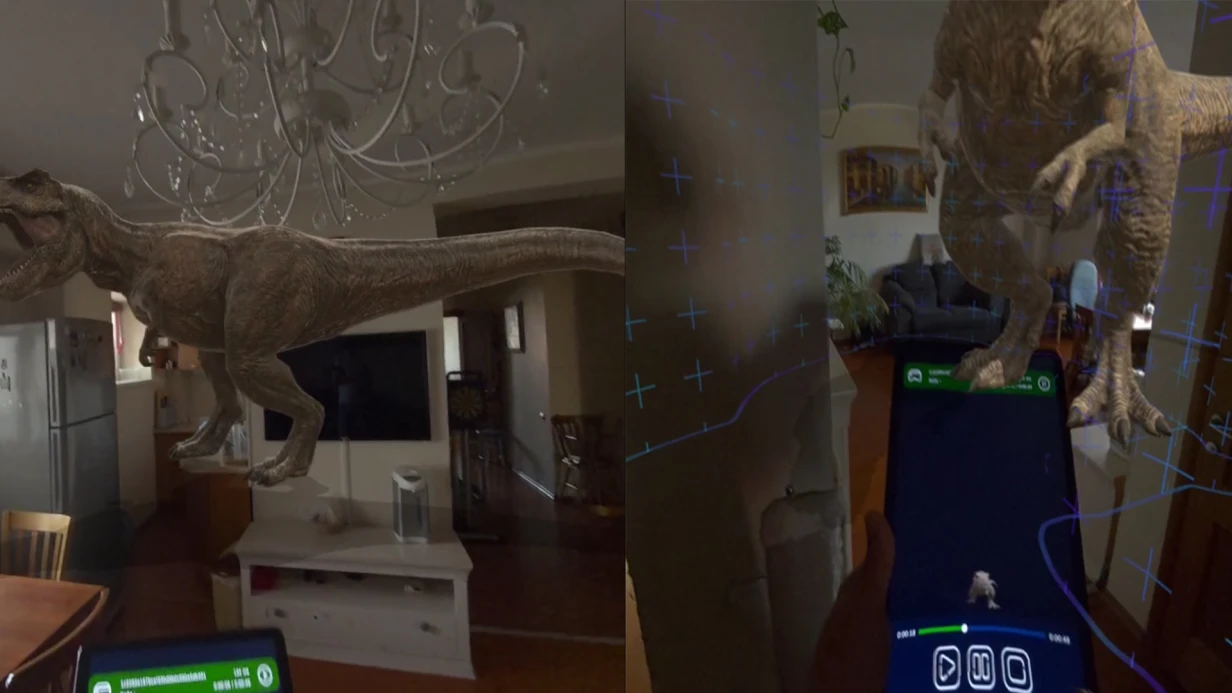
AR works better for the opposite task: not taking a person away from the space, but bringing it to life. You overlay digital objects onto a real hall, showcase, or banner — and guests interact with them right in the crowd.
This is convenient for interactive zones at exhibitions, where it's important not to create queues and to give everyone a quick, vivid brand contact.
The key question is what should remain in memory a week later.
VR delivers a deep individual experience of "I was there"; AR provides a shared impression of "we saw that at the booth." When choosing an installation format, look at your audience: for business delegations, a short VR scenario with figures and a 3D model is more valuable; for mass museum or festival visitors, AR navigation and revived exhibits work better.
Venue context also matters: in a noisy, high-traffic hall, VR cabins will sit idle, while an AR zone will draw a steady flow thanks to its instant start with no instructions required.
If the event is long, a hybrid works better: two VR stations for in-depth presentations and several AR markers around the perimeter for continuous engagement. This way, you cover both the surprise factor and the reach goal.
We help you settle on the format before development begins: send us a brief with your event goals, and we'll propose a scenario that fits your budget and venue.
Book a consultation — we'll discuss how to create an interactive zone that works toward your result, not just takes up space.
Frequently Asked Questions Before Ordering a VR Installation
Before ordering a VR installation, everyone has roughly the same doubts. We've gathered the common questions and answered them briefly — practical value without technical details. If your question isn't listed below, ask us personally.
Will the equipment break down?
We use professional equipment in protective housings. An administrator is on duty at the venue: replacement in case of failure takes up to 15 minutes, and the project is delivered after full testing.
Is VR safe for guests?
Each guest receives a single-use mask, and all surfaces are sanitized. The zone is clearly marked, and the administrator makes sure guests don't bump into each other. The scenario includes no sudden movements.
Will guests find it hard to figure out?
The controls come down to one or two simple actions. The administrator puts on the headset and explains the task in 30 seconds, so it suits both children and adults.
How much time is needed for development?
A standard project takes two weeks to a month after the brief. We lock the exact timeline into the plan and deliver in time for the event date, even if the event is already on the calendar.
What's the business benefit?
Guests linger at the booth 3–4 times longer, and sessions turn into branded photos and videos on social media. You receive statistics and contact details of interested attendees.
Shall We Discuss a VR and AR Installation for Your Event?
An exhibition space lives on impressions. A guest decides within seconds whether to stop at the booth or walk past, and a VR/AR installation is one of the most powerful ways to capture attention.
But launching such a zone doesn't require you to understand the technology: it's enough to discuss your goal with a team that has already delivered dozens of projects for events and museums.
After reaching out, you immediately receive a VR consultation, a preliminary VR booth estimate, and a placement layout — even before signing the contract.
We rely on your goals, the event format, and the specifics of your exhibition space, so the proposal is concrete rather than "by eye."
From there, we work to a clear timeline:
- On the day of inquiry — we accept your request for an AR installation or VR project, answer key questions, and record the task.
- Within 1-2 days — we hold a VR consultation, clarify the target audience and the desired impact.
- Within 2-3 days — we calculate the VR booth: budget, timeline, equipment, and team lineup.
- In parallel — we prepare a zone layout for your exhibition space, so you can see how it will fit in.
- After approval — we take on content production, installation, and testing at the venue.
- On opening day — we hand over the installation, train the staff, and stay in touch until the event ends.
To order a VR installation or discuss an AR format for your booth, submit a request through the form. We'll respond within one business day, show examples of similar projects, and recommend the solution that will deliver the strongest results for your exhibition space.