

Freshsales Without Gamification: Why Employees Lose Motivation
Implementing gamification in Freshsales starts with a question most managers prefer to ignore: why do results still drop even when the CRM works properly and sales plans are clear? The answer almost always lies not in system logic, but in human motivation.
When a manager sees the same task list, the same type of calls and emails day after day, their brain stops perceiving routine as a challenge. Sales in Freshsales turn into mechanically filling out cards — and each subsequent contact becomes harder than the last.
This is especially noticeable at the stage when a company has already automated its funnel but has not invested in the "human factor." Employees do not see their progress, do not understand which colleagues are ahead, and do not feel the connection between effort and results.
Employee motivation fades unnoticed: first, response speed to leads drops, then the number of touches decreases, and ultimately overall revenue suffers. The system itself is not to blame — it simply reflects how engaged people are in working with it.
The problem is solved not by increasing fines or holding another meeting, but by systematically implementing CRM gamification.
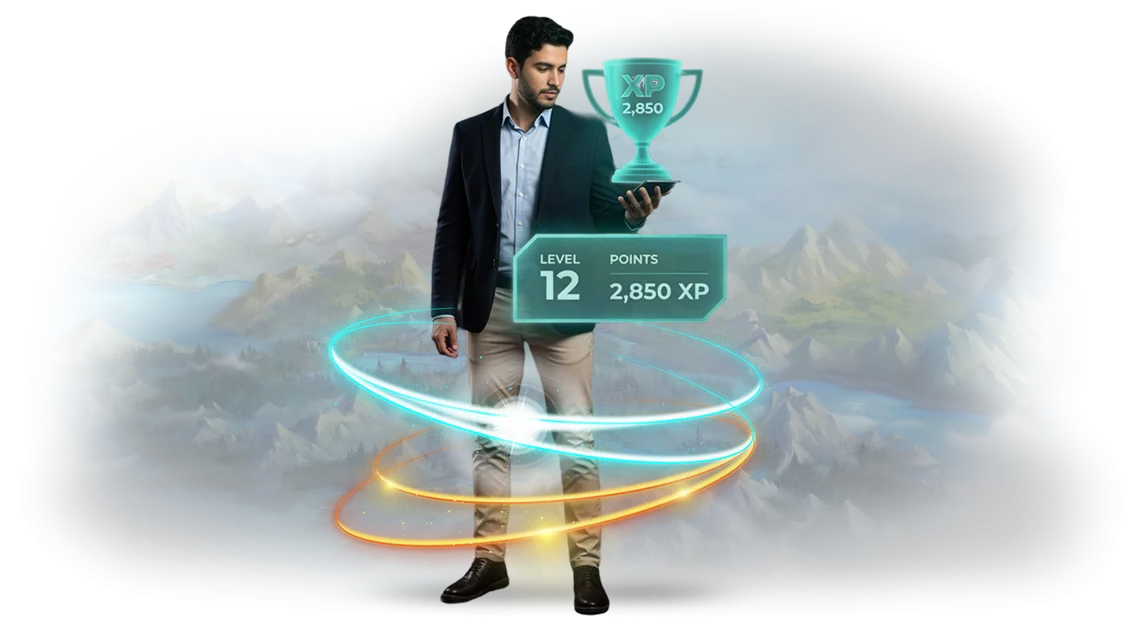
We build competition, levels, visual achievements, and instant feedback into the familiar workflow — so that the salesperson themselves wants to return to Freshsales. That is exactly why we design mechanics for your team: clear, measurable, and tied to real business metrics.
As a result, Freshsales stops being a "data repository" and becomes a tool that pushes employees to act every day.
What Results Freshsales Gamification Brings
When deals sit at the same stage for weeks and managers lose interest in the CRM, the funnel turns into a "black box." You see the final numbers but do not understand where the team is struggling.
Freshsales gamification solves this at two levels at once: employee motivation and daily discipline.
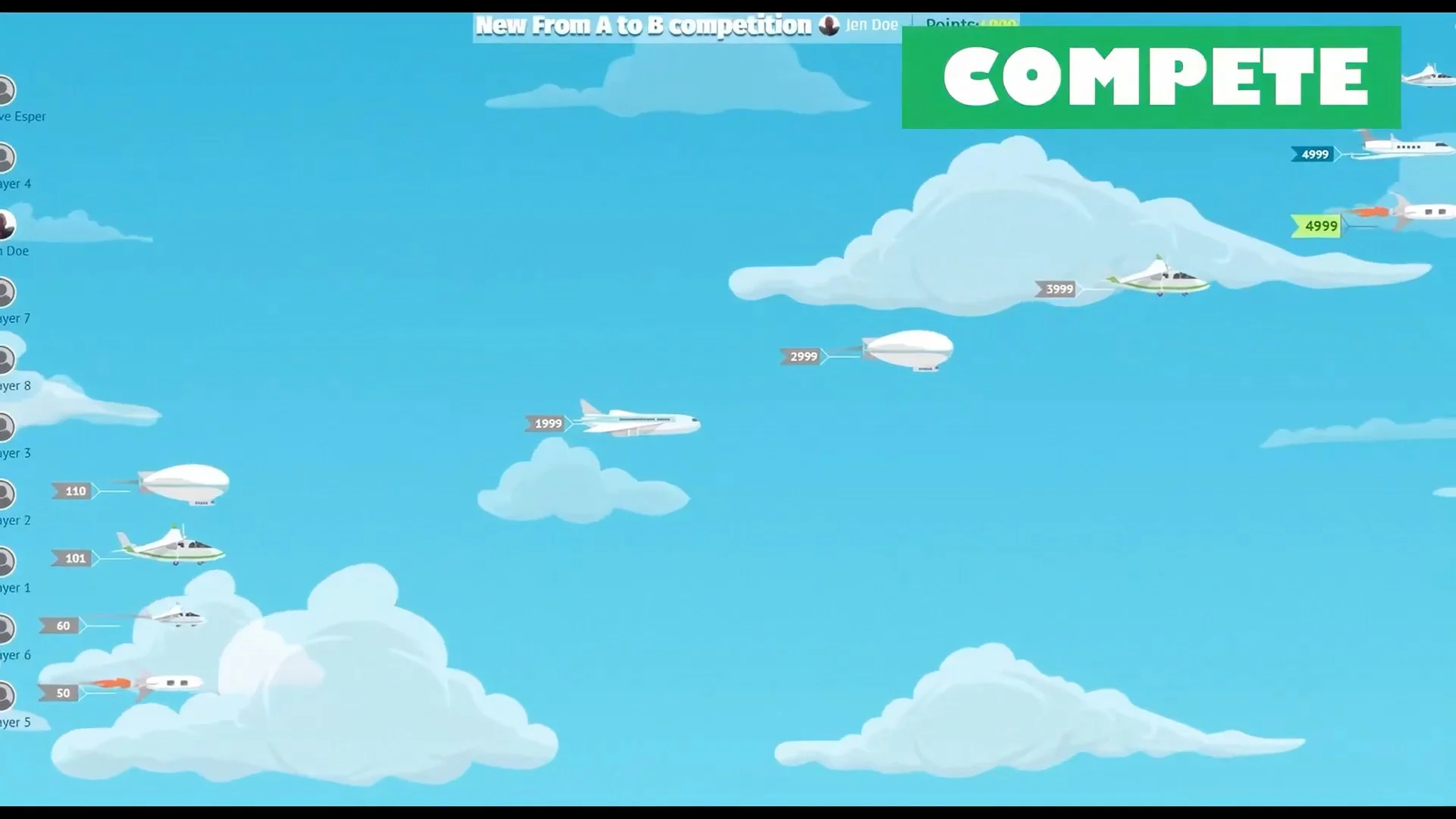
Integration with Freshsales turns routine work with leads into a competition. Managers see who closed more deals, who called the client back faster, and who completed the plan ahead of schedule.
Competition increases engagement — the team reaches for the leaders instead of waiting for instructions from above.
The second result is faster deal cycles. When every action has weight and a bonus, the desire to postpone calls and "freeze" clients disappears. A manager takes a deal to the end rather than dropping it halfway — the sales cycle noticeably shortens.
The third result is funnel transparency. All activities automatically sync with Freshsales, and the manager sees in real time who is dragging leads and who is actually selling.
No more "memory-based" reports: the data in the CRM and gamification match without discrepancies.
These three effects deliver the main business result — sales growth without expanding the team. We adjust the mechanics to your funnel and launch within a few weeks: after that the system works on its own, and you get a predictable flow of deals.
Gamification Formats for Your Business Goals
Business process gamification only works when the format matches the task. Short sprints motivate closing the monthly plan, long-running campaigns build the habit of working with the database, and team games unite the department.
The same mechanism in different packaging produces different results — what matters is choosing what solves your problem rather than simply entertaining the team.
Below are three basic formats that we adapt to your company's processes. Any of them can include Freshsales integration so employees see results in their working interface and do not have to switch to third-party applications.
| Format | Who It Is For | What It Gives the Business |
|---|---|---|
| Competition | Sales departments, client managers | A quick surge of activity in a short period: more calls and deals through healthy competition |
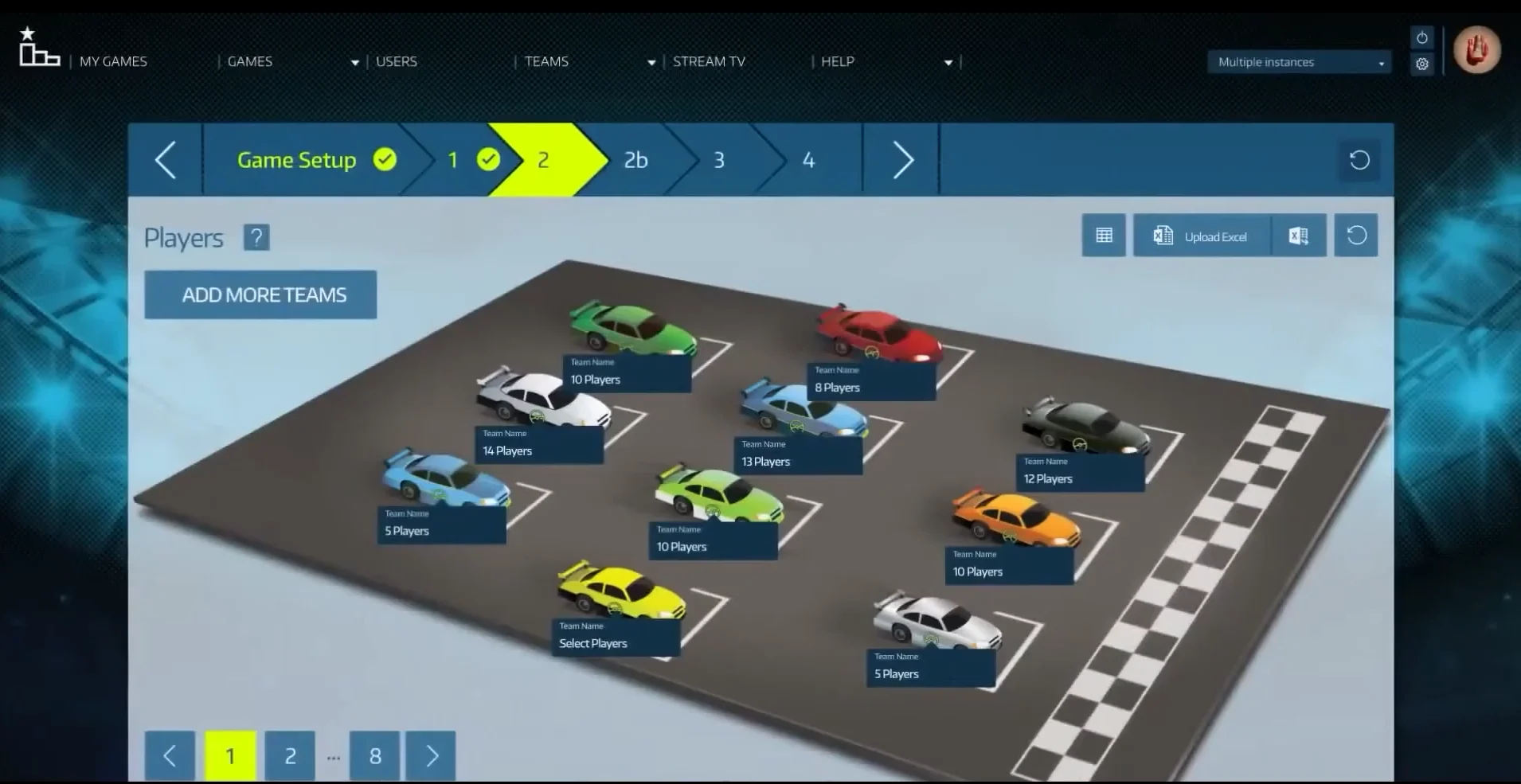
| Team game | Departments that work toward a common result | Improved communication and experience sharing between employees — the team lifts shared metrics |
| Long-term campaign | The whole company or large departments | Building a sustainable habit of systematic work: regular CRM updates, meeting plans without "firefighting" days at the end of the month |
The first format suits situations when you need to quickly "warm up" the team — for example, at the end of a quarter. The second is for regular work when results depend on employee coordination. The third is for implementing new working rules across the company.
In practice, formats are combined: a competition as a warm-up and a team game as the main mechanism for the month. We select a scenario based on your goal and configure rewards so they are visible in the familiar CRM interface.
How a Gamification Project Goes: From Brief to Launch
We approach implementation as a project with clear stages and deadlines. No surprises: you see what is happening at every step and control the outcome.
-
Brief and goal setting. At the start, we review your business processes, employee motivation, and current bottlenecks. We document which metric we will accelerate — sales, lead processing speed, or task completion consistency.
-
Process audit and data collection. We analyze where the team loses time and focus, and which actions need to be strengthened. Often this stage already reveals a growth reserve that goes unnoticed in daily routine.
-
Mechanics prototype. We propose a gamification scenario: tasks, points, levels, department competitions. We show on your data how employees will earn points and how this affects work processes.
-
Approval and refinement. We take into account the wishes of managers and the team. We document rules, launch dates, and success criteria so every participant understands their benefit.
-
Freshsales integration. We set up the system so managers' actions in the CRM are automatically counted and reflected in the game interface. You do not need to keep double records — the mechanics work on familiar daily actions.
-
Launch and support. We launch the project, train employees, and monitor initial results. After launch, we stay in touch: we help adjust mechanics, answer team questions, and suggest ways to increase engagement.
What Is Included in the Delivery: A Gamification Launch Kit
The delivery package consists of ready-made tools that start working from day one. You receive game mechanics tailored to your business processes, Freshsales configuration, and materials for independent team work.
-
Game mechanics for your tasks. Points, levels, competitions, and rewards for real actions in Freshsales: deals, calls, tasks. An employee immediately sees what earns them points and how that brings them closer to the result.
-
Freshsales connection to the gamification system. Events related to deals and contacts automatically become game actions. Managers do not need to mark anything manually or switch between windows.
-
Clear analytics for the manager. Team progress, leaders, and growth areas in real time. You can notice a drop in activity in time and react before the overall result declines.
-
Instructions and training materials. For employees — how to participate, accumulate points, and see their rating. For administrators — how to configure rules, add new mechanics, and manage rewards.
-
Launch documentation. A checklist of implementation stages, access rights, notifications, and regular team actions. You are not dependent on a single specialist and can develop the system independently.
-
Help at the start. We launch the first game cycle together with you, check point allocation, and adjust mechanics based on the first week of work.
After handover, we do not disappear: during the launch phase we answer questions and help adapt rules if any process turns out to be inconvenient. That is the delivery package — everything needed for working gamification, not just a set of files.
Case Study: How We Boosted Sales Department Activity
One of the frequent pains of a sales manager is a CRM that lives its own life. Managers fill out cards late, deals stall, and the real funnel picture appears only after manual requests.
We closed this gap by integrating gamification with Freshsales: the system itself counts actions and turns routine into competition.
We did not add "control for control's sake" — we made the process clear and exciting. Managers earn points for timely card updates, completed calls, and deals moving through stages.
Levels, weekly competitions, and a leaderboard appear in the CRM — everyone sees their own progress and colleagues' results without extra reports.
The effect was felt within a month. Department activity grew by 40% — deals began to be managed in a timely manner, and conversion rose by 15%.
The manager received up-to-date real-time analytics and stopped wasting time on manual checks: the system itself shows who is moving the funnel and who needs support.
What is especially valuable is that implementation did not require changing the familiar workflow. Managers stay in their CRM and simply begin using its full potential.
The client stayed with us for the next quarter and is scaling gamification to a neighboring department — that is the best indicator that the mechanics work.
How to Choose the Right Gamification Format for Your Task?
There is no universal gamification: what accelerates sales in one department can destroy teamwork in another. So first determine exactly which business problem you are solving — and only then choose the mechanics.
The system built into Freshsales allows you to change formats for current goals without restructuring processes.
Competition with a leaderboard is the best choice when you need to quickly raise KPIs: hit the call plan, increase deal conversion, reduce lead response time. Healthy competition provides an instant energy boost but works in short cycles — a week, a month. If you need steady results without burnout, use it selectively for a specific campaign.
A collaborative game (shared goals, team levels, collective bonuses) suits situations when success depends on department cohesion. Instead of racing for a personal rating, employees help each other close deals, share scripts, and suggest solutions. This is a format for retaining strong specialists and developing horizontal connections.
Long-term motivation is built on levels, statuses, and long-term rewards — an employee sees their progress over the quarter and understands where they are heading.
This format reduces turnover and maintains interest in routine tasks, but it requires constantly updating scenarios so the game does not get boring.
It is best to start with one mechanic tied to a key metric, with point data automatically pulled from Freshsales. Once employees get used to the game and the first results appear, you can combine formats: inter-team competition plus overall progress over the long run. The main thing is that the mechanics serve the business result, not just entertain.
Frequently Asked Questions About Gamification Implementation
Doubts before implementation are normal. Most often people ask about timelines, risks, and compatibility with existing tools. Below we have covered the main questions — if you do not find the answer, we will discuss your case personally.
How long does gamification implementation take?
The timeline depends on scale: for one department, two to three weeks is enough; for the whole company, up to two months. At the start, we set exact dates and a step-by-step plan so you see progress and control the launch.
Importantly, first results appear within a week after launch — employees see ratings, receive rewards, and the manager gets initial engagement data. No "endless" processes: everything follows an agreed schedule.
What if gamification is not suitable for our business?
This rarely happens because we do not start with "implementation for its own sake" but with an analysis of your business processes. We choose mechanics for specific tasks: sales growth, service quality, lead processing speed.
If you are unsure, we launch a pilot project in one department. You see real numbers before scaling the system across the whole company. The risk is minimal: you pay only for the pilot, not for a full-scale launch.
How does gamification work with Freshsales?
Freshsales remains your primary system — deals, clients, and tasks are stored there. Gamification connects to it and uses this data for motivation: for example, it automatically counts points for closed deals, updates ratings, and shows employee progress in real time.
You do not need to transfer data manually or keep records in spreadsheets — everything syncs automatically. Employees continue working in the familiar CRM, and you get a clear motivation system without adding extra burden to the team.
If you still have questions about timelines, capabilities, or compatibility with other tools — write to us. We will show examples of projects and propose a solution for your task.Ready to Start? Book a Gamification Consultation
Leave a request for a consultation — we will review your situation and show how gamification boosts team engagement and accelerates key metric achievement. You will receive specific recommendations, not general phrases.
After your inquiry, we will prepare for you:
- an analysis of current business processes and the points where gamification will deliver measurable impact;
- an implementation plan with stages, deadlines, and responsible owners;
- a cost estimate tailored to your scale and objectives;
- a selection of game mechanics that fit your team and corporate culture;
- integration options with your CRM (Freshsales) without stopping managers' work.
You will immediately understand where to start and what result to expect from implementation. The plan can be shown to leadership — it already contains step-by-step justification and measurable goals.
Gamification works when it is embedded in the real workflow, not hung on as a separate toy. That is why during the consultation we align with your sales funnel and department goals — and only then propose solutions.
Book a consultation — it is the first step toward turning routine into excitement and achieving measurable metric growth. Simply leave a request, and we will get in touch at a convenient time.