

Loyalty Gamification: How to Retain Customers Without Discounts
Every year, a business loses a noticeable share of its customers — and this isn't about one-off deals, but about those who could return again and again. Customer churn is a silent revenue leak: acquiring a new customer costs several times more than retaining an existing one.
At the same time, familiar tools — discounts, promotions, bonuses — no longer deliver the same effect.
Discounts don't work the way they used to. Constant sales teach customers to wait for price reductions, devalue the product, and don't create emotional attachment. A loyalty program built only on percentages and points turns into a faceless card that's easy to forget in a wallet. The customer needs a reason to return not because of a benefit, but because of interest.
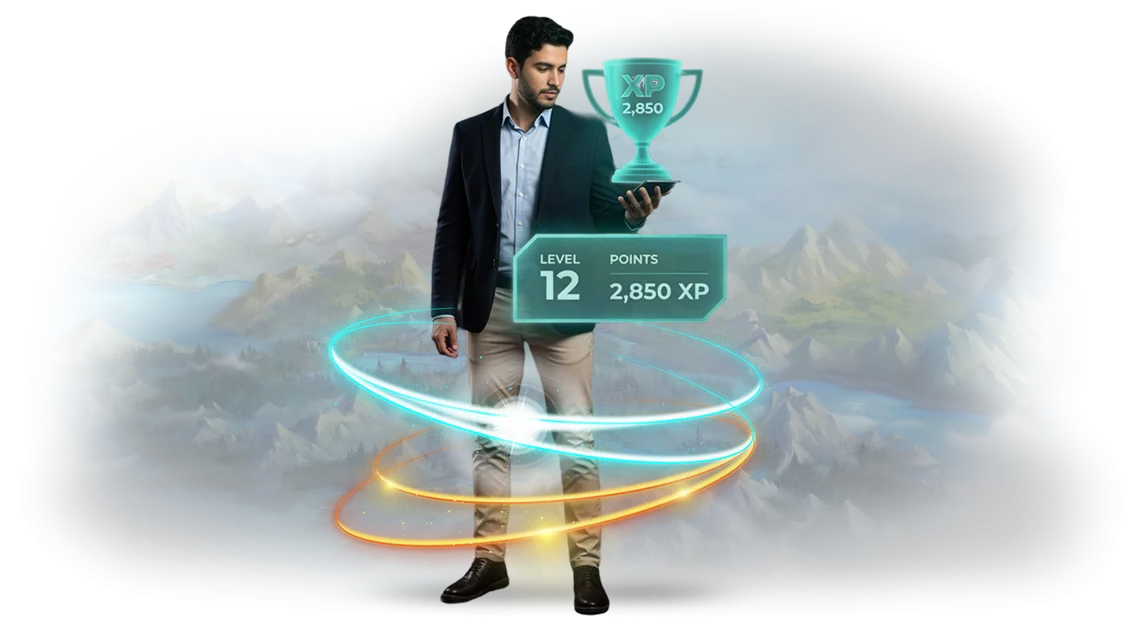
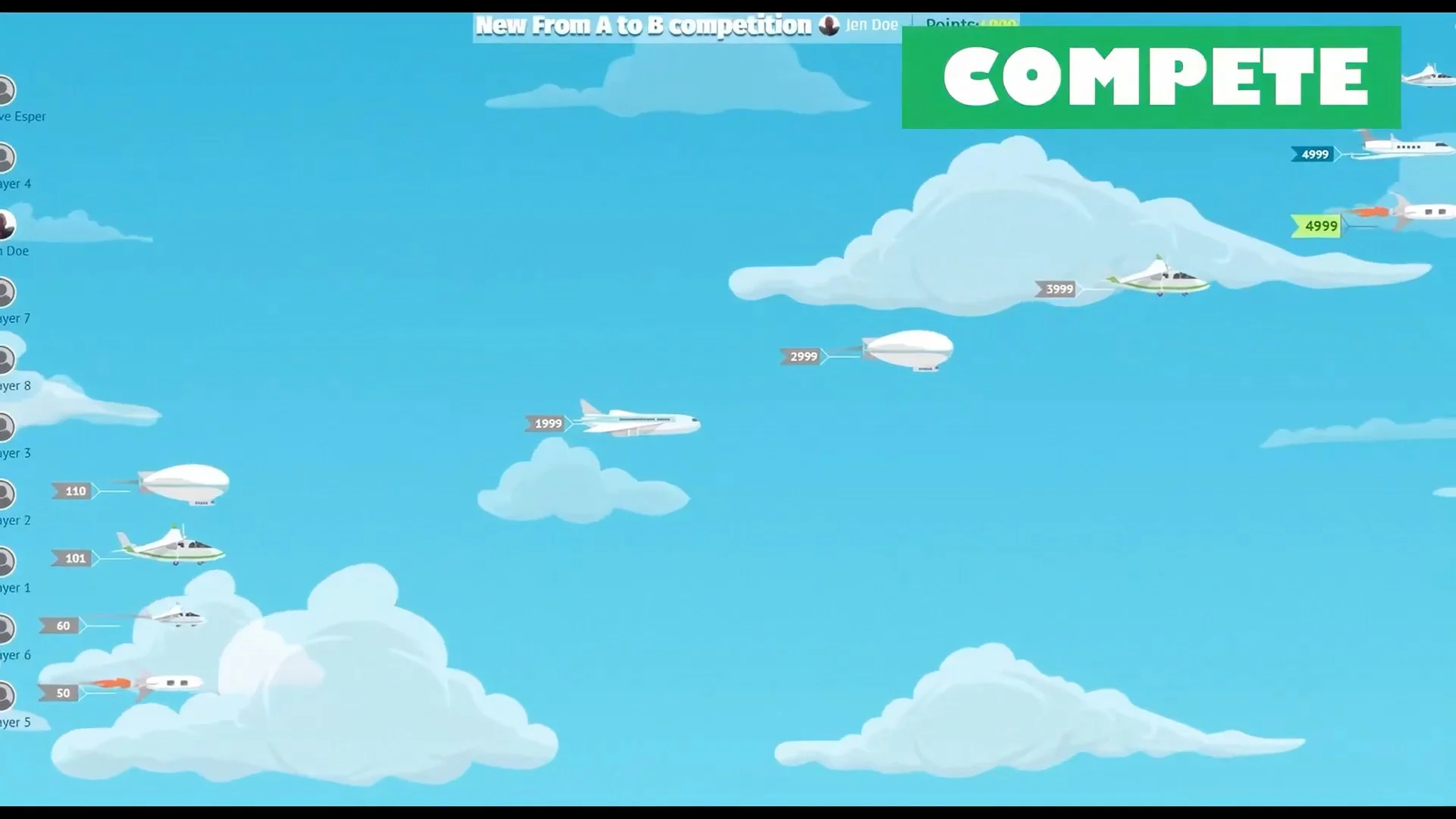
Loyalty gamification changes the mechanics: instead of simply accumulating points — levels, challenges, rewards for actions. A person gets drawn into the game, sees progress, and gets the emotions that form the habit of coming back.
It works both for small companies and large chains — the result shows in the growth of repeat purchases and an increase in the average order value.
We develop gamified loyalty programs for the specific objectives of a particular business: from simple mechanics to comprehensive solutions that are clear to customers and profitable for you.
We help reduce churn, increase engagement, and make customers return on their own — without constant discounts.
What You Get from Implementing Game Mechanics
Game mechanics turn an ordinary loyalty program into an emotional ritual. Instead of boring points, the customer gets progress, statuses, and tasks — and returns on their own to "complete the level."
Benefit: Growth in Repeat Purchases
If just one purchase is missing to reach the next status, the customer returns on their own. Short "action — reward" cycles increase order frequency without discounts: in our projects, the share of repeat visits grew by 20–35% with the same marketing budget.
Benefit: Customer Engagement and Loyalty Without Discounts
Quests, rewards, and unexpected bonuses hold attention better than ordinary mailings. The customer opens the app more often to check their progress — and every visit becomes a touchpoint with the brand. This way, loyalty rests not on "cheaper" but on "more interesting."
Benefit: Brand Recognition
Achievements are worth sharing. Levels, badges, and prizes give a reason for posts: after implementing gamification for the retail chain «Карамель», brand mentions on social media tripled.
We handle the task turnkey: we design the mechanics, set up analytics, and launch. You get a measurable result — growth in repeat purchases, engagement, and brand recognition.
Loyalty Gamification Formats for Your Task
Every customer returns not for a discount, but for emotion and clear progress. The same mechanics in different industries produce different results: accumulation points work better in retail, while quests engage users of online services.
We select the format to match your audience's behavior and adapt proven schemes — as in large loyalty programs, for example, «Аэрофлот Бонус».
Below are four basic formats that most often address our clients' tasks. Choose the one that fits, and we'll design levels, accrual rules, and visual design for your business.
| Format | For Whom | What It Gives the Customer |
|---|---|---|
| Points and accumulation systems | Retail, coffee shops, beauty salons | Clear progress, quick return, growth in average order value and visit frequency |
| Levels and game statuses | Premium services, B2B segments | Status, privileges, and a sense of exclusivity, long-term brand attachment |
| Quests and challenges | Online services, apps, education | Engagement with new features, emotions, increased time in the product |
| Mixed mechanics | Turnkey projects | Points, statuses, and events in one system — customer retention at every stage |
Any format is adapted to your business logic: accrual thresholds, prizes, activation scenarios. We'll show on a test prototype what it looks like for the customer, and only then kick off development.
How the Project Works: From Brief to Launch
For loyalty gamification to deliver measurable value — growth in repeat sales, customer engagement, brand recognition — rather than just being a pretty mechanic, we follow a clear process. Below are the development stages from the first brief to launch and support. You'll always understand what's happening and what result you'll get at each stage.
- Project brief — we meet with you and dive into your business: who your customers are, what motivates them, and what processes you want to improve. This is the foundation for all mechanics.
- Plan and estimate — based on the brief, we propose a loyalty gamification concept, work stages, timeline, and cost. You see the full picture before the start, with no hidden work.
- Mechanics approval — we show what the program will look like: rules, levels, rewards. We discuss and make edits before development begins — this saves time and money.
- Development and integration — we build the platform and connect it to your accounting systems or CRM. We test it on real scenarios so the program runs smoothly at your pace.
- Program launch — we roll out the solution, train your employees, and provide ready-made materials for customers. Everything is ready to start; you don't deal with technical routine.
- Support and growth — after launch, we track metrics, analyze user behavior, and suggest improvements. The loyalty program lives and delivers results rather than remaining static.
What's Included in the Delivery Package
You get not just a set of game elements, but a ready-made tool for loyalty growth that immediately works for your revenue. The package includes everything needed to launch, support, and grow the program: from scenarios to training materials for staff.
- Game mechanics scenarios. We develop them for your specifics: what actions to reward, how to accrue points and bonuses, and which levels and prizes create excitement among different customer segments.
- Rules and regulations. Documentation in plain language: participation terms, limits, points exchange methods, and the procedure for resolving disputes. Internal instructions are ready for use by lawyers and the support team.
- Staff training. We conduct training for your team: how to work in the new system, answer customer questions, and use gamification for additional sales.
- Analytics on key metrics. We set up tracking of participant activity, repeat visits, average order value, and conversion to target actions. You see what pays off and what needs adjustment.
- Integration with your systems. We connect the solution to your current CRM, website, or app without lengthy downtime. Your customers don't notice technical details — only the convenience of participation.
- Post-launch support. We help in the first weeks, monitor stability, and respond quickly to feedback. Based on feedback, we fine-tune the mechanics so the program delivers maximum benefit.
In the end, you get a package that doesn't gather dust on the shelf: it's implemented, employees are trained, and it's used right away. Analytics and regular support turn gamification from a one-off promotion into a working channel for boosting loyalty and repeat sales.
Case Study: How We Retained Customers Without Additional Discounts
The coffee shop chain Кофейная мануфактура approached us. Previously, it kept guests with a classic discount card "minus 10%", but this directly hit margins: regular customers paid less, while sales didn't grow. At the same time, new visitors rarely came back — there was no reason to return.
We replaced the discount with game mechanics. The guest received levels and personal tasks: "order 3 drinks in a week," "bring a friend," "try a new product." For completing them — a free topping or coffee, but the main thing was status. The client decides when to reward and doesn't sacrifice margin.
We launched the program at 12 locations. Three months later, we measured the effect using point-of-sale data: repeat purchases grew by 37%, the average order value by 18%. The share of guests who returned within a month grew from 22% to 41%. And all of this without increasing spending on discounts and marketing.
Importantly, the result was visible, not "by eye." We compared two full periods before and after the launch: the dynamics of repeat visits and average order value were confirmed at every location in the chain. The owner understood how the mechanics affected revenue and could adjust the rules at any time.
Gamification proved to be fairer than discounts: it creates a habit, not a "deal purchase." After three months, the loyal audience didn't just stay — it started spending more.
That's why we're confident: customer retention can work without hurting profit, if you measure effectiveness correctly.
How to Choose the Right Format for Your Task?
Choosing a format starts not with technology, but with the question: what task is gamification solving? Retaining customers, increasing the average order value, or motivating employees?
Each task has its own tool — from a simple loyalty program to a multi-level mechanic with point accumulation and levels.
If the goal is to engage a visitor at the first touch, one bright promotion is enough; for a lasting habit, you need a system that accompanies the customer at every step.
The second step is your database: how often customers make purchases, how engaged they are with digital channels, and what their average order value is. If the audience is inactive in the app, a daily-tasks format won't work — you need a lighter mechanic with instant rewards.
And if a customer buys once a month, personal goals and surprises work better than broad mass promotions.
The third factor is launch speed. Standard gamification can be implemented in 3–4 weeks, requires no complex setup, and fits well into an existing website or app.
Non-standard tasks — like integration with CRM and a complex loyalty system — extend the timeline, but pay off with automatic accruals and a unified customer view without manual tracking.
We help you choose a format for your specifics: we analyze the database, set measurable metrics, and show on a prototype how the mechanic will affect behavior. You see which scenarios pay off and which ones need refinement — before significant money is invested in development. The key is not to copy someone else's schemes, but to adapt them to your product.
The final choice comes down to three parameters: goal, audience, and timeline. Tell us about your task — we'll propose two or three formats with an assessment of the effect and cost, so you can make an informed decision.
Frequently Asked Questions and Concerns Before You Start
Before launching loyalty gamification, every manager has the same concerns: timelines, non-standard tasks, guarantees, post-launch support. The key is to get answers before signing the contract, not during the process. We've gathered them here.
What if we can't make the agreed date?
Timelines are fixed in the contract, and we're responsible for them. If a stage is delayed, you'll find out in advance and receive a revised plan — no surprises on the last day. We deliver 9 out of 10 projects on time or earlier.
What if we need non-standard mechanics that competitors don't have?
Non-standard requirements are our regular work. We design mechanics for your task: from simple points to multi-level scenarios with roles for different customer segments. The more unusual the task, the more valuable the result for your audience.
What guarantees are there that the system will actually increase loyalty?
We guarantee not promises, but specific metrics: growth in repeat visits, increased average order value, audience engagement. Before the start, we record the current figures and targets — then track the result in the analytics dashboard. If the mechanic doesn't deliver, we adjust it as part of the support service.
Who will support the system after launch?
We don't disappear after project delivery. A dedicated manager remains available, responsible for the system's operation, updates, and improvements.
Issues are handled on a priority basis, and on request we train your employees to manage the program — from setting up promotions to exporting reports.
If you still have questions — ask them during a free consultation. We'll review your scenario, assess the risks, and propose a solution you can defend before management. You're under no obligation.Discuss Your Task and Get a Project Estimate
Loyalty gamification delivers results only when the mechanic is embedded in your business processes and clear to customers.
At the meeting, we'll review your situation, look at what scenarios already work in your niche, and propose a solution that will lift repeat sales and engagement. The discussion takes 30–40 minutes — enough to define goals, audience, and program format.
After the conversation, you receive:
- Project estimate on the day of inquiry — you understand the budget and timeline without spending weeks on approvals.
- Transparent implementation cost — we fix the scope of work in advance, without hidden charges or "surprises" at the final stage.
- Solution presentation — you see what the mechanics and interface will look like before development even starts.
- Consultation request — a manager will pick a convenient time and answer technical and organizational questions.
- Adaptation to your business — gamification for customers or employees, not a template solution "like everyone else's."
- Post-launch support — we help with setup, participant engagement, and program growth.
This approach has already helped our clients increase the share of repeat orders and turn ordinary promotions into a systematic mechanic that works for brand recognition.
Leave a consultation request — we'll tell you how loyalty gamification will pay off in your case and prepare a project estimate without any obligation.