

Are Your Developers Working Without Fire? GitHub Doesn't Solve That
The familiar tool GitHub solves code-related tasks: it stores versions, tracks issues, and organizes reviews. But ask yourself — does it ignite your team? Usually no.
Developers complete sprints, close tickets, but the inner drive fades: work becomes a pipeline with no room for excitement or personal challenge.
This hits the business directly: feature delivery slows down, deadlines slip, and the best specialists leave for companies that know how to keep interest alive. Those who stay work on autopilot — they burn out and lose initiative.
GitHub records who did what, but it doesn't answer the main question: why should your developers do this with fire?
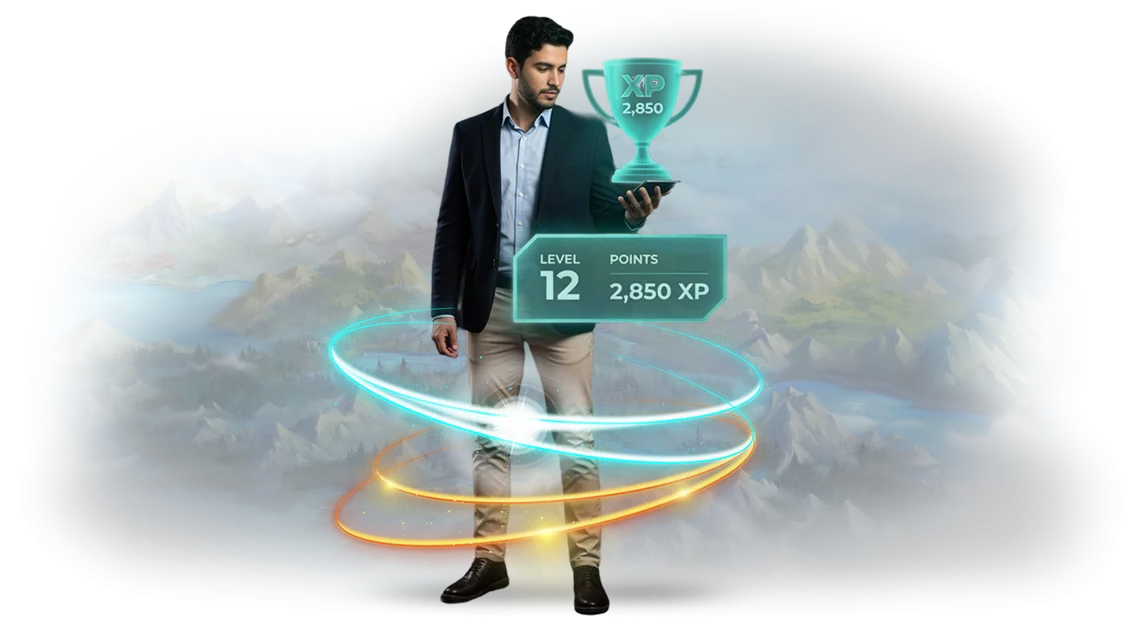
We close that gap. We embed gamification into the processes that already live in GitHub: competitive elements, mastery levels, team challenges, and transparent progress. Your developers see not just a list of tasks, but an achievement map — and that brings motivation back.
The business impact is predictability: higher team engagement, faster releases, lower turnover. Find out exactly how we do it in the following sections.
What Gamification of Business Processes Delivers
Implementing gamification into business processes often comes down to one question: how do you get employees to genuinely engage with their work instead of just clocking hours?
The system's integration with GitHub automatically reads team activity — from task creation to delivery. This turns routine into a game without requiring anyone to learn new tools.
Check yourself: do any of these signs apply?
- Increased engagement — employees see their contribution and get involved in the race for achievements.
- Better teamwork — shared goals and mutual support become visible and are rewarded.
- Greater transparency — everyone understands who is doing what, without extra meetings.
- Clear results — activity and quality are tied to actually completed tasks.
| What we improve | How it shows | What the business gets |
|---|---|---|
| Engagement | Employees show more initiative and see tasks through to the end | Fewer idle periods, higher work speed |
| Teamwork | Sharing experience and helping colleagues earns points | Stronger mutual support, lower turnover |
| Transparency | The dashboard shows each participant's activity | Managers see the real picture without reports |
| Results | Goals are linked to shipped updates and closed tasks | Plans are fulfilled predictably |
GitHub-based gamification is not a game for show — it's a way to put the team on a clear incentive system. Employees get regular feedback, and you get a management tool that works automatically and is visible in numbers.
Gamification Formats for a GitHub Team
For gamification to deliver business results rather than just "badges," it's important to choose a format that fits the team's goals. Within GitHub, you can build several mechanics — from light competitions to long quests. They don't require retraining employees: everything happens in a familiar development environment.
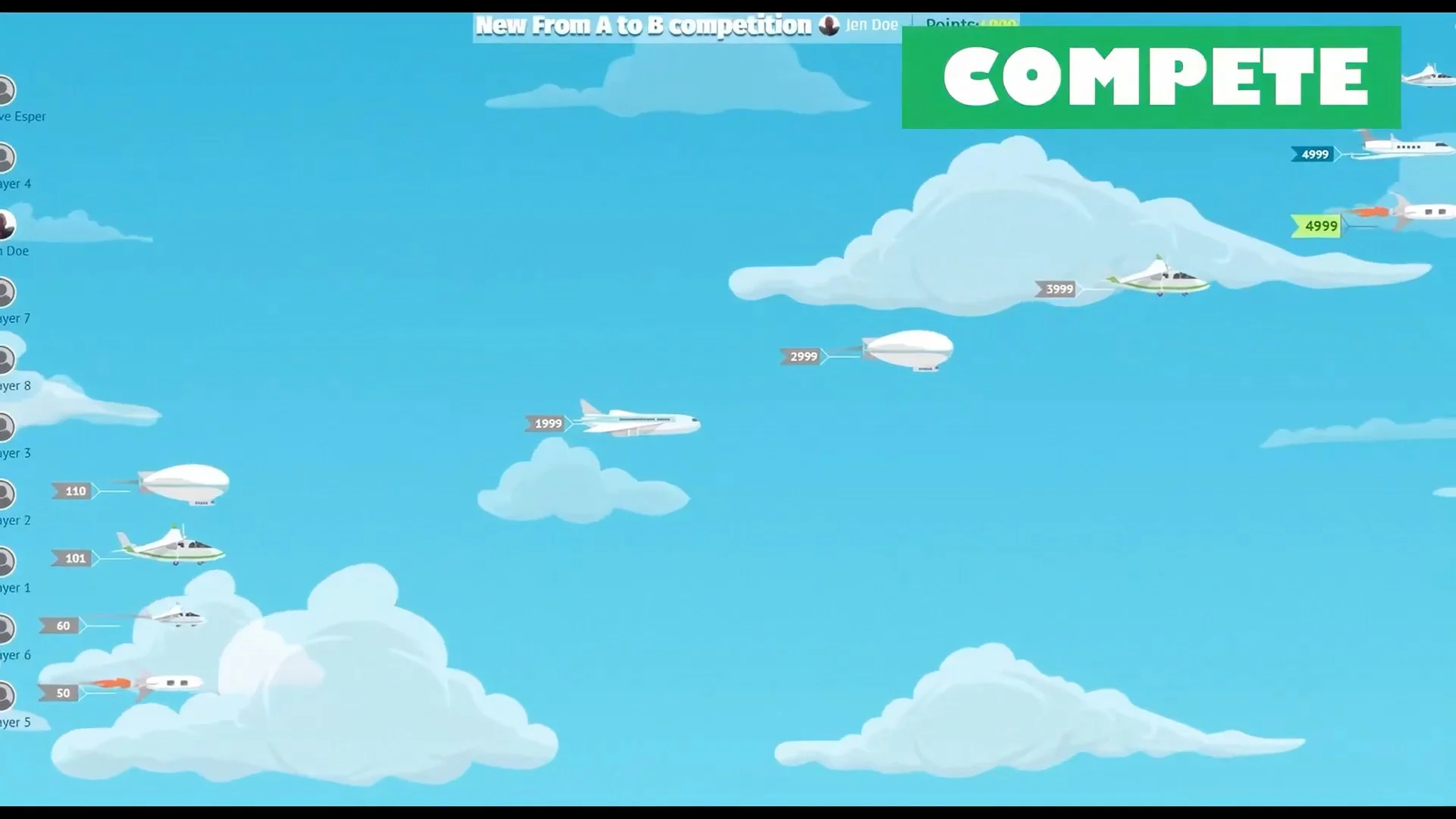
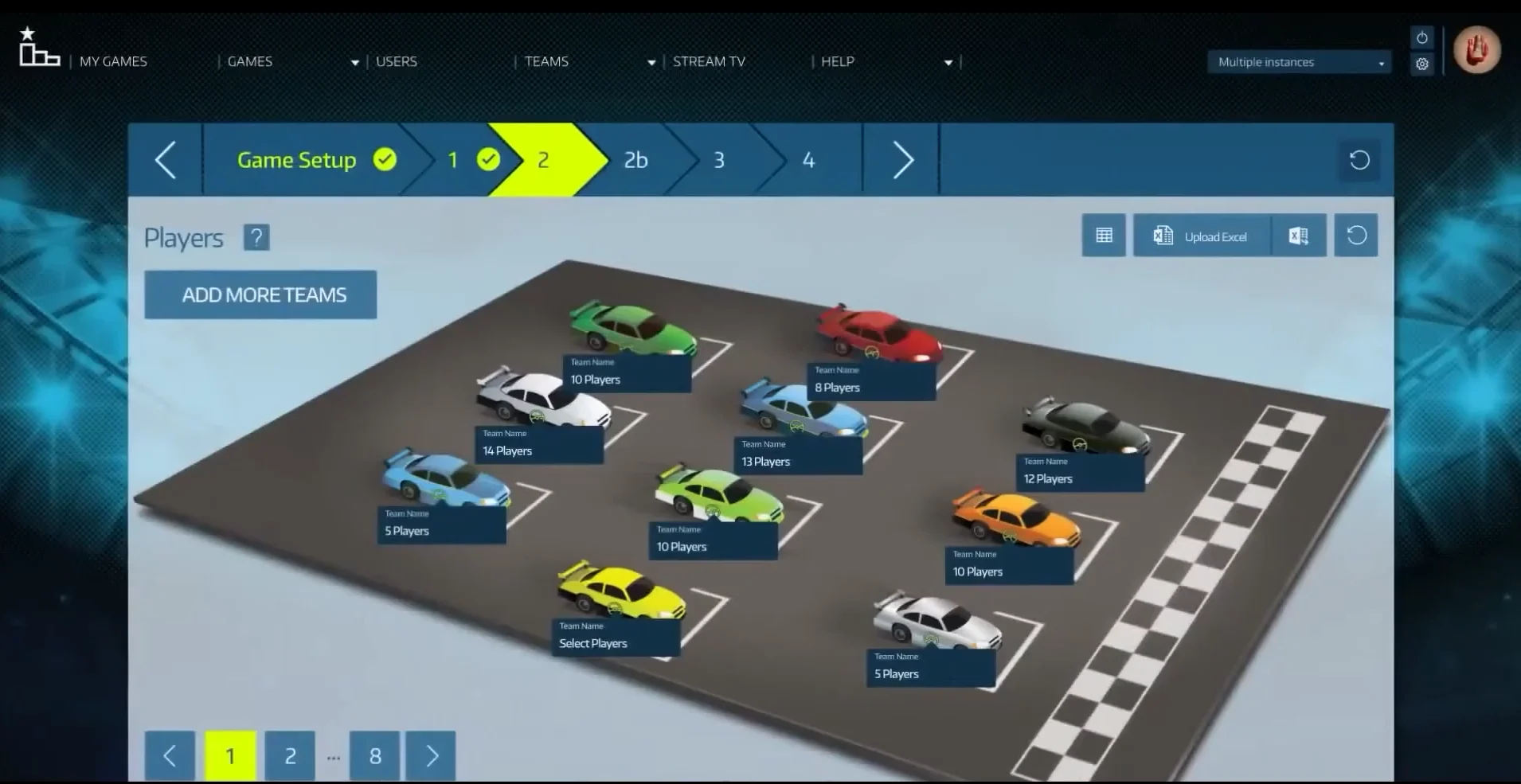
Competitions are useful when you need to quickly boost activity — for example, during a short period or when clearing a backlog. Quests stretch engagement over several weeks and gently introduce new practices.
Achievements reinforce regular behavior: clean change descriptions, code reviews, timely releases. Below is how these formats align with typical manager objectives.
| Format | Who it's for | What the client gets |
|---|---|---|
| Competitions | Teams that need acceleration in the coming weeks | Higher activity, faster task closure, healthy competitive energy |
| Quests | Projects with training and adoption of new practices | Sustained engagement, skill development, team cohesion |
| Achievements | Regular processes and maintaining standards | Predictable quality, less manual control, reinforced habits |
We choose the format based on your goal, configure the mechanics and metrics, and make sure you see results in numbers: faster task completion, fewer missed reviews, higher employee engagement.
At the same time, the team stays comfortable — working in a familiar interface instead of learning a new tool.
How Gamification Implementation Works
We structure implementation as a clear multi-stage process — every stage is time-boxed, and your involvement is needed only at key points. That way, gamification launches predictably without stopping business processes.
-
Brief and audit. We analyze your business goals, employee roles, and current workflows. We identify which actions should be strengthened and which should be measured.
-
Implementation plan and approval. We prepare a stage-by-stage plan, define participant roles, and set success criteria. We show how gamification will fit into your processes and what value it brings at each step.
-
Mechanic design. We build reward, level, and feedback scenarios tailored to your specifics. We consider how employees perceive tasks and when they need extra motivation.
-
Setup and integration. We implement the system and link it to your existing work tools. If you use GitHub, we connect directly to it so employee achievements are reflected automatically — without manual entry or extra effort.
-
Testing and refinement. We test the system on real scenarios, catch issues, and polish the details. You get a stable, working solution — not a "raw" product.
-
Launch and training. We announce gamification to the team, clearly explain the rules and benefits, and help employees adopt the new system quickly.
-
Support and evolution. We stay with you after launch: monitor metrics, answer questions, and regularly improve mechanics based on feedback.
As a result, implementation is transparent — you always know what is happening at each stage and what value it creates for the business. And support from the start helps you keep momentum and adjust the program on time.
What's Included in the Delivery Package
The delivery package is not just software — it's a ready-made tool that starts working immediately after setup. Everything needed to launch gamification is included in one package, from mechanics to reports.
The package includes:
- Game mechanics. Points, levels, ratings, and team competitions are adapted to your processes. They are battle-tested and require no additional development.
- Employee interfaces. Clear screens showing current results and achievements. Employees don't need to dig into settings — everything is visible at a glance.
- Game rules. Scoring criteria, levels, and statuses are predefined. Transparent rules prevent disputes and make motivation objective.
- GitHub integration. Developer actions are automatically reflected in the game system: completed tasks, project contributions, code quality. No manual entry — data is pulled automatically.
- Manager reports. Visual summaries of team activity and engagement. You can see which mechanics work and what should be adjusted.
- Launch support. We work with you for the first month: help configure the system, answer employee questions, and adjust rules as needed.
- Administrator training. We transfer the knowledge your team needs to manage mechanics and read reports. You won't depend on us after launch.
In the end, you get not a "box of code" but a working motivation management tool. Everything you need to start is already in the package — including support.
Case Study: How Game Mechanics Raised Productivity by 40%
One of our clients — "Smart Develop", a product company with a team of 14 developers — came to us with a typical pain point: tasks were slipping, code reviews stalled for days, and productivity dropped from iteration to iteration.
External incentives no longer worked, so we proposed layering game mechanics over their daily process.
How We Implemented It and What Changed
We didn't rebuild the workflow — instead, we connected the game system to the tool the team already used every day, including GitHub. Developers earned points for every meaningful action: timely commits, fast code reviews, helping colleagues.
The leaderboard showed participants their contribution to the overall result — which triggered healthy competition and made progress visible.
Within two months, the team felt the difference. Productivity rose by 40%: the time from task creation to release almost halved, and the share of tasks delivered on time jumped from 61% to 87%.
Turnover and rework dropped noticeably — people became more attentive to details because quality also earned bonuses.
The development manager summed it up: "Before, I spent half the day on reminders and control. Now the team keeps track of deadlines on its own and helps each other.
We became significantly faster, and six months later they ordered gamification for the sales department — the effect repeated."
Client Review
This project wasn't a one-off success story. After the release, the client left a detailed review on our website and recommended us to two partners. For us, the main indicator is that a year later the company still uses the system and extended its support agreement.
That means the mechanics work on an ongoing basis — not just during the first few weeks of excitement.
Answers to Frequently Asked Questions About Gamification
Doubts before launching gamification are normal.
In ten years of working with our team, we've heard them hundreds of times: "it's complicated," "what if it breaks," "how do we know it will pay off." Our short answer: implementation takes from two weeks, the system runs on professional infrastructure, and the return on investment is visible within the first month through employee and client engagement.
The main thing that removes most concerns is seamless integration with your current development process.
If your team runs projects in GitHub, we connect gamification to the workflows you already have — without stopping work, migrating data, or introducing a "parallel" system that someone has to update manually.
You keep working exactly as before, while the system automatically tracks actions and awards points.
What if gamification doesn't fit into our processes?
We don't offer a cookie-cutter "same as everyone" solution. First we analyze your business goals, roles, and employee motivation — only then do we design the mechanics. So you end up with a system that feels like a natural part of your workflow, not an external add-on.
In addition, we provide a guarantee for support and maintenance after launch. If something goes wrong, you won't be left alone with the issue — our engineers are available during the working day.
Submit a Request for Gamification Development
Submit a request — and within 1-2 days you'll receive an express audit of your business process. We'll show where employee interest is lost, which routines can be turned into a game, and how this will affect work speed and engagement. These are not abstract recommendations, but concrete growth points tailored to your goals.
On the free consultation, we analyze your case and prepare a gamification concept. If needed, we show how achievement tracking can be embedded in your work tools, including GitHub — without any technical complexity for you.
After that, we act transparently, step by step:
- Conduct an express audit of the process and current motivation system.
- Build a gamification concept for your goals: metric growth, faster deal closure, employee retention.
- Prepare a commercial proposal with a clear scope of work and terms — no hidden requirements.
- Create a launch timeline with checkpoints at every stage.
- Implement the solution and, if needed, integrate it with your services — from internal portals to development systems.
- Provide guarantees for implementation, maintenance, and post-launch support.
After the call, you'll have a plan, timeline, budget, and a clear understanding of the expected result. The decision to start is always yours — we don't push, we help you make an informed choice.
Submit a request now — we'll send you the audit and launch timeline, and discuss the details at a time that works for you.
How to Choose the Right Gamification Format for Your Team?
The right gamification format is determined not by the popularity of a mechanic, but by your goals and team specifics. First, answer three questions: what exactly do you want to change — speed, quality, engagement? Who participates — one department or the whole company?
And what timeframe are you looking at — a month, a quarter, or on an ongoing basis? This determines whether a simple rating is enough or a multi-stage team scenario is needed.
For a small team, lightweight mechanics work best: points for completed tasks, badges for regularity, visible progress. For a large department, team quests are more effective, where employees compete by division and everyone's contribution is visible.
It's important that the format doesn't disrupt existing processes but embeds into them. For example, if the team already works in GitHub, gamification can become part of the familiar flow: closed issues, completed code reviews, and finished sprints earn points and statuses. No need to learn a new system — results are visible immediately.
The most common mistake is choosing a trendy format that isn't connected to daily work. Employees see the game as a distraction, not as support.
That's why the right approach starts with diagnostics: we examine real processes, find where the team loses focus or motivation, and propose mechanics matched to those specific dynamics.
This approach ensures gamification reinforces the right behavior, rather than simply adding competitive noise.
The key selection criterion is whether the format will still be engaging after a month. If the leaderboard has already become boring, choose a deeper scenario: levels, storyline, team goals, and unexpected bonuses.
We help you find the right balance — rewards at the start, sustained interest in the middle, and clear business value at the end.
In short, you get not just a game, but a tool your employees use willingly — because it becomes easier and more interesting to achieve real results alongside GitHub processes.