

Gamification of Business Processes: How to Bring Back Interest in Work in Jira
When tasks in Jira are completed formally, the team loses motivation. Employees close tickets "for show" without digging into the substance, and gradually interest in work fades. Outwardly, the process continues: tasks move through statuses, comments appear. But the product isn't advancing, and deadlines are missed due to constant rework.
"We ask for a detailed comment, but all we get is 'done' — and it's like that for every task," says the development lead at one of our clients.
"There's progress only in reports, not in the product." This situation is familiar to anyone who manages a team through Jira: frantic activity in the tracker doesn't equal results.
The reason isn't employee laziness, but the lack of a visible connection between their actions and the company's success. When a task is just an item on a list, motivation inevitably drops.
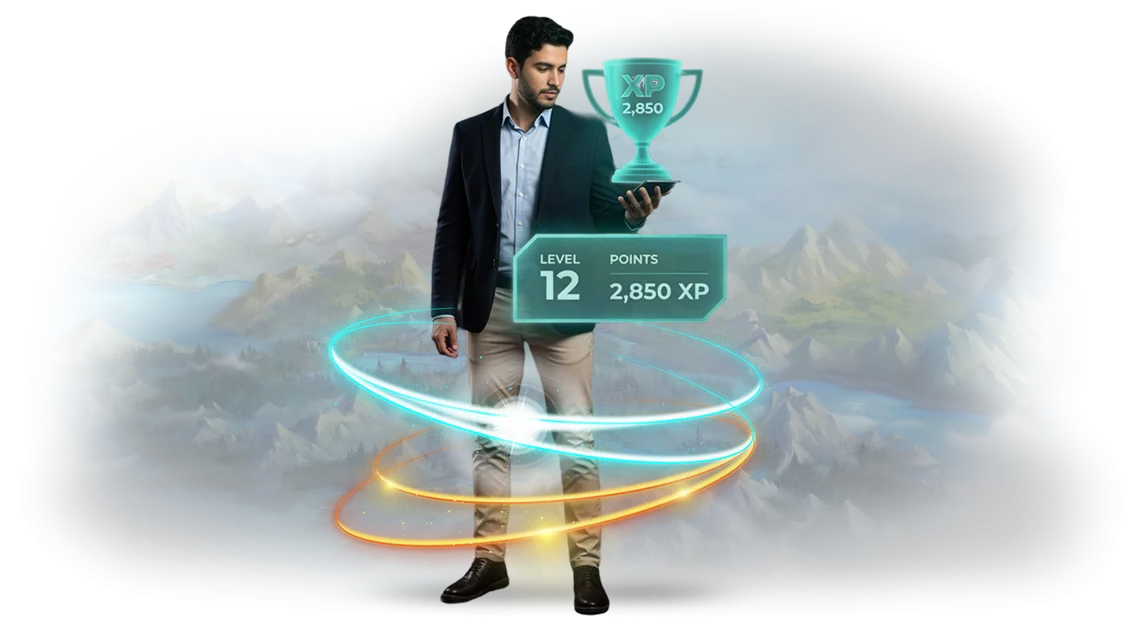
Gamification of business processes changes this: routine turns into a game with clear goals, levels, and rewards. The team sees progress and its impact on the overall result — engagement returns.
Gamification isn't points for points' sake, but an engagement management tool. It lets employees compete with themselves and their colleagues, do better work, and enjoy it. For a manager, it's a way to turn Jira from a task repository into a living business development tool.
We implement game mechanics directly in Jira: we configure points, achievements, ratings, and team challenges so that employee motivation grows naturally, without coercion.
The manager gets a transparent picture — who is genuinely moving forward and who is just simulating activity. Tasks are closed faster, and business processes come to life.
What Gamification Delivers: Efficiency Growth and a Living Team
Routine tasks in Jira are a manager's eternal headache: deadlines are burning, team members lose focus, and team efficiency is judged by eye.
Gamification turns daily work into an engaging process: employees earn points for closed tasks, levels for consistency, and rewards for helping colleagues.
This isn't a game for the sake of gaming, but a tool that embeds into your Jira and starts steering team behavior in the right direction.
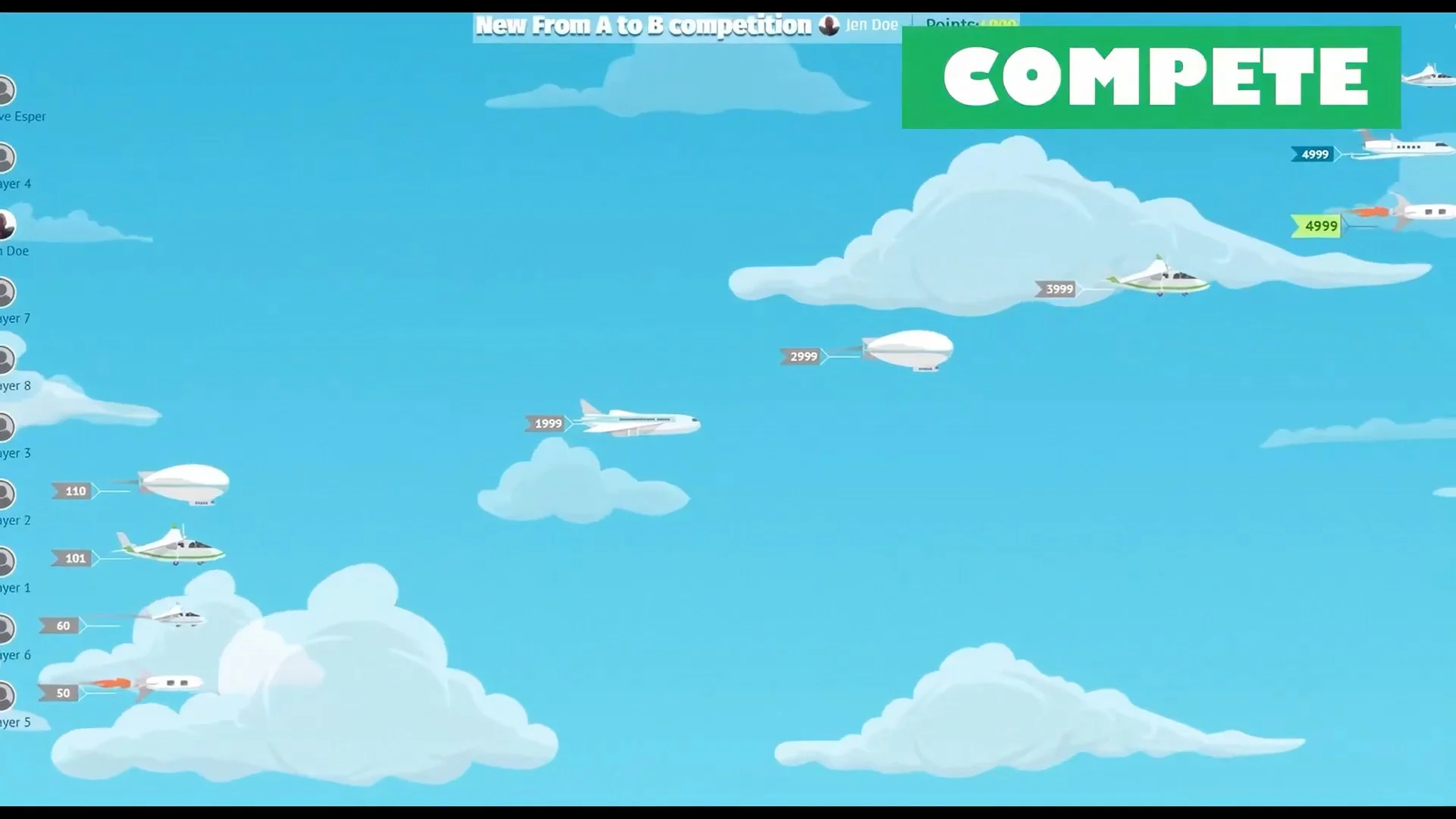
"We connected gamification to our Jira and within a month saw noticeable growth: tasks started being closed 30% faster, and the team members themselves began competing for the top spot in the leaderboard," — head of development at a large IT company.
What specifically changes after implementation:
- Speed. Transparent rules and instant rewards motivate closing tasks without delay. The average completion cycle shrinks by 20–40%.
- Teamwork. Mechanics of collaborative competitions and shared goals unite departments that previously worked in silos.
- Lower turnover. Recognition of achievements and public rewards boost engagement — employees see the value of their work and leave less often.
- Live metrics. The manager sees not abstract reports, but real-time activity dynamics: who is driving the project and who is stalling.
Gamification gives you not just a "fun picture," but measurable efficiency growth. A transparent reward system creates healthy competition, and you get objective data for bonuses and team development.
As a result, the business gains predictable timelines and engaged employees — and that's a direct path to profit growth.
Gamification Formats in Jira: What to Choose for Your Team
Choosing a gamification format in Jira isn't a matter of "like it or not" — it's about matching the team size and its tasks.
If you overload a small group with complex mechanics, employees will tire of distractions; if you give a large department too simple a set of rewards, interest will quickly fade.
We've identified three formats that cover most scenarios: from a small team to an entire company. Each option is tailored to your process and doesn't require employees to change their usual way of working in Jira — the system itself guides them on what to do next.
| Format | For Whom | What It Gives the Client |
|---|---|---|
| Light | Team of up to 10 people | Fast engagement: task showcase, rating, and badges for completed work. Setup takes 2–3 days without changing processes. |
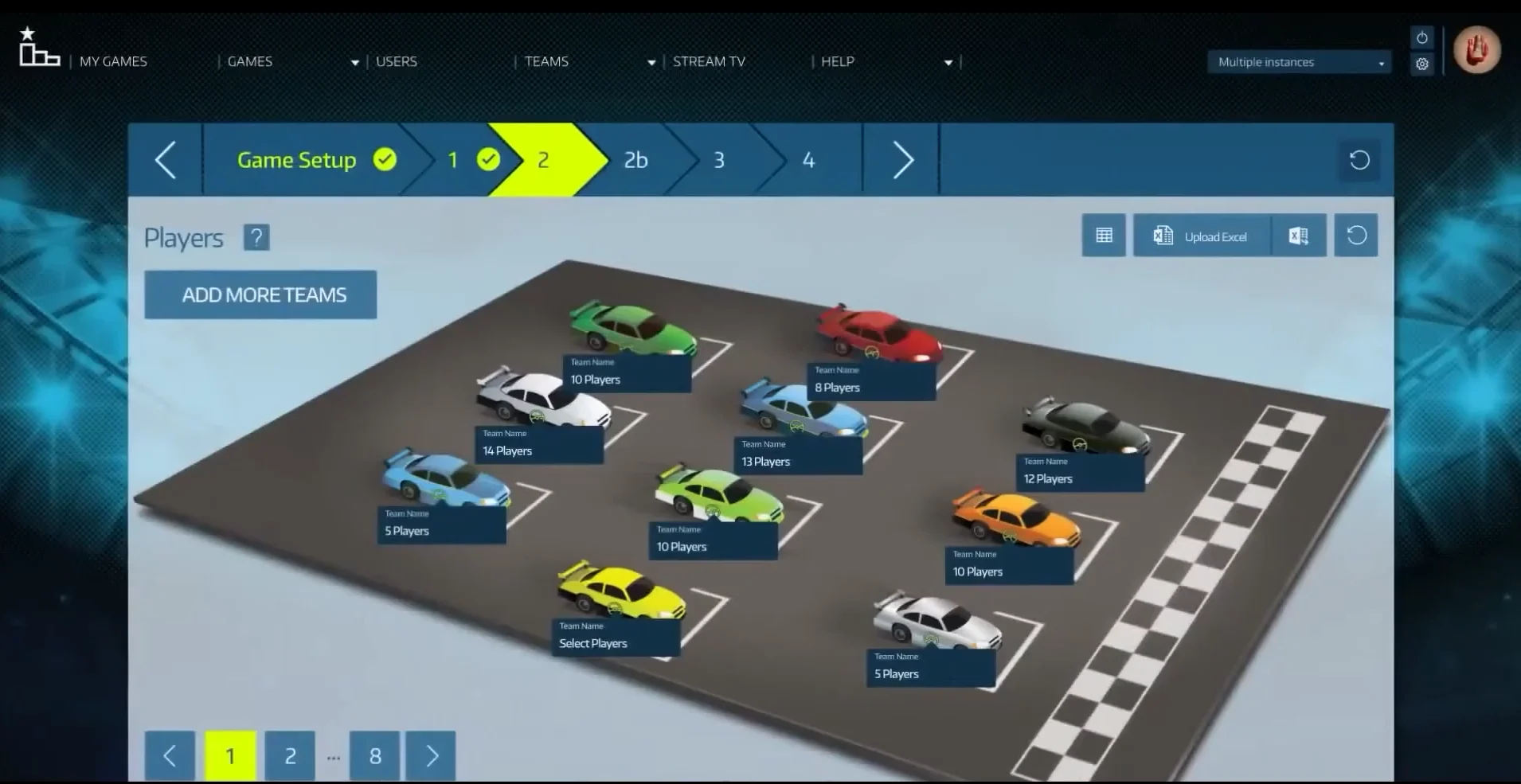
| Advanced | Department of 15–50 employees | Personal and team goals, levels, automatic rewards, and workload analytics. Task completion regularity grows — the manager sees who is doing what. |
| Comprehensive | Company with multiple departments | A unified motivation system based on KPIs, cross-functional challenges, and consolidated reports for management. Suitable when you need to unite different teams around common goals. |
If you're unsure where to start, choose the light format: it pays off within the first week and easily expands into a more complete one.
Our team helps with the choice, configures the system to fit your business processes, and supports the launch so that gamification works for results rather than being just a game.
Implementing Business Process Gamification: 6 Steps
Any innovation is a risk for business. That's why we've built gamification implementation as a transparent six-step route where the result and timeline are clear at every stage. You see the full picture and control the process.
- Brief and process audit. We analyze which team tasks should be turned into a game: regular reports, ticket handling, following procedures. We record current metrics and goals — so there's a baseline to compare against after launch.
- Plan and approval. We present the gamification scheme: which actions earn points, how levels and rewards work. You approve the mechanics before work begins — no unpleasant surprises.
- Prototype and Jira setup. We configure the game logic directly in your work environment — employees keep working in the familiar system, and the new mechanics require no separate window or context switching.
- Testing with key participants. We run a pilot with a small group, collect feedback, and adjust the difficulty balance. This eliminates the risk of "the game didn't land" before full launch.
- Launch and team training. We bring gamification into regular operation and explain the rules and benefits of participation to employees. Clear communication boosts engagement from day one.
- Support and development. We monitor metrics, answer questions, and fine-tune the mechanics to the evolving business process. You get a working tool, not a "one-off project."
As a result, you have your own motivation system that drives metrics every day. Your data stays in Jira — with no losses and no process downtime.
What's Included in the Delivery: A Complete Launch Kit
We deliver a ready-made solution, not a set of scattered files. Everything needed for launch and day-to-day operation is already assembled and tested. You get a complete kit that lets you start without bringing in additional contractors or unexpected refinements.
- Game scenarios and rules — well-thought-out mechanics for your business tasks. The points, levels, and rewards system is clear to employees from day one: they immediately see how participation affects the overall result.
- Setup and integration with Jira — a ready-made connection to your workspace. Tasks, projects, and processes are automatically accounted for in the game logic, so there's no need to spend time on manual data transfer.
- Instructions for the team — simple materials for employees and managers: how to participate, where to see progress, and how to use the results in work. Anyone on the team can figure it out in a minute.
- Results reports — clear statistics on engagement and dynamics. You see which processes have sped up, which employees are active, and where rules should be adjusted.
- Launch support — we help at the start, answer questions, and guide the first game cycles. You're never left alone with the system and always know who to reach out to.
- Mechanics updates — as processes change, we adapt scenarios and add new levels and rewards so the team's interest doesn't fade.
This kit covers all stages — from the first days of work to regular analysis. You don't need to figure anything out or buy anything extra. All that's left is to focus on results, and gamification will work for your team's efficiency.
Case Study: How Gamification Improved Task Completion in Jira
The head of the IT department at an 80-person company came to us. The team managed all tasks in Jira, but deadlines were systematically missed: only about half of the tasks were closed on time, while overdue "tails" piled up for months.
Negotiations, oversight, and personal reminders helped for a few days — then everything returned to the previous rhythm.
We conducted a brief process audit and proposed adding game mechanics directly into the work tool.
Employees began earning points for tasks closed on time and losing them for long-overdue and "forgotten" ones; on the board, everyone could see their own progress and the team's rating. No additional systems or training — just familiar work, but with a clear goal.
Results appeared within a month. Task completion in Jira grew by a third, and the share of overdue tasks was cut in half. Moreover, the growth didn't come from overtime — the team started planning its day better and getting distracted less often by unrelated tasks.
"We expected a positive effect, but not such a fast one. Tasks that had been hanging around for months were closed in the very first week." — head of the IT department.
"People started tracking deadlines themselves and reminding each other. Internal competition raised the pace without our involvement." — team lead.
"The main result is predictable processes. Now we're confident that a task set in Jira will be completed on time." — development director.
Six months later, the client ordered an extension of gamification to the support department. A repeat order is the best indicator for us that the system delivers measurable value to the business.
How to Choose a Gamification Format for Non-Standard Tasks?
The format should be chosen based on the task, not from ready-made templates. There's no one-size-fits-all solution for a non-standard situation: an individual approach is needed.
The mechanics must account for the specifics of the process, the audience, and the tools people work in. We help you choose a format that solves your exact task — without excessive "gaminess."
First, we identify what gamification should change: speed up routine, engage people in a new process, reduce resistance, or collect useful data. The goal determines the foundation — light points and ratings, levels, team contests, or a combination of these.
If the process runs through Jira, game elements are embedded into the work rather than distracting from it. The key selection criteria can be summarized in the table:
| Criterion | How It Affects Format Choice |
|---|---|
| Gamification goal | Determines the mechanics: competition, levels, team goals |
| Audience profile | Affects interface complexity and familiarity |
| Process nature | Routine — points; projects — scenarios and stages |
| Work environment | Jira, CRM, portal — the format must work inside familiar tools |
| Desired behavior | Rewards are matched to the frequency, speed, and quality of actions |
For example, for regularly updating statuses in Jira, accumulating points and visual progress bars work well. For long project work — team levels and an open finale. This way, each non-standard task gets its own set of mechanics.
We don't sell "off-the-shelf" solutions. We select the format individually for your process and test it on a real audience — you get gamification that delivers measurable results rather than just entertaining employees.
Addressing Doubts: What If Gamification Doesn't Work?
Doubts are a natural part of working with new tools. "What if employees don't like it?", "What if the mechanics become outdated?", "Who's responsible if something breaks?" — clients ask before starting. Let's address the typical fears and show how we resolve them.
Gamification works when it's embedded in real business processes. We start with a task audit, then select mechanics that support the team. Integration with Jira preserves the familiar environment — employees work in a known interface, and motivation appears from within.
What if gamification doesn't bring the expected effect?
We don't launch a project without measurable goals. We record key metrics — conversion, ticket processing speed, engagement — and check against them after launch. If we see the mechanics aren't working, we adjust them together with you. You pay only for functionality that delivers results.
What if the system breaks down or stops working?
We're responsible for uptime. Throughout the support period, we ensure stable operation through backups and monitoring. In the event of a failure, we respond within the business day and restore access — you're never left alone with a problem.
Who will support the project after launch?
After launch, a team is assigned to you: a manager and a technical specialist. They monitor the system, update mechanics at your request, and advise on how to increase engagement. Support continues for the entire duration of cooperation, not ending on delivery day.
Are there any guarantees on results?
Yes, we formalize our agreements in the contract: timelines, metrics, and the refinement process. If we don't hit the targets, you receive compensation or free adjustments. We work as partners, not just contractors.
Below are detailed answers: working terms, cost, and implementation stages.Launch Gamification in Jira: Get a Plan for Your Task
Gamification in Jira turns routine into a game: employees see progress, earn points for tasks, and compete to achieve goals. But to make it beneficial, you need a plan, not just a set of mechanics. We'll prepare one for your task — just submit a request.
Within a few days, you'll receive a step-by-step gamification plan and an estimate that can be approved and launched right away. We'll analyze your process, suggest suitable mechanics, and show how to integrate them with Jira without stopping work.
- Request — you describe the task; we clarify the details and agree on the format.
- Brief — a short interview about goals, the team, and the problems you want to solve.
- Analysis — we examine your process in Jira and identify growth points and bottlenecks.
- Gamification plan — we select mechanics to match employee motivation and task specifics.
- Estimate — we set timelines, budget, and expected results.
- Implementation — we configure the system, integrate it with Jira, and test.
- Launch — we train the team, provide support, and fine-tune the mechanics.
The plan will include:
- a map of current processes and growth points;
- a selection of game mechanics matched to team motivation;
- a scheme of points, levels, and rewards;
- a plan for Jira integration without stopping work;
- forecasts for engagement and timelines;
- a transparent budget estimate.
Submit a request — we'll send the plan and estimate within a day. You'll be able to make a decision without extra meetings or calls.