

Employees losing motivation? Gamification in Microsoft Teams will solve it
Employees lose interest in routine: tasks are performed on autopilot, metrics sag, and the best ones look elsewhere. The problem is not laziness, but the lack of quick feedback and tangible progress.
When one day is no different from the previous, team motivation drops—and that hits business results.
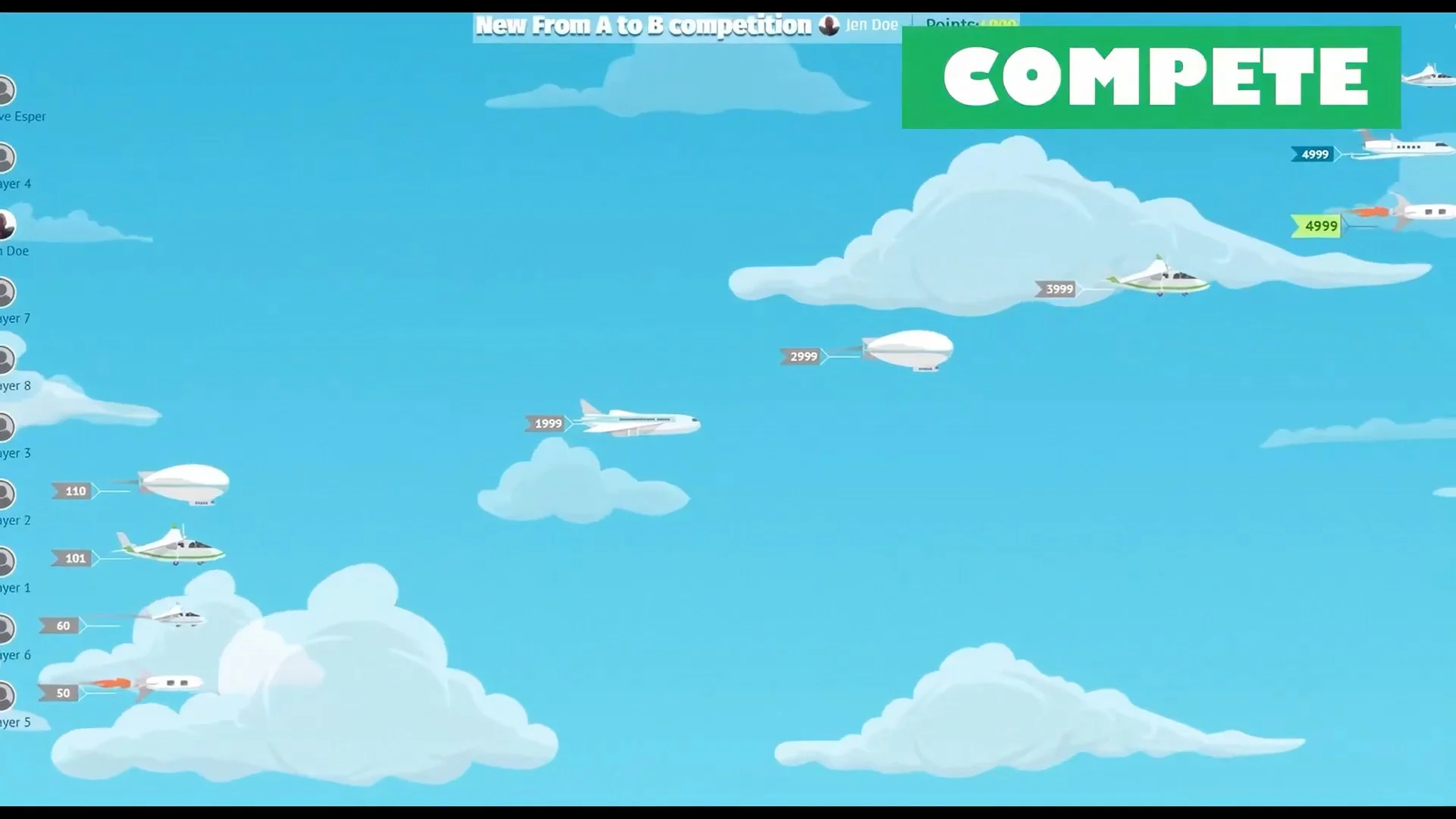
Gamification in Microsoft Teams brings back employee engagement without introducing a new system. We use the environment where the team already works: chats and channels become a space for competition and achievements.
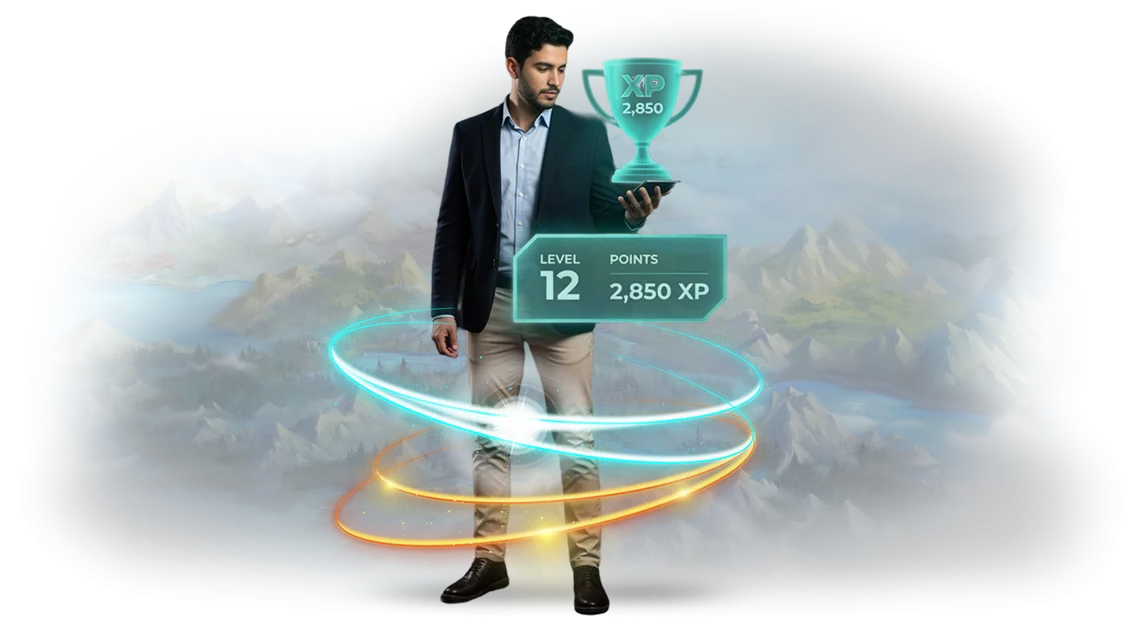
Employees earn points for tasks, unlock levels, and see their contribution to the overall result—this works stronger than orders.
For business, this is a measurable effect: higher work speed, fewer errors, lower turnover. Engaged employees bring 20–30% more value, and the team does not require constant control.
The manager sees who moves the project forward and who is “sitting it out,” and redistributes the workload in time.
We bring gamification into Microsoft Teams without overloading the interface or distracting from work. The mechanics are tailored to your processes: from recognition of merits to quarterly competitions. Employees do not need to learn new tools—they play where they are already used to working.
In the end, you get a team that wants to achieve goals on its own. Gamification in Microsoft Teams is not entertainment, but a working tool for improving efficiency. Tell us about your task—we’ll show you how to bring energy back into the team.
What benefits you get from game mechanics in work processes
Game mechanics in work processes are not a way to entertain employees, but a tool that translates routine into measurable results.
Integration with Microsoft Teams allows you to launch gamification where the team already works every day—without context switching and without new software. You get not just a game, but a managed change in employee behavior.
Increased productivity
When employees see their progress in points and levels, routine tasks stop being an endless stream. Competitiveness and clear goals speed up the execution of operations by 20–30%—this is confirmed by our projects for companies in the services and manufacturing sectors. At the same time, quality does not suffer: mechanics reward correct actions, not just speed.
Lower staff turnover
Constant rewards and public recognition of achievements increase employee loyalty. The more often a person sees that their contribution is noticed, the less they think about finding another job.
Implementing gamification on average reduces staff turnover by 15-20% within the first year—these are direct savings on recruitment and training of newcomers.
Engagement and initiative
Game scenarios turn employees from passive executors into active participants. They themselves suggest improvements, take on additional tasks, and help colleagues—because it brings points and status. As a result, the overall productivity of the team grows, not just KPI attainment.
Improved team atmosphere
Shared goals, team competitions, and joint achievements reduce tension and decrease the number of conflicts. Gamification creates reasons for positive communication: congratulations on a new level, thanks from colleagues, joint challenges.
This kind of environment retains strong specialists and attracts new ones—over time, it becomes part of the company’s HR brand.
Formats for implementing gamification in Microsoft Teams for your task
Every business comes to gamification in its own way: some need a quick contest to revive a department at the end of the quarter, others need a full-fledged motivation system that works for years. That is why we do not offer a single “universal” option. Instead, we select an implementation format for your task—from a light start to a custom solution.
An important advantage of all formats is built-in integration with Microsoft Teams. Employees do not need to learn a new interface or log into a separate portal: points, ratings, tasks, and notifications appear right in the familiar workspace. This removes the main barrier to adoption—team resistance.
Here are the typical options we work with:
| Format | For whom | What it gives the client |
|---|---|---|
| Quick start on templates | For departments up to 100 people who want results in 7-14 days | Engaging contest without lengthy preparation, clear rules, instant spike in activity |
| Flexible constructor | For medium teams with non-standard processes | Configuration of mechanics to fit your business process without major development, quick changes to rules |
| Individual system | For companies building long-term motivation | Unique scenarios, integration with accounting systems and internal services, analytics for each participant |
Each format can be easily combined: you can start with a quick start and then grow to an individual system. We always recommend the option that will lead you to a visible result the fastest—growth in engagement and key metrics—and then we scale it up.
Choosing a format is not a technical task, but a question of what result you need in the coming months.
How the integration project runs from brief to launch
We run projects from brief to launch using a proven scheme—it is clear for the client and allows you to control the result at every step. Below are the typical stages of implementing gamification in Microsoft Teams. After the brief, you receive a clear plan, not abstract promises.
- Brief and goals. We have a call and analyze the task: what you want to improve—engagement, adaptation speed, KPI attainment. We record expectations, target audience, and success criteria, so we understand what to count as a result.
- Audit and plan. We study current processes, talk to key employees, and find growth points. We prepare an implementation plan with stages, timelines, and areas of responsibility—you get a project roadmap.
- Mechanics design. We select game scenarios for your business tasks: points, levels, challenges, team competitions, or mixed formats. We agree on the rules and appearance so that gamification organically fits your style.
- Development and configuration. We configure the system for your scenario, integrate it with Teams, and connect the necessary data and events. At this stage, you see intermediate results and can make changes—without losing deadlines.
- Testing. We test the mechanics on a small group of employees: whether everything is intuitive, whether motivation works, and whether there are any failures. We collect feedback and fix the shortcomings before the general launch.
- Launch and support. We enable gamification for everyone, train administrators, and stay in touch for day-to-day questions. After a month, we review the metrics and adjust the settings if needed.
Case: 40% increase in engagement after implementing game mechanics
For the fuel station chain Traektoria, we implemented game mechanics on a corporate portal based on Microsoft Teams.
The client’s task was painful: 650 employees are spread across 40 sites, barely a quarter of the team used internal services, and training for new cashiers stretched out to a week. After three months of the system running, the numbers changed radically.
What the implementation gave: employee engagement grew by 40%—that is how many additional active Teams users appeared in the first two weeks. Completion of training modules rose from 25% to 78%: people began to compete, earn ranks, and share achievements.
The time to get a newcomer up to speed on a shift dropped from five days to two, and turnover in line positions decreased—teams saw career growth in game progression.
Client testimonial
The head of the HR direction of the chain noted: “We expected an increase in activity, but we didn’t think the game would become part of the daily routine.
Employees themselves come up with quests for trainees and ask for new levels for fulfilling the plan.” After six months, the client ordered the expansion of the mechanics to the sales department and logistics—this is the best indicator that the result turned out to be measurable and cost-effective.
How to choose the right gamification format for your team’s tasks?
Choosing the right gamification format starts not with mechanics and points, but with the question: what team task do you want to solve? Make reporting more consistent? Speed up onboarding of newcomers? Make product training less formal?
For each scenario, a different model works: competitive—for sales plans, narrative—for onboarding, cooperative—for cross-functional projects.
There is no universal solution, so we do not sell a “box.” At the first consultation, we analyze your situation: who the participants are, what their level of digital literacy is, where efficiency losses happen, and how the team already works in Microsoft Teams.
That determines whether it will be a light reward system in the chat or a full-fledged achievement tracker with levels and team quests.
It is also important to consider how employees will perceive the change: if you introduce complex mechanics right away, it will cause resistance. An experienced contractor will propose a phased launch—first transparent rules and quick wins, then increasing complexity. This approach keeps interest alive and does not break the usual rhythm of work.
We have already gone down this path with dozens of teams and know which formats take root and which remain just a “toy” with no impact on business metrics.
The choice is also affected by the frequency of interaction: for daily operations, light reminders with game elements are enough, while long projects need a system with stages, levels, and recognition of achievements.
So the right answer to the question “how to choose” is not to read reviews, but to request a consultation. We will ask the right questions, show you two or three suitable options for your tasks, and together we will choose the optimal one.
Then we take on the configuration and integration with Microsoft Teams, so that you get a working tool, not an abstract idea. You will be able to see team engagement and results in the familiar interface, and your employees will not have to learn a new platform.
All that is required from you is to formulate the goal—we will turn everything else into clear and motivating mechanics.
Frequently asked questions about gamification of business processes
We have collected the common questions clients ask before implementing gamification of business processes in Microsoft Teams. We answer directly—without technical details and only about what matters to your company: results, reliability, and support.
How quickly will the effect of gamification appear?
Clients usually notice an increase in engagement within the first few weeks of operation. The system is configured for your business processes, so the first results are easy to see in transparent analytics inside Teams—without complex reports.
Employees may be skeptical about the game. What should we do?
We design mechanics that motivate, not entertain. Before the launch, we take into account the corporate culture and department goals, so game elements are perceived as part of the work process, not as a distraction. If something does not fit, we will adjust the rules together with you.
What guarantees and support do you provide after launch?
We do not abandon the project after delivery. We stay in touch at all stages, respond quickly, and help adapt the gamification when business tasks change. We give a guarantee for all revisions during the first months—we will state this in the contract.
Will the integration with Microsoft Teams compromise data security?
We use standard Microsoft Teams mechanisms: corporate login, access rights differentiation, and data storage within your ecosystem. Employees see only the necessary elements, and management stays with you—all actions are transparent and controlled.
If you still have a question, ask it personally. We will help you design gamification for your business processes, prepare an implementation plan for Microsoft Teams, and address all concerns before the work begins.Order gamification implementation and get results within a month
You are looking not for another program, but for a measurable result: employees are engaged, processes move faster, and metrics are growing.
That is why we design gamification around your business goals and launch it right in Microsoft Teams—in the environment where the team already works. In just a month, you see concrete changes in numbers, not just a nice interface.
The result is not an “installed module,” but a living system in which employees participate every day. We handle the entire path: audit of the current process, setup of mechanics, launch, and training.
All you have to do is use the result and watch the growth, instead of dealing with technical details.
What you get if you order the implementation right now:
- Launch of gamification in Microsoft Teams within a month—without stopping work or long approvals.
- Mechanics adapted to your processes, not template contests.
- Clear rules for employees and ready-made motivation scenarios—no need to study instructions.
- Reporting in a convenient form: you see participation, progress, and impact on business metrics.
- Team training and cheat sheets that stay at your disposal.
- Support after launch: we are right there to keep everything running smoothly and delivering value.
- Transparent terms and a clear work plan—you always know what happens next.
This approach gives results in a month, not in a quarter. Leave a request on the website—we will contact you within one business day, clarify the task, and offer a solution for your business. Ordering the implementation is simple: fill out the form, and we will take care of the rest.