

Employees Ignoring Oracle ERP Cloud? Gamification Will Fix That
If employees avoid Oracle ERP Cloud, you're paying for licenses that aren't working for you. Data is entered late, reports lose relevance, and managers spend time on manual reconciliation — this is a direct loss of money and speed.
The reason is simple: the system seems complex and boring to employees, and there is no motivation to figure it out. Gamification of business processes turns routine into a game with clear rules, rewards, and tangible results.
Instead of forcing work in Oracle ERP Cloud, you create an environment where employees themselves want to complete tasks — because they find it interesting.
We solve this problem: we design game mechanics around your business goals, configure them inside Oracle ERP Cloud, and achieve measurable growth in employee engagement.
Employees stop seeing Oracle ERP Cloud as a "must-do" and begin to see it as a tool that helps achieve personal goals.
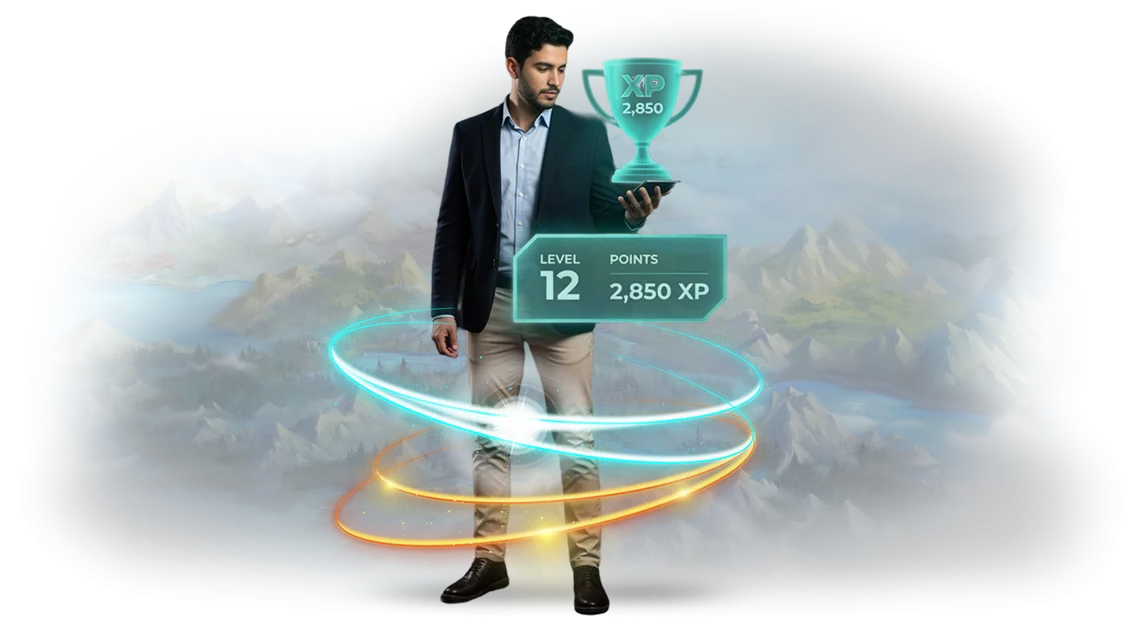
Filling out reports, approving requests, managing the customer database — every action gains value: points, levels, statuses, competition between departments.
This is how gamification of business processes increases staff motivation without expanding headcount or increasing payroll.
Managers see a transparent picture: who is active, where delays occur, which stages get stuck. The system itself highlights bottlenecks, so you can react quickly and improve processes. Gamification doesn't just entertain — it makes work with Oracle ERP Cloud intuitive and regular.
What you get in the end: accurate data entered on time, reduced approval time, and increased productivity. Your employees stop resisting the system and begin using it as an assistant.
This changes the attitude toward work as a whole — excitement, healthy competition, and a sense of achievement appear.
We work on professional equipment and use proven integration tools, so implementation proceeds without failures or downtime in your existing infrastructure.
You don't need to change your usual processes — gamification integrates gently into Oracle ERP Cloud and starts working immediately after launch.
The key result is not pretty points in the interface, but a lasting habit among employees to work in the system daily. This leads to higher engagement, data accuracy, and ultimately higher revenue.
Gamification of business processes is an investment with a clear return, and you can test it in your pilot area.
If employees avoid Oracle ERP Cloud, you're paying for licenses that aren't working for you. Data is entered late, reports lose relevance, and managers spend time on manual reconciliation — this is a direct loss of money and speed.
The reason is simple: the system seems complex and boring to employees, and there is no motivation to figure it out. Gamification of business processes turns routine into a game with clear rules, rewards, and tangible results.
Instead of forcing work in Oracle ERP Cloud, you create an environment where employees themselves want to complete tasks — because they find it interesting.
We solve this problem: we design game mechanics around your business goals, configure them inside Oracle ERP Cloud, and achieve measurable growth in employee engagement.
Employees stop seeing Oracle ERP Cloud as a "must-do" and begin to see it as a tool that helps achieve personal goals.
Every action — filling out reports, approving requests, maintaining the customer database — gains value: points, levels, statuses, competition between departments. Gamification of business processes increases staff motivation without expanding headcount or increasing payroll.
Managers see a transparent picture: who is active, where delays occur, which stages get stuck. The system itself highlights bottlenecks, so you can react quickly and improve processes.
We work on professional equipment and use proven integration tools, so implementation proceeds without failures or downtime in your existing infrastructure.
You don't need to change your usual processes — gamification integrates gently into Oracle ERP Cloud and starts working immediately after launch. The key result is not pretty points in the interface, but a lasting habit among employees to work in the system daily.
This leads to higher engagement, data accuracy, and ultimately higher revenue. Gamification of business processes is an investment with a clear return, and you can test it in your pilot area.
Five Key Benefits of Gamification for Your Company
Routine operations in an accounting system are often perceived by employees as a mandatory burden rather than part of the overall result. Gamification changes that perception: it turns work processes into a clear system of goals where every completed step is visible and rewarded.
Integration with Oracle ERP Cloud allows embedding motivation mechanics directly into daily scenarios — without switching between systems and without data loss.
Here are five key business benefits a company gains after implementation:
-
KPI growth. Employees see their contribution to the big picture in real time. This increases plan completion by 15–25% within the first months of operation.
-
Higher productivity. Game scenarios reduce time spent on document processing, approvals, and closing tasks. Fewer data entry errors — key cycles complete faster.
-
Employee loyalty. A transparent system of points, levels, and rewards reduces turnover. People see the connection between their actions and recognition — this retains strong specialists.
-
Game-based learning. New regulations and updates in Oracle ERP Cloud are absorbed many times faster when employees go through them as a quest rather than a boring instruction. Onboarding of newcomers is reduced from weeks to a couple of days.
-
Unified team motivation. Competition between departments and shared goals create healthy competition. The team itself strives for better results, and managers receive transparent engagement analytics.
Gamification is not just points and badges, but a working performance management tool. We configure it to your business processes, link it to Oracle ERP Cloud metrics, and support it after launch.
As a result, you get growth in key metrics and an engaged team that sees work as achievable levels rather than endless tasks.
Gamification Formats for Your ERP System
The right gamification format depends on the industry and the specific business task. For a warehouse or production, it's quests that guide employees step by step and reduce errors. For retail and service, it's ratings and levels that boost sales motivation.
For a branch network, it's team competitions that bring weak units up to the level of the best. We select mechanics individually and embed them into Oracle ERP Cloud so that game events are based on real data.
Compatibility with the ERP system is a key advantage: the customer does not need to manually collect results and transfer them into accounting. The system itself sees plan performance, number of operations, and other metrics — and turns them into points, levels, and rewards.
| Format | For whom | What it gives the client |
|---|---|---|
| Quests for employees | Data entry departments, logistics, production | Fast process mastery and fewer errors |
| Ratings and levels | Sales and service departments | Higher conversion and average ticket size through healthy competition |
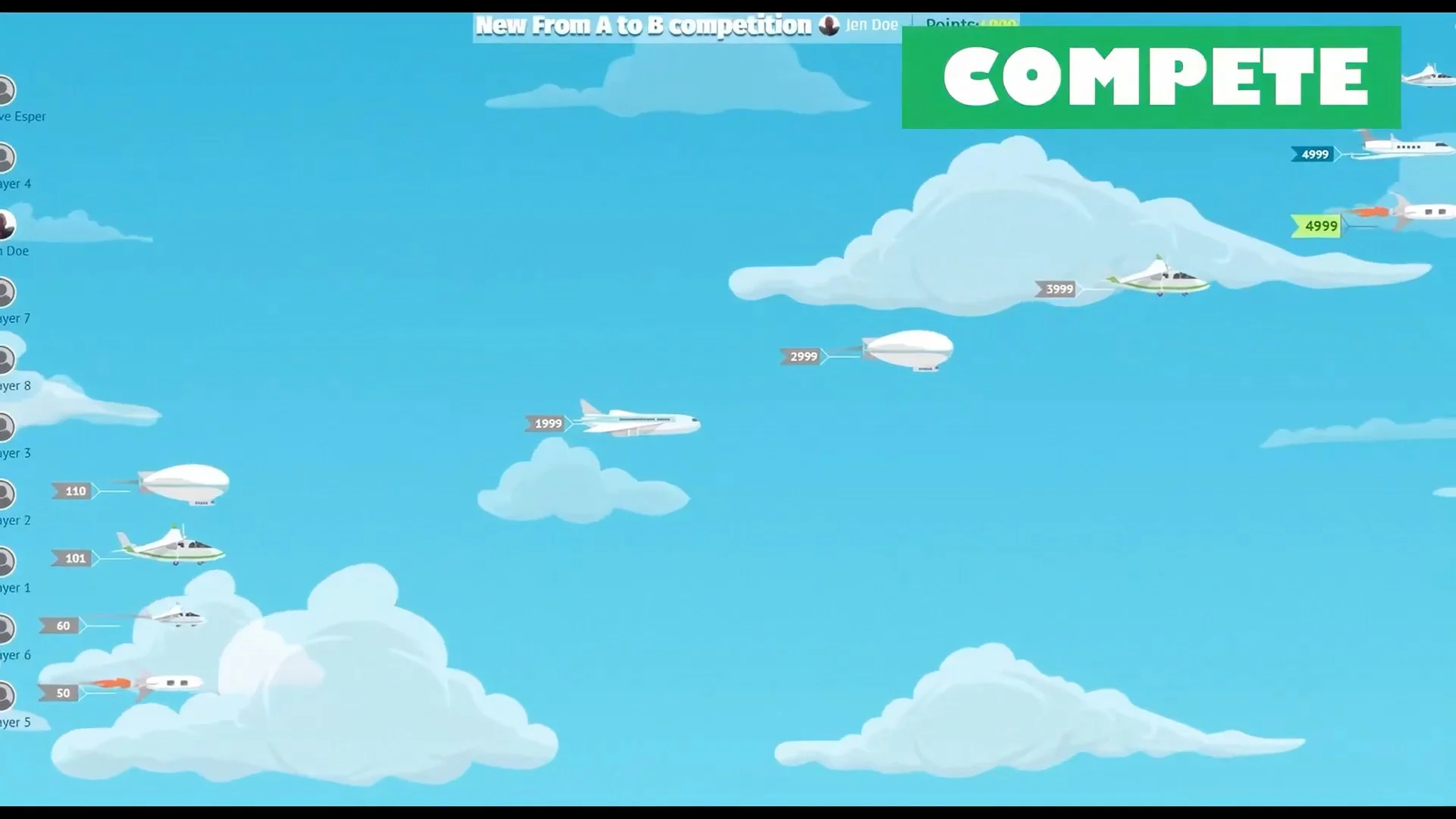
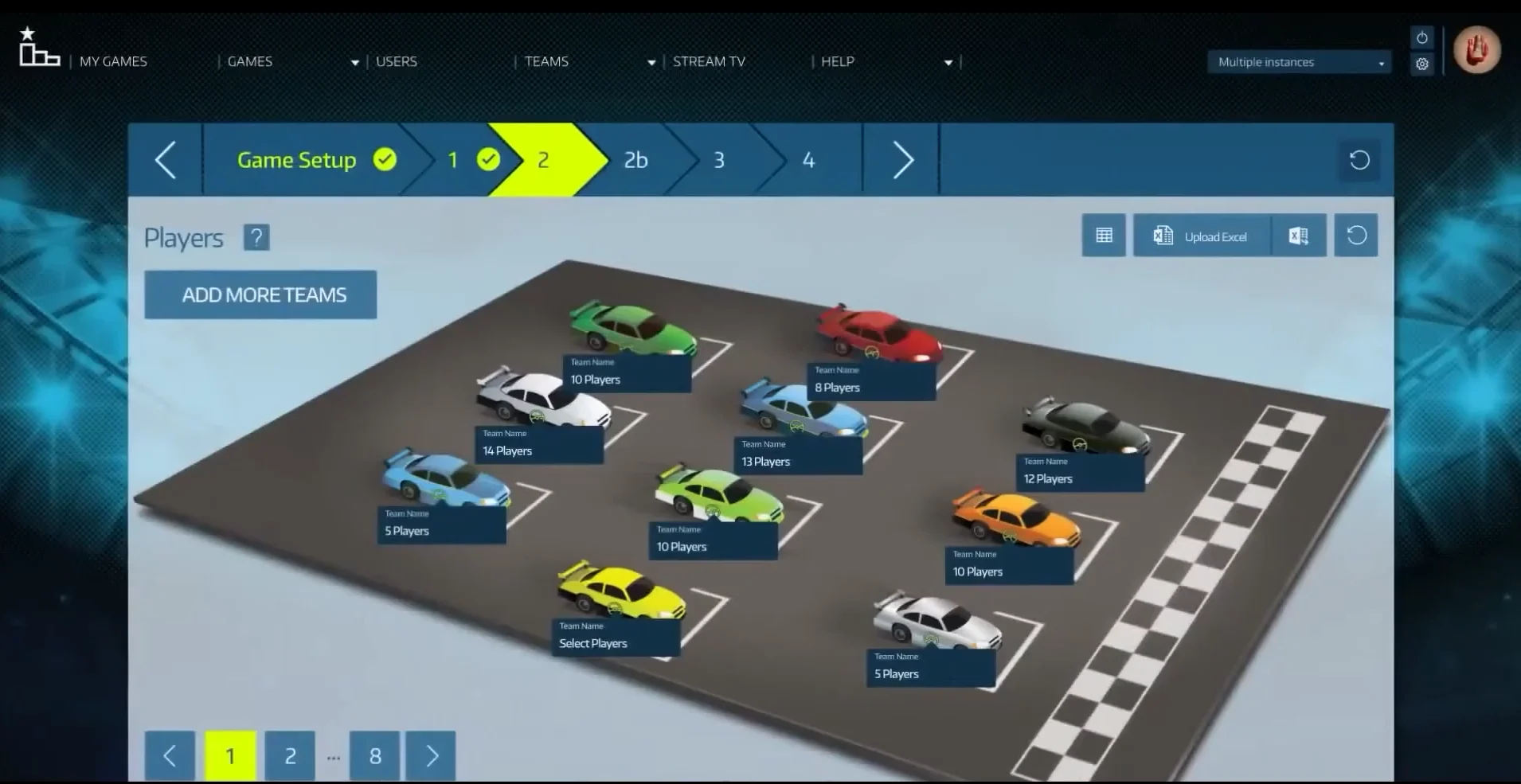
| Team competitions | Branches and divisions | Meeting plans and spreading best practices across the network |
| Badges and achievement awards | Onboarding of newcomers, regular training | Transparent reward system and a clear employee development path |
Any of these formats can be customized for your ERP system. We connect Oracle ERP Cloud data — sales volumes, request processing speed, staff KPIs — and turn it into game mechanics.
As a result, you get a living motivation system without manual calculation or extra reporting: everything is counted automatically, and managers see the real picture of team engagement at any moment.
How the Project Works: From Audit to Gamification Launch
The project follows a clear procedure: from the first dive into the system to the stable operation of the motivation scheme. You go through all gamification implementation stages together with us. At every step, you see what you get and adjust tasks in time.
-
Brief and interviews with key employees. We learn what tasks teams work with, what slows down plan execution, and which metrics matter to you. Together we define measurable project goals.
-
Business process audit. We examine how operations are currently organized in and around Oracle ERP Cloud: where pauses and routine occur. We find points where game mechanics will deliver a noticeable effect without stopping operations.
-
Concept approval. We propose a gamification scenario: which actions we incentivize, how points are awarded, what motivates teams. We approve the system before development begins.
-
Mechanics design. We think through how game elements look in everyday work: timely data entry, quick response to partner requests, meeting standards. Without distraction from core responsibilities.
-
Implementation and configuration. We prepare the tool, connect it to your data, and verify the accuracy of calculations. We make sure employees see progress and understand the rules.
-
Pilot launch. We test the mechanics on one team or department, collect feedback, and refine the scenario before scaling.
-
Company-wide launch and support. We train managers to run gamification and support employees at the start. We monitor engagement dynamics and adjust mechanics based on data.
What's Included in the Delivery: A Package for Fast Results
The full delivery package is not a "box of files" but a ready-made solution that starts delivering results from the first week.
We provide everything you need to launch, manage, and develop gamification: from Oracle ERP Cloud settings to regulations and training materials. You won't have to figure out details or learn the system through trial and error.
Here's what's included in the delivery:
- Working gamification configuration — settings integrated with Oracle ERP Cloud: tasks, points, levels, and rewards are tied to your business processes, not abstract scenarios.
- Documentation and instructions — clear guides for administrators, managers, and regular employees: how to use the system, where to view results, what to do in unusual situations.
- Gamification policy — documented rules for awarding points, conditions for receiving rewards, and the procedure for reviewing mechanics. Transparent rules eliminate disputes within the team and simplify management.
- Employee training — practical sessions for the team and separately for administrators. After training, employees immediately work independently, without constant calls to support.
- Reports and dashboards — regular exports on activity, engagement, and goal achievement. You see the ROI of the mechanics and can adjust the program in time.
- System development guide — recommendations on how to scale gamification to new departments and processes once the team gets used to the mechanics.
- Startup support — assistance in the first weeks after launch: we answer questions, help fine-tune scenarios, and quickly resolve any issues.
Each element of the package addresses a specific task: fast launch, clarity for employees, control for managers, and scaling in the future. You get not just a tool but a manageable system that works toward business results.
This approach ensures that gamification does not remain a "checkbox project" but becomes part of your team's daily work. All that's needed after the package is handed over is to appoint someone responsible for developing the mechanics; everything else is ready to use.
Case Study: How We Increased Sales Department KPIs by 30%
The sales department was working, but metrics were stuck at the same level. Managers lost their drive between planning meetings, and the manager saw only dry numbers of closed deals — without understanding where exactly speed was lost.
We combined the gaming platform with Oracle ERP Cloud: deals, calls, and meetings were automatically converted into points. The leaderboard updated itself, and instead of the abstract "there will be a bonus," a transparent reward system appeared.
What changed for the business
After 90 days, the department's overall KPI grew by 30%. The sales growth proved sustainable: the conversion of inquiries into paid invoices rose by 18%, and the average deal cycle dropped from three weeks to fourteen days.
The share of repeat orders grew to 40% — customers returned more often because managers followed up on pending contacts right away instead of forgetting about them.
"We didn't change the compensation system or add strict control — only transparent game mechanics. We saw growth in the first month, and the team started suggesting which levels to add," noted the client's department head.
This is a case of systematic gamification, not one-off contests. The mechanics are embedded into the workflow through your own accounting system, so results persist after launch.
The same approach can be deployed in marketing, logistics, or customer service — based on your data and without replacing the tools you use.
How to Choose the Optimal Gamification Format for Your Processes?
Choosing a gamification format starts not with trendy mechanics but with a question: what business problem are you solving? Do you want to speed up employee training, increase the regularity of reporting in Oracle ERP Cloud, or boost sales plan performance?
The answer determines whether you need a system of points and levels, a competitive mode between teams, or, conversely, personal scenarios with feedback.
There is no universal solution: what works perfectly for a sales department may not work for accounting or a warehouse. That's why we recommend looking at three things: who your users are, what they consider valuable, and what actions you want to turn into a habit.
For example, for a young team, competition and public recognition matter, while for experienced specialists, visible progress and a connection to their personal performance metrics are more important.
The format itself can be combined: short daily challenges, a long-term program with quarterly goals, team and individual ratings. The key is that the mechanics don't distract from work but help achieve measurable results.
That's why we conduct a consultation before launch: we analyze your processes, find points where gamification will have the maximum effect, and select a scenario tailored to your company's specifics.
After choosing the format, we design the system so that it works organically within your ecosystem — including integration with Oracle ERP Cloud.
This means employees see their achievements and goals directly in familiar interfaces, and you get controlled dynamics of key metrics without having to change business processes.
If you're unsure where to start, start with a short consultation. We'll help you get oriented, offer options, and show how they will affect your metrics. You'll get a clear plan and a solid understanding of which format is right for your team.
Frequently Asked Questions About Implementing Gamification
Implementing gamification into business processes usually raises the same questions: will it disrupt work, when will the payoff come, and how will employees react. Especially when it comes to integration with Oracle ERP Cloud. Below are answers to the most common concerns.
How long does implementation take and when will the first results appear?
A typical pilot project takes one to two months; full deployment within a selected process takes about a quarter. First results are visible right after the pilot: growth in engagement, share of completed tasks, and interest in training.
How quickly does gamification pay off?
Payback is measured through business metrics: speed of operations, fewer errors, repeat customer contacts. If the process is chosen correctly, positive dynamics appear in the first reporting period, and a lasting effect is established after the second or third cycle.
What if employees resist the innovation?
We introduce gamification gradually: first simple scenarios, then more complex ones. Employees see their achievements and rewards in a transparent system, so engagement grows naturally. Importantly, the game doesn't replace work but makes it clearer and fairer.
How complex is integration with your ERP system?
We have experience connecting game mechanics to corporate systems, including integration with accounting platforms at the Oracle level. Data is pulled automatically, employees work in familiar interfaces, and managers see results in real time. Business processes don't stop — implementation proceeds without downtime or double data entry.
Ready to Launch Gamification? Submit a Request for a Consultation
Leave a request — and we'll take the first step toward making gamification work in your business processes. No abstract promises: you get a clear plan, understandable timelines and cost, and then a ready-made solution integrated with Oracle ERP Cloud.
Here's what the process of working with us looks like:
- You submit a gamification request — it takes a couple of minutes, and we contact you within one business day for a consultation.
- We perform a free task assessment: analyze current processes, identify growth areas, and show how gamification will affect key metrics.
- We prepare a cost estimate and implementation plan — we set timelines, stages, and budget without hidden extras.
- We approve the project and launch development: integrate the gamification system with Oracle ERP Cloud, connect the necessary modules, and train employees.
- We launch the solution and monitor initial results — promptly adjusting mechanics based on feedback.
- We provide support after launch: update scenarios, add new mechanics, and develop the system further.
As a result, you get not just an "interesting gimmick" but a tool that boosts employee and customer engagement, accelerates task completion, and delivers measurable results. Submit a request right now — consultation and estimate are free, and you have nothing to lose.