

Why teams lose motivation and how Slack gamification changes that
A team is not just people who complete tasks. It's a living system where motivation directly affects work speed and quality of results.
But most often, employees gradually lose interest: routine takes over, achievements go unnoticed, and the connection between their efforts and company success becomes blurred.
The result is familiar to every manager: deadlines slip, initiative fades, clients feel the coldness and turn to more responsive competitors. The problem isn't lazy people — the problem is that processes don't give them feedback and don't show why they should make the effort.
Slack gamification solves exactly this task. It turns everyday work processes from an "endless task list" into a clear system with transparent goals and quick reactions to actions.
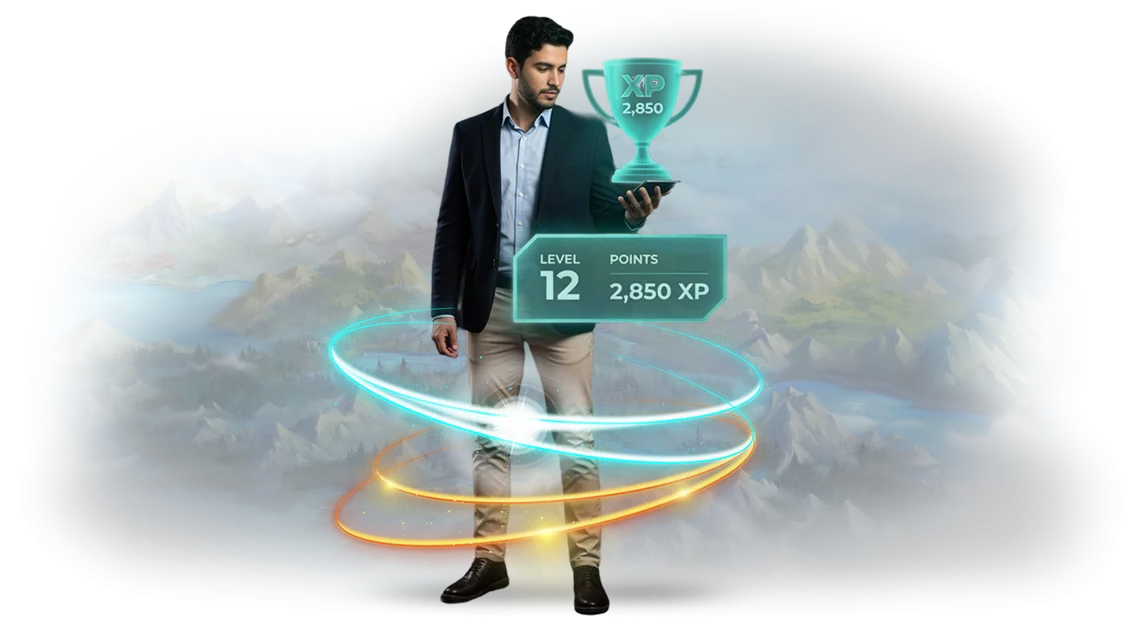
Employees see their progress, receive recognition for their contributions, and understand how their work drives overall results. For business, this means increased productivity without strict control, reduced turnover, and stronger team engagement.
By embedding game mechanics right inside the Slack workspace, you aren't changing the familiar tool — you're making it a driver of growth. We help set up such a system for your business processes: so motivation becomes a natural part of every day, not a one-time campaign.
What gamification in Slack brings to business
Slack is where your team already makes decisions, closes tasks, and shares ideas. Gamification weaves into this familiar rhythm and turns routine into a game with clear rules and rewards — without switching to third-party platforms and without losing context.
Here are five benefits for business:
- Higher engagement. Employees participate more actively in discussions and initiatives because they see progress and recognition from colleagues.
- Faster task completion. The competitive element and instant feedback speed up routine processes — from approvals to handling requests.
- Initiative. The system encourages suggestions and improvements, so employees stop waiting for instructions and start finding growth points themselves.
- Team spirit. Joint quests and shared goals align the department's work rhythm, and healthy competition doesn't turn into conflict.
- Measurable business results. Managers see an objective picture: rankings, KPI performance, and metric dynamics in real time.
According to industry research, implementing game mechanics in corporate communications boosts productivity by 20–30% and reduces turnover among active employees.
For a department of thirty people, that translates into several saved working days per month and a noticeably faster response to client requests.
The key point is that gamification in Slack solves a problem rather than creating a new one.
We tailor scenarios to your processes — and the team starts achieving goals because it's interesting to them, not because they "have to." It works as a constant growth driver: employees push metrics up on their own, and you get a predictable result.
Gamification formats at different stages of implementation
Each stage of implementing gamification in Slack has its own goals. First, you need to quickly get employees involved in the new system, then maintain regular interest, and for major events — create bright spikes of activity. Below we compare the main formats so you can choose the one that fits your current task.
| Gamification format | When to use | What the client gets |
|---|---|---|
| Quest in Slack | Quick start: the first weeks after launching a process | Employees quickly master the new tool, most of the team gets engaged |
| Team competition | Regular work cycles: month, quarter | Growing metrics, healthy competition between departments, meeting plans |
| Ongoing motivation | Long-term work: from six months onward | Stable engagement, habit of new rules, lower turnover |
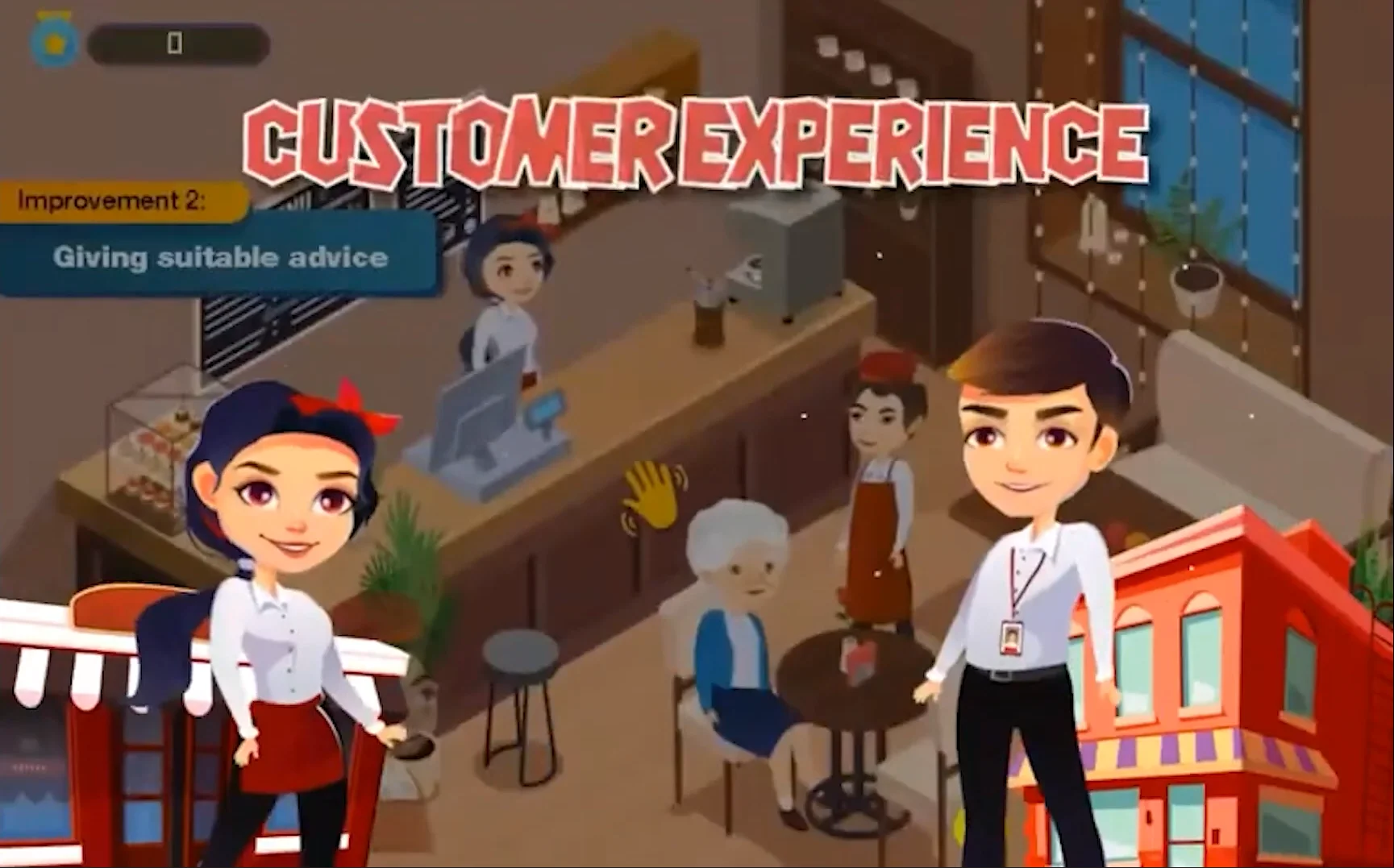
A quest in Slack is ideal for the start: employees go through scenarios, complete tasks, and learn the new workflow in a game format.
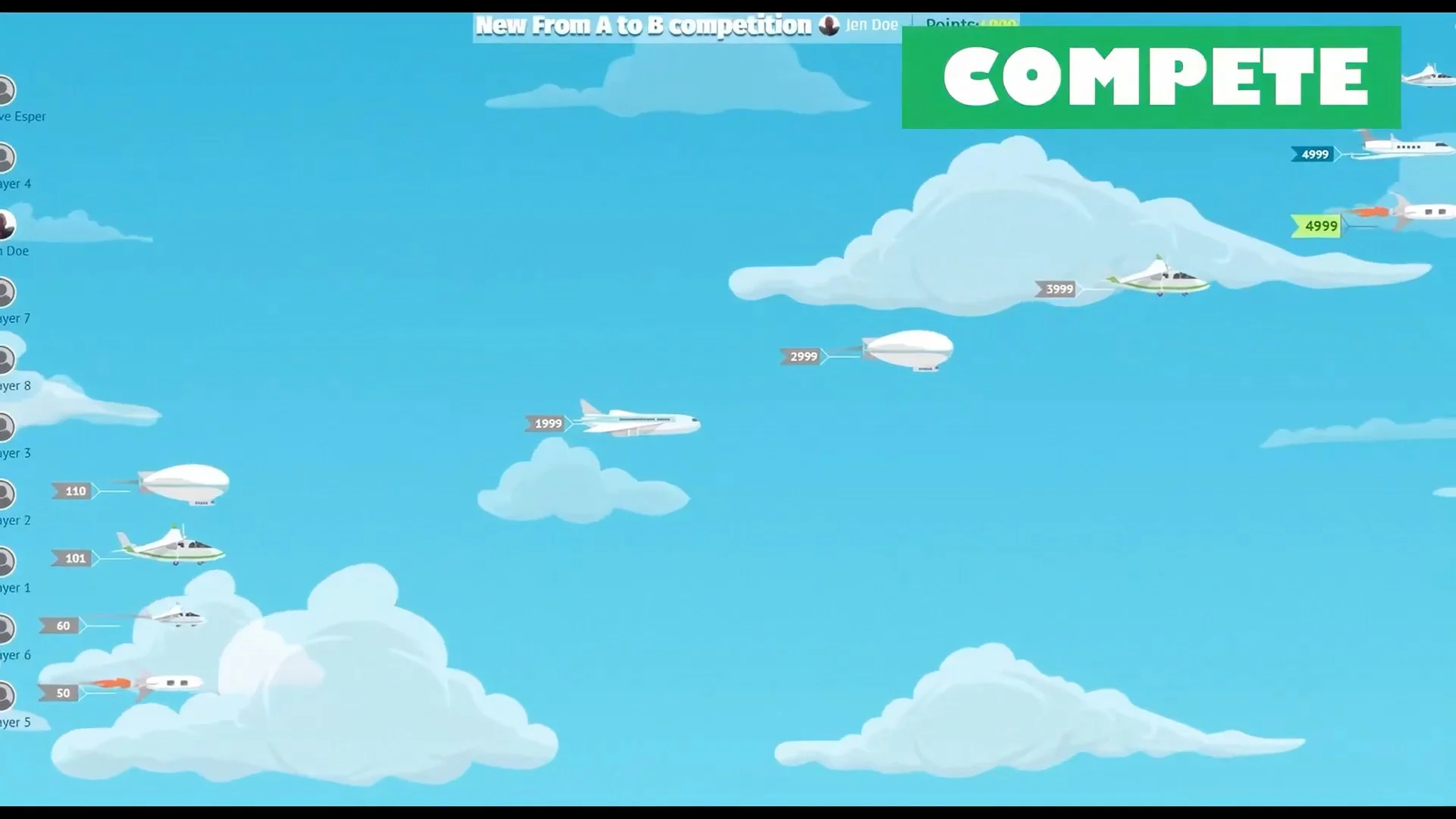
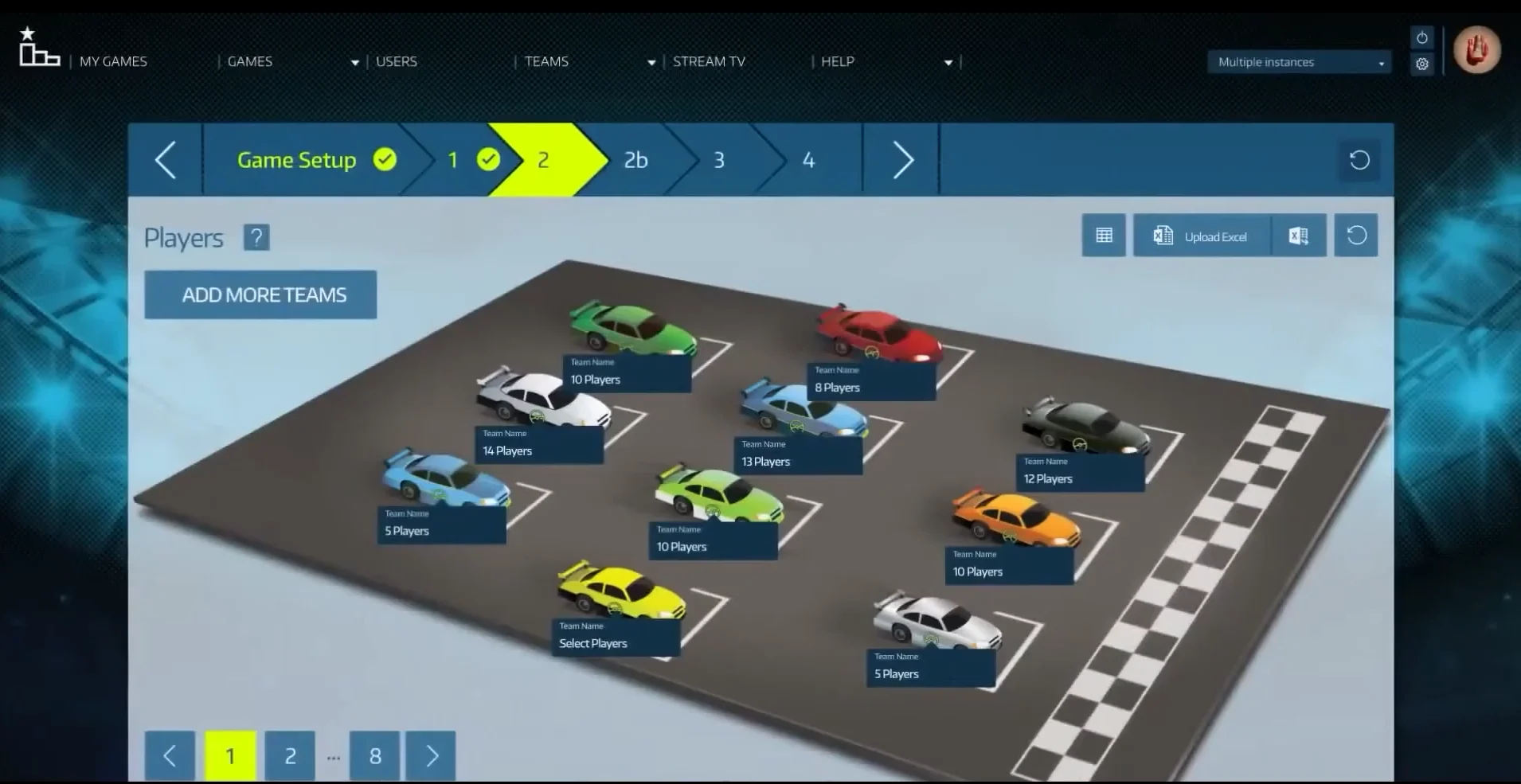
Team competitions kick in once the process is established — then the participants' energy is channeled into regular achievements and meeting business metrics. And ongoing motivation (points, ranks, rewards) cements the changes and keeps interest from fading.
Choose the format based on the stage — or combine them: a quest for warm-up, competition for momentum, ongoing motivation for a long-term effect. That way gamification works continuously and delivers business results at every step.
How gamification implementation goes: from brief to launch
Implementing gamification into business processes is a task that seems difficult without a clear plan. We make the process transparent: you see the path from brief to launch in Slack and participate in key decisions. No surprises or hidden stages — only agreed steps and a clear result.
Implementation stages
- Brief. We analyze tasks, audience, and the metrics that should grow. The outcome is a clear goal for gamification.
- Scenario development. We propose 2–3 mechanic options: from levels to team competitions. You choose what fits best into your company culture.
- Scenario approval. We finalize rules, rewards, rankings, and the logic for moving between levels. We approve how gamification will look inside Slack: commands, notifications.
- Mechanic development. We set up the chosen mechanic and link it to Slack work events. We test reliability so the system doesn't glitch or distract employees.
- Launch in Slack. We onboard the team, give a short briefing, and provide a quick reference guide. In the first days, we help employees get comfortable and answer questions.
- Support and growth. We analyze activity and collect feedback. If interest drops, we offer new levels and scenarios to keep gamification working.
After launch, you get not a one-time campaign but a working tool for employee engagement and efficiency. We stay in touch and help the system evolve along with your business goals.
What's included in the delivery: a launch kit
The result isn't a "presentation" but a ready-to-launch kit your team can use immediately after handover. Everything created during the process is packed into four working blocks: scenarios, rules, mechanics, and documentation.
Here's what's included:
-
Gamification scenarios — three ready-made scenarios tailored to your business needs: for a specific department, for cross-functional interaction, and for a long-term motivation program. Each includes a description of participants, triggers, and expected results.
-
Rules and mechanics — a transparent system of points, levels, rewards, and limits. No "gray areas": it spells out what earns points, how they're deducted, and how difficulty grows.
-
Administrator guide — who manages the system and how: adding employees, adjusting rules, viewing statistics. Your HR or department lead can handle it without involving developers.
-
Participant guide — a short and clear guide for employees: how to register, where to see points, how to complete tasks. Everything the team needs to start without questions.
-
Slack integration documentation — steps for connecting, setting up notifications and bots, access rights, and a list of required permissions. Parameters for smooth operation with corporate security are documented separately.
-
Launch checklist — a to-do list for the first week and first month: what to check, who to notify, which metrics to watch.
Important: the kit includes not a set of files, but a working system that you accept and maintain. After handover, we stay in touch — if you need to adapt a scenario for a new department or add a mechanic, it's a quick task, not a new project.
Example: how we doubled a company's activity
Let's take a real case from our practice. An event agency, EventFactory, approached us — a team of 40 people that organizes corporate events. The pain point was familiar: employees put off internal tasks, the general chat was silent, urgent requests hung unanswered for hours. Managers tried control, deadlines, and personal reminders, but that only increased tension.
We proposed implementing gamification right in Slack — where the team already communicates every day. Instead of building a separate platform, we embedded rankings, levels, and short team competitions into internal processes.
Employees kept working in a familiar interface, while the game automatically marked completed tasks, awarded points, and posted results to the general channel.
The effect appeared within two weeks. Company activity doubled: the number of completed tasks doubled, and response time to chat messages dropped from several hours to 15–20 minutes.
The team started engaging on its own — participation in competitions was voluntary, but public recognition and visible progress did their job. Managers stopped spending time on daily oversight, and employees got an objective assessment of their contribution.
Two months later, the agency ordered a second phase — we expanded the game to client work. This confirms: gamification delivers results when it's embedded in everyday tools and doesn't require changing habits.
If your team lives in Slack, there's no need to invent separate systems — just add a game to the existing process. Maybe your business is missing exactly this kind of push.
What if you have specific requirements for gamification?
Every company builds processes in its own way, and ready-made templates often don't fit.
That's why we don't offer a boxed solution — we assemble mechanics for your tasks so they fit organically into the work rhythm, motivate employees, and don't require breaking familiar workflows.
Custom mechanic setup starts with analyzing your processes, roles, and rules. Then we offer gamification options, discuss them with you, and agree at each stage: from concept to launch. You see how the system logic changes and can influence it before the solution reaches employees.
When it comes to Slack integration, we account for how your team already uses work channels. Notifications, rankings, challenges, and rewards appear where employees already communicate — without installing additional apps and without retraining.
For non-standard requirements, we break the task into clear stages and show how each element will work.
The guarantee of results comes through agreed interim versions. You see in advance how the mechanic looks from the inside and can adjust the details that matter specifically to your company.
By launch, the system has already been tested against your scenarios, so there are no surprises or downtime.
Non-standard tasks are our routine. Tell us about your process, and we'll suggest how to make it engaging and effective.
Frequently asked questions about gamification implementation
Implementing gamification raises the same questions for owners and managers: will deadlines slip, will the new framework break familiar work, and will there be real value from it. We answer the most common doubts — briefly and to the point. If your question isn't here, just write to us — we'll share the details for your task.
How long does gamification implementation take?
A typical project takes 3 to 6 weeks. First results — growth in team activity — are visible after the first week: employees get used to the mechanic and start performing actions for points and levels.
If you need to quickly launch motivation for a specific event or campaign, we can put together a simplified scenario in 2–3 weeks.
Full configuration for all business processes usually takes about a month: that's enough to fine-tune the rules without creating extra load on the team.
Is it difficult to integrate gamification with Slack?
No, it's one of the simplest integrations. Employees keep working in familiar Slack: they see contest notifications, earn points for completed tasks, and track rankings right in the channel.
All the technical work is on our side: we connect the system to your workspace and set up access rights. This usually takes a few days, and your working conversations and channels aren't affected during setup.
How does gamification increase employee engagement?
The mechanic relies on the natural desire to win and receive recognition. Employees see their efforts noticed: completing the plan, helping colleagues, or delivering tasks on time earns points and rewards.
This creates healthy competition and transparency: everyone understands what earns rewards and how to climb the ranking. As a result, the frequency of desired actions and overall team activity grow — without coercion or extra control.
Is there a guarantee that gamification will deliver results?
Yes. At the start, we set target metrics together with you — for example, growth in KPI achievement, reduced task closing times, or the number of active participants. After launch, we track these metrics and adjust the mechanic rules if we see deviations.
Support is included in the project: for a month after launch, we stay in touch, make adjustments, and help the team adapt. The guarantee of results is our work until the agreed values are reached.
If you still have doubts — send us a description of your process, and we'll advise how gamification will fit into your current system and what it will specifically deliver for your business.Discuss your task and get an implementation plan
Start with a short gamification request — describe which process you want to make engaging for employees or clients. After you reach out, we'll get back to you within one business day, ask clarifying questions, and propose a real format for your task.
This isn't a technical consultation but an analysis of your business goal: what's measurable, what motivates participants, and how to build the game into your team's daily rituals.
A significant part of the work happens right in Slack — where your people already communicate. So at the first consultation, we look at which processes can be turned into game format without changing familiar tools: virtual rewards, rankings, challenges, levels. You get not an abstract idea but a specific scenario with clear rules.
What you get after reaching out:
- A consultation with a gamification expert — no technical jargon, in the language of your business.
- An assessment of the task: what to automate and what to leave to human interaction.
- A cost and timeline estimate for your scale, not an average price list.
- An implementation roadmap: from setup and testing to launch and support.
- Examples of solutions for similar teams — so you can see how it works before the project starts.
- An integration plan with your current processes and regulations.
After the conversation, you receive a written implementation plan with concrete steps and timelines. We don't start work until you see the full picture and approve it.
Leave a request — and within a day you'll know how gamification will solve your task, what it costs, and when the project will go live.