


Workplace safety programs don't work without gamification
A formal approach to occupational safety is the main reason programs fail. Safety briefings are conducted just to tick a box, employees nod through mandatory checks, yet continue taking risks in real work.
The result is violations, micro-injuries, and the sense that safety is someone else's concern rather than everyone's personal responsibility.
The problem is that workplace safety cannot be imposed by decree. No matter how many rules and regulations are handed down from above, they remain paper until an employee understands: following the rules protects him and his colleagues. Employee engagement is the only way to make a program alive rather than formal.
Gamification closes exactly this gap. It turns tedious duties into a clear system where everyone sees their own progress and result: completed a checklist, suggested an improvement, prevented a risk — received recognition.
The employee begins to monitor workplace safety himself because it becomes personally beneficial and interesting, not because "the boss made me."
For business, this means fewer injuries, fewer downtimes and fines, and greater trust within the team. But the main thing is that culture changes: people are no longer afraid to report problems, and instead propose solutions.
Safety ceases to be the responsibility of one specialist and becomes a common cause of the entire shift.
We help build workplace safety programs where employee engagement is embedded in daily processes. Not another formality, but a system people want to participate in and that is easy to sustain.
What gamification of business processes gives an enterprise
Gamification turns training and compliance from a boring duty into a meaningful game where each employee sees their progress and results.
Staff engagement grows not through coercion but through internal motivation: people themselves strive to follow the rules because it brings points, statuses, and recognition from colleagues. For the enterprise, this means higher discipline without additional administrative resources.
When safety rules are followed consciously, the number of violations and hazardous situations decreases. Game scenarios allow practicing responses to emergencies in a safe environment — the employee gains a practical skill that triggers automatically in a real situation.
As a result, the enterprise reduces downtime, compensation costs, and losses from production stoppages.
Systemic gamification shapes a safety culture as a shared value. Points and ratings create healthy competition between shifts and departments, and public recognition of the best reinforces correct behavior.
Over time, safety ceases to be a set of prohibitions and becomes part of the corporate code that employees themselves support.
Production discipline is thereby strengthened in all directions: from order at the workplace to timely equipment maintenance. A manager gets a transparent picture of each employee's engagement and progress, and thus can fine-tune training and motivation.
We design game mechanics based on analysis of real business processes and behavioral data, not abstract templates. Drawing on our team's experience in automation and game design, we create programs that deliver measurable results within the first few months.
Gamification formats for different tasks
Choosing a format "by eye" is ineffective: what engages a team of installers beautifully will fail at a meeting of engineers.
A workplace safety program works when the format matches the task and the type of personnel — from mandatory briefing to emergency response practice.
Below is a summary of the formats we combine in safety programs. The table will help you match your task with a suitable tool and see a measurable result.
| Format | For whom and when | What it gives the client |
|---|---|---|
| Training | New employees, scheduled briefings, repeating regulations | Stable knowledge level without leaving the shift, quick verification of material comprehension |
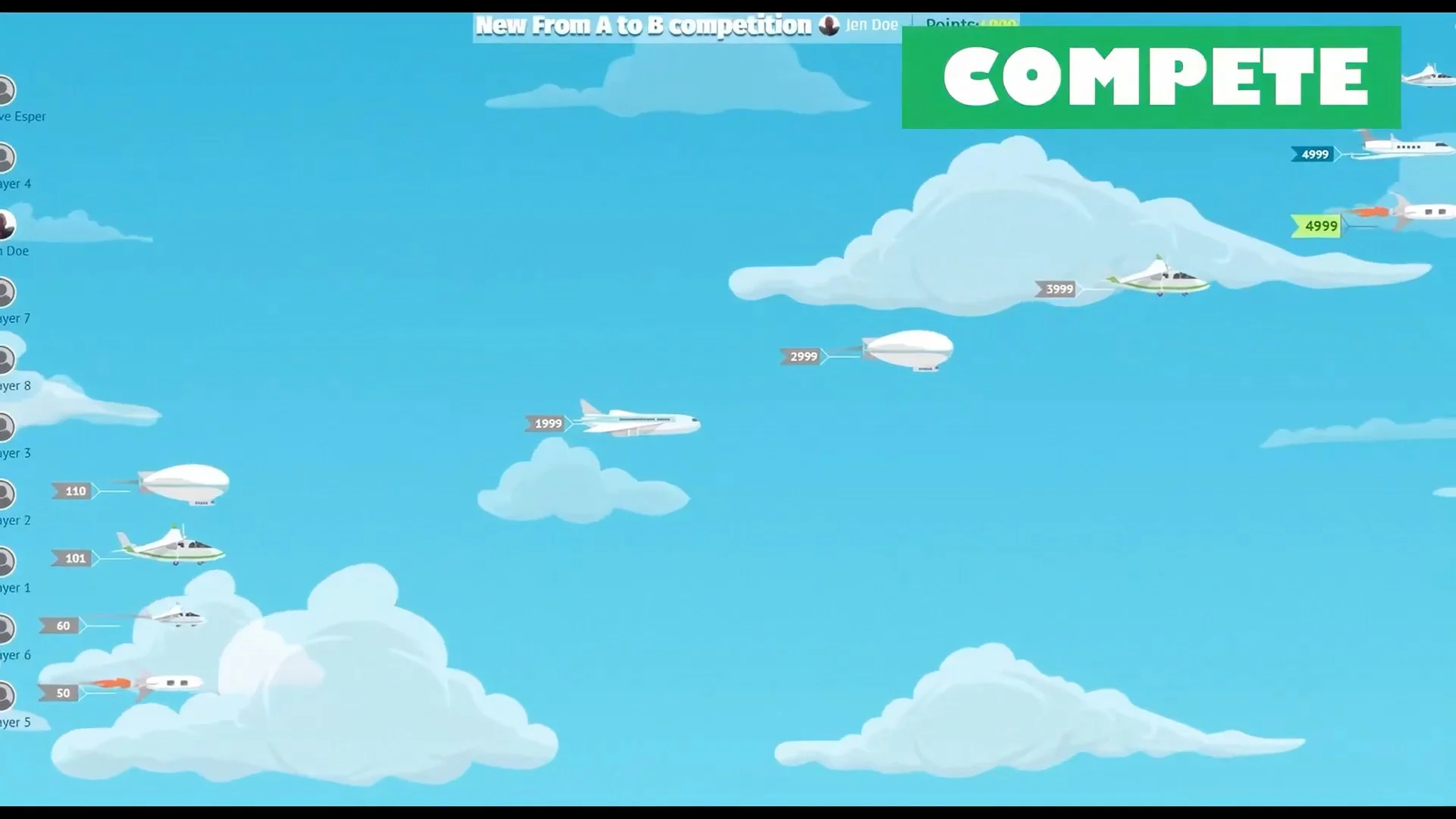
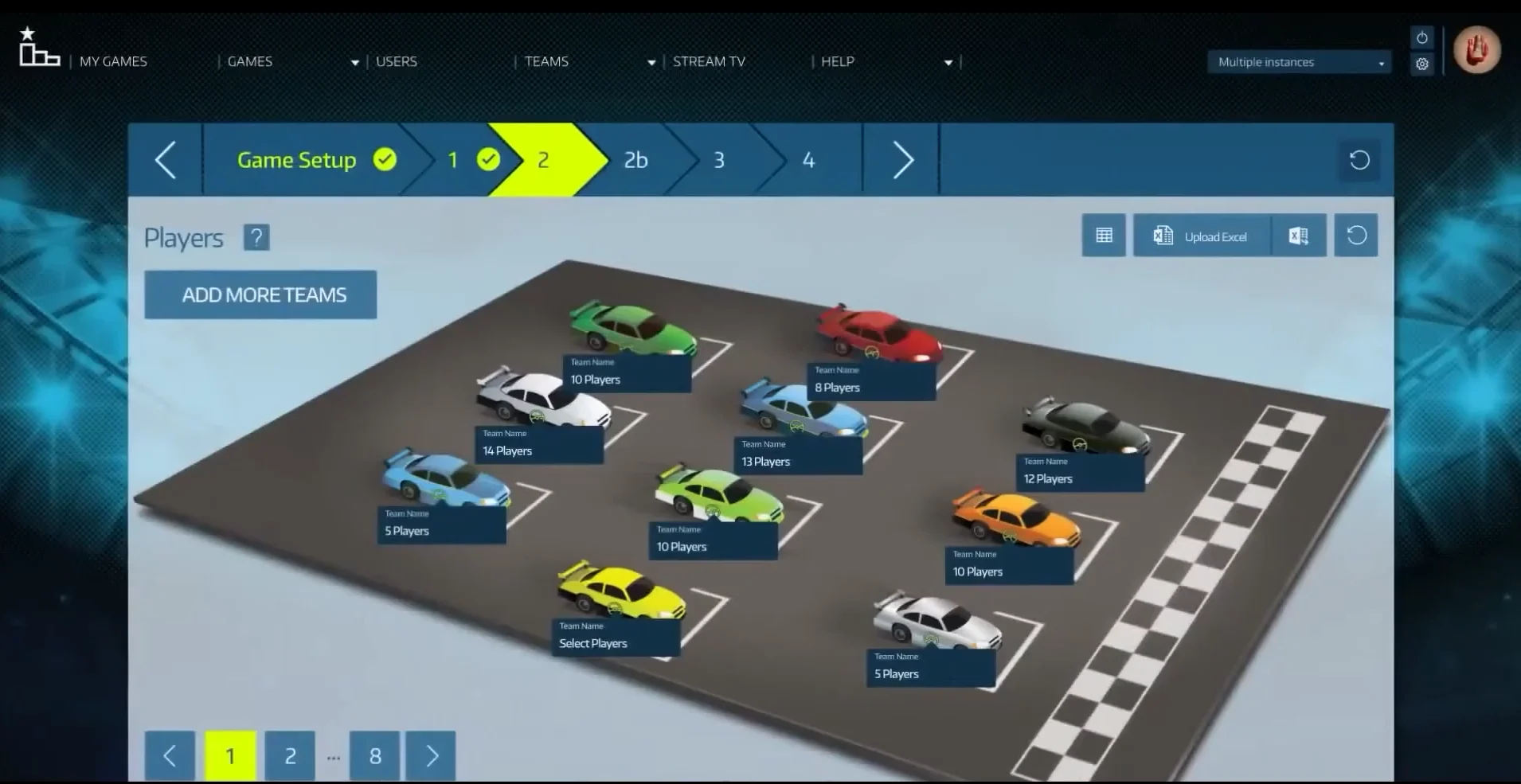
| Competitions | Line personnel, rotational crews, workshop departments | Increased motivation, healthy competition, clear rating of best safety practices |
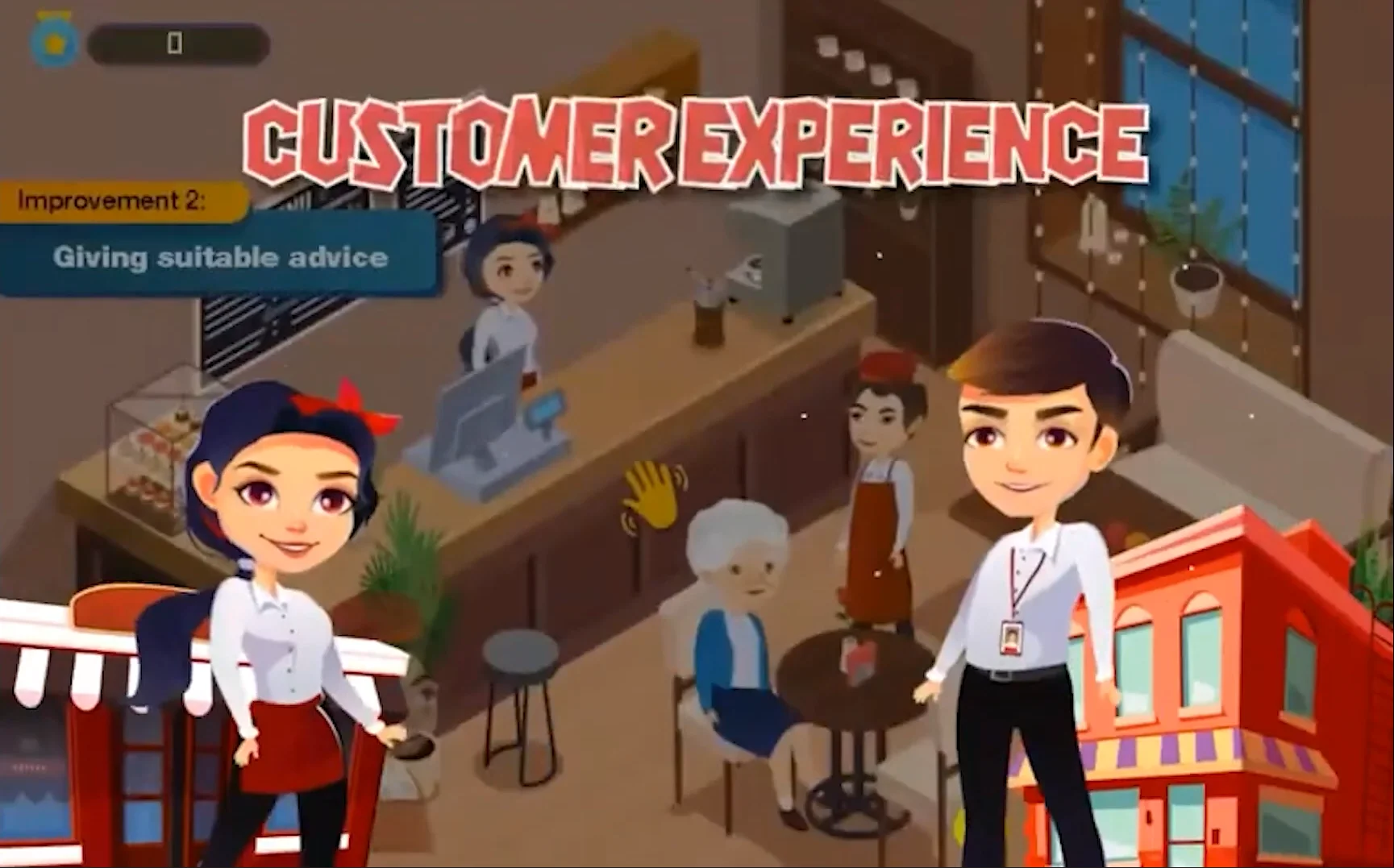
| Quests | Mixed teams, cross-functional groups | Practicing interdepartmental interaction, remembering scenarios through emotions |
| Simulations | Workers in hazardous zones, rare and critical incidents | Safe practice of actions without risk to people and equipment, fewer errors in real situations |
How to choose a working format for your task
The key criterion is what exactly you want to change: increase knowledge, change behavior, or refine coordination.
If the goal is to reduce injuries at a specific site, simulations and quests will work best, while regular training and competitions are enough for an overall safety culture.
We select a format according to the specifics of your production and the level of staff training.
As a result, you get not an abstract "game for the sake of a game," but a tool that closes a specific risk area and delivers a measurable result — for example, a 30% reduction in violations over a quarter.
The main thing is not to be afraid to combine: the "training + competition" pairing gives both knowledge and the motivation to apply it.
How we implement gamification in workplace safety
Implementing game mechanics into occupational safety is not "quests just for show" but systematic work that changes employee habits and reduces risks in specific areas.
That is why each project goes through several stages — from diving into the specifics of your production to post-launch support. Below is the sequence by which we implement gamification in workplace safety programs.
- Brief and immersion in the process. We collect information about your enterprise: risk zones, typical violations, current regulations, and existing training formats. We clarify who will participate — shifts, crews, administrative staff.
- Analysis of production situations. We study where exactly incidents occur and which employee actions affect safety. We single out recurring scenarios that will become the basis of future gamification and define the target behavior of workers.
- Gamification design. We develop the mechanics: levels, rewards, feedback, team goals. It is important that the game encourages correct actions in real work, not just knowledge testing.
- Alignment with occupational safety and managers. We make sure the mechanics do not contradict instructions and regulatory requirements, and adjust scenarios to the real conditions of a workshop, warehouse, or office. We make changes before development begins.
- Implementation and configuration. We prepare modules, an achievement tracking system, and clear dashboards for managers. At this stage, you already see how points will be awarded and how each employee's participation is tracked.
- Launch and staff training. We run the launch so that employees quickly get involved: short briefings, visual materials, and support in the first days. Administrators get access to management and understand how to respond to questions.
- Support and development. We analyze engagement, collect feedback from shifts, add new challenges, and adjust mechanics if a scenario does not work. The program stays alive and continues to deliver results.
This sequence lets you get not just "hang a game on safety," but a tool employees use daily. After launch, you see increased participation and fewer violations — both at the level of individual shifts and across production as a whole.
What a gamification project for an enterprise includes
In a safety program gamification project, you get not a "game for the sake of a game," but a working tool embedded in the staff training and motivation system.
All stages and decisions are documented — you always see what the project consists of and how it affects employees.
Here is the full project scope:
- Process analysis — we identify risk zones, frequent violations, and audience motivation so scenarios hit the target precisely.
- Game scenarios and mechanics — quizzes, simulations, team tasks. We develop them for your goals, not "because it's fashionable."
- Motivation system and game balance — points, levels, rewards, competition. We maintain interest over the long haul without "cheating."
- Rules and methodological materials — documentation for managers and participants: how to launch, evaluate, and respond to disputed situations.
- Integration with existing processes — we connect with briefings, mentoring, and performance indicators; data flows into reports.
- Testing and launch — we try it on a focus group, adjust the difficulty, and only then implement it fully.
- Support and updating — we monitor statistics, add new levels and content so the program works for a long time.
The result is a detailed plan describing mechanics, rules, roles, and implementation timelines. You get not just a description of a game, but a system ready for integration that reduces injuries and improves safety culture.
Case study: how gamification increased staff engagement
Production employees often perceive safety instructions as a formality: they know the rules but violate them "in small ways." Fines and reprimands increase tension, while the number of incidents does not decrease.
This is exactly what we encountered in a project for a large food processing plant Zarya — up to 60 violations were recorded there per quarter.
Instead of another lecture, we developed a gamification system that became part of the work process. Employees received points for correct actions on the line, participation in drills, and tips to colleagues.
Shifts competed with each other, and leaders received not cash prizes but improved lunch conditions and an extra day off — this proved stronger than fines.
After six months, the number of violations decreased by 40%. The system recorded not only incidents but also activity: 83% of staff participated weekly, and the time of the introductory briefing was cut in half.
The workshop manager noted that employees now remind each other about the rules instead of looking for loopholes.
After the first stage, the client expanded the program to three other sites. We adapted the mechanics to the specifics of each workshop — and achieved a stable effect everywhere.
Engagement ceased to be "mandatory duty," and safety turned into a team game with clear rules.
This case study shows: gamification works when it is embedded in a real process, not attached for entertainment. We design the game balance so mechanics strengthen safety rather than distract from it.
How to choose a gamification format for your task?
The right format is not the trendiest one, but the one that solves your specific task.
For a workplace safety program, this means not just "getting people interested in a game," but changing behavior: teaching people to notice danger, act according to instructions, and not take shortcuts for speed.
A common mistake is taking a flashy mechanic with screens and points but not embedding it into real work processes.
There is no universal template, so we do not impose ready-made solutions.
First, we listen to your specifics: which risks occur most often, who works in the workshop — age, experience, habit of briefings, whether there is a shift schedule and whether newcomers need to be onboarded quickly.
There are always specific requirements: from the impossibility of stopping the conveyor to the ban on phones in the work area. We take all this into account before the start.
Both the format — short scenarios, team competitions, training simulations — and the cycle length and rule complexity depend on these conditions. For example, one company may only need to turn its monthly briefing into an interactive test with error analysis.
Another needs mechanics to work directly on the site: an employee receives a task, performs it in a real environment, and immediately sees the result. A third is suited to an internal competition between shifts — with a safety rating and a reward for the best indicator.
Therefore, the first step is a short consultation. You describe your production task, and we offer two or three gamification options with a clear forecast: what you will get in terms of engagement and what will change in employee behavior. No abstract "mechanics for mechanics" — only what suits your production and team.
Write or call us — we will choose a format that will withstand your specifics and deliver a measurable result.
Answers to frequent questions about gamification
Many managers doubt whether gamification is appropriate in a workplace safety program: will it distract from work, will it require complex training. Properly designed mechanics keep attention on safe behavior rules and reduce staff resistance to training.
We answer common client questions — so you can assess the risks and understand how we work.
Will gamification distract employees?
Game elements are embedded in short training scenarios and do not interfere with the production process. Sessions last 5–10 minutes, and points and levels motivate employees to return to the material at a convenient time.
How long does the launch take?
A typical project takes two to four weeks from the moment the assignment is approved. We fix the goals and audience, develop the scenario and balance, test the mechanics on a small group, and launch.
Is it difficult to integrate with an existing training system?
We embed the mechanics into your learning management system or launch our own lightweight module. Employees log in through familiar accounts, and results automatically appear in reports.
How is data security ensured?
Employee data is stored on secure servers, and only authorized specialists have access. Your internal information security regulations are taken into account at the design stage.
Still have questions? Ask them directly — we will show how gamification will fit into your program and what it will give in the first months.Leave a request and get a gamification implementation plan
You have already invested a lot of effort into your safety program, but employees still go through training formally and break regulations at the first opportunity. Does that sound familiar?
Gamification changes the attitude to rules: instead of boring briefings — engagement, competition, and clear benefit for each worker. So you can evaluate this approach in practice, we have prepared a clear implementation plan tailored to your production specifics.
After your inquiry, you will receive not general words but a working document adapted to your tasks. Here is what it will include:
- Audit of the current safety program — we will identify where employee attention is lost and which violations occur most often.
- Selection of game mechanics — we will propose formats: from ratings and levels to team quests that work specifically in your environment.
- Cost calculation and timelines — we will provide an exact estimate without hidden additions so you can plan your budget.
- Step-by-step launch plan — from a pilot site to full coverage of all shifts and departments, with clear control points.
- Engagement recommendations — how to announce the program so that employees participate with enthusiasm rather than under duress.
- Expert consultation — we will answer questions and help align the plan with your internal regulations.
The implementation plan will become the basis for a quick start: you will see how gamification fits into existing processes, not breaking them but strengthening them.
We will take into account the specifics of shift schedules, age groups, and your production peculiarities — because there are no universal solutions here.
Leave a request — and within the next few days you will get a plan, an estimate, and answers to your questions. You lose nothing, but you gain a concrete tool for improving safety without administrative pressure. Click the button below or write to us — we will tell you where to start.