

Why KPI Motivation Programs Don't Drive Sales Growth
You've implemented employee KPIs, tied bonuses to them, and hung charts in the office. But sales are stagnant, and the team works without fire. Sound familiar?
Most often, the problem isn't in the metrics themselves, but in the fact that they remain a dry number for the team rather than a clear goal.
Employee motivation degenerates into a formal checkbox: there's a plan, but no excitement. Employees meet the target but don't engage in the process. They're not interested in achieving the goal because the goal doesn't spark emotion.
Why does this happen? Familiar methods — percentages, bonuses, penalties — appeal to the employee's rational side. But the client makes a purchase decision emotionally, and a salesperson without engagement can't convey that emotion. KPIs remain alien, and achievement turns into routine.
Moreover, classic schemes don't provide quick feedback. The employee learns about the result at the end of the month, when the connection between action and reward has already faded.
Everyone works "for a salary" rather than for results because they don't see the impact of their efforts on the overall outcome.
We design KPI motivation programs as a game process: with rules, levels, rewards, and instant reactions to actions. This way, employees begin to strive for the metrics themselves, and sales growth becomes a natural consequence of engagement. We'll show you how this works using your team as an example.
What Game Mechanics Give the Team and the Manager
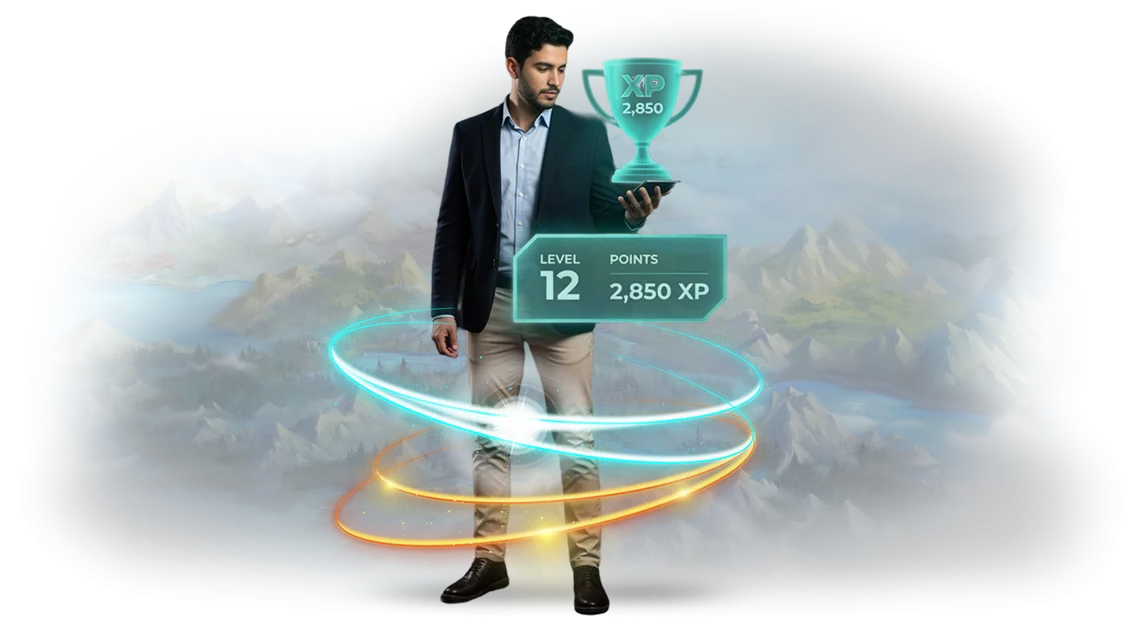
Game mechanics turn the chase for KPIs from a tedious obligation into a clear and engaging process. The employee sees not abstract numbers, but their own progress, levels, and specific goals — this triggers a natural desire to win rather than to clock hours.
The manager gets a transparent picture without extra reports. When metrics are built into game logic, it's immediately clear who's driving results and who's stalled.
And this isn't surveillance — it's a fair system where every participant understands the rules and their zone of responsibility.
An added bonus is reduced turnover. Non-material motivation through recognition, rankings, and statuses retains employees as effectively as bonuses. People stay where their efforts are noticed and where routine becomes a competition with themselves and colleagues. That means you spend less on finding and training new hires.
Gamification in business also simplifies team management: goals are communicated without long meetings, new hires get up to speed faster, and competition stays healthy. You get a tool that gently steers the team toward the right actions every day — without pressure and burnout.
Gamification Implementation Formats for Different Tasks
Gamification only works when the format matches the scale and objective of the business. The same KPI motivation mechanic will work differently in a team of 10 people and in a department of 500.
That's why we choose a format based on your goal — to unite a department, boost revenue, or quickly train new hires — and embed it into the program so that results are visible within the first cycle.
Below are three standard formats we use most often in projects. They combine easily and scale as your business grows.
| Format | For Whom | What It Gives the Client |
|---|---|---|
| Small Team League | Department up to 20 people, startup, project group | Quick launch, visible team standings, healthy competition. Within a month, it's clear who's driving the metrics and who needs support. |
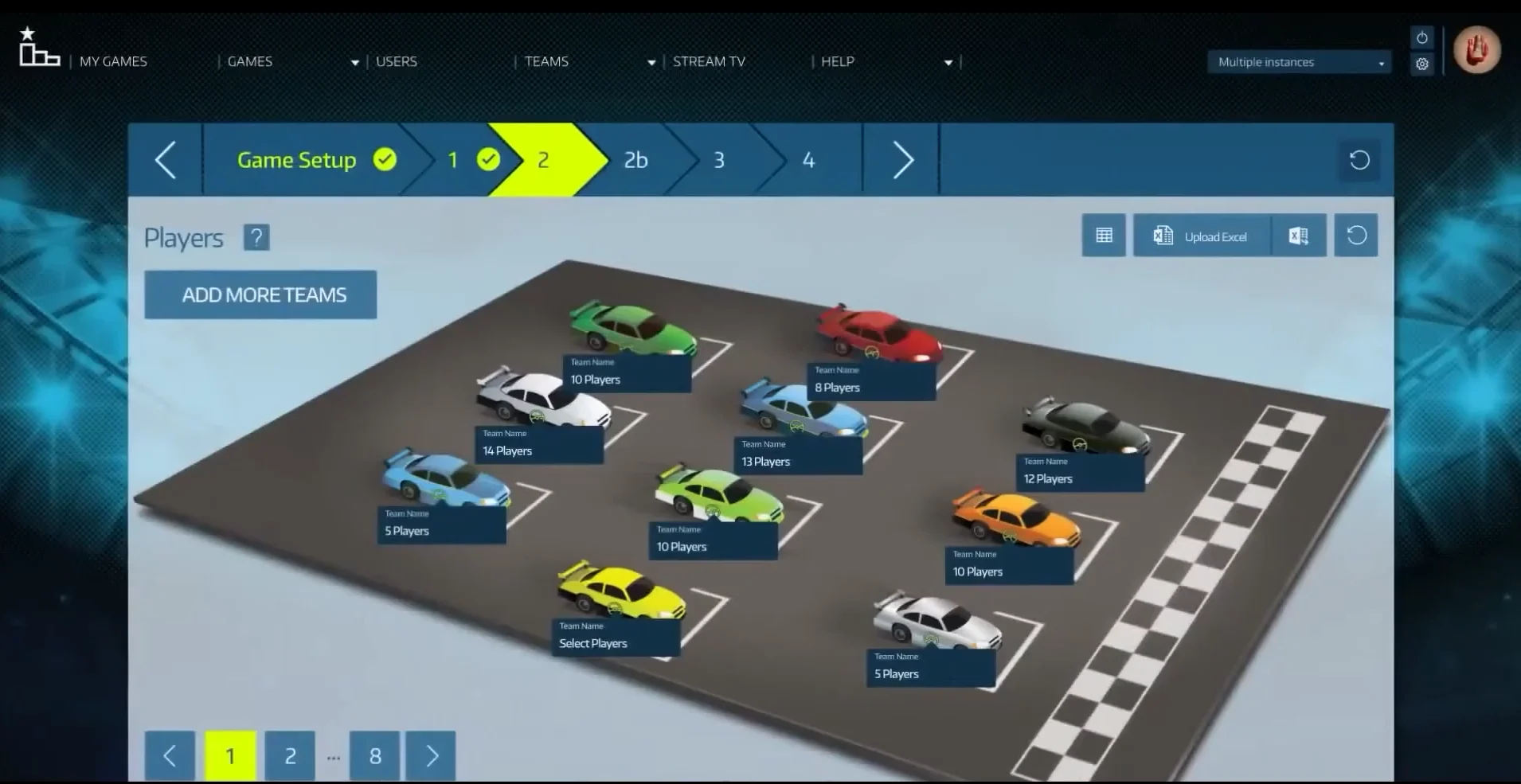
| Corporate Championship | Division or company with 50+ staff | Engages hundreds of employees simultaneously: overall rankings, levels, team and individual standings. The manager gets a clear picture of KPI performance and natural competition between branches or departments. |
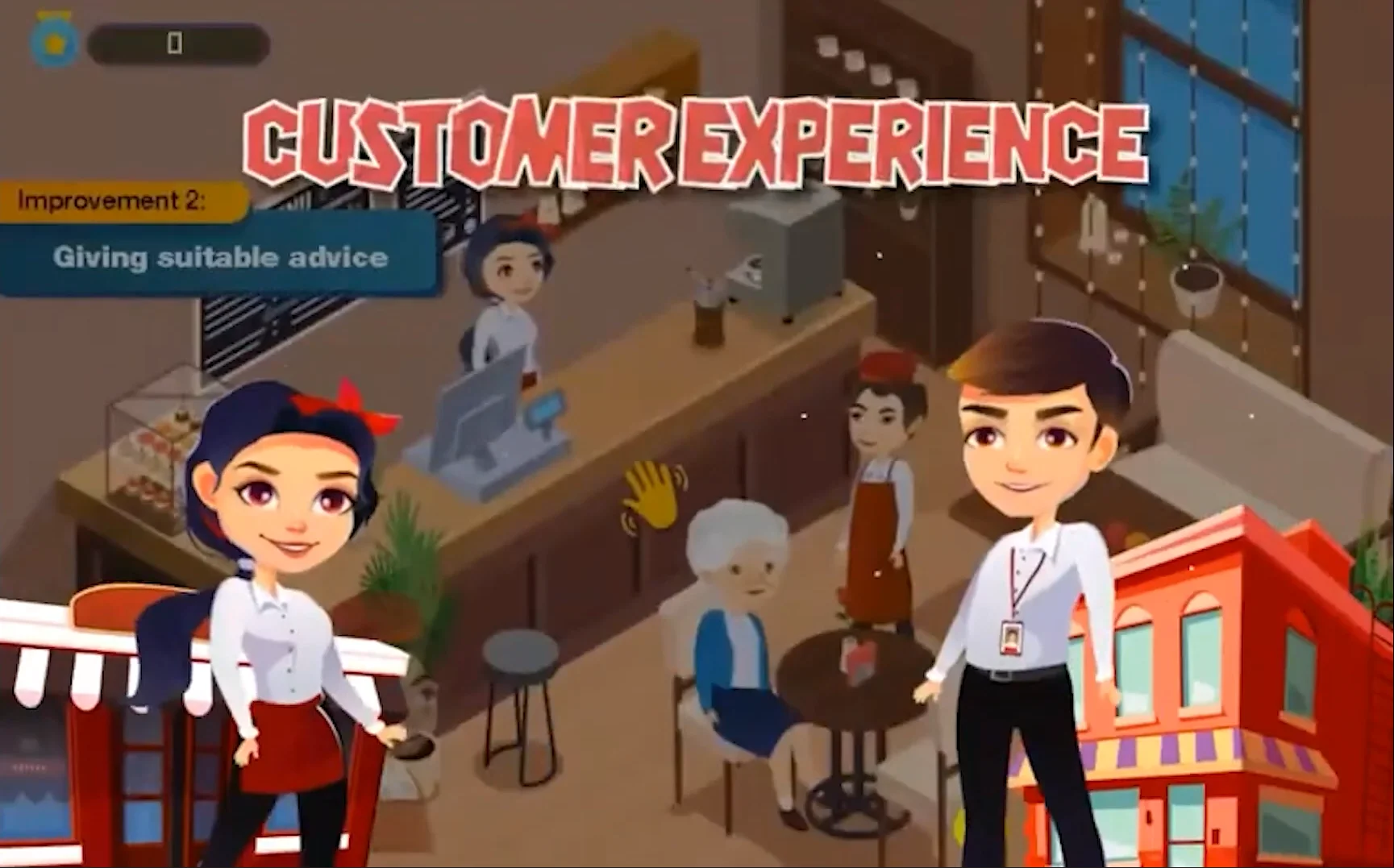
| Training Quest | New hires, interns, employee training programs | A game scenario instead of boring presentations. Employees master processes faster, make fewer mistakes, and perceive instructions as an interesting challenge rather than a chore. |
Each format is designed around your business processes, not abstract templates. We determine in advance which actions will earn points, how often to sum up results, and which prizes and statuses will motivate your specific team.
Clients often choose a combination: a small pilot for one department, then — after testing the mechanics — they scale the championship to the entire company. This reduces risks and lets you fine-tune the KPI motivation program before it becomes part of corporate culture.
How We Integrate Gamification into KPI Work
We don't turn KPIs into "just another spreadsheet" — we turn them into a clear game in which the employee sees their own progress and benefit.
The process is structured so that you understand what's happening at every stage and control the result rather than digging into technical details.
-
Brief and audit of current motivation. We analyze which KPIs are in place now, what motivates the team, and where the growth areas are. The outcome is an understanding of which processes should be gamified first.
-
Setting KPIs and game rules. Together with you, we turn business metrics into achievable levels, tasks, and rewards. The employee always sees the connection: "I did this → here's my result → here's my benefit."
-
Prototype of game mechanics. We show how points, levels, competitions, team goals, and rewards will work. You see it in action, not in a presentation, and can adjust before development starts.
-
Gamification development and integration. We configure the mechanics for your business processes and connect them to your accounting tools. KPI data is pulled automatically — no manual entry required.
-
Testing and launch. First, we run a pilot on one team or department, gather feedback, refine the scenarios, and prepare a full-scale launch. You get a working program, not a "test bench."
-
Support and evolution of mechanics. Gamification lives and grows: we add new levels, seasonal events, and adjust the balance based on your data. We stay in touch after launch to ensure the program consistently drives KPI growth.
What's Included in the Deliverable and How We Hand Over Results
We don't deliver an abstract "game" — we deliver a working motivation tool embedded in your business processes. At the end, you get a complete package: from game mechanics to employee instructions and manager reporting. Everything is packaged so the result can be launched immediately and scaled easily.
What's included in the deliverable:
- Game mechanics and balance tailored to your KPIs — rules, levels, rewards, and challenges directly tied to employee targets.
- Motivation program interface — a simple, intuitive panel where participants see their results, progress, and next steps. No complex instructions — everything works intuitively.
- Engagement scenarios — ready-made communications for launching and maintaining interest: announcements, interim results, reminders. You can use them without additional preparation.
- Methodological materials for managers — a guide on how to read results, respond to lagging, and sustain a competitive spirit in the team.
- Manager reporting — regular summaries: participant coverage, KPI dynamics, growth areas. You see whether the program is working, not just that "employees are doing something."
- Administrator guide — who manages the program and how: changing settings, adding participants, adjusting difficulty. This removes dependency on the developer.
- Post-launch support — we stay in touch for several weeks after launch: we help with early issues, collect feedback, and fine-tune scenarios based on real dynamics. If something needs improvement, we make changes without lengthy approvals.
In short: you get not just mechanics, but the entire motivation management loop — from day one to regular analytics. This reduces risks and accelerates results: higher KPI achievement, team engagement, and a transparent picture for management.
Case Study: How Engagement Growth Affected Profit
At federal retailer TechnoCity with 40 stores, the sales department consistently missed the plan: KPI performance was stuck at 80%. Fines and one-off bonuses didn't work — motivation faded after a couple of weeks, and the best employees started looking elsewhere.
We proposed turning the plan into a game: levels, team competitions, a public ranking, and rewards for completing target actions.
What Changed After Launch
Within two months, KPI performance grew from 80% to 112%, the average transaction value rose by 14%, and network profit for the quarter increased by 9%. The growth didn't fade after the first game season because levels gradually became more challenging, sustaining interest.
Employees themselves wrote in the chat: "Finally, we can earn money and enjoy our work at the same time." The manager confirms this: "We stopped forcing people and started engaging them.
Teams compete with each other to exceed the plan, and I see the result in profit figures, not in pretty presentations." This efficiency growth became possible because gamification touched specific actions — from calls to repeat sales — rather than the abstract "be more active."
Importantly, we didn't replace motivation with prizes. Points and statuses are tied to KPI performance, so employees got the feeling of a game while the business got a predictable result.
It was precisely the combination of clear rules and visible dynamics that gave the team sustainable growth.
These metrics are typical for cases where KPI gamification is embedded in daily processes rather than existing separately.
That's why client feedback after six months sounds the same: "KPI has become a tool for the game, not for pressure." If you'd like, we'll analyze your process and show where the growth potential is hidden.
How to Choose the Right Gamification Format for Your Task?
Choosing a gamification format doesn't start with picking mechanics — it starts with the question the system must answer: what exactly needs to change in employee behavior and how will that affect the business result.
There's no universal "game for everyone" — what inspires a sales department may not work for accountants or a production team.
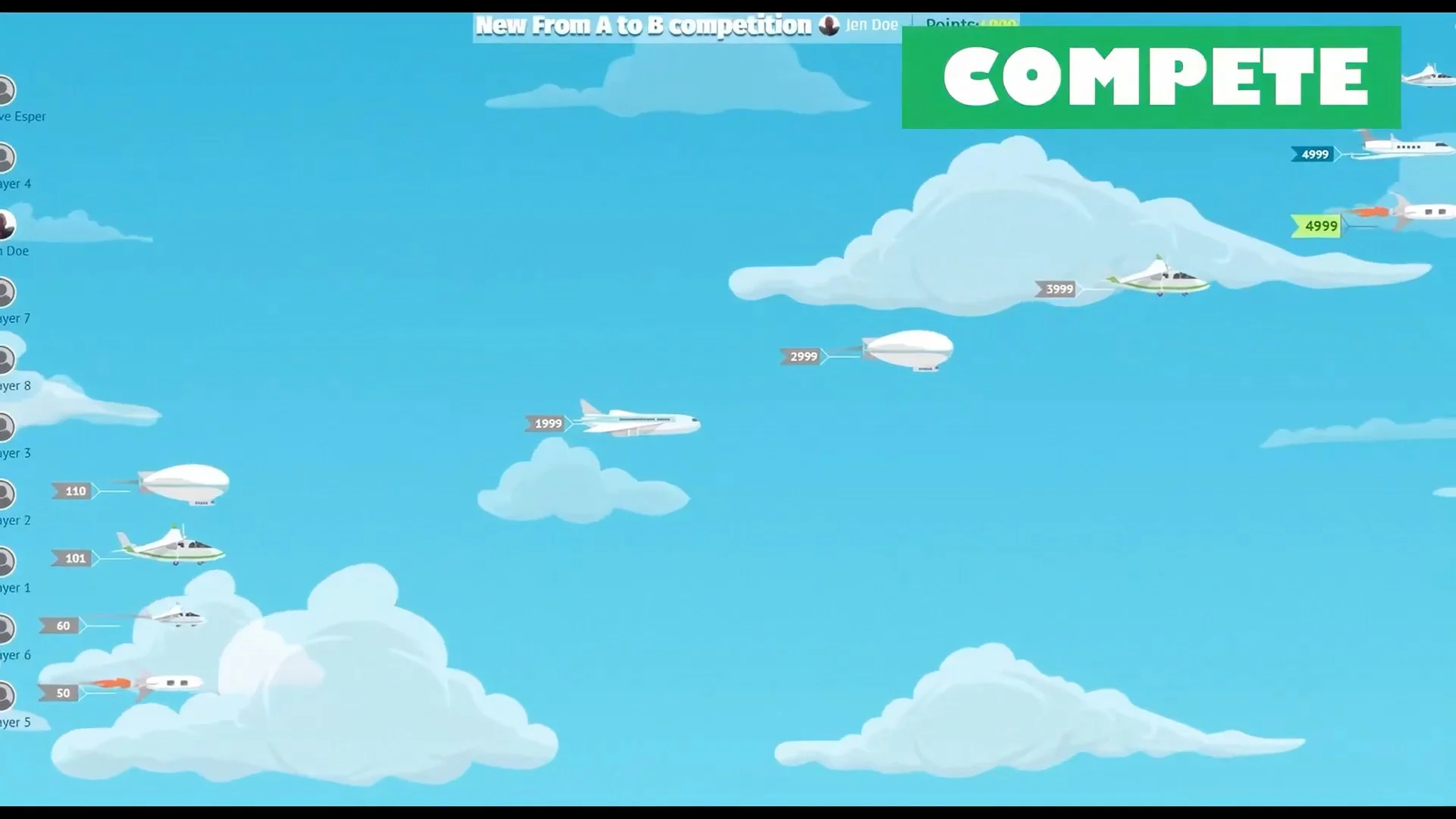
If the goal is to raise achievement of plan targets, competitive formats work best: a visible ranking, team standings, quick rewards for closing tasks.
If you need long-term motivation and retention of valuable employees, we choose levels, roles, and skill development: a person sees their growth trajectory, not just another point.
For routine operations, quests and mini-scenarios work well, turning daily actions into small achievements.
When choosing a format, we consider the company's specific requirements: team size, KPI update frequency, management style, and accepted communication formats. Gamification should integrate into existing workflows, not force a restructuring.
It's important to understand how employees perceive competition: for some it's a driver, for others — stress, so mechanics are tailored to the team culture.
We help you choose a format at the start: we conduct a short audit of the task, discuss goals and constraints with you, and propose two or three mechanic options with an engagement forecast. At the trial stage, we test the team's reaction and only then scale the solution.
This way, you get gamification that boosts team motivation and addresses your specific business challenge, rather than just adding game elements to reports.
Addressing Doubts Before Launch
Before launching a KPI-based motivation program, any manager has legitimate doubts: will gamification really improve results, who will maintain the system, and how to control processes.
We hear these questions on every project and answer them without promising a "magic pill."
We don't launch mechanics blindly. First, we analyze your current KPIs and employee motivation, then design game logic where achieving goals is natural and interesting.
If we see after launch that some mechanic isn't working, we adjust the balance within the first week — so the risk of poor results is minimal.
We don't disappear after launch. We train your HR specialists and managers and hand over clear maintenance guidelines. You get a game that lives and evolves without constant dependency on developers.
For control, we provide transparent analytics: you can see who's moving toward the goal, who's lagging, and which gamification elements drive the biggest engagement gains. You can manage the program through an intuitive interface without getting into technical details.
Here are answers to the most common doubts:
What if employees don't embrace gamification?
We run a pilot on a control group and tailor the mechanics to your corporate culture. If there's no response — we change the approach within the first days. By the time you scale, you already have a proven model, not an experiment.
Who will provide support and development for the program?
We hand your specialists simple tools for managing and updating content. If needed, we step in to refine the mechanics. You always know who's responsible for keeping the system running.
When will measurable results appear?
The first shifts in engagement are visible within a month; sustainable dynamics appear after two to three KPI evaluation cycles. We define checkpoints in advance and show you interim results so you can see the movement.
Launch a Project That Boosts Team Performance
Integrating game mechanics into a KPI motivation program isn't just about adding points and levels. To truly engage employees and grow the metrics, you need a well-thought-out launch: from goal setting to adaptation for your team.
Here's a checklist to help you prepare and not miss anything:
- Formulate the business goal. What exactly should gamification improve: plan achievement, request processing speed, fewer errors? A concrete result is the foundation for calculating motivation.
- Collect data on current KPIs. You'll need actual metrics from the past several months: they serve as a baseline and help measure the effect after launch.
- Define the target audience. Mechanics for a sales department and for production staff differ. Understand what motivates your specific people.
- Decide how employees will see progress. A personal dashboard, a table, a scoreboard? The more transparent the system, the higher the trust and engagement.
- Design a reward system. It's important that incentives are achievable and valuable to the team: from non-material perks to prizes.
- Plan a pilot launch. Start with one department, collect feedback, and adjust the balance — this reduces risks and increases the odds of success in a full rollout.
When all the items are in place, the main thing remains — handing the project to professionals.
We've been implementing gamification and game balance for KPI motivation programs for over 10 years: we help calculate motivation, select mechanics for your tasks, and support the launch.
Submit a request for a consultation — we'll analyze your situation, propose an implementation plan for game mechanics, and show how the project will pay off. It will take no more than 30 minutes, and you'll get ready-made solution options.