

Clients Lose Talent: Why Leadership Development Programs Stall
Companies regularly invest in leadership development programs, yet after a few months they see no measurable changes. Employees complete training, receive certificates, but key specialists still leave for competitors — and that is the main sign that the program is not working.
The reason is simple: low engagement. Adults do not want to learn just to check a box, and standard lectures and tests create neither emotions nor a habit of applying new skills.
Without practice and feedback, the material is forgotten within the first few weeks — learning inefficiency becomes a systemic, not a one-off, problem.
Then comes a chain reaction. Talent drain hits the bottom line: months are spent recruiting and onboarding a new leader, projects slow down, and the team loses direction.
Managers see that training investments are not paying off and shut down the programs — although the problem is not the training itself, but a format that fails to hold attention and motivate change.
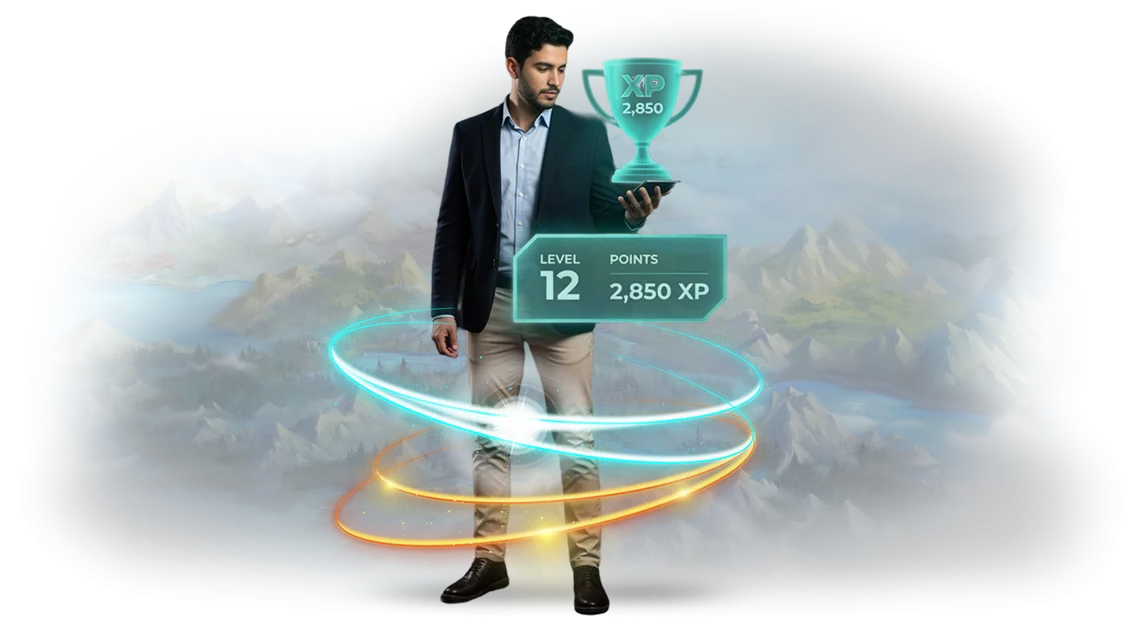
Gamification turns a leadership development program from a "boring obligation" into meaningful practice with goals, levels, and rewards.
Employees get involved in the process, see their progress, and apply skills in real situations — engagement grows and talent stays in the company.
These are exactly the challenges we solve: we design game mechanics around your business results and turn learning into a driving force for team growth.
Gamification of Business Processes: 5 Benefits for Your Team
Leadership development programs often break down under routine: adult participants are skeptical about trainings, and motivation fades after the second module. Gamification turns learning into a live game where everyone sees their progress and wants to be the best.
We use game mechanics to make your team not just go through the program, but actually change behavior.
Here are the five key benefits you get:
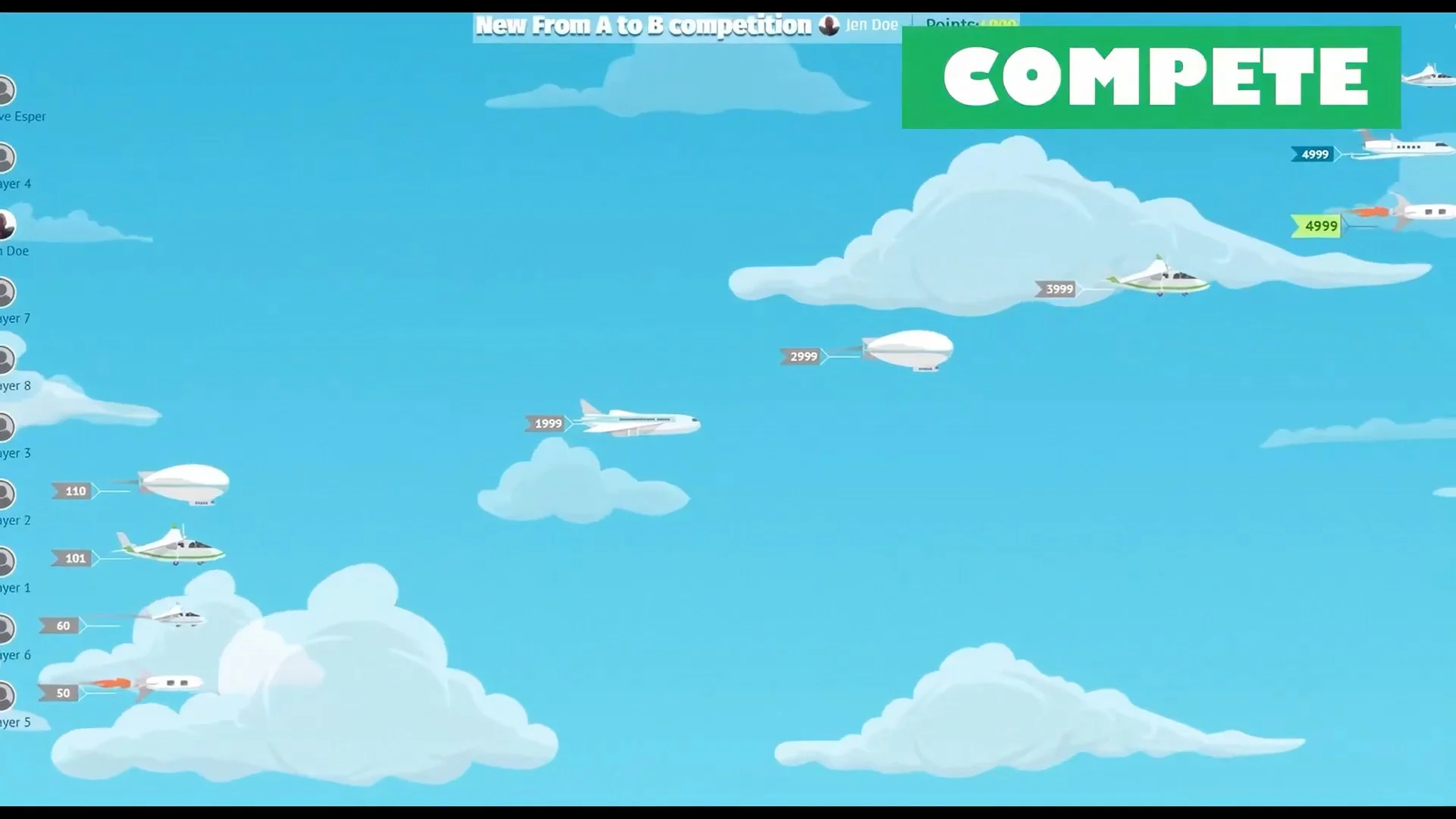
- Increased motivation. Points, levels, and rewards create healthy competition. Employees return to learning on their own because they are interested in completing the next stage — not because they "have to."
- Leadership skill development. In game scenarios, participants take on the role of a mentor, make decisions under time pressure, and take responsibility for the outcome. This is how leadership skills are practiced, not just theorized.
- Higher engagement. Constant feedback and visible progress keep the team's attention. Participants follow the ranking, exchange experiences, and discuss tasks even outside working hours.
- Team cohesion. Team quests and shared goals bring together employees from different departments. Gamification breaks down barriers and teaches negotiation — this benefits corporate culture as a whole.
- Measurable business results. Game mechanics give you transparent statistics: who completed the program, who fell behind, and which skills improved. You see the return on investment and can adjust the program to business goals.
Gamification is not entertainment for its own sake, but a tool that makes a leadership development program effective. Want to discuss mechanics for your team? We will help you design them around your goals and metrics.
Gamification Formats: Choosing the Right Fit for Your Company's Task
The choice of gamification format directly determines whether a leadership development program will deliver results.
The same task — building managerial skills — can be solved in different ways: business simulations suit strategic decision-making practice, case championships suit testing leadership qualities in a team, and marathons suit long-term engagement.
To avoid guesswork, we match the format to a specific goal, audience, and timeline. The table below shows the main types of gamification and what each one delivers to the business.
| Format | For whom | What it gives the client |
|---|---|---|
| Case championship | For teams where leaders need to be identified in real scenarios | Objective assessment of participants' decisions and fast selection of strong managers |
| Business simulation | For managers who need to practice strategy in a safe environment | Mistakes without business losses, refined decision-making skills |
| Team quest | For developing cross-functional connections and communication | A cohesive team and higher engagement without formal training sessions |
| Marathon competition | For a long-term leadership development program | A sustainable development habit and sustained interest in the program |
We do not sell a one-size-fits-all template. We analyze the team's current level, business goals, and available time, and after a pilot launch we adjust the balance and mechanics.
As a result, the client gets a program that delivers measurable improvements: from higher engagement to more effective management decisions. Leave a request — we will select the format that works in your company.
Stages of Launching Gamification in Your Company
Gamification of a leadership development program is not a one-off event, but a system that needs to be carefully integrated into your business processes.
We go from the first brief to stable program operation, so you see the result at every stage and make decisions based on data, not guesswork.
How We Structure the Work
- Brief and goals. We define which leadership competencies need to be strengthened and which business objectives to address: increased engagement, faster onboarding, development of management skills.
- Audience and current program analysis. We study how training currently works, what motivates your employees, and where they lose interest. This is the foundation for mechanics that will work specifically for you.
- Game design and balance. We develop the scenario, scoring system, levels, and rewards. Difficulty increases so participants see their growth rather than "completing a mandatory program."
- Prototype and testing. We build a lightweight working version and test it on a small group. Based on feedback, we adjust the mechanics, interface, and balance — before investing resources in a full launch.
- Pilot project. We launch gamification on one team or cohort and measure engagement, task completion, and development dynamics. You get concrete numbers and examples of how it works in your environment.
- Full launch. We integrate the mechanics into the program, involve HR and managers, and prepare all materials and guides. The process requires no technical training for employees.
- Support and evolution. We analyze metrics, update scenarios and rewards, and help scale the success to other departments. Gamification stays alive and delivers value after the initial launch.
This step-by-step approach reduces risks: you do not invest in a large project all at once, but move from validation to scaling. And at each step, you get a clear result that is visible to both the manager and the participants.
What Is Included in the Delivery: A Package for Your Project
We understand that you are not ordering a "game for the sake of a game," but a working tool for developing a management team. That is why the delivery package is put together so that you get everything you need for launch and use — from scenarios to employee training.
- Gamification scenarios tailored to your goals. Ready-made game mechanics for a leadership development program: from individual tracks to team competitions. The scenarios are easily adapted to participants' level and company values.
- Methodological framework and rules. Documentation that explains how each game element contributes to developing leadership competencies. You always know why a particular format was chosen and how it affects the result.
- Analytics and reporting. A dashboard for the program manager: participant progress, key growth points, and focus areas. Analytics helps make decisions based on data, not guesswork.
- Employee training. Materials and a workshop for your HR specialists and mentors — they will be able to independently run the game and adjust it as the program goes on.
- Support and maintenance. We stay in touch at all stages: from launch to completion. If fine-tuning or additional mechanics are needed, we prepare updates within the agreed timeline.
In other words, you get not scattered files, but a comprehensive delivery package where everything is connected: scenarios, methodology, analytics, and training.
This allows you to launch a leadership development program quickly, without a long warm-up, and with a clear business outcome.
Case Study: How We Doubled Leadership Engagement
A manufacturing company approached us with a request: their leadership development program was running formally; participants sat through sessions and did not apply their knowledge in practice.
Managers wanted to see real growth in management skills, and the HR team wanted a measurable learning outcome.
We analyzed the process: the training lasted six months, but motivation dropped after the second module.
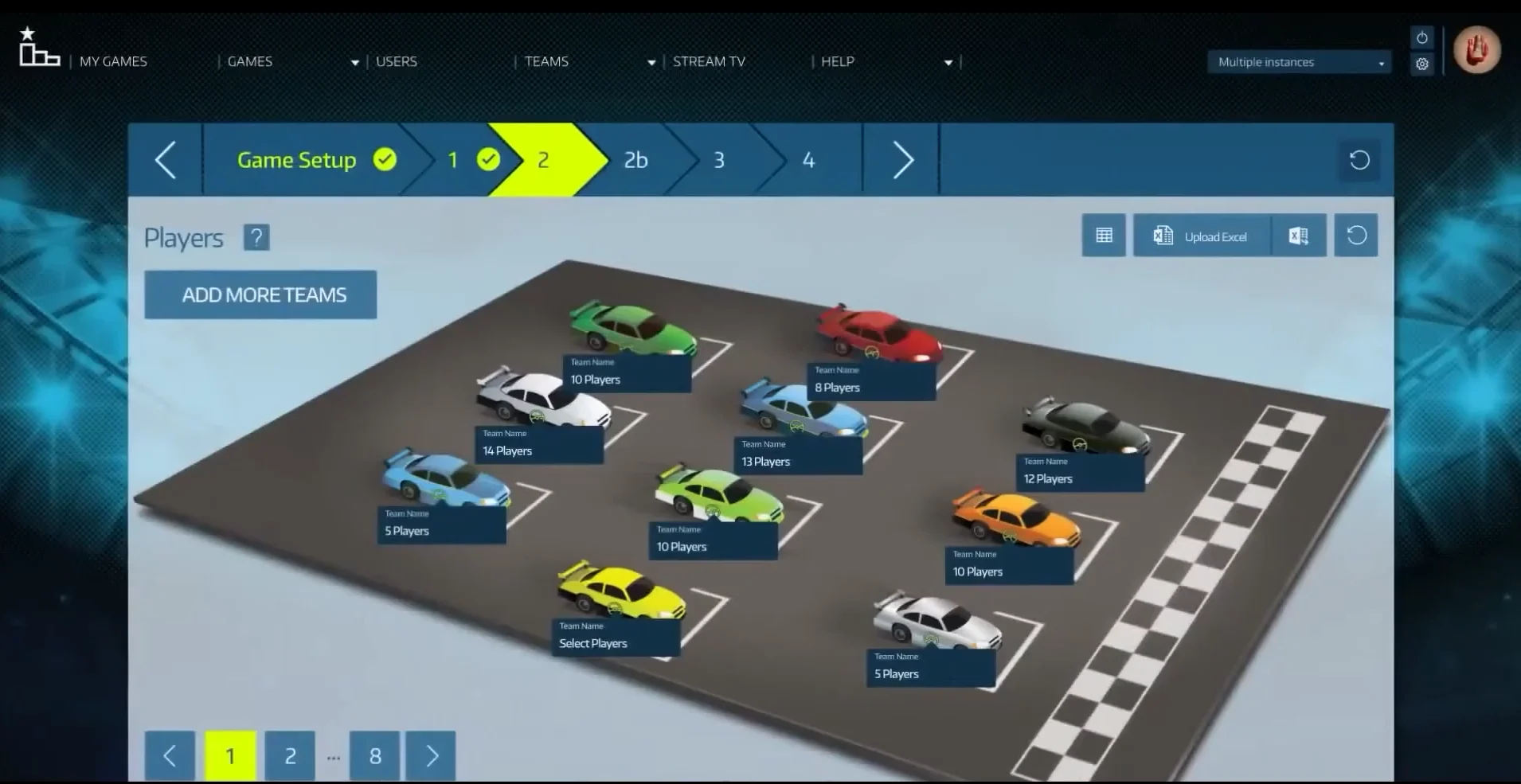
Instead of the usual lectures, we built a gamified trajectory: each participant received a personal game profile, tasks became quests with levels, and team competitions added healthy excitement.
We focused on competition between departments and public recognition of achievements — this strengthened the leaders' desire to step up.
The results were noticeable within just two months. Engagement in the program doubled: participants began to initiate meetings on their own, take on extra projects, and help colleagues.
Program retention (the share of those who reached the final) rose by 35% — previously, almost a third of participants dropped out. An additional effect: teams began to use learning tools more often in their daily work.
The case showed that gamification does not just entertain; it changes behavior. After the final, the client extended the collaboration for the next cohort and asked to scale the mechanics to other training programs.
For us, that is the main success indicator — when a client comes back and recommends us to colleagues.
How to Choose the Right Gamification Format?
A universal gamification format does not exist — and that is good news. The right option is always determined by the specifics of your goals: whether you are building management skills, teaching teamwork, or preparing leaders for change.
Therefore, the first step is not choosing mechanics, but clearly understanding what the program should change.
The key selection criteria are program goals, participant level, group size, and available time. For experienced managers who value reflection and strategic thinking, narrative scenarios with non-obvious decisions work well.
For mid-level managers who need to be engaged in work tasks, competitive and team formats where each person's progress is visible are a better fit.
The specifics of the tasks also guide the choice of mechanics. If you need to strengthen negotiation skills, we use role-playing simulations with feedback.
If the goal is to improve cross-departmental collaboration, we launch a shared project with distributed roles and a common result. Mechanics should not distract from the content, but enhance it: then participants perceive the game as a working tool, not entertainment.
In practice, we start with a brief description of your situation and the desired changes, then select the format, difficulty level, and duration.
You get not an abstract game, but a solution for a specific task — with clear results and the ability to measure each participant's progress. This is how gamification becomes part of a leadership development program, not a separate entertainment module.
Frequently Asked Questions About Gamification of Business Processes
Managers and HR directors often worry that gamification in a leadership development program looks unserious, creates unnecessary competition, or does not deliver measurable results.
We answer the most frequent questions — without empty words, based on experience from real projects.
Is it safe to use game mechanics in leadership training?
Yes, if the gamification is designed around business objectives rather than for the sake of "achievements." In our programs, competitiveness is carefully calibrated so that participants engage in the process instead of fighting each other.
All mechanics are agreed with the client at the brief stage, and during the pilot, the difficulty and pace can be adjusted. This way, you keep full control over the team atmosphere.
What if the gamification does not work?
The risk is reduced as early as the launch stage: we run a pilot, collect participant feedback, and quickly adjust the balance. The contract includes intermediate checkpoints so you can see the dynamics.
If something goes wrong, we correct it rather than leaving the project to "run as is." That is why in our practice, most of these programs are brought to a result and receive repeat orders.
How do you measure the effect of gamification in a leadership development program?
We define the metrics in advance: participant activity, task completion, competency progress, and, most importantly, the impact on work performance. By comparing data before and after, you see a real shift in behavior and results.
These figures go into a report and help you understand which mechanics delivered the strongest effect for your team.
A transparent evaluation system and phased launch turn gamification into a predictable leadership development tool. You get not a game for its own sake, but a manageable business process with clear success criteria.Order Gamification and Get a Motivated Team
Ordering gamification means getting a ready-made tool that turns a leadership development program from a series of lectures into a live process with engagement, competition, and feedback.
We will start with a diagnosis and calculate the cost of gamification to fit your budget, so you can make decisions based on numbers rather than feelings.
When you submit a request, you get not just an estimate, but a launch plan. Within 2–3 days, we will prepare a concept, describe game mechanics, participant roles, and implementation stages — everything for your team to see the value from the very first meeting.
After ordering, we provide:
- A diagnostic of your managers' motivation — we determine which mechanics will work specifically in your team.
- Transparent gamification cost and timelines — no hidden fees or "surprises" along the way.
- A game scenario balanced for a leadership development program: levels, rewards, team and individual goals.
- A prototype and test run on a focus group — you see the result before a full-scale launch.
- Materials for facilitators and launch instructions — your employees will quickly get on board.
- Engagement and progress metrics — you track how participant behavior changes.
To get a consultation and calculate the cost of gamification for your program, leave a request on the website.
We will contact you within one business day, show examples of projects, and offer a solution tailored to your goals — in the end, you get a motivated team ready to grow and achieve goals.