

Why partnership programs and team building lose effectiveness
Partnership programs and team building share one common problem: after a few repetitions, participants stop engaging.
Formally, people are present and complete tasks, but inside there is no excitement or personal interest — the activity turns into mandatory routine rather than an experience people want to have.
The reason is that standard scenarios are built around instructions, not emotions. Adults, especially in a work context, quickly sense the artificiality of exercises and switch off.
Engagement drops, teams remember a checkbox rather than a shared experience, and within a week everything returns to old roles and familiar conflicts.
For a manager, this looks like a spent budget without measurable results: the activity happened, but team spirit, experience exchange, and partner loyalty did not grow.
Worse, a bad experience breeds skepticism toward future events — employees arrive with the mindset "this will be boring again."
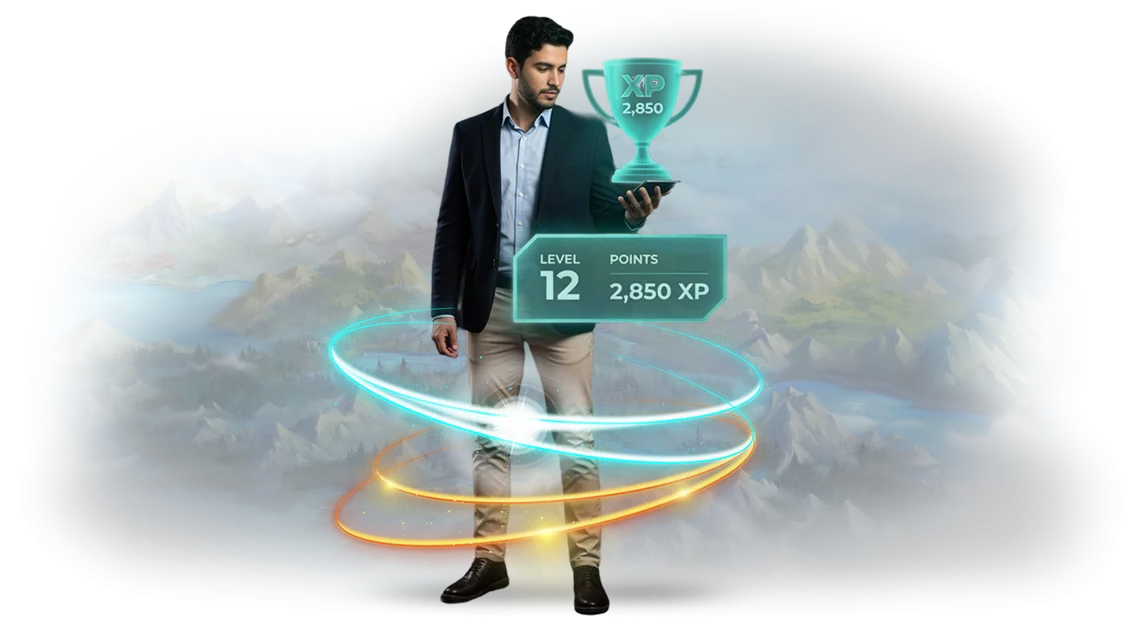
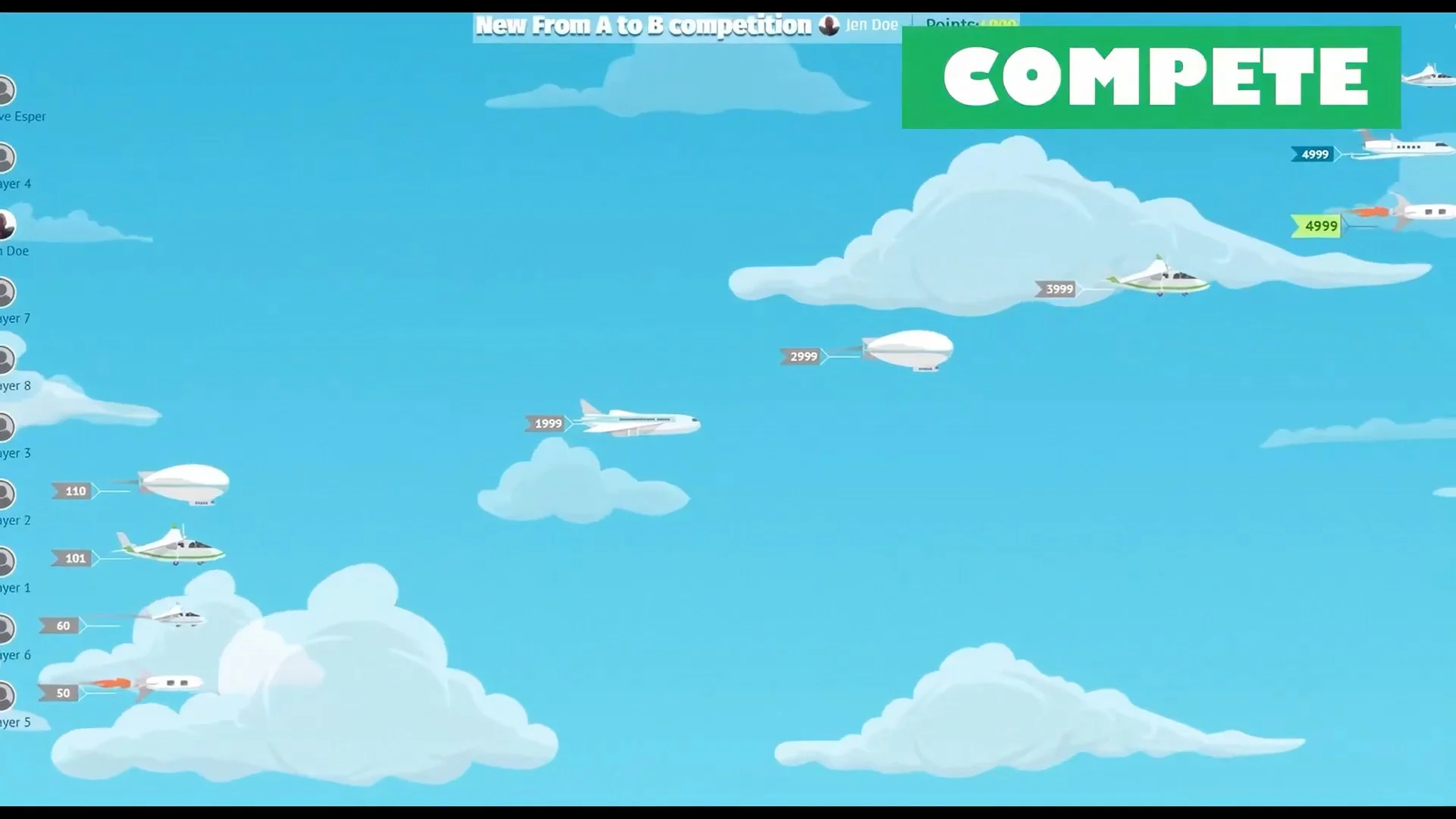
Gamification changes the very mechanics of participation: instead of passively following a scenario, people get a game goal, choice, and visible progress. A task becomes a challenge, competition becomes interest, and shared achievement becomes a source of pride.
That is what brings engagement back to partnership programs and team building and makes results measurable — through activity, communication, and repeat interactions.
We help design game mechanics for your task: from lightweight team activities to multi-stage programs with points, levels, and rewards. You get not "just another team building" but a tool participants will want to keep using.
What you lose without gamification and what you gain
Without game mechanics, partnership programs and team building often become formal events: employees go through the motions, partners lose interest, and investments do not deliver the expected return. Motivation drops, metrics stagnate, best people leave — and all of this costs more than any game.
Comparison: boredom and attrition vs. interest and growth
| Criteria | Without game mechanics | With game mechanics |
|---|---|---|
| Engagement | Routine, low interest, formal participation | Excitement, desire to act, visible progress |
| Motivation | External carrots and sticks, quick burnout | Internal drive, competition, rewards |
| Loyalty | Employee attrition, looking for a better place | Attachment to team and brand |
| Business metrics | Stagnation, underperforming plans | KPI growth, stable results |
As you can see, the difference is not in the scenery but in the attitude toward the work. Game mechanics turn work tasks into an engaging process with clear goals and levels. People see their progress, receive recognition, and want to continue.
What gamification changes in business
An engaged team works significantly more productively: plans are completed faster, projects launch on schedule, partners return to collaboration more often.
This is the result of systematic motivation work through game mechanics — you get not a one-time boost but sustainable metric growth.
Gamification holds attention on tasks that once seemed boring and creates a positive emotional backdrop. Employees and partners start acting proactively — which reduces turnover, increases loyalty, and makes your partnership program genuinely attractive.
Gamification formats for partnership programs
In partnership programs and team building, the same mechanics rarely work equally well everywhere. Keeping a partner engaged for months, energizing a team at a one-time event, or teaching a new skill — these are different tasks, and each requires its own game format.
We develop game mechanics that integrate into your communication and deliver measurable results: increased activity, plan fulfillment, higher engagement. Below are three basic formats we adapt to your partnership program.
Main formats
| Format | Who it is for | What it gives the client |
|---|---|---|
| Long-term partner program | Partners, dealers, agents — those you work with on an ongoing basis | Growth in repeat interactions and loyalty: participants return to you on their own because the program includes accumulating levels, personal achievements, and valuable prizes for activity |
| One-time event | Employees and partners at a corporate event, conference, or company anniversary | Live engagement without boring presentations: guests take part in team competitions, get emotions and photos, and the brand is remembered for a long time |
| Training track | Teams that need regular skill development | Clear progress and competency growth: employees go through training like a game, see their rating, and apply knowledge immediately in work tasks |
This is not a rigid list — in every project we combine elements to get the exact dynamic your business needs. What matters is that the game mechanics serve your goals, not just being "interesting."
How gamification implementation works: from brief to result
Gamification implementation follows transparent stages — you see timelines, control results, and make decisions without technical details.
We adapt the mechanics to the goals of your partnership program and team building so participants engage immediately and you see measurable impact.
- Brief: a short call or questionnaire where you define goals — increase activity, train, or unite the team. Based on this, we suggest initial game concepts.
- Plan and estimate: we determine the format, timeline, and scope of work. You receive a document showing what will be done and when.
- Mechanics approval: we present the scenario and balance without jargon. You make edits before work starts — this saves time and money.
- Implementation: designers and developers build the solution; we send status updates regularly. You do not need to attend technical meetings.
- Test and launch: we test the game with a portion of the audience, fix issues, and launch. We support participants on launch day.
- Support and analytics: we collect activity data, number of completed tasks, and engagement. We suggest adjustments and help grow the program.
The process takes anywhere from a few weeks to three months depending on scope. The result is a ready-to-run program that works without constant oversight from you.
What is included in the gamification delivery package
You get not "an idea on paper" but a ready-to-use tool you can launch from day one. The entire package is assembled around your task — a partnership program or team building — and adapted to your specific participants, their motivation, and engagement level.
Here is what is included in the delivery:
- Ready-made game mechanics. Rules, scenario, and game logic are clear to participants without a long introduction and are immediately aligned with business goals: increased activity, team cohesion, partner network growth.
- Scenarios and narrative. Legend, tasks, dialogues, final branching — all written so participants want to play the game again.
- Visual materials. Cards, posters, screens, social media assets — all in your brand's unified style. Nothing needs extra drawing or adaptation.
- Instructions for participants and the host. Short guides, rules, edge case resolutions. Your own employee can run the game without hiring a contractor.
- Training for your team. Mechanics walkthrough, launch rehearsal, Q&A — after the workshop, you confidently manage the process yourself.
- Analytics tools. Simple dashboards to see activity, progress, and results for each participant and team — for future decisions.
- Technical support. Fast response after launch and mechanics refinements as new tasks come up.
All documentation is collected in one place and stays with you — you can scale the game to other departments, branches, and partners without new development costs.
Case study: how gamification increased engagement in a loyalty program
For a partnership program and team building, it is important that participants do not just sit in the database but regularly perform target actions: invite colleagues, complete training, take part in activities.
This is where things usually break down: after a month, interest fades, metrics drop, and the motivation budget is already spent. In one such case, we faced a situation where partner activity had dropped to 20% of its initial level.
We proposed moving the program into a game model: instead of a boring points system, we introduced team levels, personal achievements, and joint tasks. Every participant action received instant feedback and brought the team closer to a shared goal.
Most importantly, the gamification fit into the existing process — partners did not have to learn a new tool.
Implementation results
Within the first program cycle, the number of target actions per participant grew 2.5 times. Half of the partners who had shown almost no activity returned to regular operations.
The share of participants completing at least one action per week rose from 18% to 57% — and this is not a one-time spike but steady momentum. The company gained not just engagement but a predictable flow of activities to rely on in planning.
Client testimonial
The partner program manager noted: "We stopped chasing participants with reminders — they come back to tasks on their own and invite colleagues.
Gamification made collaboration natural and interesting, and we did not increase the motivation budget." After the pilot, the client decided to scale the mechanics to a new regional program.
The case became a reference story we use as a starting point for other projects: the approach adapts to any business task and audience. The main takeaway confirmed in practice: a game justifies its investment when it solves a specific business metric, not just entertains.
How to choose a gamification format for your task?
Choosing a gamification format does not start with "what is more fun" but with "what should change after the program." The same mechanics can work great for team bonding yet be useless for partner motivation — the difference is in the goal, audience, and expected outcome.
Before starting, answer four questions: who exactly participates, what behavior you want to reinforce, how you will know the task is solved, and how much time you have. If the goal is to introduce colleagues from different departments, active team formats work well.
If you need to increase partner sales, a long-term program with points accumulation and statuses works better. If you want to engage event guests — use fast mechanics with instant results.
The biggest mistake is choosing a format based on someone else's case. What worked for another company can fail for you due to a different corporate culture, audience age, or digital maturity level.
So before selecting mechanics, it is important to define the business metric: conversion to repeat participation, activity growth, or number of completed tasks.
The good news: there is almost always a format that solves the task without extra costs.
Sometimes a board game with branded cards is enough; sometimes you need a digital platform with a personal account; for team building, a hybrid of a live quest and an online scoreboard works well.
We help you avoid wrong choices: at the initial brief we ask the right questions, suggest 2-3 formats with engagement forecasts, and prepare a detailed scenario after approval. This way you get gamification that works for your task, not just entertains.
Frequently asked questions about gamifying business processes
Having doubts before launching gamification is normal: you are accountable for results to management and your team. Below we have addressed the questions most often asked before starting — so you can make decisions based on facts, not promises.
What if participants do not like it? People are tired of "mandatory activities"
True, nobody likes forced checkbox quests. That is why we design mechanics not as a game for the sake of a game, but as a clear tool of value: an employee sees that their actions earn real points, statuses, and prizes — not just a sticker on a chart.
We build partnership programs and team building around existing tasks — gamification makes them more tangible instead of adding "extra burden."
If the mechanics do not resonate, we see it at the pilot stage through engagement data and quickly adjust the scenario. We are not betting on "we will make everyone play" but on those who deliver results: they enjoy competing and pull others in.
How long will the launch take? Will it disrupt current processes
A typical project from brief to launch takes 2–4 weeks, and it does not interfere with your team's daily work. We use proven tools and ready-made mechanic templates, so we do not "build from scratch" — we adapt battle-tested solutions to your task.
Your team's involvement is minimal: a couple of calls at the start and 1-2 short meetings for approval.
The project is divided into stages, and at each one you see intermediate results. Gamification launches predictably and creates no chaos in current processes.
How does gamification adapt to our company, not to "the average company"
We do not bring a one-size-fits-all solution or stretch someone else's case to fit. First, we do a short audit: what the team actually lives by, what tasks you want to strengthen, what motivates your specific people.
For a partnership program, this might be partner points and access levels; for team building, shared challenges and team rankings.
The mechanics are tuned to your structure, values, and even the team's communication style. The same system ends up looking different for different clients — because it reflects their tasks.
Is there a guarantee that gamification will deliver business results
We guarantee not "magic" but a manageable process: we define measurable goals before launch — activity growth, plan fulfillment, reduced turnover — and build mechanics around them.
After launch, you get clear analytics: what worked, which scenarios stopped motivating, what needs strengthening. We do not walk away after delivery but support at least one full program cycle.
If the pilot shows the mechanics are not producing the needed dynamics, we offer a scenario rebuild within the agreed scope — not "a new project for new money."
Do not want to act blindly? Leave a request — during a short brief we will review your task for free and show where gamification can strengthen both your partnership program and team events.Order gamification development for your tasks
Leave a request for gamification development for your partnership program or team building — and get a ready solution that boosts engagement and achieves business goals. We handle everything: from researching your task to launching mechanics that deliver results.
After you fill out the form, we will have a short brief — a 15–20 minute online meeting to understand your audience, goals, and constraints. Then we will prepare a cost estimate and commercial proposal, and after approval, we will launch the project within agreed timelines. You always know what stage the work is at and what you will get in the end.
What you get when you order gamification from us:
- Deep immersion into the context of your partnership program or team building — mechanics that fit your specific audience.
- Transparent pricing aligned with your budget and goals: you understand the cost and expected result upfront.
- A clear plan with milestones and dates — no dragged-out timelines or unexpected surprises.
- Full support: we take the project to launch and handle the technical side.
- Post-launch support and calibration: if the mechanics need adjusting, we make changes quickly.
- Adaptation to the event format — offline, online, or hybrid, accounting for venue and technical specifics.
Leave a request below — we will respond within one business day, clarify the details, and propose a solution that fits your timeline. We will build gamification that becomes a growth tool for your business.